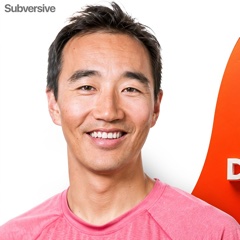
Jimmy Liu
Original creator of DashPass and former Head of Product for New Verticals at DoorDash
Where to hear and read about Jimmy Liu1 episode or test

Jimmy Liu is the original creator of DashPass and a former Head of Product for New Verticals at DoorDash. The lesson most worth taking from him is to start from a customer pain, ship a scrappy test fast, and tune the economics until the bet compounds.
If you don't bet big, you can't win big.
DoorDash's Playbook for Scaling DashPass to 35M+ Members
Jimmy Liu: the story and the lessons
1Jimmy Liu's path to DoorDash
Liu joined DoorDash expecting it to fail within a couple of years. A LinkedIn message in November 2015 reached him when he wasn't looking, and he had never heard of DoorDash. He took a pay cut to run the San Francisco market.
He interviewed more or less for fun and was impressed by everyone he met. He thought it would be a failed startup in a year or two.
San Francisco was losing money on every delivery when he arrived. The market lost $12 a delivery on about 1,500 deliveries a day.
He says that market is where he "cut my teeth".
He brought a founder's mindset and learned SQL on the job. His past as a founder at GymFlow gave him an owner's mindset. He learned SQL on the job in his early DoorDash days.
2How customer emails gave Jimmy Liu the idea for DashPass
Liu emailed every first-time San Francisco customer and asked how it went. He asked what went well and what went poorly after each first DoorDash order. He calls these emails probably the single highest signal used to grow the market and improve the product.
Three complaints came back, and affordability was the one that stuck. Customers named missing restaurants, bad deliveries and high prices. Missing restaurants could be fixed by signing them.
One delivery arrived 40 minutes late and was then cancelled. Customers also called delivery a luxury they couldn't afford every day, and that pain gave Liu his conviction.
He kept the habit later with first-time grocery customers. As head of new verticals he emailed first-time grocery customers too. His two lessons were to stay close to the customer and to move fast, because speed is a competitive advantage.
3How Jimmy Liu built and tested the DashPass MVP
Liu tested the idea with a cheap delivery pack before building. The pack offered 10 deliveries for $20, or $2 each. It shipped in a week or two in Dallas and one other Midwest submarket.
It was much faster to build than a subscription and showed good results, which became another data point for building DashPass.
He carved one small pod out of his team to build it. Four or five engineers built the first version in three or four weeks. It offered unlimited free delivery over $20 and removed the whole service fee, about 15%.
In his words: "it was very hacky. Uh it was very scrappy. A lot of things were missing, but the core functionality was there."
Liu waited for positive unit economics before launching a subscription. Two years earlier, losing $10 or $12 an order in San Francisco, it would not have worked. Once each extra order was profitable, customers, DoorDash, merchants and Dashers wanted the same thing.
"We can't have a situation where people ordering more actually causes us to lose more money."
Test markets were chosen by sorting submarkets by profitability. The aim was to test where DoorDash could not completely brick the bank. A finance partner did extensive modeling before launch.
The team did not overthink the selection.
An A/B test proved DashPass caused members to order more. The head of product and the COO worried that heavy buyers were simply the ones signing up. Order frequency rose almost 2% in two to three weeks, against about 0.1% for typical tests, and kept compounding.
At about $4 billion in run-rate gross order value, a lift of one or two percent was worth a great deal.
Merchants had their own reason to join DashPass. Large, high-commission orders were profitable for them and grew their business. Merchants carry big fixed costs, so reliable order volume matters.
Liu calls the merchant pitch the overlooked part of DashPass's growth.
4How Jimmy Liu fixed DashPass economics
The first version lost money and Liu shipped it anyway. The COO said it took the best customers, made them unprofitable, and got them to place more unprofitable orders. Liu privately feared being fired, but knew many levers could fix the math.
His rule was to "build the thing, learn fast, fail fast, and then iterate." The second version kept the compounding growth and became profitable.
Three levers made DashPass profitable: minimum, fee discount, eligible merchants. The minimum dropped from $20 to $15, and the service fee discount was cut to about 10 of the 15 points. The national launch came in August 2018.
Customers had found the $20 minimum hard to hit, which pointed to which dial to turn first.
Merchant eligibility turned on ticket size, commission rate and order accuracy. Inaccurate orders, with forgotten or missing items, raise support costs. That is why some restaurants were excluded.
Liu is unsure whether eligibility came before the first launch or after it.
Liu says build and test early instead of modeling. His advice: "don't sit at the whiteboard. Don't live in Excel or or SQL or whatever. Just build the thing, test it, and get get real data."
A simple first version avoids a false negative, since nickel-and-diming customers up front can sink a good idea.
5How Jimmy Liu won over skeptics and scaled DashPass
Liu pushed past the head of product and COO with customer evidence. He had talked to more customers about affordability than anyone at the company. The COO, a former Amazon executive nicknamed CP who was usually right, called it a dumb idea.
Liu had built credibility with both leaders, and DoorDash's early meritocracy favored the best ideas and the results behind them. He wondered if it was a big career mistake.
The strongest skeptic reversed within months of launch. A few months later CP called DashPass "the way that we win affordability".
The reversal came from results, not from argument.
Liu says to spend about six months earning credibility at a new company. It is rare to find people with a high batting average who will also swing for the fences. DoorDash's culture of empowering smart risks helped it attract them.
DoorDash scaled DashPass hard once it caught fire. The team grew from four or five engineers to over 100, and COVID acted as an accelerant. In annual planning, every team had to propose a DashPass benefit it could build.
Tony Xu's philosophy is to give bets room to incubate, then "invest aggressively" once one catches fire. Members showed sharply higher order frequency, retention and lifetime value.
Hitting 10 million members early made Tony Xu raise the goal. He said the goal was not ambitious enough and set 20 million, then 100 million. DashPass exited 2025 with more than 35 million members.
Liu took away that "people rise the expectations that you set for them."
6How Jimmy Liu thinks about subscription pricing and retention
Liu says price is the last lever to pull on a subscription. DashPass has stayed at $9.99 a month since 2018 while benefits grew. A $1 or $2 hike could lift revenue 10 to 20% overnight, but he argues it would slow growth over 5 to 10 years.
His test: with 100 engineers, the moment they work on raising the fee, the team has lost sight of the core job. No test or data backs the long-run claim, which is his judgment.
Early churn from a price hike looks small, which hides the cost. The early data would look good, with only a little churn. Liu says "people underestimate compounding math."
His rule is to keep the focus on a better offering and let growth compound as long as possible.
Retention comes from one big saving plus many small features. Members save roughly 80% on fees, not 10 or 20%. Sign-up flow, billing and discovery changes each add a point or two.
Liu says the retention is causal, not just correlation.
He audits the checkout flow to decide where to pitch membership. He asks what share of customers even discover the membership and what share see an upsell. He also talks to customers about whether the placement and wording make sense.
Telling people what they could have saved on this order is a win-win.
DoorDash pitches DashPass louder on large orders. When a large order would more than pay the $10 monthly fee on that single order, the upsell is louder. For small orders where the member would not benefit yet, it stays quieter.
DashPass pulls restaurant customers into grocery and retail. Members place about 75% of DoorDash's grocery and retail orders. Free delivery lowers the risk of trying a new category.
Liu led new verticals including grocery, convenience, alcohol and retail. He expects people to stick to one app that does many jobs.
7Jimmy Liu on conviction, data and what comes next
Liu worries data culture crowds out long-term conviction bets. DoorDash is very data-driven, but early data can misread a bet's potential, as in pricing tests. Nobody runs an A/B test for 10 years.
"Sometimes bets need time to bake and the initial data or the short-term data I should say is not a reflection of the true potential."
He tells junior staff to swing for home runs, not singles. His questions: how much conviction do you have, and can you back it up? If you would regret not swinging, go for it.
Liu sees DashPass growing into a personal assistant for the physical world. DoorDash ended 2025 with over 35 million members, about half of its monthly users, which Tony Xu sees as single-digit percent of potential. Over the next decade, Dashers could take on tasks such as dry cleaning pickup.
He sees ChatGPT as closer to a Google replacement than a doer of physical tasks. He also expects tiny AI-built companies, even a one-person unicorn within a few years.

DoorDash's Playbook for Scaling DashPass to 35M+ Members
Jimmy Liu explains how he built DashPass from customer emails and a scrappy MVP, fixed its economics with three levers, and won over skeptical executives. DashPass now has over 35 million members and drives about 75% of DoorDash's grocery and retail orders, all at a flat $9.99 per month.
Liu joined DoorDash expecting it to fail within a couple of years. A LinkedIn message in November 2015 reached him when he wasn't looking, and he had never heard of DoorDash. He took a pay cut to run the San Francisco market.
He interviewed more or less for fun and was impressed by everyone he met. He thought it would be a failed startup in a year or two.
San Francisco was losing money on every delivery when he arrived. The market lost $12 a delivery on about 1,500 deliveries a day.
He says that market is where he "cut my teeth".
He brought a founder's mindset and learned SQL on the job. His past as a founder at GymFlow gave him an owner's mindset. He learned SQL on the job in his early DoorDash days.
Liu emailed every first-time San Francisco customer and asked how it went. He asked what went well and what went poorly after each first DoorDash order. He calls these emails probably the single highest signal used to grow the market and improve the product.
Three complaints came back, and affordability was the one that stuck. Customers named missing restaurants, bad deliveries and high prices. Missing restaurants could be fixed by signing them.
One delivery arrived 40 minutes late and was then cancelled. Customers also called delivery a luxury they couldn't afford every day, and that pain gave Liu his conviction.
He kept the habit later with first-time grocery customers. As head of new verticals he emailed first-time grocery customers too. His two lessons were to stay close to the customer and to move fast, because speed is a competitive advantage.
Liu tested the idea with a cheap delivery pack before building. The pack offered 10 deliveries for $20, or $2 each. It shipped in a week or two in Dallas and one other Midwest submarket.
It was much faster to build than a subscription and showed good results, which became another data point for building DashPass.
He carved one small pod out of his team to build it. Four or five engineers built the first version in three or four weeks. It offered unlimited free delivery over $20 and removed the whole service fee, about 15%.
In his words: "it was very hacky. Uh it was very scrappy. A lot of things were missing, but the core functionality was there."
Liu waited for positive unit economics before launching a subscription. Two years earlier, losing $10 or $12 an order in San Francisco, it would not have worked. Once each extra order was profitable, customers, DoorDash, merchants and Dashers wanted the same thing.
"We can't have a situation where people ordering more actually causes us to lose more money."
Test markets were chosen by sorting submarkets by profitability. The aim was to test where DoorDash could not completely brick the bank. A finance partner did extensive modeling before launch.
The team did not overthink the selection.
An A/B test proved DashPass caused members to order more. The head of product and the COO worried that heavy buyers were simply the ones signing up. Order frequency rose almost 2% in two to three weeks, against about 0.1% for typical tests, and kept compounding.
At about $4 billion in run-rate gross order value, a lift of one or two percent was worth a great deal.
Merchants had their own reason to join DashPass. Large, high-commission orders were profitable for them and grew their business. Merchants carry big fixed costs, so reliable order volume matters.
Liu calls the merchant pitch the overlooked part of DashPass's growth.
The first version lost money and Liu shipped it anyway. The COO said it took the best customers, made them unprofitable, and got them to place more unprofitable orders. Liu privately feared being fired, but knew many levers could fix the math.
His rule was to "build the thing, learn fast, fail fast, and then iterate." The second version kept the compounding growth and became profitable.
Three levers made DashPass profitable: minimum, fee discount, eligible merchants. The minimum dropped from $20 to $15, and the service fee discount was cut to about 10 of the 15 points. The national launch came in August 2018.
Customers had found the $20 minimum hard to hit, which pointed to which dial to turn first.
Merchant eligibility turned on ticket size, commission rate and order accuracy. Inaccurate orders, with forgotten or missing items, raise support costs. That is why some restaurants were excluded.
Liu is unsure whether eligibility came before the first launch or after it.
Liu says build and test early instead of modeling. His advice: "don't sit at the whiteboard. Don't live in Excel or or SQL or whatever. Just build the thing, test it, and get get real data."
A simple first version avoids a false negative, since nickel-and-diming customers up front can sink a good idea.
Liu pushed past the head of product and COO with customer evidence. He had talked to more customers about affordability than anyone at the company. The COO, a former Amazon executive nicknamed CP who was usually right, called it a dumb idea.
Liu had built credibility with both leaders, and DoorDash's early meritocracy favored the best ideas and the results behind them. He wondered if it was a big career mistake.
The strongest skeptic reversed within months of launch. A few months later CP called DashPass "the way that we win affordability".
The reversal came from results, not from argument.
Liu says to spend about six months earning credibility at a new company. It is rare to find people with a high batting average who will also swing for the fences. DoorDash's culture of empowering smart risks helped it attract them.
DoorDash scaled DashPass hard once it caught fire. The team grew from four or five engineers to over 100, and COVID acted as an accelerant. In annual planning, every team had to propose a DashPass benefit it could build.
Tony Xu's philosophy is to give bets room to incubate, then "invest aggressively" once one catches fire. Members showed sharply higher order frequency, retention and lifetime value.
Hitting 10 million members early made Tony Xu raise the goal. He said the goal was not ambitious enough and set 20 million, then 100 million. DashPass exited 2025 with more than 35 million members.
Liu took away that "people rise the expectations that you set for them."
Liu says price is the last lever to pull on a subscription. DashPass has stayed at $9.99 a month since 2018 while benefits grew. A $1 or $2 hike could lift revenue 10 to 20% overnight, but he argues it would slow growth over 5 to 10 years.
His test: with 100 engineers, the moment they work on raising the fee, the team has lost sight of the core job. No test or data backs the long-run claim, which is his judgment.
Early churn from a price hike looks small, which hides the cost. The early data would look good, with only a little churn. Liu says "people underestimate compounding math."
His rule is to keep the focus on a better offering and let growth compound as long as possible.
Retention comes from one big saving plus many small features. Members save roughly 80% on fees, not 10 or 20%. Sign-up flow, billing and discovery changes each add a point or two.
Liu says the retention is causal, not just correlation.
He audits the checkout flow to decide where to pitch membership. He asks what share of customers even discover the membership and what share see an upsell. He also talks to customers about whether the placement and wording make sense.
Telling people what they could have saved on this order is a win-win.
DoorDash pitches DashPass louder on large orders. When a large order would more than pay the $10 monthly fee on that single order, the upsell is louder. For small orders where the member would not benefit yet, it stays quieter.
DashPass pulls restaurant customers into grocery and retail. Members place about 75% of DoorDash's grocery and retail orders. Free delivery lowers the risk of trying a new category.
Liu led new verticals including grocery, convenience, alcohol and retail. He expects people to stick to one app that does many jobs.
Liu worries data culture crowds out long-term conviction bets. DoorDash is very data-driven, but early data can misread a bet's potential, as in pricing tests. Nobody runs an A/B test for 10 years.
"Sometimes bets need time to bake and the initial data or the short-term data I should say is not a reflection of the true potential."
He tells junior staff to swing for home runs, not singles. His questions: how much conviction do you have, and can you back it up? If you would regret not swinging, go for it.
Liu sees DashPass growing into a personal assistant for the physical world. DoorDash ended 2025 with over 35 million members, about half of its monthly users, which Tony Xu sees as single-digit percent of potential. Over the next decade, Dashers could take on tasks such as dry cleaning pickup.
He sees ChatGPT as closer to a Google replacement than a doer of physical tasks. He also expects tiny AI-built companies, even a one-person unicorn within a few years.

 DoorDash
