
Ivan Zhao
Co-founder and CEO of Notion
Where to hear and read about Ivan Zhao1 episode or test

Ivan Zhao is co-founder and CEO of Notion, which he built over several lost years into a profitable company valued at $10 billion plus. The most useful lesson is to hide a big vision inside a product people already want, then keep building it in your own native way with a small team.
People don't want to eat the broccoli but people like sugar, so give them the sugar then hide the broccoli inside of it.
Notion's lost years, near collapse during COVID, staying small to move fast, building horizontal
Ivan Zhao: the story and the lessons
1Ivan Zhao's path from Urumqi to Notion
A programming contest got Zhao out of a remote desert city. Zhao grew up in Urumqi, a city of 4 million in China's northwest desert. His mom took him to Beijing, where a good school required winning a competition, and he placed second in the Information Olympiad.
He chose the Information Olympiad over math because he loved computer games. He moved to Canada at 16.
Artist friends showed him that most people cannot make software. He studied art and science rather than computer science, since he already knew how to code. As the only nerd among his art friends, he built three or four portfolio websites for them.
He learned English from SpongeBob and The Simpsons, because exam English in China taught grammar but missed context, culture and humor.
Engelbart, Kay and Nelson gave him the vision behind Notion. Reading Engelbart's Augmenting Human Intellect made Zhao obsessed. His takeaway was that making software for others is the highest-leverage thing a coder or designer can do.
The Xerox Alto ran Smalltalk, which had no separate applications and let users change everything. The PC generation kept the application framework instead, which led to today's apps and SaaS. Notion tries to bring back the idea that builders and users share one medium.
2The lost years and the resets at Notion
Notion's first version served what Zhao wanted, not what people wanted. Zhao agrees the first version was more about what he wanted. Notion took three to four years to find fit, while many companies now reach $100M ARR in under two years.
It took about two years of building developer-style tools to see that the world is not made of developers and designers. Most people wake up with a report due and do not care about creating software.
He restarted the company when the technical base proved wrong. Notion bet on Web Component technology that was too new and unstable. The team could not tell whether a bug came from their code or the libraries, so Zhao decided to restart or run out of time.
They laid off everyone, which took the team from five people to Zhao and his co-founder Simon, and rebuilt on a more orthodox foundation.
His mother's loans kept Notion alive. She helped start the company because, as a Canadian, he had to register a US company to move. He repaid her, ran out of money again, and borrowed once more to bridge the gap.
The reset abroad became one of the happiest periods. Zhao and Simon went to Japan and later traveled the world, coding and designing daily, sometimes up to 18 hours a day. They subleased their San Francisco apartment and office, so they earned money while away.
They knew each other's thinking, so they moved quickly through technical, product and design problems. A shared love of Lego kept them going: it was the only gift Simon wanted every Christmas.
Zhao believes better abstractions compound, so lost work is cheap to redo. People think linearly and underestimate how fast a better base catches up. Smalltalk and Lisp, big influences on Notion, had kernels of about a hundred lines.
"You can create progress through better abstractions."
He got through the dark years by staying even-keeled and sleeping. For Zhao and Simon, high is never too high and low is never too low. A bad day ends with sleep, and the next day is a reset.
He calls sleep a daily personal reset, like resetting a code base or a mental model.
3How Zhao found product-market fit at Notion
Zhao hid the Lego-for-software vision inside a productivity tool. Notion kept the vision but wrapped it in productivity software, which people use every day. Zhao calls it sugar-coated broccoli.
Positioning must stay truthful, because fooling people once or twice leaves no future.
Product-market fit arrived as a gradual ramp, not a milestone. First people cared, then some paid, and revenue ramped slowly. Zhao asks whether the product beats last week's version, not whether a single achievement has been hit.
"It's a very gradual ramp." Even today Notion feels small to him next to what it could be.
Zhao turned away investor attention he did not need. When revenue began, investors reached out, and one even sent dog treats to the unlisted office address. Investor Shana Fisher told him he did not need money and was seeking validation.
He did not take that investor's money the first time and went back to hardcore building with no meetings. Real feedback comes from customers.
4How Zhao keeps Notion small and profitable
Zhao hires founders who can cover many jobs. Zhao designs, does marketing and storytelling, and closes sales deals himself. Simon and Akshay also cover wide ground, and the hiring overhead is mostly internal communication.
Notion had no salesperson until over $10 million ARR and hired its first PM at 50 people.
He runs the company on Notion to replace people with systems. Notion is a meta tool, so the team builds its own tools in it. Low headcount has kept the company profitable for a couple of years, with no fundraising every 18 to 24 months.
"I just believe better system is much better than brute force through people."
Zhao calls Notion a small bus and picks who sits on it. A smaller bus turns corners and accelerates more easily. The leader decides who gets a seat, which sets its speed and everyone's work life.
He tracks talent density, not headcount. The team watches revenue per employee, and talented people want to work with other talented people.
Zhao says Notion is not cost-saving-first, and he likes fancy chairs and furniture. The root is taste, not frugality.
5Building horizontal software the Zhao way
Zhao uses notes and docs as the top of Notion's funnel. Notes and docs reach over 1 billion people, and users then discover databases and tasks and bring Notion to work. Zhao calls the strategy B2C2B.
Half of Notion's B2B customers come from prior personal users. The same logic drove the calendar launched last year and the email product in progress.
He says horizontal products must be sold as ready-made solutions. Only hardcore fans care about bricks, and enterprises want a solution tied to their P&L. Zhao wishes Notion had made this shift earlier.
"Only hardcore Lego fans care about Lego bricks. Most people care about Lego boxes." Bricks still get built behind the scenes so the product is not pigeonholed.
Horizontal products have no market wall, so Zhao builds one. Notion uses the word solutions internally to rally sales and product teams and to define a spot in the customer's mind.
In Lenny's reader survey of 6,500 people, Notion ranked second in project management and fourth in CRM, though it never set out to build a CRM. A CRM is a relational database, so users built it themselves.
AI turned Notion's building blocks into material for agents. Notion went from an AI writer, to Q&A with connectors to Jira and Zendesk, to coding agents that assemble its blocks into custom software.
Zhao had spent five or six years building blocks for knowledge work and did not expect this. He finds AI works especially well on bundled, horizontal data.
Zhao reads software as swinging between bundling and unbundling. He traces 1980s PC apps, Microsoft's 1990s suite, then SaaS unbundling. The average company now uses almost a hundred tools, which he calls madness.
He thinks bundling has the edge for now, helped by cost pressure and AI, but the market could shift again.
Non-programmers now earn a living from Notion templates. YouTubers and creators package their workflows into templates, and some make millions selling them on places like Etsy.
Zhao finds this fulfilling because it returns to the original mission of letting anyone create software.
6Zhao's mistakes and crises at Notion
Notion hard-coded sprints and it cost about a year and a half. Notion built sprints and milestones into project management instead of from its Lego pieces. Customers found the feature underpowered next to competitors, and engineers disliked touching the code base for it.
2024 was the first year of good velocity, quality and alignment with values. "If you're building non-Lego way, the system work against you."
Zhao's no-premature-optimization rule nearly broke Notion during COVID. Notion ran on a single Postgres instance and kept moving to a bigger machine. Near the limit it stopped feature work and put almost every engineer on sharding.
Behavior gets sporadic near the limit, so the day it hits is unpredictable. The clock ran three to six months and they finished with roughly weeks to spare. "Don't do premature optimization but plan ahead a little bit. Don't go late."
Every 12 to 18 months Zhao has to grow into a new role. Notion is like a new company at each stage, needing a different skill from him. He calls it an infinite game.
Storytelling to many people did not come naturally, and podcasts and talks drain him. He treats them as a craft to unlock, like a video game skill.
7Zhao on craft, values and taste
Zhao balances his own taste against what the business needs. Too much of himself gives a research project with no users, and too much business gives a commodity. He says the two feel like different energies.
He leans on an adviser to cue him, almost like a therapist. Building from his values is the more durable energy source through dark years.
He treats craft as values and taste applied to technical skill. Craft and values is Notion's internal philosophy. Zhao's wife calls him a wood cabinet builder because he asks how to make a thing more beautiful, useful and pleasant to hold.
He runs the permutations and trade-offs in his head first, then builds.
He looks for the sweet spot of technology, people and market. There is no free lunch, so you choose what to give up to match what the market wants. Zhao sees language models as a new material, like aluminum.
Human behavior is the fixed constraint: after about 16, people mostly stop wanting to learn new things.
Zhao designed Notion's offices to feel like a studio or home. Notion uses home furniture and warm colors, with no overhead lighting. The team tried 30 shades of warm white on the walls.
"Top light is evil." It feels like a hospital, and cozy rooms keep people longer and feel more creative. Notion ran a no-shoes rule and one shared table for years.
He names meeting rooms after timeless tools. Rooms are named after the iPhone, the original Macintosh, Lamy 2000 pens, Toshiba rice cookers and the Sony transistor radio.
Tech cycles run six to 12 months, and he wants a form factor that lasts longer than 18. He cites McLuhan: we shape our tools, then our tools shape us.
Zhao steals product ideas from outside tech. He says Hacker News and Twitter focus on the last six months, while books and history hold far more patterns and trade-offs.
He recommends complex systems, such as ants and bees, and James Burke's BBC series Connections. "I wish more people look beyond tech to steal good ideas."

Notion's lost years, near collapse during COVID, staying small to move fast, building horizontal
Ivan Zhao explains how Notion went through about four lost years and several resets before finding a product people wanted, and how it stayed small, profitable and horizontal afterward. The result is a company that is profitable, hired no salesperson until over $10 million ARR, and reached a $10 billion plus valuation.
A programming contest got Zhao out of a remote desert city. Zhao grew up in Urumqi, a city of 4 million in China's northwest desert. His mom took him to Beijing, where a good school required winning a competition, and he placed second in the Information Olympiad.
He chose the Information Olympiad over math because he loved computer games. He moved to Canada at 16.
Artist friends showed him that most people cannot make software. He studied art and science rather than computer science, since he already knew how to code. As the only nerd among his art friends, he built three or four portfolio websites for them.
He learned English from SpongeBob and The Simpsons, because exam English in China taught grammar but missed context, culture and humor.
Engelbart, Kay and Nelson gave him the vision behind Notion. Reading Engelbart's Augmenting Human Intellect made Zhao obsessed. His takeaway was that making software for others is the highest-leverage thing a coder or designer can do.
The Xerox Alto ran Smalltalk, which had no separate applications and let users change everything. The PC generation kept the application framework instead, which led to today's apps and SaaS. Notion tries to bring back the idea that builders and users share one medium.
Notion's first version served what Zhao wanted, not what people wanted. Zhao agrees the first version was more about what he wanted. Notion took three to four years to find fit, while many companies now reach $100M ARR in under two years.
It took about two years of building developer-style tools to see that the world is not made of developers and designers. Most people wake up with a report due and do not care about creating software.
He restarted the company when the technical base proved wrong. Notion bet on Web Component technology that was too new and unstable. The team could not tell whether a bug came from their code or the libraries, so Zhao decided to restart or run out of time.
They laid off everyone, which took the team from five people to Zhao and his co-founder Simon, and rebuilt on a more orthodox foundation.
His mother's loans kept Notion alive. She helped start the company because, as a Canadian, he had to register a US company to move. He repaid her, ran out of money again, and borrowed once more to bridge the gap.
The reset abroad became one of the happiest periods. Zhao and Simon went to Japan and later traveled the world, coding and designing daily, sometimes up to 18 hours a day. They subleased their San Francisco apartment and office, so they earned money while away.
They knew each other's thinking, so they moved quickly through technical, product and design problems. A shared love of Lego kept them going: it was the only gift Simon wanted every Christmas.
Zhao believes better abstractions compound, so lost work is cheap to redo. People think linearly and underestimate how fast a better base catches up. Smalltalk and Lisp, big influences on Notion, had kernels of about a hundred lines.
"You can create progress through better abstractions."
He got through the dark years by staying even-keeled and sleeping. For Zhao and Simon, high is never too high and low is never too low. A bad day ends with sleep, and the next day is a reset.
He calls sleep a daily personal reset, like resetting a code base or a mental model.
Zhao hid the Lego-for-software vision inside a productivity tool. Notion kept the vision but wrapped it in productivity software, which people use every day. Zhao calls it sugar-coated broccoli.
Positioning must stay truthful, because fooling people once or twice leaves no future.
Product-market fit arrived as a gradual ramp, not a milestone. First people cared, then some paid, and revenue ramped slowly. Zhao asks whether the product beats last week's version, not whether a single achievement has been hit.
"It's a very gradual ramp." Even today Notion feels small to him next to what it could be.
Zhao turned away investor attention he did not need. When revenue began, investors reached out, and one even sent dog treats to the unlisted office address. Investor Shana Fisher told him he did not need money and was seeking validation.
He did not take that investor's money the first time and went back to hardcore building with no meetings. Real feedback comes from customers.
Zhao hires founders who can cover many jobs. Zhao designs, does marketing and storytelling, and closes sales deals himself. Simon and Akshay also cover wide ground, and the hiring overhead is mostly internal communication.
Notion had no salesperson until over $10 million ARR and hired its first PM at 50 people.
He runs the company on Notion to replace people with systems. Notion is a meta tool, so the team builds its own tools in it. Low headcount has kept the company profitable for a couple of years, with no fundraising every 18 to 24 months.
"I just believe better system is much better than brute force through people."
Zhao calls Notion a small bus and picks who sits on it. A smaller bus turns corners and accelerates more easily. The leader decides who gets a seat, which sets its speed and everyone's work life.
He tracks talent density, not headcount. The team watches revenue per employee, and talented people want to work with other talented people.
Zhao says Notion is not cost-saving-first, and he likes fancy chairs and furniture. The root is taste, not frugality.
Zhao uses notes and docs as the top of Notion's funnel. Notes and docs reach over 1 billion people, and users then discover databases and tasks and bring Notion to work. Zhao calls the strategy B2C2B.
Half of Notion's B2B customers come from prior personal users. The same logic drove the calendar launched last year and the email product in progress.
He says horizontal products must be sold as ready-made solutions. Only hardcore fans care about bricks, and enterprises want a solution tied to their P&L. Zhao wishes Notion had made this shift earlier.
"Only hardcore Lego fans care about Lego bricks. Most people care about Lego boxes." Bricks still get built behind the scenes so the product is not pigeonholed.
Horizontal products have no market wall, so Zhao builds one. Notion uses the word solutions internally to rally sales and product teams and to define a spot in the customer's mind.
In Lenny's reader survey of 6,500 people, Notion ranked second in project management and fourth in CRM, though it never set out to build a CRM. A CRM is a relational database, so users built it themselves.
AI turned Notion's building blocks into material for agents. Notion went from an AI writer, to Q&A with connectors to Jira and Zendesk, to coding agents that assemble its blocks into custom software.
Zhao had spent five or six years building blocks for knowledge work and did not expect this. He finds AI works especially well on bundled, horizontal data.
Zhao reads software as swinging between bundling and unbundling. He traces 1980s PC apps, Microsoft's 1990s suite, then SaaS unbundling. The average company now uses almost a hundred tools, which he calls madness.
He thinks bundling has the edge for now, helped by cost pressure and AI, but the market could shift again.
Non-programmers now earn a living from Notion templates. YouTubers and creators package their workflows into templates, and some make millions selling them on places like Etsy.
Zhao finds this fulfilling because it returns to the original mission of letting anyone create software.
Notion hard-coded sprints and it cost about a year and a half. Notion built sprints and milestones into project management instead of from its Lego pieces. Customers found the feature underpowered next to competitors, and engineers disliked touching the code base for it.
2024 was the first year of good velocity, quality and alignment with values. "If you're building non-Lego way, the system work against you."
Zhao's no-premature-optimization rule nearly broke Notion during COVID. Notion ran on a single Postgres instance and kept moving to a bigger machine. Near the limit it stopped feature work and put almost every engineer on sharding.
Behavior gets sporadic near the limit, so the day it hits is unpredictable. The clock ran three to six months and they finished with roughly weeks to spare. "Don't do premature optimization but plan ahead a little bit. Don't go late."
Every 12 to 18 months Zhao has to grow into a new role. Notion is like a new company at each stage, needing a different skill from him. He calls it an infinite game.
Storytelling to many people did not come naturally, and podcasts and talks drain him. He treats them as a craft to unlock, like a video game skill.
Zhao balances his own taste against what the business needs. Too much of himself gives a research project with no users, and too much business gives a commodity. He says the two feel like different energies.
He leans on an adviser to cue him, almost like a therapist. Building from his values is the more durable energy source through dark years.
He treats craft as values and taste applied to technical skill. Craft and values is Notion's internal philosophy. Zhao's wife calls him a wood cabinet builder because he asks how to make a thing more beautiful, useful and pleasant to hold.
He runs the permutations and trade-offs in his head first, then builds.
He looks for the sweet spot of technology, people and market. There is no free lunch, so you choose what to give up to match what the market wants. Zhao sees language models as a new material, like aluminum.
Human behavior is the fixed constraint: after about 16, people mostly stop wanting to learn new things.
Zhao designed Notion's offices to feel like a studio or home. Notion uses home furniture and warm colors, with no overhead lighting. The team tried 30 shades of warm white on the walls.
"Top light is evil." It feels like a hospital, and cozy rooms keep people longer and feel more creative. Notion ran a no-shoes rule and one shared table for years.
He names meeting rooms after timeless tools. Rooms are named after the iPhone, the original Macintosh, Lamy 2000 pens, Toshiba rice cookers and the Sony transistor radio.
Tech cycles run six to 12 months, and he wants a form factor that lasts longer than 18. He cites McLuhan: we shape our tools, then our tools shape us.
Zhao steals product ideas from outside tech. He says Hacker News and Twitter focus on the last six months, while books and history hold far more patterns and trade-offs.
He recommends complex systems, such as ants and bees, and James Burke's BBC series Connections. "I wish more people look beyond tech to steal good ideas."
More from Notion
 Guest
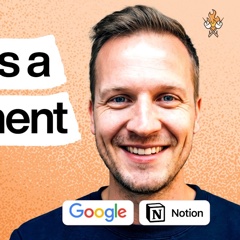
Max Schoening
Head of Product at Notion; previously PM at Google, design lead at Heroku, VP of Design at GitHub, two-time founder
 Notion1 source · 18 tips
 Guest
Rachel Hepworth
Former CMO at Notion, now marketing and growth advisor
Notion 1 source · 18 tips
Camille Ricketts
First marketing hire and long-time head of marketing at Notion; former head of content and marketing at First Round Capital
Notion1 source · 19 tips