Camille Ricketts
First marketing hire and long-time head of marketing at Notion; former head of content and marketing at First Round Capital
Where to hear and read about Camille Ricketts1 episode or test
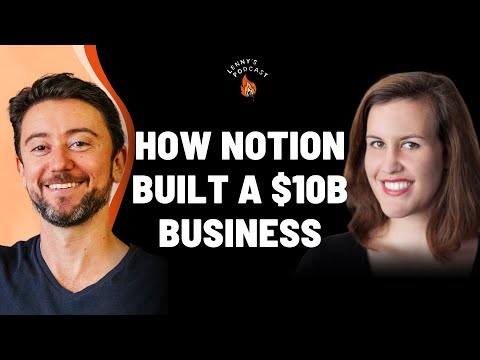
Camille Ricketts was Notion's first marketing hire and spent years as its head of marketing, after journalism, Tesla and First Round Capital. The thing most worth learning from her is to back the people who already love your product, grow that group slowly, and let them make you well known before you chase metrics.
There's no better way to motivate someone to evangelize Notion than have their income rely on Notion.
How Notion leveraged community to build a $10B business | Camille Ricketts
Camille Ricketts: the story and the lessons
1Camille Ricketts's path from reporter to Notion's first marketer
Ricketts moved from journalism to Notion's first marketing job. She started as a reporter at the Wall Street Journal, moved into communications and marketing at Tesla Motors, then spent about 5 years at First Round Capital.
At First Round she was at the ground floor of the First Round Review. First Round invested early in Notion, which is how she met Ivan Zhao and Simon and landed the first marketing role.
Tesla taught her to know every fact and make people feel a vision. Her job was to sit at Elon Musk's right with every fact ready for press conversations. This was before the Model S, so much of the work was driving journalists around in the Roadster.
Musk painted an emotional picture of the electric vehicle revolution and space travel, and that enlisted hearts and minds. She learned to be quick and to know everything that could come up.
She joined Notion as employee number 11. Notion is now over 400 people and was last valued around $10 billion. The first office was a loft with an apartment on top, where people took off their shoes and worked on couches over tea.
There was no good HVAC, so industrial fans ran in summer and it was cold in winter. With no overhead lighting, one colleague switched on a headlamp late at night.
The January 2021 outage showed how much users depended on Notion. On the first day back from the holidays, users flooded Twitter and Reddit, and many then sent hugs and asked that the team be given a break. Her team explained what was broken, what was being done and how long it would take.
Notion has since hired top infrastructure people and refactored its database. Her view is that users return after an outage if the product is excellent, even after a week-long one like Jira or Confluence had.
2How Ricketts defines community-led growth and when it works
She treats community as a way to become known enough to win enterprise. People saw Notion on social media, heard it on a podcast, got a friend's tip and saw a billboard. That made Notion a safer choice for large companies.
She prefers the word discovery to awareness: you have heard about a product so often that you take the step to learn more. Notion chose to focus its work on discovery.
Notion's north star was net new website visitors each month. The measure counted people who had never been to the site before. Influencer campaigns, run by Lexi Barnhorn, were the most measurable because traffic from sponsored creators could be tied directly to them.
The brand team separated influencer traffic from other teams such as SEO. For community, members reported how many people attended their events.
Community pays off when the product makes something people want to share. At Notion the shareable unit was templates and personal workspaces. Figma and Canva work the same way, as freemium products where what users create says something about them.
She calls showing what you made "an aspirational thing to do". Products with long sales cycles or high price points need many touchpoints, so community should not be their first investment.
Her two by two picks the community type for your stage. The axes are product-market fit reached or still exploring, and strongly enterprise or strongly consumer. Pre-fit enterprise products suit customer advisory boards of ideal users.
Enterprise products with fit suit champions and consultant communities, as early Salesforce built. Consumer products with fit suit ambassadors and influencers, and Notion sat in that quadrant early on.
Ricketts refused to hold early community to ROI metrics. Notion did not measure community concretely until the year before she left. Organic signals were enough: its link to geographic expansion and what users said in surveys about how they found Notion.
Ivan Zhao backed community from the start. She says one of the worst things you can do is decide to "cut this off at the knees" for lacking ROI.
She argues for delaying monetization to build ubiquity first. Founders should ask whether long-term success needs ubiquity or revenue now. Many wildly successful companies pushed off monetizing small things that would dampen the enthusiasm to share.
Notion's early users were regular people, while its high LTV came later from large companies. A large excited base that legitimizes the product can be mobilized in many directions, and organic growth buttresses any paid growth added later.
3How Notion ran its ambassadors, creators and champions
Notion seeded its ambassador program with 20 vocal users in 2019. They were best-fit users who already talked about the product on Twitter and other platforms, chosen the way you would choose customers for a positioning exercise.
The network grew worldwide. Events took off in 2019, paused in 2020 and 2021, and head of community Ben Lang says they are back to 30 a month.
Notion admitted about 20 ambassadors a month to keep it warm. A light application process let existing members welcome and get to know each newcomer. Camille calls this slightly contrarian advice, drawn from one data point.
A group of 5,000 sounds good on a website, but people feel they are speaking to an auditorium and the conversation goes very muted.
Access to the team motivated ambassadors more than payment. Perks were feature previews with product team feedback, Q&As with Ivan, Akshay, Simon and the head of engineering, subsidized events, and promotion of members' work on social channels.
The relationship was meant to be special, not transactional. Three people run the program: Ben, Francisco and Emma.
She backed creators and consultants who earn money from Notion. Notion built guide material and connected people running similar businesses. In mid-2021 one creator made about $35,000 in 4 months selling a single template.
The first ambassadors did not expect to build close to a million dollars in business. Consultants who came up through the community now employ dozens of people.
Notion gave champions inside customer companies their own Slack. Champions are the most avid users inside customer companies. Customer success used the channel to check that adoption stuck and to clear obstacles.
Members felt closer to the team than the average user, which helps land and expand inside accounts.
Ricketts put the community in Slack, where members already spend their day. Notion did not want to be another destination people had to remember to visit. A notification badge is a stronger nudge than asking people to go to a new site.
Members moderate huge groups of their own, such as the Notion Vietnam Facebook group of about 250,000 people.
Listening came before designing the program. Ben Lang spent hours on Zoom with members asking why they were there and what would make it better, then the team followed their lead. Monthly community updates in all-hands and Slack kept staff close to who they were building for.
Ricketts warns against arriving with fixed ideas of what a community must look like. Over time members answered each other's questions faster than staff could.
4Ricketts on content market fit and the work behind good content
She treats content like a product with its own market fit. Start with who the audience is and ask what they need to get promoted, to avoid failure, and what causes daily anxiety. Painkillers beat vitamins.
First Round Review let operators share failures so readers felt less alone. It drew a disproportionate readership at Google, Apple and Amazon, and reached founder types and geographies the fund otherwise would not.
She landed a few big names first to make the Review credible. Ricketts joined First Round in 2013, backed by partner Josh Kopelman and platform head Brett Berson with runway and introductions. Early marquee guests made later invitations easier to win.
The platform team was small: Ricketts, an events person and a talent person. Her tactic was to use whatever connections you have.
Quality took real hours: about 8 writing each post after prep. A First Round post took about 8 hours to write after the interview prep. The prep meant anchoring the interviewee on a topic and mining it for tactical gems.
Much of the writing time went to connecting the dots across interviews and pulling out bigger themes. Lenny Rachitsky's median post takes about 10 hours, and he sees a strong link between time spent and results.
She advises picking one job for your content and beating everyone at it. Content can entertain, help people get better at work or life, or inform with news they did not have. Notion's bucket is helping people get better.
She adds that emotional jobs, like feeling less alone or getting some levity, are underrated. She says these are the four buckets she always comes back to.
5What Ricketts learned about press, Product Hunt and founder social
A Wall Street Journal story was Notion's big break. David Pierce, then at the Journal, wrote that Notion was the one work life productivity app you will ever need. The traffic graphs show a clear jump.
She says few megaphones reach so many people with a stamp of credibility, and a strong press relationship still pays off. At First Round, portfolio companies with mission-driven stories saw more candidates, investors and customers.
Product Hunt was Notion's other big break and still drives growth. Notion 2.0 and every major productized launch went there, most recently Notion AI. Many templates found their audiences through it.
She warns against giving brand or founder accounts a posting quota. Notion's main accounts gained more traction once they became more reserved and waited until they had something of value to say.
Founders should go direct only as far as it feels authentic. She contrasts Elon Musk, who speaks directly to his audience, with Ivan Zhao, who stays under the radar.

How Notion leveraged community to build a $10B business | Camille Ricketts
Camille Ricketts explains how Notion turned passionate users into a growth engine through ambassadors, creators, templates and champions, and how to build content that finds its audience. Notion grew from employee number 11 to about 400 people and a roughly $10 billion valuation, with community a major part of its discovery and enterprise growth.
Ricketts moved from journalism to Notion's first marketing job. She started as a reporter at the Wall Street Journal, moved into communications and marketing at Tesla Motors, then spent about 5 years at First Round Capital.
At First Round she was at the ground floor of the First Round Review. First Round invested early in Notion, which is how she met Ivan Zhao and Simon and landed the first marketing role.
Tesla taught her to know every fact and make people feel a vision. Her job was to sit at Elon Musk's right with every fact ready for press conversations. This was before the Model S, so much of the work was driving journalists around in the Roadster.
Musk painted an emotional picture of the electric vehicle revolution and space travel, and that enlisted hearts and minds. She learned to be quick and to know everything that could come up.
She joined Notion as employee number 11. Notion is now over 400 people and was last valued around $10 billion. The first office was a loft with an apartment on top, where people took off their shoes and worked on couches over tea.
There was no good HVAC, so industrial fans ran in summer and it was cold in winter. With no overhead lighting, one colleague switched on a headlamp late at night.
The January 2021 outage showed how much users depended on Notion. On the first day back from the holidays, users flooded Twitter and Reddit, and many then sent hugs and asked that the team be given a break. Her team explained what was broken, what was being done and how long it would take.
Notion has since hired top infrastructure people and refactored its database. Her view is that users return after an outage if the product is excellent, even after a week-long one like Jira or Confluence had.
She treats community as a way to become known enough to win enterprise. People saw Notion on social media, heard it on a podcast, got a friend's tip and saw a billboard. That made Notion a safer choice for large companies.
She prefers the word discovery to awareness: you have heard about a product so often that you take the step to learn more. Notion chose to focus its work on discovery.
Notion's north star was net new website visitors each month. The measure counted people who had never been to the site before. Influencer campaigns, run by Lexi Barnhorn, were the most measurable because traffic from sponsored creators could be tied directly to them.
The brand team separated influencer traffic from other teams such as SEO. For community, members reported how many people attended their events.
Community pays off when the product makes something people want to share. At Notion the shareable unit was templates and personal workspaces. Figma and Canva work the same way, as freemium products where what users create says something about them.
She calls showing what you made "an aspirational thing to do". Products with long sales cycles or high price points need many touchpoints, so community should not be their first investment.
Her two by two picks the community type for your stage. The axes are product-market fit reached or still exploring, and strongly enterprise or strongly consumer. Pre-fit enterprise products suit customer advisory boards of ideal users.
Enterprise products with fit suit champions and consultant communities, as early Salesforce built. Consumer products with fit suit ambassadors and influencers, and Notion sat in that quadrant early on.
Ricketts refused to hold early community to ROI metrics. Notion did not measure community concretely until the year before she left. Organic signals were enough: its link to geographic expansion and what users said in surveys about how they found Notion.
Ivan Zhao backed community from the start. She says one of the worst things you can do is decide to "cut this off at the knees" for lacking ROI.
She argues for delaying monetization to build ubiquity first. Founders should ask whether long-term success needs ubiquity or revenue now. Many wildly successful companies pushed off monetizing small things that would dampen the enthusiasm to share.
Notion's early users were regular people, while its high LTV came later from large companies. A large excited base that legitimizes the product can be mobilized in many directions, and organic growth buttresses any paid growth added later.
Notion seeded its ambassador program with 20 vocal users in 2019. They were best-fit users who already talked about the product on Twitter and other platforms, chosen the way you would choose customers for a positioning exercise.
The network grew worldwide. Events took off in 2019, paused in 2020 and 2021, and head of community Ben Lang says they are back to 30 a month.
Notion admitted about 20 ambassadors a month to keep it warm. A light application process let existing members welcome and get to know each newcomer. Camille calls this slightly contrarian advice, drawn from one data point.
A group of 5,000 sounds good on a website, but people feel they are speaking to an auditorium and the conversation goes very muted.
Access to the team motivated ambassadors more than payment. Perks were feature previews with product team feedback, Q&As with Ivan, Akshay, Simon and the head of engineering, subsidized events, and promotion of members' work on social channels.
The relationship was meant to be special, not transactional. Three people run the program: Ben, Francisco and Emma.
She backed creators and consultants who earn money from Notion. Notion built guide material and connected people running similar businesses. In mid-2021 one creator made about $35,000 in 4 months selling a single template.
The first ambassadors did not expect to build close to a million dollars in business. Consultants who came up through the community now employ dozens of people.
Notion gave champions inside customer companies their own Slack. Champions are the most avid users inside customer companies. Customer success used the channel to check that adoption stuck and to clear obstacles.
Members felt closer to the team than the average user, which helps land and expand inside accounts.
Ricketts put the community in Slack, where members already spend their day. Notion did not want to be another destination people had to remember to visit. A notification badge is a stronger nudge than asking people to go to a new site.
Members moderate huge groups of their own, such as the Notion Vietnam Facebook group of about 250,000 people.
Listening came before designing the program. Ben Lang spent hours on Zoom with members asking why they were there and what would make it better, then the team followed their lead. Monthly community updates in all-hands and Slack kept staff close to who they were building for.
Ricketts warns against arriving with fixed ideas of what a community must look like. Over time members answered each other's questions faster than staff could.
She treats content like a product with its own market fit. Start with who the audience is and ask what they need to get promoted, to avoid failure, and what causes daily anxiety. Painkillers beat vitamins.
First Round Review let operators share failures so readers felt less alone. It drew a disproportionate readership at Google, Apple and Amazon, and reached founder types and geographies the fund otherwise would not.
She landed a few big names first to make the Review credible. Ricketts joined First Round in 2013, backed by partner Josh Kopelman and platform head Brett Berson with runway and introductions. Early marquee guests made later invitations easier to win.
The platform team was small: Ricketts, an events person and a talent person. Her tactic was to use whatever connections you have.
Quality took real hours: about 8 writing each post after prep. A First Round post took about 8 hours to write after the interview prep. The prep meant anchoring the interviewee on a topic and mining it for tactical gems.
Much of the writing time went to connecting the dots across interviews and pulling out bigger themes. Lenny Rachitsky's median post takes about 10 hours, and he sees a strong link between time spent and results.
She advises picking one job for your content and beating everyone at it. Content can entertain, help people get better at work or life, or inform with news they did not have. Notion's bucket is helping people get better.
She adds that emotional jobs, like feeling less alone or getting some levity, are underrated. She says these are the four buckets she always comes back to.
A Wall Street Journal story was Notion's big break. David Pierce, then at the Journal, wrote that Notion was the one work life productivity app you will ever need. The traffic graphs show a clear jump.
She says few megaphones reach so many people with a stamp of credibility, and a strong press relationship still pays off. At First Round, portfolio companies with mission-driven stories saw more candidates, investors and customers.
Product Hunt was Notion's other big break and still drives growth. Notion 2.0 and every major productized launch went there, most recently Notion AI. Many templates found their audiences through it.
She warns against giving brand or founder accounts a posting quota. Notion's main accounts gained more traction once they became more reserved and waited until they had something of value to say.
Founders should go direct only as far as it feels authentic. She contrasts Elon Musk, who speaks directly to his audience, with Ivan Zhao, who stays under the radar.
More from Notion
 Guest
Ivan Zhao
Co-founder and CEO of Notion
 Notion1 source · 18 tips
 Guest
Max Schoening
Head of Product at Notion; previously PM at Google, design lead at Heroku, VP of Design at GitHub, two-time founder
Notion1 source · 18 tips Guest
Rachel Hepworth
Former CMO at Notion, now marketing and growth advisor
Notion 1 source · 18 tips