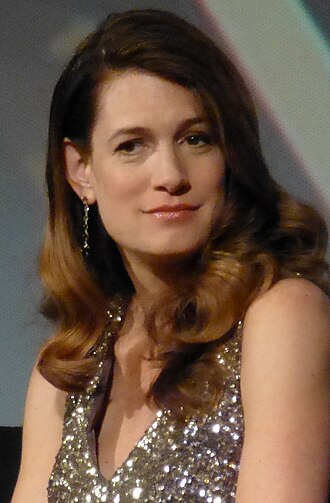
Gillian Flynn
Novelist and screenwriter, author of Gone Girl and Sharp Objects
Where to hear and read about Gillian Flynn1 episode or test

Gillian Flynn is the novelist and screenwriter behind Sharp Objects and Gone Girl, known for dark, character-driven thrillers about violent women. The most useful thing to learn from her is to let characters' flaws drive the plot, then keep showing up to write and earn every clue.
I always think a lot of writing is stubbornness. A lot of getting published is just being a stubborn human.
How to Write Thrilling Stories (Gillian Flynn Interview)
Gillian Flynn: the story and the lessons
1Gillian Flynn's path to dark, character-driven thrillers
Flynn grew up watching horror with her father, a film professor. Going to movies was their father-daughter thing, and she saw Alien at about seven after he sold it as a film with a female hero.
She jokes that she calls horror viewing research, and her household holds a Halloween horror marathon with bloody barbecue.
Ten years grading TV at Entertainment Weekly trained her to spot what a story lacks. She graded shows A to F. The A's and D's were easy, and the hard part was explaining what made a C, a C minus or a C+.
One answer she found was a placeholder scene sitting where a rewrite should have been.
She wrote violent women because fiction left them out. Sharp Objects was written at the height of shopping-and-shoes chick lit, and she wondered where the women who don't care about shoes were. She asked how many anti-heroines there were next to the male anti-hero.
As an English major and journalist she felt something was missing and decided to "raise my hand". She wants women who are tortured, hurt and angry, not crazy evil troublemakers.
Early rejections said women wouldn't read unlikable heroines, and Gone Girl disproved it. Sharp Objects collected rejections saying women only want aspirational heroines like Bridget Jones. Gone Girl then sat at number one for about 10 weeks before anyone wanted it for film.
She wrote the screenplay herself and worked with David Fincher, and the film was nominated for an Oscar. She calls Gone Girl "lightning in a bottle" and doubts Sharp Objects would be published today.
2How Flynn builds character, setting and mystery
Flynn lets her characters' own flaws wreck their situation. In Gone Girl, Nick flubs the police interview, takes a selfie and accidentally flirts with a woman bringing a casserole. Camille in Sharp Objects makes decisions and then tries to undo them while chasing the killer.
She says the twist was never the reason she wrote Gone Girl. She recommends Scott Smith's The Ruins and A Simple Plan for the same trait.
Her only test for a character is wanting to know more. She rejects the idea that characters must be likable and says nothing matters except whether you are interested in knowing more about them. Hidden motives and strange choices create that pull.
A vintage photo of a girl in braids with pursed lips hung near her while she wrote Sharp Objects. The girl looked like everything a little girl should be, but her eyes said something else, and that became Emma.
Flynn picks character names from the Social Security baby names site. The site ranks the top thousand names by state, decade and year. She picks names that fit a character's birth year and asks whether she wants a name outside the top thousand to feel unusual.
She tested Nick on real people and everyone loved or hated it. He was first going to be Ben, but too many people liked Ben.
She chooses settings that trap the character in the right way. Flynn wrote about 100 pages of Gone Girl set in Chicago before it stopped making sense. Chicago let Amy remake herself too easily, so Amy had to be dragged from her beloved New York to Missouri.
She likes the Midwest because it is not southern noir or big-city noir, so she can make it gothic. New York was harder to write because everyone thinks they already know it.
Her kind of horror traps people with themselves. Serial killer films scare her least. Her recipe is to trap people who will lead themselves into worse versions of themselves, in a small town, a house or a self.
Once that is set up, she says, "then you can kind of start having a little fun".
Flynn uses a mystery to force her plot to move. Plot is her weakest point, because she thinks of character first. Early Sharp Objects drafts were only conversations about women and violence, so she attached the themes to a mystery.
Because the next clue has to happen, the story can't stall. She read Dennis Lehane's Mystic River in one night and thought he had shown her the way.
She finds the killer while writing, then goes back to plant clues. In the first draft of Sharp Objects, the eventual murderer was not even a character. With no ending planned, there is nothing to give away, and the reader chases leads alongside her.
The first draft is a creative gush and the rewrite is strategic. She says she isn't advising this for everyone, only describing what works for her.
Flynn insists every mystery be earned and traceable. Her test is whether a reader looking back can find how they could have known. Reading Agatha Christie as a child, she felt cheated by reveals that asked "how would I have known that?"
She says a surprise from nowhere usually comes from a book that isn't character driven.
She earns a slow burn by keeping something happening. Gone Girl's long first half works like the clicks up a roller coaster, with events piling up so the twist lands harder. Some readers nearly put it down before then.
She thinks the common TV note that viewers quit if nothing happens in five minutes underrates audiences.
Flynn nails down logistics so readers accept a bonkers plot. She wrote Gone Girl in a basement covered in sticky notes, checking things like whether Zima was still made in 1997. She fixed a plot hole about whether the FBI could date Amy's writing.
She finishes the book and then asks experts whether something could happen, not whether it would. She says people go with her because "I nail things down".
3Flynn's working habits for finishing a book
She writes three good pages a day purely for joy. On stuck days she drops the pressure to move the plot and writes pages that make her happy and relate to the book. Cool Girl began as one of these, written in a single afternoon.
Her rule is that exercises don't go in the book, or she writes them self-consciously. She cut Cool Girl and restored it twice, and kept it because it was only a page and she liked it.
She writes side scenes that never appear in the book. She wrote Nick's first-grade parent-teacher conference from the teacher's view, which showed her Nick's bond with his father and fed into the book. She also wrote a chapter from Amy's boarding school roommate.
These scenes keep her writing on days the main draft won't move.
When the draft gets hard, Flynn stays with the same book. She spent most of her 20s learning not to flee a hard part. Starting a new book means hitting the same wall about 50 pages in.
She wrote about three versions of Gone Girl before finding the book. Her advice: "Don't start another book."
She treats writing as a job and starts even when not in the mood. Starting often brings the momentum, and a bad day can mean two more hours of work after dinner. The weekly magazine deadlines taught her that "there's no muse that's going to come and save you".
She says this demystified writing for her.
4Flynn on voice, openings, editing and feedback
Flynn finds a character's voice by living inside them like a method actor. She spends so much time with a character that the voice grows big in her head. She knew she had Amy when she stood in a supermarket line and thought Amy would hate the woman ahead of her.
While filming Jackass for her day job she kept writing Camille, because she felt she owed her.
She refuses to force a big voice. Setting out to sound loud and daring makes a writer self-conscious and fake. The voice has to be found in the character first.
She compares it to chasing trends, such as writing about vampires because Twilight was huge.
Flynn writes the first paragraph last. The first sentence of a book is intimidating, so she pictures herself diving in a few paragraphs along. After finishing, she asks what theme and mood the opening should set.
Gone Girl opens with Nick thinking about the shape of his wife's head, which makes readers uneasy about him. Her husband thinks the Sharp Objects opening is weaker and says she should have fixed it.
Fincher taught her to cut any scene she can't explain. He worked like a book editor and asked why each scene was there. Saying it aloud either sharpened the scene or showed it should go.
Her first script came in at exactly 120 pages, and his first note was to put more of the book back in. She saw Seven twice in a row after moving to LA at 22, so working with him felt like full circle.
Her most common note to authors is to trust their voice. She tells authors to live where they feel most confident and most themselves. She can feel a section that goes watery, where the writer is less sure.
Her fix is to justify the section until the author believes it belongs, then give more. She gives general notes and leaves the hard editing to editors.
She wants readers who argue with her books. Her imprint aims at books that start debates. When someone slams her book down at a reading, she asks what they hated.
Her years as a critic taught her that if you can dish it out, you should take it. She likes being conflicted about a character.
She uses jealousy of better writers to improve. Flynn rereads writers who do what she can't, such as Kate Atkinson, who made her cry and laugh within three pages, to work out how the magic happened.
She warns that reading more advice can become a way to delay starting. She recommends timed writing exercises over books about writing.

How to Write Thrilling Stories (Gillian Flynn Interview)
Gillian Flynn explains how she builds character-driven thrillers: she writes toward a mystery she hasn't solved, then goes back and earns every clue. Her most useful habit is writing three good pages a day purely for joy, often as exercises that never go in the book.
Flynn grew up watching horror with her father, a film professor. Going to movies was their father-daughter thing, and she saw Alien at about seven after he sold it as a film with a female hero.
She jokes that she calls horror viewing research, and her household holds a Halloween horror marathon with bloody barbecue.
Ten years grading TV at Entertainment Weekly trained her to spot what a story lacks. She graded shows A to F. The A's and D's were easy, and the hard part was explaining what made a C, a C minus or a C+.
One answer she found was a placeholder scene sitting where a rewrite should have been.
She wrote violent women because fiction left them out. Sharp Objects was written at the height of shopping-and-shoes chick lit, and she wondered where the women who don't care about shoes were. She asked how many anti-heroines there were next to the male anti-hero.
As an English major and journalist she felt something was missing and decided to "raise my hand". She wants women who are tortured, hurt and angry, not crazy evil troublemakers.
Early rejections said women wouldn't read unlikable heroines, and Gone Girl disproved it. Sharp Objects collected rejections saying women only want aspirational heroines like Bridget Jones. Gone Girl then sat at number one for about 10 weeks before anyone wanted it for film.
She wrote the screenplay herself and worked with David Fincher, and the film was nominated for an Oscar. She calls Gone Girl "lightning in a bottle" and doubts Sharp Objects would be published today.
Flynn lets her characters' own flaws wreck their situation. In Gone Girl, Nick flubs the police interview, takes a selfie and accidentally flirts with a woman bringing a casserole. Camille in Sharp Objects makes decisions and then tries to undo them while chasing the killer.
She says the twist was never the reason she wrote Gone Girl. She recommends Scott Smith's The Ruins and A Simple Plan for the same trait.
Her only test for a character is wanting to know more. She rejects the idea that characters must be likable and says nothing matters except whether you are interested in knowing more about them. Hidden motives and strange choices create that pull.
A vintage photo of a girl in braids with pursed lips hung near her while she wrote Sharp Objects. The girl looked like everything a little girl should be, but her eyes said something else, and that became Emma.
Flynn picks character names from the Social Security baby names site. The site ranks the top thousand names by state, decade and year. She picks names that fit a character's birth year and asks whether she wants a name outside the top thousand to feel unusual.
She tested Nick on real people and everyone loved or hated it. He was first going to be Ben, but too many people liked Ben.
She chooses settings that trap the character in the right way. Flynn wrote about 100 pages of Gone Girl set in Chicago before it stopped making sense. Chicago let Amy remake herself too easily, so Amy had to be dragged from her beloved New York to Missouri.
She likes the Midwest because it is not southern noir or big-city noir, so she can make it gothic. New York was harder to write because everyone thinks they already know it.
Her kind of horror traps people with themselves. Serial killer films scare her least. Her recipe is to trap people who will lead themselves into worse versions of themselves, in a small town, a house or a self.
Once that is set up, she says, "then you can kind of start having a little fun".
Flynn uses a mystery to force her plot to move. Plot is her weakest point, because she thinks of character first. Early Sharp Objects drafts were only conversations about women and violence, so she attached the themes to a mystery.
Because the next clue has to happen, the story can't stall. She read Dennis Lehane's Mystic River in one night and thought he had shown her the way.
She finds the killer while writing, then goes back to plant clues. In the first draft of Sharp Objects, the eventual murderer was not even a character. With no ending planned, there is nothing to give away, and the reader chases leads alongside her.
The first draft is a creative gush and the rewrite is strategic. She says she isn't advising this for everyone, only describing what works for her.
Flynn insists every mystery be earned and traceable. Her test is whether a reader looking back can find how they could have known. Reading Agatha Christie as a child, she felt cheated by reveals that asked "how would I have known that?"
She says a surprise from nowhere usually comes from a book that isn't character driven.
She earns a slow burn by keeping something happening. Gone Girl's long first half works like the clicks up a roller coaster, with events piling up so the twist lands harder. Some readers nearly put it down before then.
She thinks the common TV note that viewers quit if nothing happens in five minutes underrates audiences.
Flynn nails down logistics so readers accept a bonkers plot. She wrote Gone Girl in a basement covered in sticky notes, checking things like whether Zima was still made in 1997. She fixed a plot hole about whether the FBI could date Amy's writing.
She finishes the book and then asks experts whether something could happen, not whether it would. She says people go with her because "I nail things down".
She writes three good pages a day purely for joy. On stuck days she drops the pressure to move the plot and writes pages that make her happy and relate to the book. Cool Girl began as one of these, written in a single afternoon.
Her rule is that exercises don't go in the book, or she writes them self-consciously. She cut Cool Girl and restored it twice, and kept it because it was only a page and she liked it.
She writes side scenes that never appear in the book. She wrote Nick's first-grade parent-teacher conference from the teacher's view, which showed her Nick's bond with his father and fed into the book. She also wrote a chapter from Amy's boarding school roommate.
These scenes keep her writing on days the main draft won't move.
When the draft gets hard, Flynn stays with the same book. She spent most of her 20s learning not to flee a hard part. Starting a new book means hitting the same wall about 50 pages in.
She wrote about three versions of Gone Girl before finding the book. Her advice: "Don't start another book."
She treats writing as a job and starts even when not in the mood. Starting often brings the momentum, and a bad day can mean two more hours of work after dinner. The weekly magazine deadlines taught her that "there's no muse that's going to come and save you".
She says this demystified writing for her.
Flynn finds a character's voice by living inside them like a method actor. She spends so much time with a character that the voice grows big in her head. She knew she had Amy when she stood in a supermarket line and thought Amy would hate the woman ahead of her.
While filming Jackass for her day job she kept writing Camille, because she felt she owed her.
She refuses to force a big voice. Setting out to sound loud and daring makes a writer self-conscious and fake. The voice has to be found in the character first.
She compares it to chasing trends, such as writing about vampires because Twilight was huge.
Flynn writes the first paragraph last. The first sentence of a book is intimidating, so she pictures herself diving in a few paragraphs along. After finishing, she asks what theme and mood the opening should set.
Gone Girl opens with Nick thinking about the shape of his wife's head, which makes readers uneasy about him. Her husband thinks the Sharp Objects opening is weaker and says she should have fixed it.
Fincher taught her to cut any scene she can't explain. He worked like a book editor and asked why each scene was there. Saying it aloud either sharpened the scene or showed it should go.
Her first script came in at exactly 120 pages, and his first note was to put more of the book back in. She saw Seven twice in a row after moving to LA at 22, so working with him felt like full circle.
Her most common note to authors is to trust their voice. She tells authors to live where they feel most confident and most themselves. She can feel a section that goes watery, where the writer is less sure.
Her fix is to justify the section until the author believes it belongs, then give more. She gives general notes and leaves the hard editing to editors.
She wants readers who argue with her books. Her imprint aims at books that start debates. When someone slams her book down at a reading, she asks what they hated.
Her years as a critic taught her that if you can dish it out, you should take it. She likes being conflicted about a character.
She uses jealousy of better writers to improve. Flynn rereads writers who do what she can't, such as Kate Atkinson, who made her cry and laugh within three pages, to work out how the magic happened.
She warns that reading more advice can become a way to delay starting. She recommends timed writing exercises over books about writing.