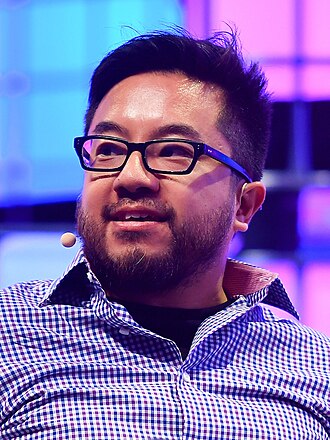
Garry Tan
President and CEO of Y Combinator, investor and YouTuber
Where to hear and read about Garry Tan1 episode or test

Garry Tan is President and CEO of Y Combinator, an investor and a YouTuber who has used writing since seventh grade to work out who he is. The most useful lesson is to write plainly, test the draft on a silent reader, and be distinctly yourself, because that is the one thing that cannot be copied.
it doesn't seem numerically possible to have zero cringe and be authentic
Y Combinator CEO: The Key To Writing For Startups & Entrepreneurs | Garry Tan | How I Write Podcast
Garry Tan: the story and the lessons
1How Garry Tan grew up writing
Tan found his voice on early internet forums as a kid. In 1991 or 92, anonymous bulletin boards treated him as an adult. Nobody could tell his age, so he held long discussions on almost any topic.
He says his brain more or less developed there. His parents always bought him the newest PC, which led him to Aldus PageMaker.
A seventh grade underground newspaper changed his standing at school. He asked classmates what they would write if they made a newspaper. One friend argued that Pete Wilson's three strikes law was unjust. A teacher photocopied 150 copies of 10 to 15 pages, one for every classmate.
Tan describes going from a kid who got shoved into lockers to someone with standing and influence. He says much of what he is known for, he learned in seventh grade.
Web pages taught him to code and showed him an audience. He learned to code by making web pages and later edited his high school paper, Express. His online zine at 12 or 13 drew comments from people who took it as seriously as CNN.
Nobody could tell he was a kid, and he says the raw enthusiasm of that kid shows in everything he later did.
A hard childhood sent him to books, and one book changed his essays. He read Kerouac and Kundera early and picked library books at random. In December 1998 he found The Fountainhead at the Fremont library, after he had already sent Stanford his essay.
He was waitlisted or rejected everywhere except Stanford. He says the book made him an asshole, and he would not have accepted those essays himself.
Writing became how Tan became an individual. He grew up between a collectivist Chinese culture and an individualist Western one, and says he felt the struggle of simply mattering. Putting experience into words gave him a felt sense of agency.
He says it took 20 or 30 years to fully develop. "How do you know who you are until you sort of like put it on a page".
2Tan's tests for clear writing
Tan watches a reader struggle with a draft and says nothing. He uses this for developer documentation at YC. Sit next to someone as they use it and let them struggle until they ask a question.
Whatever you say in answer is what needs to go back into the writing. He calls the exercise self correcting.
He sends drafts out with two direct questions. Tan tests documentation the way he tests an essay. He asks readers whether they understood what he meant and whether he got anything wrong.
Rereading your own work will not show you where it fails. These questions do.
Tan explains only what 80 to 90 percent of readers need. Great writing does not explain everything. Aim at what most readers need to get the point, and stop there.
Clear documentation matters most for developer tools and cloud products, where he calls its importance kind of crazy.
He says to explain your idea so a 75 IQ reader gets it. Tan points to the meme with the 75 IQ and 150 IQ at the ends and the midwit in between. Understanding an idea that thoroughly lets you convince customers, hires and investors.
He ties this to why great writers make good founders: they communicate clearly and convince people.
Tan favors plain writing that teaches him something at once. YC reads huge numbers of applications, and stretches of 10 or 15 near-identical ideas blur together. Travel apps for friends are one example. A plain, concrete point stands out.
He has no formula for novelty: the trick to good writing is being good.
He writes for readers who have five seconds and endless alternatives. A web page competes with every other page and the front page of Reddit. Tan tells founders they have five or 10 seconds, or less, to prove their value.
He calls the web a raw, perfect competition for human attention, with nothing to shield a page from comparison.
3Why Tan says be vulnerable, weird and specific
Tan accepts some cringe as the price of being yourself. His theory is that being yourself is always a little weird. Zero cringe tends to mean tasteless or perfectly of the moment.
He says school aims people at a B or B plus in the middle of the bell curve and teaches them to blend in.
He leans into weirdness because the internet rewards one of a kind. Anyone can now reach nearly anyone, with no editorial board or printing press. Tan cites Naval: only one person could be you.
"being incredibly weird and unique and yourself and having the courage to do that is really, really important"
Tan shares hard things, but matches the amount to the audience. Sharing what was going on for him made it okay for others to do the same. As a Stanford freshman he sent overshare emails to a provost, who did not know what to do.
He first spoke publicly about his father and childhood abuse on a podcast with Justin Kahn. He says vulnerability can expose you to attack, and it worked differently when he had nothing.
He tells new writers to write the obvious advice they repeat daily. Beginners aim to impress themselves and their heroes, and that bar is exhausting. Tan's most helpful advice is the commonplace stuff he tells founders every day.
Trying to push the form forward like the Velvet Underground is the wrong model.
Tan says the most personal writing resonates most. David Perell observed that writers try to write what everyone shares, but zooming into your own reality, even something the size of a penny, travels further.
Tan agrees that media, to him, is building a relationship and understanding your place in the world. He has not yet written about what happened to him as a child.
4How Garry Tan writes and publishes
Tan writes his own scripts and resists a ghostwriter. His wife started a book publishing firm and wants his book. She suggested a ghostwriter, and he leans against it.
A ghostwriter would merge someone else's beliefs with his memoir. "if it's truly my book or my memoir, I want it to be truly my own words"
He treats product copy like hosting a good party. As a designer, Tan says a website, app or email should greet you like a good host. He calls writing probably the most important part of interaction design.
Software codifies a conversation, and with 10,000 users you hold it 10,000 times. His own early writing was over the top, and his English teacher called him drunk with words.
Tan publishes regularly without knowing which piece will land. He creates from what is top of mind, fitted around founder work. He says the thing he is proudest of is not made yet.
Writing was never his main job, since founder and engineer work came first.
He put a philosophical idea under a plain title. His top video is titled "how to get rich", which he admits is almost too flippant. Inside he included an Alan Watts excerpt on the nature of money.
People searching for the most basic thing get an idea they did not expect.
Tan treats messages to the YC community as media. Over 10,000 founders and alumni belong to it, and hundreds of thousands to millions counting employees. A weekend gathering drew 2,700 people.
The aim is to help these people and connect them to each other. He says it felt like home.
He sees a well-named idea as a way to gather people. Tan points to Paul Graham's phrase "solving the money problem", which readers recognized at once. Naming an idea attracts others trying to do the same.
He also describes Peter Thiel shaping rooms he is not in through his theses. Tan hired a Columbia CS senior at Palantir whose smart email Thiel forwarded to him, and that hire became the best PM and later a CEO.

Y Combinator CEO: The Key To Writing For Startups & Entrepreneurs | Garry Tan | How I Write Podcast
Garry Tan explains how writing has been his way to work out who he is, from a seventh grade underground newspaper to blogs and YouTube scripts. The most useful ideas are testing writing by watching a reader struggle in silence, explaining things simply, and pairing vulnerability with the obvious-but-useful.
Tan found his voice on early internet forums as a kid. In 1991 or 92, anonymous bulletin boards treated him as an adult. Nobody could tell his age, so he held long discussions on almost any topic.
He says his brain more or less developed there. His parents always bought him the newest PC, which led him to Aldus PageMaker.
A seventh grade underground newspaper changed his standing at school. He asked classmates what they would write if they made a newspaper. One friend argued that Pete Wilson's three strikes law was unjust. A teacher photocopied 150 copies of 10 to 15 pages, one for every classmate.
Tan describes going from a kid who got shoved into lockers to someone with standing and influence. He says much of what he is known for, he learned in seventh grade.
Web pages taught him to code and showed him an audience. He learned to code by making web pages and later edited his high school paper, Express. His online zine at 12 or 13 drew comments from people who took it as seriously as CNN.
Nobody could tell he was a kid, and he says the raw enthusiasm of that kid shows in everything he later did.
A hard childhood sent him to books, and one book changed his essays. He read Kerouac and Kundera early and picked library books at random. In December 1998 he found The Fountainhead at the Fremont library, after he had already sent Stanford his essay.
He was waitlisted or rejected everywhere except Stanford. He says the book made him an asshole, and he would not have accepted those essays himself.
Writing became how Tan became an individual. He grew up between a collectivist Chinese culture and an individualist Western one, and says he felt the struggle of simply mattering. Putting experience into words gave him a felt sense of agency.
He says it took 20 or 30 years to fully develop. "How do you know who you are until you sort of like put it on a page".
Tan watches a reader struggle with a draft and says nothing. He uses this for developer documentation at YC. Sit next to someone as they use it and let them struggle until they ask a question.
Whatever you say in answer is what needs to go back into the writing. He calls the exercise self correcting.
He sends drafts out with two direct questions. Tan tests documentation the way he tests an essay. He asks readers whether they understood what he meant and whether he got anything wrong.
Rereading your own work will not show you where it fails. These questions do.
Tan explains only what 80 to 90 percent of readers need. Great writing does not explain everything. Aim at what most readers need to get the point, and stop there.
Clear documentation matters most for developer tools and cloud products, where he calls its importance kind of crazy.
He says to explain your idea so a 75 IQ reader gets it. Tan points to the meme with the 75 IQ and 150 IQ at the ends and the midwit in between. Understanding an idea that thoroughly lets you convince customers, hires and investors.
He ties this to why great writers make good founders: they communicate clearly and convince people.
Tan favors plain writing that teaches him something at once. YC reads huge numbers of applications, and stretches of 10 or 15 near-identical ideas blur together. Travel apps for friends are one example. A plain, concrete point stands out.
He has no formula for novelty: the trick to good writing is being good.
He writes for readers who have five seconds and endless alternatives. A web page competes with every other page and the front page of Reddit. Tan tells founders they have five or 10 seconds, or less, to prove their value.
He calls the web a raw, perfect competition for human attention, with nothing to shield a page from comparison.
Tan accepts some cringe as the price of being yourself. His theory is that being yourself is always a little weird. Zero cringe tends to mean tasteless or perfectly of the moment.
He says school aims people at a B or B plus in the middle of the bell curve and teaches them to blend in.
He leans into weirdness because the internet rewards one of a kind. Anyone can now reach nearly anyone, with no editorial board or printing press. Tan cites Naval: only one person could be you.
"being incredibly weird and unique and yourself and having the courage to do that is really, really important"
Tan shares hard things, but matches the amount to the audience. Sharing what was going on for him made it okay for others to do the same. As a Stanford freshman he sent overshare emails to a provost, who did not know what to do.
He first spoke publicly about his father and childhood abuse on a podcast with Justin Kahn. He says vulnerability can expose you to attack, and it worked differently when he had nothing.
He tells new writers to write the obvious advice they repeat daily. Beginners aim to impress themselves and their heroes, and that bar is exhausting. Tan's most helpful advice is the commonplace stuff he tells founders every day.
Trying to push the form forward like the Velvet Underground is the wrong model.
Tan says the most personal writing resonates most. David Perell observed that writers try to write what everyone shares, but zooming into your own reality, even something the size of a penny, travels further.
Tan agrees that media, to him, is building a relationship and understanding your place in the world. He has not yet written about what happened to him as a child.
Tan writes his own scripts and resists a ghostwriter. His wife started a book publishing firm and wants his book. She suggested a ghostwriter, and he leans against it.
A ghostwriter would merge someone else's beliefs with his memoir. "if it's truly my book or my memoir, I want it to be truly my own words"
He treats product copy like hosting a good party. As a designer, Tan says a website, app or email should greet you like a good host. He calls writing probably the most important part of interaction design.
Software codifies a conversation, and with 10,000 users you hold it 10,000 times. His own early writing was over the top, and his English teacher called him drunk with words.
Tan publishes regularly without knowing which piece will land. He creates from what is top of mind, fitted around founder work. He says the thing he is proudest of is not made yet.
Writing was never his main job, since founder and engineer work came first.
He put a philosophical idea under a plain title. His top video is titled "how to get rich", which he admits is almost too flippant. Inside he included an Alan Watts excerpt on the nature of money.
People searching for the most basic thing get an idea they did not expect.
Tan treats messages to the YC community as media. Over 10,000 founders and alumni belong to it, and hundreds of thousands to millions counting employees. A weekend gathering drew 2,700 people.
The aim is to help these people and connect them to each other. He says it felt like home.
He sees a well-named idea as a way to gather people. Tan points to Paul Graham's phrase "solving the money problem", which readers recognized at once. Naming an idea attracts others trying to do the same.
He also describes Peter Thiel shaping rooms he is not in through his theses. Tan hired a Columbia CS senior at Palantir whose smart email Thiel forwarded to him, and that hire became the best PM and later a CEO.
 Y Combinator