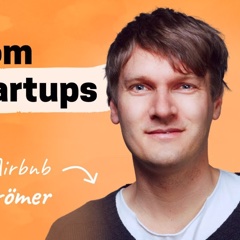
Gustaf Alströmer
Group Partner at Y Combinator, former head of the original Airbnb growth team
Where to hear and read about Gustaf Alströmer1 episode or test

Gustaf Alströmer started Airbnb's original growth team and is now a Y Combinator group partner who has worked with 600+ startups. The thing most worth learning from him is that startups mostly fail by not talking to customers, so the best founders make visible progress with real users every week.
the best way for you to figure out what is the intensity of the problem is not to ask them but to watch them
Lessons from working with 600+ YC startups | Gustaf Alströmer (Y Combinator, Airbnb)
Gustaf Alströmer: the story and the lessons
1Gustaf Alströmer's path from Airbnb growth to Y Combinator
Alströmer built Airbnb's first growth team, then moved to YC. He spent over four years at Airbnb and started its original growth team. He has been a YC group partner for almost six years and has worked with over 600 startups.
He is also at the center of YC's rising focus on climate tech.
Early Airbnb felt like friends on a shared project. When he joined there were roughly five to seven PMs and about 30 engineers. Alumni describe a bond closer to family than to coworkers, and almost nobody he asked later found a team as good.
He credits Joe, Nate and Brian: without them there would be nothing to build. The first hires set the standard for everyone after.
Airbnb hired people who were excited and shared its values. Candidates had other offers, and how they weighed them showed their excitement. Culture interviews checked core values, and the first 10 to 15 PMs were mostly former founders.
He admits it is hard to separate which practices actually worked. Airbnb's founders later recreated parts of it at YC, such as demo day, retro and doing things that don't scale.
A strong business let Airbnb take risks most startups cannot. Individual projects could fail while the company was still going to succeed. Most companies lack something so obviously great, so they cannot take such risks.
He points out that great culture and hiring would not be remembered fondly if the company had failed.
He had to unlearn the growth mindset when he joined YC. A growth mindset is all scalable tactics, and he says you can't start a startup with it. Early on, the work is unscalable, hands-on contact with customers.
Growth thinking helps once something works, for example getting from 1,000 sign-ups a day to 2,000.
2Why Alströmer says startups fail and how to find customers
Most startups fail because they don't talk to customers. Without product market fit nothing else matters, and the headline advice is still to make things people want. The second most common failure is a team with no technical founder who can build a first prototype.
He says: "If I drill down what makes companies fail, it's quite simple. They don't talk to users."
Fear of rejection keeps founders away from customers. About 90% of any customer group are not early adopters, so a founder must reach about 10 people to find one. He treats rejection as a base rate, not proof the idea is bad.
Paul Graham once asked Airbnb's founders where their customers were. They were in New York, so he asked why they were talking to him instead. That led to their trips to New York and his essay on doing things that don't scale.
Talk to 25 to 50 potential customers, not five. Most founders expect to need about five conversations. One team spoke to 150 finance leaders before raising, and another used LinkedIn ads to find 100 to 200 people in one specific role.
The people you talk to are also your first buyers, so this is already sales work.
Watch users work instead of asking about their pain. People can't describe their own pain. He suggests having users share their screen and walk through their daily workflow, or using the product category yourself, such as renting an EV and using the chargers.
Non-technical people repeat the same Excel steps a million times because it is all they know, so asking how hard something is gets no useful answer.
Indifference is the usual reaction, and it leaves room to return. People sign up and forget, they don't hate you. He advises going back in two weeks, six months or a year with improvements, and starting with a narrow solution for early adopters.
Airbnb began with air mattresses and stays in occupied homes, far from the full product.
Investor interest and press are not product market fit. YC acceptance, investor checks and TechCrunch write-ups make founders feel they have it when they don't. YC reminds every batch on day one that almost nobody has it yet.
He wants a technical co-founder, not a contractor team. He recalls no startup that won with a contractor building the whole product. Non-technical founders who succeeded valued engineering and gave great engineers equity as a founding team.
A 90/10 split in your favor signals that you undervalue engineering. Calendly's first product was built by a Ukrainian dev team that stayed part of its engineering.
3How Alströmer runs office hours and reads founders
He asks what is holding a founder back from moving faster. In one-on-one office hours he skips updates and strategy questions. Founders usually don't know what is slowing them, so the probing question surfaces it and forces priorities.
He avoids asking how's it going, because nothing is ever good and the question only creates anxiety.
Group check-ins on two-week goals create support and accountability. He asks six or seven startups what their goals were for the last two weeks, whether they hit them, and what got in the way, then asks for the next two weeks. Competitive founders don't want to report nothing learned.
He calls the intense three to four month period the most magical part of YC. The best version was in person with laptops and phones on the floor.
He asks co-founders why they are doing this. Founders often never told their co-founder their motivation, which ranges from solving a technical problem to proving themselves to building a big company. Knowing it helps resolve conflicts and explains how someone shows up on a given day.
YC does not screen for motivation, it helps founders discover and share it.
Weekly visible progress is his best sign of a winner. A strong signal is that each office hour brings new news, such as customers who bought and weekly growth near 10%. It beats a hot market or investor attention as an indicator.
He says YC is good at spotting failure patterns and warning founders, not at picking outlier winners. Paul Graham and Jessica Livingston saw the same: continuously hitting goals correlates with success.
His favorite interview question is what founders did since applying. The gap is usually a month or two. He hopes to hear a list of things built and learned, not that they prepared for the interview.
It tests speed and bias to action.
He warns against starting a company as a career step. If it works it becomes your whole career, likely ten years, and if it fails it is nothing to aspire to on a resume. He also says to think twice if financial, family or relationship constraints come first.
He neither discourages nor encourages founders, he wants them to have all the information.
4Alströmer's rules for early-stage execution
He says a small startup should skip strategy talk. A small team can do only one thing at a time, so its priorities are a ranked list. A request for a strategy session suggests the founder doesn't understand their priorities.
Before product market fit, getting people to want the product is the whole strategy. "When you are a small startup strategy does not matter."
Speed and quality are not a tradeoff. Quality is what the customer finds valuable, not the founder's personal bar. Moving fast while learning from customers produces quality.
Asking whether to focus on growth or retention is asking permission to skip one.
Founding teams need an agreed decision process. A team of three to ten cannot be run by one autocrat. Either everyone decides together or each person owns their area, run in weekly or biweekly sprints.
The key is sticking to the process and not rehashing decisions a million times.
Founders need strong confidence and strong humility. Many people doubt an early idea, so if the founder doesn't protect their confidence, nobody will. Humility is what makes people want to work for or invest in you.
5Gustaf Alströmer on why climate tech is a real business
He frames climate tech as an economic shift, not a nonprofit. Governments have decided on the energy transition and trillions of dollars will move. YC has funded over 130 climate companies, and he wrote its carbon removal request for startups.
He notes Tesla is worth about $600 to 700 billion while selling only a couple of percent of new US cars.
He tells founders to sell to corporations. Three or four years ago a Fortune 100 firm sent founders to someone with no power to decide. Now firms promise cuts of about two percent a year and sign contracts, fearing becoming the Toyota to Tesla.
His point is that you only need enough corporations to change, not to convince everyone.
Regular product and software skills are enough to join. He says a good PM background is worth more than domain expertise, since scientists are already on staff. Pachama's founders had no forest expertise and it has raised $60 million.
YC's request for startups lists directions for people without a specific idea.
He points to carbon accounting and EV charging as open areas. Carbon accounting already has paying customers, with Unravel Carbon in Asia and Carbonchain in the UK. Enode is building Plaid for EV chargers and Static is the Airbnb for EV charging in India.
Shipping is hard because its oil is cheap and only regulation pushes change.

Lessons from working with 600+ YC startups | Gustaf Alströmer (Y Combinator, Airbnb)
Drawing on work with 600+ YC startups, Gustaf explains why startups fail (mostly because they don't talk to customers or lack technical founders) and what the strongest founders do differently. He also lays out why climate tech is now a real business, with YC funding 130+ climate companies.
Alströmer built Airbnb's first growth team, then moved to YC. He spent over four years at Airbnb and started its original growth team. He has been a YC group partner for almost six years and has worked with over 600 startups.
He is also at the center of YC's rising focus on climate tech.
Early Airbnb felt like friends on a shared project. When he joined there were roughly five to seven PMs and about 30 engineers. Alumni describe a bond closer to family than to coworkers, and almost nobody he asked later found a team as good.
He credits Joe, Nate and Brian: without them there would be nothing to build. The first hires set the standard for everyone after.
Airbnb hired people who were excited and shared its values. Candidates had other offers, and how they weighed them showed their excitement. Culture interviews checked core values, and the first 10 to 15 PMs were mostly former founders.
He admits it is hard to separate which practices actually worked. Airbnb's founders later recreated parts of it at YC, such as demo day, retro and doing things that don't scale.
A strong business let Airbnb take risks most startups cannot. Individual projects could fail while the company was still going to succeed. Most companies lack something so obviously great, so they cannot take such risks.
He points out that great culture and hiring would not be remembered fondly if the company had failed.
He had to unlearn the growth mindset when he joined YC. A growth mindset is all scalable tactics, and he says you can't start a startup with it. Early on, the work is unscalable, hands-on contact with customers.
Growth thinking helps once something works, for example getting from 1,000 sign-ups a day to 2,000.
Most startups fail because they don't talk to customers. Without product market fit nothing else matters, and the headline advice is still to make things people want. The second most common failure is a team with no technical founder who can build a first prototype.
He says: "If I drill down what makes companies fail, it's quite simple. They don't talk to users."
Fear of rejection keeps founders away from customers. About 90% of any customer group are not early adopters, so a founder must reach about 10 people to find one. He treats rejection as a base rate, not proof the idea is bad.
Paul Graham once asked Airbnb's founders where their customers were. They were in New York, so he asked why they were talking to him instead. That led to their trips to New York and his essay on doing things that don't scale.
Talk to 25 to 50 potential customers, not five. Most founders expect to need about five conversations. One team spoke to 150 finance leaders before raising, and another used LinkedIn ads to find 100 to 200 people in one specific role.
The people you talk to are also your first buyers, so this is already sales work.
Watch users work instead of asking about their pain. People can't describe their own pain. He suggests having users share their screen and walk through their daily workflow, or using the product category yourself, such as renting an EV and using the chargers.
Non-technical people repeat the same Excel steps a million times because it is all they know, so asking how hard something is gets no useful answer.
Indifference is the usual reaction, and it leaves room to return. People sign up and forget, they don't hate you. He advises going back in two weeks, six months or a year with improvements, and starting with a narrow solution for early adopters.
Airbnb began with air mattresses and stays in occupied homes, far from the full product.
Investor interest and press are not product market fit. YC acceptance, investor checks and TechCrunch write-ups make founders feel they have it when they don't. YC reminds every batch on day one that almost nobody has it yet.
He wants a technical co-founder, not a contractor team. He recalls no startup that won with a contractor building the whole product. Non-technical founders who succeeded valued engineering and gave great engineers equity as a founding team.
A 90/10 split in your favor signals that you undervalue engineering. Calendly's first product was built by a Ukrainian dev team that stayed part of its engineering.
He asks what is holding a founder back from moving faster. In one-on-one office hours he skips updates and strategy questions. Founders usually don't know what is slowing them, so the probing question surfaces it and forces priorities.
He avoids asking how's it going, because nothing is ever good and the question only creates anxiety.
Group check-ins on two-week goals create support and accountability. He asks six or seven startups what their goals were for the last two weeks, whether they hit them, and what got in the way, then asks for the next two weeks. Competitive founders don't want to report nothing learned.
He calls the intense three to four month period the most magical part of YC. The best version was in person with laptops and phones on the floor.
He asks co-founders why they are doing this. Founders often never told their co-founder their motivation, which ranges from solving a technical problem to proving themselves to building a big company. Knowing it helps resolve conflicts and explains how someone shows up on a given day.
YC does not screen for motivation, it helps founders discover and share it.
Weekly visible progress is his best sign of a winner. A strong signal is that each office hour brings new news, such as customers who bought and weekly growth near 10%. It beats a hot market or investor attention as an indicator.
He says YC is good at spotting failure patterns and warning founders, not at picking outlier winners. Paul Graham and Jessica Livingston saw the same: continuously hitting goals correlates with success.
His favorite interview question is what founders did since applying. The gap is usually a month or two. He hopes to hear a list of things built and learned, not that they prepared for the interview.
It tests speed and bias to action.
He warns against starting a company as a career step. If it works it becomes your whole career, likely ten years, and if it fails it is nothing to aspire to on a resume. He also says to think twice if financial, family or relationship constraints come first.
He neither discourages nor encourages founders, he wants them to have all the information.
He says a small startup should skip strategy talk. A small team can do only one thing at a time, so its priorities are a ranked list. A request for a strategy session suggests the founder doesn't understand their priorities.
Before product market fit, getting people to want the product is the whole strategy. "When you are a small startup strategy does not matter."
Speed and quality are not a tradeoff. Quality is what the customer finds valuable, not the founder's personal bar. Moving fast while learning from customers produces quality.
Asking whether to focus on growth or retention is asking permission to skip one.
Founding teams need an agreed decision process. A team of three to ten cannot be run by one autocrat. Either everyone decides together or each person owns their area, run in weekly or biweekly sprints.
The key is sticking to the process and not rehashing decisions a million times.
Founders need strong confidence and strong humility. Many people doubt an early idea, so if the founder doesn't protect their confidence, nobody will. Humility is what makes people want to work for or invest in you.
He frames climate tech as an economic shift, not a nonprofit. Governments have decided on the energy transition and trillions of dollars will move. YC has funded over 130 climate companies, and he wrote its carbon removal request for startups.
He notes Tesla is worth about $600 to 700 billion while selling only a couple of percent of new US cars.
He tells founders to sell to corporations. Three or four years ago a Fortune 100 firm sent founders to someone with no power to decide. Now firms promise cuts of about two percent a year and sign contracts, fearing becoming the Toyota to Tesla.
His point is that you only need enough corporations to change, not to convince everyone.
Regular product and software skills are enough to join. He says a good PM background is worth more than domain expertise, since scientists are already on staff. Pachama's founders had no forest expertise and it has raised $60 million.
YC's request for startups lists directions for people without a specific idea.
He points to carbon accounting and EV charging as open areas. Carbon accounting already has paying customers, with Unravel Carbon in Asia and Carbonchain in the UK. Enode is building Plaid for EV chargers and Static is the Airbnb for EV charging in India.
Shipping is hard because its oil is cheap and only regulation pushes change.
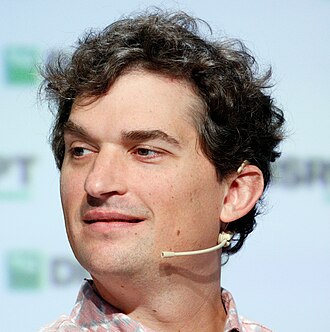
 Y Combinator