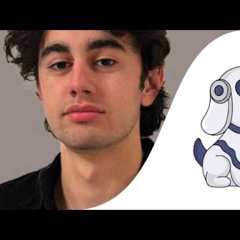
Esan Durrani
Cofounder and CEO of StudyFetch
Where to hear and read about Esan Durrani1 episode or test

Esan Durrani is cofounder and CEO of StudyFetch, an AI tutor for college students used by more than 7 million students, and of its workforce training spinoff Honen. The most useful lesson is how he proved a message with founder-made videos and then scaled it through hundreds of closely reviewed student creators.
We actually review every single video before it gets posted.
How StudyFetch Used Creator-Led Growth to Hit $10M+ ARR in 3 Years
Esan Durrani: the story and the lessons
1How Esan Durrani got from drummer to StudyFetch
Durrani scrapped a profitable essay tool because it helped students cheat. The founders built an essay writing tool after GPT-3's API showed him AI would change the world, and it grew once ChatGPT launched. They asked whether it was sustainable and whether they wanted to help students cheat, answered no, and shut it down.
They launched StudyFetch in September 2023 as the opposite. In his words: "morally do you want to help students basically like cheat their way through life and the answer was no to all of those things."
He interviewed 120 to 150 college students before building anything. The team asked students directly what was missing from their education. The answer was that students needed to understand material that was poorly presented, not only save time.
The founders feared students would not care about a tool that teaches. The second StudyFetch video they posted blew up, which settled it.
Years of live drumming taught him to serve two audiences at once. Performing meant serving the people beside him and the people watching. He applies the same split to his team and to college students.
For the audience, the job is to simplify things for the average person. For the band, it is to connect with the other members.
2How StudyFetch built a tutor that teaches instead of answering
Durrani builds for learning outcomes, not the fast answers a chatbot gives. He calls ChatGPT a productivity tool built to finish a task quickly, which is the opposite of learning. StudyFetch's engine uses data from earlier students on a topic like supply and demand to show the next student the best path.
He compares it to picking the best Meta ad by conversion data, except here it optimizes for mastery. Each course or textbook worked through teaches the engine how to teach that topic better. He says Chegg and Course Hero earned money from fast answers that may lift grades but not learning.
StudyFetch replaced a pile of features with a guided study plan. Early features were chosen for usefulness and for how well they would spread on social media. Students were then unsure where to start, so a study plan now orders the tools, such as a practice test, three flashcard sessions, then a tutoring session.
His rule for consumer products: "it's so important to to actually show the user the value instead of them trying to pull it out of you."
He credits grade gains to giving students one place to start. Students often never begin because the volume of material is overwhelming. Uploading it all and getting a clear first step is what he says lifts grades. StudyFetch reports 92% of active students see better grades and study up to 30% less.
Those figures are the company's own, with no study design or comparison group shown. He says his own grade rose about 40% between his first physiology midterm and the final after he started using StudyFetch.
Mixing learning modes helps the weakest students the most. Case studies find the biggest gains among students with learning differences, and the lowest grades in a class rise, which narrows the achievement gap.
A visual learner is not limited to visuals, because the tutor asks questions and flashcards support memorization. He calls talking with something that feels human 4D instead of 3D, and says learning styles are a controversial topic with some truth to them.
3How StudyFetch scaled creator-led growth
Founder-made videos proved the message before any creators were added. The CMO filmed StudyFetch in lecture halls a couple of days after launch, and one video drew over 76 million organic views on Instagram. The pool then grew from one creator to five, then 20, then about 400 over the next school year.
The program has produced over 2 billion social media views. Durrani notes that a bigger pool makes it harder to keep quality and brand image consistent.
Durrani only markets a product that is actually useful. He says virality comes from solving a real use case, and that a product people don't find useful will never go viral. The team knew the user and the exact use case, so the first videos took off.
The plan was to show that same use case to as many people as possible by multiplying the people filming.
The team found its high-volume method by testing, not by copying. In 2023, before the tactic was well known, they tested many approaches and failed often. TikTok's algorithm lets one viral video offset nine flops, and hundreds of creators now post over 100 short videos a day across TikTok and Instagram.
The program is mostly brand marketing, since old videos keep earning views. Even three months without posting still yields views.
StudyFetch reviews every creator video before it goes live. Even with hundreds of creators, every video is approved first. Posting is tracked in Asana, and performance runs on in-house tools built on TikTok's API plus spreadsheets.
Durrani says the review is more intense than most people would expect at this scale.
He reads engagement and product comments, not just view counts. Feedback arrives within 24 hours through likes-to-views rates, comment counts and comment sentiment. He checks how many comments on a big video are about the product itself.
Leadership stays close to the videos so the team can pull out learnings and shape the next batch. In his words: "You don't need to see like oh did this video get a million views or not to see success."
Influencers build familiarity and performance creators convert it. Influencers have tens to hundreds of thousands of followers, post consistently and get freedom to tell the story their way. Performance creators are the larger group, with smaller followings, tighter direction and specific calls to action.
A student who later sees a performance video already knows the name. As he puts it, they "might not necessarily be thinking about the product, but they've heard of study fetch before."
He builds real relationships with creators to fight creative fatigue. Creators posting daily run low on ideas. An internal team helps them succeed on their own terms, not only for StudyFetch.
Posting 20 to 30 videos a month is a new kind of relationship, almost like consulting, and some early creators were startled by the format, so educating them was part of the job.
Moving early made good creators easy to win. Few companies used the creator strategy in 2023, so the bar for attracting talent was low. Durrani treats a strategy as saturated once large corporations adopt it.
The team pushed hard last school year to capture the creator market that fits its audience.
He ties the creator program into the rest of marketing. It is one part of the marketing engine, not the whole of it. Larger companies often hire a creator specialist who knows nothing of other departments.
The result is social media that looks disconnected from billboards and the main brand account.
4How Durrani extended StudyFetch into Honen and NVIDIA
Honen reuses the learning engine for workforce training under a new brand. Honen is a course-creation platform for internal training teams, launched publicly in May, the month before the conversation. StudyFetch teaches other people's content, while Honen teaches new content created inside it.
Both share one engine but run as different products, sites and brands for different audiences. His reason for Honen is that workplace content changes faster than static training can keep up. No revenue or customer numbers are given for Honen.
He won NVIDIA by owning the learner that others ignored. Most K-12 AI products target educators and administrators, and Durrani says none has yet engaged the end user. NVIDIA chose StudyFetch for its record of engaging learners.
The work sits inside NVIDIA's $25 million K-12 AI education commitment, with a goal of 250,000+ high schoolers on a path to AI literacy. The first project is a co-created course covering AI literacy and CUDA software.
Honen found early traction with trades unions that software ignores. Plumbers' unions are adopting Honen because they want certifications and completions. Med gas certification in plumbing is a specific pain point it targets.
Durrani says the trades have been an underserved community for tools. He ties this to youth apprenticeship programs that train students outside four-year colleges.
StudyFetch trains its own staff on Honen. A marketer with no sales experience took a cold-calling course and was call-ready in about 90 minutes. The course covered what Honen is, how to cold call and how to market to unions.
A simulated voice-to-voice call hangs up if the learner rambles, then gives a grade and feedback. The learner repeats the call until it goes right.
5Durrani on teams, agency and the future of learning
He defines agency as believing you can figure things out. He builds it through cold DMs: a reply from someone he admired showed him he could do more. A startup wakes you up with 50 problems, and hope is knowing you can solve them.
He says the right team and a sense of agency drive the company.
Durrani says team chemistry takes a group from normal to extraordinary. He learned this from drumming with bandmates. At StudyFetch everyone gets a say in what happens in the business.
He names keeping everyone informed as a weak spot, since late-night talks with cofounder Ryan Trattner can change plans before others hear. He suggests using Honen for internal communications.
He expects AI to break college's hold on skills. He predicts AI will speed content creation about 1,000 times, and that platforms taking learners from A to Z will be where people learn fastest.
He points to YouTube as an example of skills learned outside college, and expects everyone to have a personal "mini school" with a teacher.

How StudyFetch Used Creator-Led Growth to Hit $10M+ ARR in 3 Years
StudyFetch grew to over 7 million students by building an AI tutor that teaches instead of giving answers, and by scaling a student creator program from one person to hundreds of creators. The episode covers how that creator engine works, which creator types to use, and how the company extended into B2B with Honen and NVIDIA.
Durrani scrapped a profitable essay tool because it helped students cheat. The founders built an essay writing tool after GPT-3's API showed him AI would change the world, and it grew once ChatGPT launched. They asked whether it was sustainable and whether they wanted to help students cheat, answered no, and shut it down.
They launched StudyFetch in September 2023 as the opposite. In his words: "morally do you want to help students basically like cheat their way through life and the answer was no to all of those things."
He interviewed 120 to 150 college students before building anything. The team asked students directly what was missing from their education. The answer was that students needed to understand material that was poorly presented, not only save time.
The founders feared students would not care about a tool that teaches. The second StudyFetch video they posted blew up, which settled it.
Years of live drumming taught him to serve two audiences at once. Performing meant serving the people beside him and the people watching. He applies the same split to his team and to college students.
For the audience, the job is to simplify things for the average person. For the band, it is to connect with the other members.
Durrani builds for learning outcomes, not the fast answers a chatbot gives. He calls ChatGPT a productivity tool built to finish a task quickly, which is the opposite of learning. StudyFetch's engine uses data from earlier students on a topic like supply and demand to show the next student the best path.
He compares it to picking the best Meta ad by conversion data, except here it optimizes for mastery. Each course or textbook worked through teaches the engine how to teach that topic better. He says Chegg and Course Hero earned money from fast answers that may lift grades but not learning.
StudyFetch replaced a pile of features with a guided study plan. Early features were chosen for usefulness and for how well they would spread on social media. Students were then unsure where to start, so a study plan now orders the tools, such as a practice test, three flashcard sessions, then a tutoring session.
His rule for consumer products: "it's so important to to actually show the user the value instead of them trying to pull it out of you."
He credits grade gains to giving students one place to start. Students often never begin because the volume of material is overwhelming. Uploading it all and getting a clear first step is what he says lifts grades. StudyFetch reports 92% of active students see better grades and study up to 30% less.
Those figures are the company's own, with no study design or comparison group shown. He says his own grade rose about 40% between his first physiology midterm and the final after he started using StudyFetch.
Mixing learning modes helps the weakest students the most. Case studies find the biggest gains among students with learning differences, and the lowest grades in a class rise, which narrows the achievement gap.
A visual learner is not limited to visuals, because the tutor asks questions and flashcards support memorization. He calls talking with something that feels human 4D instead of 3D, and says learning styles are a controversial topic with some truth to them.
Founder-made videos proved the message before any creators were added. The CMO filmed StudyFetch in lecture halls a couple of days after launch, and one video drew over 76 million organic views on Instagram. The pool then grew from one creator to five, then 20, then about 400 over the next school year.
The program has produced over 2 billion social media views. Durrani notes that a bigger pool makes it harder to keep quality and brand image consistent.
Durrani only markets a product that is actually useful. He says virality comes from solving a real use case, and that a product people don't find useful will never go viral. The team knew the user and the exact use case, so the first videos took off.
The plan was to show that same use case to as many people as possible by multiplying the people filming.
The team found its high-volume method by testing, not by copying. In 2023, before the tactic was well known, they tested many approaches and failed often. TikTok's algorithm lets one viral video offset nine flops, and hundreds of creators now post over 100 short videos a day across TikTok and Instagram.
The program is mostly brand marketing, since old videos keep earning views. Even three months without posting still yields views.
StudyFetch reviews every creator video before it goes live. Even with hundreds of creators, every video is approved first. Posting is tracked in Asana, and performance runs on in-house tools built on TikTok's API plus spreadsheets.
Durrani says the review is more intense than most people would expect at this scale.
He reads engagement and product comments, not just view counts. Feedback arrives within 24 hours through likes-to-views rates, comment counts and comment sentiment. He checks how many comments on a big video are about the product itself.
Leadership stays close to the videos so the team can pull out learnings and shape the next batch. In his words: "You don't need to see like oh did this video get a million views or not to see success."
Influencers build familiarity and performance creators convert it. Influencers have tens to hundreds of thousands of followers, post consistently and get freedom to tell the story their way. Performance creators are the larger group, with smaller followings, tighter direction and specific calls to action.
A student who later sees a performance video already knows the name. As he puts it, they "might not necessarily be thinking about the product, but they've heard of study fetch before."
He builds real relationships with creators to fight creative fatigue. Creators posting daily run low on ideas. An internal team helps them succeed on their own terms, not only for StudyFetch.
Posting 20 to 30 videos a month is a new kind of relationship, almost like consulting, and some early creators were startled by the format, so educating them was part of the job.
Moving early made good creators easy to win. Few companies used the creator strategy in 2023, so the bar for attracting talent was low. Durrani treats a strategy as saturated once large corporations adopt it.
The team pushed hard last school year to capture the creator market that fits its audience.
He ties the creator program into the rest of marketing. It is one part of the marketing engine, not the whole of it. Larger companies often hire a creator specialist who knows nothing of other departments.
The result is social media that looks disconnected from billboards and the main brand account.
Honen reuses the learning engine for workforce training under a new brand. Honen is a course-creation platform for internal training teams, launched publicly in May, the month before the conversation. StudyFetch teaches other people's content, while Honen teaches new content created inside it.
Both share one engine but run as different products, sites and brands for different audiences. His reason for Honen is that workplace content changes faster than static training can keep up. No revenue or customer numbers are given for Honen.
He won NVIDIA by owning the learner that others ignored. Most K-12 AI products target educators and administrators, and Durrani says none has yet engaged the end user. NVIDIA chose StudyFetch for its record of engaging learners.
The work sits inside NVIDIA's $25 million K-12 AI education commitment, with a goal of 250,000+ high schoolers on a path to AI literacy. The first project is a co-created course covering AI literacy and CUDA software.
Honen found early traction with trades unions that software ignores. Plumbers' unions are adopting Honen because they want certifications and completions. Med gas certification in plumbing is a specific pain point it targets.
Durrani says the trades have been an underserved community for tools. He ties this to youth apprenticeship programs that train students outside four-year colleges.
StudyFetch trains its own staff on Honen. A marketer with no sales experience took a cold-calling course and was call-ready in about 90 minutes. The course covered what Honen is, how to cold call and how to market to unions.
A simulated voice-to-voice call hangs up if the learner rambles, then gives a grade and feedback. The learner repeats the call until it goes right.
He defines agency as believing you can figure things out. He builds it through cold DMs: a reply from someone he admired showed him he could do more. A startup wakes you up with 50 problems, and hope is knowing you can solve them.
He says the right team and a sense of agency drive the company.
Durrani says team chemistry takes a group from normal to extraordinary. He learned this from drumming with bandmates. At StudyFetch everyone gets a say in what happens in the business.
He names keeping everyone informed as a weak spot, since late-night talks with cofounder Ryan Trattner can change plans before others hear. He suggests using Honen for internal communications.
He expects AI to break college's hold on skills. He predicts AI will speed content creation about 1,000 times, and that platforms taking learners from A to Z will be where people learn fastest.
He points to YouTube as an example of skills learned outside college, and expects everyone to have a personal "mini school" with a teacher.