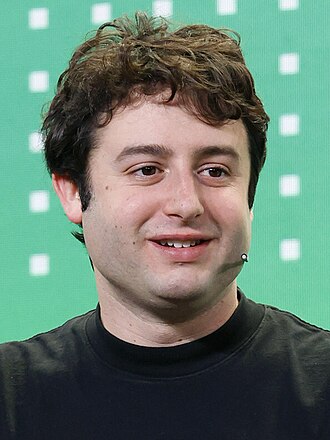
Dylan Field
Co-founder and CEO of Figma
Where to hear and read about Dylan Field2 episodes and tests

 Lenny's PodcastFigma’s CEO: Why AI makes design, craft, and quality the new moat for startups | Dylan Field
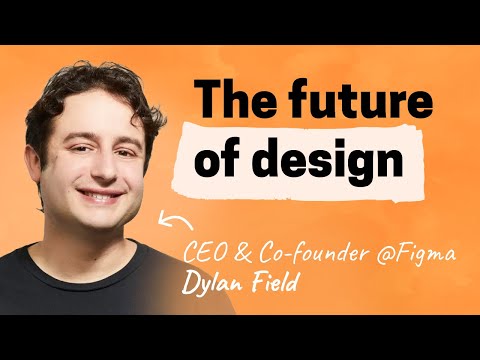 Lenny's PodcastDylan Field live at Figma's Config: Intuition, simplicity, and the future of design
Dylan Field is co-founder and CEO of Figma, which he took from a slow-to-launch design tool to a multi-product platform that reached an IPO in 2025. The most useful thing to learn from him is how he treats intuition as a hypothesis, ships early with a quality floor, and follows the user's workflow to find the next product.
Good enough is not enough. It's mediocre.
Figma’s CEO: Why AI makes design, craft, and quality the new moat for startups | Dylan Field
Dylan Field: the story and the lessons
1Dylan Field's slow road to launching Figma
Field says Figma took far too long to reach the market. Figma started in August 2012, hard work began in June 2013, closed beta came in December 2015 and general availability with multiplayer in October 2016. First revenue arrived in summer 2017.
He puts the time to launch at about three and a half years and calls it way too long. His advice is to show the vision sooner with something a little bit awesome: "Don't do that. Uh go faster."
Field sized the market on intuition because no data supported it. At the start, Bureau of Labor Statistics data suggested about 250,000 designers, and no data said design tools could be big. He bet that value was moving up the stack as consumer expectations rose.
The number of designers and design hires then rose rapidly, which expanded the market for Figma Design.
Field blamed slow hiring and a hard product for the delay. He says better recruiting from day one would have reached the market sooner, and the first paying customer came slightly less than five years in.
A new engineering director, Sho, now VP of product, presented the gap to launch in his first week. Everyone agreed with it and the team moved to ship.
Field found Figma's first users by asking admired designers for feedback. A LinkedIn internship introduced him to Gephi. He mapped the most central designers on Twitter, then offered coffee to those whose work inspired him.
Tim Van Damme's icons were his test cases for vector networks, and Tim now does the icons for UI3. The Twitter API that made this possible in 2012 and 2013 no longer exists. He says it started "more as me fanboy and me getting feedback."
Designers gave real feedback, and that feedback won the early users. Payam wrote a very long wish list after a user study. The study took hours because text editing was slow, so Field brought a bottle of wine.
Coda, then called Krypton, was the first team customer. Field turned his car around to fix an outage, and its founder Shishir did not know he was first.
2How Figma got through the failed Adobe deal
Regulators ended a 16 month process, and Field kept the pace up. Several regulators opposed the Adobe deal. During review neither side could plan a roadmap or instruct the other.
Figma went straight into launching Dev Mode and expanding the platform, and pace picked up further afterward. Field has a lot of respect for Adobe's team.
Field gave staff honest updates within legal limits. Updates started as quarterly check-ins and came every few weeks near the end. He eventually told staff the path was narrow.
Not everyone heard it, and some still assumed the deal would go through. The outcome was announced the day after a winter break began, and the company reconvened the following Monday to say what came next.
Field let people opt out of the faster pace with severance. The Detach program offered three months of severance and the option to reapply after six months. A little over 4% of the company took it.
Some had joined expecting to be part of Adobe, and others were tired. The message was "If you're bought in, let's go. And if you're not there, that's okay." Many used it as a career reset, for example moving from sales to politics.
3How Field grew Figma from one product to many
Field pushed FigJam on intuition until COVID made the demand obvious. He had seen whiteboarding used inside Figma Design for years. Colleagues asked why now, and he had little reasoning to offer.
When COVID hit, feedback on brainstorming on an infinite canvas spiked. The team did some research and built FigJam in about six months.
Field rescued a boring FigJam by making it fun. A month before launch at Config the product felt boring. A meeting with the team and the board chose to differentiate by making it fun.
A design sprint produced about 20 ideas in one day, including cursor chat, which became definitional. Fun suited brainstorming because people had withdrawn in lockdown, but it would annoy users in Figma Design.
Field picks new products by following the user's workflow, not the biggest market. When one job gets heavy inside Figma Design, it is pulled into its own surface. That is how Slides, FigJam, Buzz, Dev Mode and Sites came about.
Buzz exists because brand teams want on-brand marketing while marketers want bulk asset creation. Field says you can't always be obsessed with the next biggest TAM, and should go from strength to strength.
Going from one product to two was hard, then two to many got easier. Field says the first jump was a big change of focus, and expanding from two to many is much easier.
Dev Mode looked simple but took at least three times as long as FigJam, because directions failed and the team had to understand the developer user.
Maker Week turns the company's urge to build into product. It is a week-long hackathon with one prompt: make Figma better in some way. Figma Slides came out of it.
Teams form freely, and closing demos show the company what is now possible.
4Dylan Field's product principles
Field treats intuition as a hypothesis generator to be tested. He puts hypotheses forward, debates them and looks for data until a working hypothesis remains.
He still doubts Pages, yet shipped them because users said they needed them. Colleagues call his intuition a sixth sense for what will work.
Field reads feedback everywhere to find the root problem. He reads social media and support channels, and a Slack channel collects every tweet that mentions Figma.
People who ask for X often really want Y or Z, so he asks questions until he finds the real need and urges the whole team to do the same.
Field guards simplicity because complexity compounds. His motto is to keep simple things simple and make complex things possible. He cites Evan Wallace's idea that one plus one sometimes equals one and a half.
He admits parts of Figma are too complex as a system even though each choice was right at the time, and the fix is to revisit the whole system. He calls simplicity everyone's job.
Field ships early but holds a minimum quality bar. His rule is quality, features, deadline: choose two. Sometimes he fixes quality and deadline and cuts features.
Software can improve after launch, but the first version must be minimally awesome, and later iteration should improve quality as well as features.
Field staffed a team called Blockers to remove adoption obstacles. The team struck down table-stakes issues one by one, and each fix showed up in retention and activation graphs.
He says to balance this with some exciting vision so the product is not only table stakes.
Field wants every new user at a first moment of value fast. The risk is a blank canvas in Figma Design or an empty prompt in Make, so the goal is to get users creating quickly.
For Figma Design and FigJam the moment is a collaborative multiplayer experience. His joking life motto is "time to value."
Field says prototypes beat static mocks, which beat lots of words. He wants product managers to explore options in Figma Make, not only designers.
That frees designers to go deeper on harder problems, and lets anyone contribute early to the question of where to go.
5Why Field says design, craft and taste decide who wins in the AI era
Field argues design is now how software wins or loses. As software gets easier to build, he says good enough becomes mediocre. Value keeps moving up the stack, and better consumer apps raised everyone's expectations.
AI gives an average starting point, and craft and taste turn it into something excellent. He wants users reaching a great start, then refining and exploring a wider option space.
Field says taste is a loop anyone can sharpen. Have an experience, ask whether you like it and why, then build your repertoire and learn the canon behind it. Look for links across fields and revisit old views.
He puts a true taste maker, like Kurt Cobain, at 0.01% skill. He notes many people can match a framework while few can create one. The best product designers can switch their own taste on and off to fit a brand.
Field defines design as art applied to problem solving. Design needs creative expression and a match to a real user need. Solving the problem without the art is utilitarian.
He says the definition is not original to him. "If you lose the art and you're just solving the problem, it's totally utilitarian and it lacks soul."
Field wants AI prototypes built on the design system. Ideas get filtered out when they look off. Starting from consistent design system elements lets them be judged on merit.
Design system support in Make is earlier than Figma wants, and Field says the aim is that ideas don't die on the vine.
Field sees AI growing demand for people, not cutting it. Engineering productivity gains at Figma are mild to moderate, and desired headcount has not gone down. Figma is hiring across most roles.
In Figma's survey, 72% said AI tools like Make are a top reason roles are expanding, and only 16 to 17% of designers see AI as a threat. He expects designers to be the leaders of the future.
Field expects roles to blend into product builders. 56% of non-designers now do design-centric tasks like prototyping, up from 44% a year earlier, though 53% still say deep knowledge is needed.
He believes each person still specializes in one area. He says PMs, designers and engineers each need a bit of the others' skills, and research can make it four legs of the stool.
6How Dylan Field leads, decides and builds a team
Field learned management from scratch, mostly from leaders he hired. He had never managed a team before becoming CEO. Figma's first director of engineering, later a product leader, taught him a great deal.
He says he learns the lessons, forgets them and relearns them. One is unpacking the context in his head for the group.
Field returns most often to clarity. When an area feels murky, he pushes with hard questions until the trade-offs are known and everyone is on the same page, even without agreement.
"It's not about positive or negative. It's about, well, do we understand it?"
Field changes his mind when the case is concrete and debatable. He asks for examples and follow-up questions until he understands the idea. If nobody has answers, he sends the team to find them.
He calls it a perfectionist habit that gives good outcomes as long as it doesn't bottleneck the organization.
Field lets people run with ideas he doubts if not fatal. He states his skepticism, then says go with it and see what happens. Sometimes they come back and were right.
He says he doesn't always change his mind, but the approach builds deep trust.
Field matches people to projects they care about. People fired up about a project outperform wild expectations, and are merely fine on work they don't care about.
He also questions padding in estimates out of curiosity, balances tech debt against new work, and moves on from projects that aren't converging. He admits Figma is not perfect at this.
Field hires makers and gives them room to build. He sees culture as people plus their rituals. He looks for craft, growth mindset, self-awareness, humility and high integrity, across every function.
For AI-era hires he wants a bold point of view, high judgment and willingness to roll up sleeves, as ICs or managers.
Field treats mentorship as two-way and takes advice with caution. He learns from the community, hires, investors, coaches and founders and interns he advises. Mika joined as a junior PM and taught him through fierce debates.
On advice, he says people giving it are really giving themselves advice in your shoes.
Field wants PMs who hold a strategy, not only a process. The best ones talk to users and wrap strategy in a framework everyone can follow.
He adds that celebrating milestones matters: if everyone is unhappy, you failed, even when the goal is reached.
7Field's mistakes and what he changed
Field pulled Figma's first AI feature after a preventable QA failure. Internally called first draft and then named Make Design, it gave something close to the Apple weather app for "make me a weather app." He pulled it during the second Config, in Singapore.
He now stresses hard testing, understanding the inputs and building real evals, since "it's easy to go on vibes for too long." He adds that evals are only part of the solution.
Field calls the name Make Design wrong for a starting point. The feature was only meant as a starting point, and he agrees critics were right that it gives the most obvious thing in the most obvious form.
He uses that to argue taste still matters, and calls Make really just a starting point.
Field now builds with a bias to ship, while budgeting for hard products. He calls the advice to ship quickly totally true, and says Dev Mode needed repeated rebuilding.
His lesson is not to sweat every detail and never ship, but to show people the vision.
Figma’s CEO: Why AI makes design, craft, and quality the new moat for startups | Dylan Field
Figma's CEO explains how the company kept pace after the failed $20 billion Adobe deal, how it picks new product lines by following the workflow, and why design, craft and taste now decide who wins in software. The result: Figma moved from one product to many and reached an IPO in 2025 by treating time to value, blockers and quality as core priorities.
Field says Figma took far too long to reach the market. Figma started in August 2012, hard work began in June 2013, closed beta came in December 2015 and general availability with multiplayer in October 2016. First revenue arrived in summer 2017.
He puts the time to launch at about three and a half years and calls it way too long. His advice is to show the vision sooner with something a little bit awesome: "Don't do that. Uh go faster."
Field sized the market on intuition because no data supported it. At the start, Bureau of Labor Statistics data suggested about 250,000 designers, and no data said design tools could be big. He bet that value was moving up the stack as consumer expectations rose.
The number of designers and design hires then rose rapidly, which expanded the market for Figma Design.
Regulators ended a 16 month process, and Field kept the pace up. Several regulators opposed the Adobe deal. During review neither side could plan a roadmap or instruct the other.
Figma went straight into launching Dev Mode and expanding the platform, and pace picked up further afterward. Field has a lot of respect for Adobe's team.
Field gave staff honest updates within legal limits. Updates started as quarterly check-ins and came every few weeks near the end. He eventually told staff the path was narrow.
Not everyone heard it, and some still assumed the deal would go through. The outcome was announced the day after a winter break began, and the company reconvened the following Monday to say what came next.
Field let people opt out of the faster pace with severance. The Detach program offered three months of severance and the option to reapply after six months. A little over 4% of the company took it.
Some had joined expecting to be part of Adobe, and others were tired. The message was "If you're bought in, let's go. And if you're not there, that's okay." Many used it as a career reset, for example moving from sales to politics.
Field pushed FigJam on intuition until COVID made the demand obvious. He had seen whiteboarding used inside Figma Design for years. Colleagues asked why now, and he had little reasoning to offer.
When COVID hit, feedback on brainstorming on an infinite canvas spiked. The team did some research and built FigJam in about six months.
Field rescued a boring FigJam by making it fun. A month before launch at Config the product felt boring. A meeting with the team and the board chose to differentiate by making it fun.
A design sprint produced about 20 ideas in one day, including cursor chat, which became definitional. Fun suited brainstorming because people had withdrawn in lockdown, but it would annoy users in Figma Design.
Field picks new products by following the user's workflow, not the biggest market. When one job gets heavy inside Figma Design, it is pulled into its own surface. That is how Slides, FigJam, Buzz, Dev Mode and Sites came about.
Buzz exists because brand teams want on-brand marketing while marketers want bulk asset creation. Field says you can't always be obsessed with the next biggest TAM, and should go from strength to strength.
Going from one product to two was hard, then two to many got easier. Field says the first jump was a big change of focus, and expanding from two to many is much easier.
Dev Mode looked simple but took at least three times as long as FigJam, because directions failed and the team had to understand the developer user.
Maker Week turns the company's urge to build into product. It is a week-long hackathon with one prompt: make Figma better in some way. Figma Slides came out of it.
Teams form freely, and closing demos show the company what is now possible.
Field staffed a team called Blockers to remove adoption obstacles. The team struck down table-stakes issues one by one, and each fix showed up in retention and activation graphs.
He says to balance this with some exciting vision so the product is not only table stakes.
Field wants every new user at a first moment of value fast. The risk is a blank canvas in Figma Design or an empty prompt in Make, so the goal is to get users creating quickly.
For Figma Design and FigJam the moment is a collaborative multiplayer experience. His joking life motto is "time to value."
Field says prototypes beat static mocks, which beat lots of words. He wants product managers to explore options in Figma Make, not only designers.
That frees designers to go deeper on harder problems, and lets anyone contribute early to the question of where to go.
Field argues design is now how software wins or loses. As software gets easier to build, he says good enough becomes mediocre. Value keeps moving up the stack, and better consumer apps raised everyone's expectations.
AI gives an average starting point, and craft and taste turn it into something excellent. He wants users reaching a great start, then refining and exploring a wider option space.
Field says taste is a loop anyone can sharpen. Have an experience, ask whether you like it and why, then build your repertoire and learn the canon behind it. Look for links across fields and revisit old views.
He puts a true taste maker, like Kurt Cobain, at 0.01% skill. He notes many people can match a framework while few can create one. The best product designers can switch their own taste on and off to fit a brand.
Field wants AI prototypes built on the design system. Ideas get filtered out when they look off. Starting from consistent design system elements lets them be judged on merit.
Design system support in Make is earlier than Figma wants, and Field says the aim is that ideas don't die on the vine.
Field sees AI growing demand for people, not cutting it. Engineering productivity gains at Figma are mild to moderate, and desired headcount has not gone down. Figma is hiring across most roles.
In Figma's survey, 72% said AI tools like Make are a top reason roles are expanding, and only 16 to 17% of designers see AI as a threat. He expects designers to be the leaders of the future.
Field expects roles to blend into product builders. 56% of non-designers now do design-centric tasks like prototyping, up from 44% a year earlier, though 53% still say deep knowledge is needed.
He believes each person still specializes in one area. He says PMs, designers and engineers each need a bit of the others' skills, and research can make it four legs of the stool.
Field learned management from scratch, mostly from leaders he hired. He had never managed a team before becoming CEO. Figma's first director of engineering, later a product leader, taught him a great deal.
He says he learns the lessons, forgets them and relearns them. One is unpacking the context in his head for the group.
Field returns most often to clarity. When an area feels murky, he pushes with hard questions until the trade-offs are known and everyone is on the same page, even without agreement.
"It's not about positive or negative. It's about, well, do we understand it?"
Field matches people to projects they care about. People fired up about a project outperform wild expectations, and are merely fine on work they don't care about.
He also questions padding in estimates out of curiosity, balances tech debt against new work, and moves on from projects that aren't converging. He admits Figma is not perfect at this.
Field hires makers and gives them room to build. He sees culture as people plus their rituals. He looks for craft, growth mindset, self-awareness, humility and high integrity, across every function.
For AI-era hires he wants a bold point of view, high judgment and willingness to roll up sleeves, as ICs or managers.
Field treats mentorship as two-way and takes advice with caution. He learns from the community, hires, investors, coaches and founders and interns he advises. Mika joined as a junior PM and taught him through fierce debates.
On advice, he says people giving it are really giving themselves advice in your shoes.
Field pulled Figma's first AI feature after a preventable QA failure. Internally called first draft and then named Make Design, it gave something close to the Apple weather app for "make me a weather app." He pulled it during the second Config, in Singapore.
He now stresses hard testing, understanding the inputs and building real evals, since "it's easy to go on vibes for too long." He adds that evals are only part of the solution.
Field calls the name Make Design wrong for a starting point. The feature was only meant as a starting point, and he agrees critics were right that it gives the most obvious thing in the most obvious form.
He uses that to argue taste still matters, and calls Make really just a starting point.
Dylan Field live at Figma's Config: Intuition, simplicity, and the future of design
Figma's CEO explains how he treats intuition as a hypothesis generator, fights product complexity, and ships early while holding a quality bar. He also tells how Figma found its first users by asking design heroes for feedback, after a slow three and a half years to launch.
Field says Figma took far too long to reach the market. Figma started in August 2012, hard work began in June 2013, closed beta came in December 2015 and general availability with multiplayer in October 2016. First revenue arrived in summer 2017.
He puts the time to launch at about three and a half years and calls it way too long. His advice is to show the vision sooner with something a little bit awesome: "Don't do that. Uh go faster."
Field blamed slow hiring and a hard product for the delay. He says better recruiting from day one would have reached the market sooner, and the first paying customer came slightly less than five years in.
A new engineering director, Sho, now VP of product, presented the gap to launch in his first week. Everyone agreed with it and the team moved to ship.
Field found Figma's first users by asking admired designers for feedback. A LinkedIn internship introduced him to Gephi. He mapped the most central designers on Twitter, then offered coffee to those whose work inspired him.
Tim Van Damme's icons were his test cases for vector networks, and Tim now does the icons for UI3. The Twitter API that made this possible in 2012 and 2013 no longer exists. He says it started "more as me fanboy and me getting feedback."
Designers gave real feedback, and that feedback won the early users. Payam wrote a very long wish list after a user study. The study took hours because text editing was slow, so Field brought a bottle of wine.
Coda, then called Krypton, was the first team customer. Field turned his car around to fix an outage, and its founder Shishir did not know he was first.
Going from one product to two was hard, then two to many got easier. Field says the first jump was a big change of focus, and expanding from two to many is much easier.
Dev Mode looked simple but took at least three times as long as FigJam, because directions failed and the team had to understand the developer user.
Field treats intuition as a hypothesis generator to be tested. He puts hypotheses forward, debates them and looks for data until a working hypothesis remains.
He still doubts Pages, yet shipped them because users said they needed them. Colleagues call his intuition a sixth sense for what will work.
Field reads feedback everywhere to find the root problem. He reads social media and support channels, and a Slack channel collects every tweet that mentions Figma.
People who ask for X often really want Y or Z, so he asks questions until he finds the real need and urges the whole team to do the same.
Field guards simplicity because complexity compounds. His motto is to keep simple things simple and make complex things possible. He cites Evan Wallace's idea that one plus one sometimes equals one and a half.
He admits parts of Figma are too complex as a system even though each choice was right at the time, and the fix is to revisit the whole system. He calls simplicity everyone's job.
Field ships early but holds a minimum quality bar. His rule is quality, features, deadline: choose two. Sometimes he fixes quality and deadline and cuts features.
Software can improve after launch, but the first version must be minimally awesome, and later iteration should improve quality as well as features.
Field argues design is now how software wins or loses. As software gets easier to build, he says good enough becomes mediocre. Value keeps moving up the stack, and better consumer apps raised everyone's expectations.
AI gives an average starting point, and craft and taste turn it into something excellent. He wants users reaching a great start, then refining and exploring a wider option space.
Field defines design as art applied to problem solving. Design needs creative expression and a match to a real user need. Solving the problem without the art is utilitarian.
He says the definition is not original to him. "If you lose the art and you're just solving the problem, it's totally utilitarian and it lacks soul."
Field expects roles to blend into product builders. 56% of non-designers now do design-centric tasks like prototyping, up from 44% a year earlier, though 53% still say deep knowledge is needed.
He believes each person still specializes in one area. He says PMs, designers and engineers each need a bit of the others' skills, and research can make it four legs of the stool.
Field learned management from scratch, mostly from leaders he hired. He had never managed a team before becoming CEO. Figma's first director of engineering, later a product leader, taught him a great deal.
He says he learns the lessons, forgets them and relearns them. One is unpacking the context in his head for the group.
Field changes his mind when the case is concrete and debatable. He asks for examples and follow-up questions until he understands the idea. If nobody has answers, he sends the team to find them.
He calls it a perfectionist habit that gives good outcomes as long as it doesn't bottleneck the organization.
Field lets people run with ideas he doubts if not fatal. He states his skepticism, then says go with it and see what happens. Sometimes they come back and were right.
He says he doesn't always change his mind, but the approach builds deep trust.
Field treats mentorship as two-way and takes advice with caution. He learns from the community, hires, investors, coaches and founders and interns he advises. Mika joined as a junior PM and taught him through fierce debates.
On advice, he says people giving it are really giving themselves advice in your shoes.
Field wants PMs who hold a strategy, not only a process. The best ones talk to users and wrap strategy in a framework everyone can follow.
He adds that celebrating milestones matters: if everyone is unhappy, you failed, even when the goal is reached.
Field calls the name Make Design wrong for a starting point. The feature was only meant as a starting point, and he agrees critics were right that it gives the most obvious thing in the most obvious form.
He uses that to argue taste still matters, and calls Make really just a starting point.
Field now builds with a bias to ship, while budgeting for hard products. He calls the advice to ship quickly totally true, and says Dev Mode needed repeated rebuilding.
His lesson is not to sweat every detail and never ship, but to show people the vision.
More from Figma
 Guest
Claire Butler
Senior Director of Marketing at Figma; first GTM hire and 10th employee
 Figma1 source · 18 tips
 Guest
Mihika Kapoor
Product manager (design, engineering and PM hybrid) at Figma, early PM on FigJam
Figma1 source · 17 tips Guest
Yuhki Yamashita
Chief Product Officer at Figma, formerly Head of Design for New Mobility at Uber and PM at Google and Microsoft
Figma1 source · 19 tips