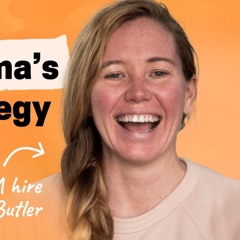
Claire Butler
Senior Director of Marketing at Figma; first GTM hire and 10th employee
Where to hear and read about Claire Butler1 episode or test

Claire Butler is Figma's first go-to-market hire and 10th employee, now Senior Director of Marketing, who built the bottom-up motion that ran Figma with no sales team for three years. The lesson most worth taking is to make practitioners love the product, then help them spread it through their companies.
You can't optimize your way to product market fit.
An inside look at Figma’s unique GTM motion | Claire Butler (first GTM hire)
Claire Butler: the story and the lessons
1How Claire Butler became Figma's first marketer
Butler joined before launch and shaped Figma's brand from day one. She was the 10th employee and first marketing hire. She led the launch, branding, positioning and messaging, and now runs the bottom-up motion plus community, events, social, advocacy and Figma for education.
She chose Figma on three tests: sensible idea, trusted backers, relentless founder. Design was the one tool not yet online and collaborative. She trusted the people who made the introductions and invested, and Dylan answered each of her concerns one by one.
She had passed on a drone company and an ad tech company because she did not understand them. She says she had no idea Figma would get this big and that some of it was luck.
Butler killed the Summit product name on her first day. The plan was a company called Figma with a design tool called Summit. She argued that two brands split equity and that Summit was not ownable, presented the case the next day, and the name was dropped.
She thinks the team would have changed it later anyway, so this saved time. The same week she was carrying four bags of ice three blocks to the first meetup, which drew about 10 people.
Being the only marketer meant deciding with no one to check against. Launching out of stealth was stressful because she had no peers and had never run messaging, positioning, press and PR end to end. She made Dylan and Sean agree on the positioning word for word in a locked conference room.
Greylock helped, but investors do not know the business as intimately as the team. Watching Dylan trust his gut showed her how to decide, and she says the lasting lesson was building trust in herself.
2How Butler earned designers' love before there was a market
Butler made her first marketing hire a designer, not a marketer. Designers have a very high bullshit meter and do not want to hear from marketers. Her first hire, six months after launch, was a designer advocate who met users, created content and fed feedback to product.
She says: "I would never have the credibility with designers that a designer has." The advocate team is still core to Figma's go-to-market and has grown large.
She published few, deep technical posts instead of marketing copy. About 10 posts at most in the first six months, each needing an engineer or designer, covering WebGL, grids and vector networks. Posts went to Hacker News, Designer News and Twitter, and Evan's technical post reached number one on Hacker News.
Her bar: "if I could have written it, it's not good enough." The grids post went deep on Josef Müller-Brockmann, and she had to Google him.
Figma used one channel, Twitter, and asked for feedback instead of selling. Dylan wrote a scraper that mapped who followed a few design influencers and who followed them. The team then DMed those influencers for feedback, and founders and engineers posted as people, not just a brand handle.
Claire: "we never sold the product. It was always about feedback." The graph approach has been reused to find audiences for later products.
The team dropped everything to save its first user. Coda's designer agreed to adopt Figma, then his engineer could not open the file. Dylan told everyone to drop everything and drove Evan to Palo Alto, where the fault turned out to be the engineer's MacBook, not the servers.
Engineers also answered Intercom chats and fixed bugs live. Telling users "we fixed this" gave them a sense of ownership, and advocates later took over that work.
Butler launched on signal, not metrics, and without multiplayer. Figma left stealth around the end of 2015, after about three years of building, without its core differentiator. In demos, designers took the laptop out of Dylan's hands to play, and a few small teams used it full time.
Her milestone ladder: one company uses it, keeps using it, a second company uses it, someone pays. She calls trusting anecdotal signal over numbers a "controversial point of view".
She bundles small fixes into the yearly 'little big updates' launch. Engineers run quality weeks, read Twitter and talk to support, then pick which annoyances to fix. Marketing shows the original tweet or forum request behind each one.
It is one of Figma's most popular launches and eases the tension between fixing old things and building new ones. Designers sit in the editor about eight hours a day, so one saved click matters.
3Butler's playbook for spreading Figma inside companies
Butler's core model: make ICs love it, then help them spread it. Revenue starts with practitioners who use the tool all day. Figma ran self-serve on credit cards with no sales team for its first three years, and most sales leads still come from free and Pro users.
Mere use does not make a champion. Love matters at the moment someone spreads the product, because they put their social capital on the line.
A node graph of invites made internal champions visible. Figma's data team can type in an organization and see who invited whom, with a cluster per team. Microsoft's use spread from one team on credit cards until the company asked for security review, account management and procurement.
Hovering over a cluster's center shows how many people spread from one person. That was the unlock for the champion idea.
She moved the free-tier cap from collaborators to files. The starter team first allowed unlimited files but only two or three collaborators, so the paywall hit just as sharing began. Figma flipped it to roughly three files with unlimited collaborators, and the effect on sharing showed in the metrics.
Viewers and commenters are free and only editors are charged. Pricing came about two years after launch, and the hard part was managing it, since people had been sharing links to get around the limit.
Each pricing tier fits its own buyer. Free to Pro must feel natural because no person is involved. Pro is a credit card, and org and enterprise mean talking to sales.
Design systems became the main reason to upgrade to the org tier.
Advocates join sales calls with no quota, and deals close more often. Tom Lowry had been the internal champion who got his own company onto Figma. Deals were much more likely to close when he joined calls, which sales called the Tom Factor.
Advocates also synthesize feedback from hundreds of customers for product. The first sales rep and a new advocate started the same day, and the team reports to Claire.
Figma turned its biggest blocker, design systems, into a growth lever. Early libraries worked only at file level and could not be shared, and big companies asked how else they were meant to work with engineers. Figma held informal meetups with practitioners, built features from what it learned, and added content, DesignSystems.com and the Schema conference.
Claire read Brad Frost's atomic design to learn the field. Design systems people are "either the biggest blockers or the biggest champions, depending on if you can win them over."
She keeps investing in champions and their careers. Champions never go away and sometimes get angry. When one at a large customer tweeted a complaint, the team went to him right away. Figma also gives them speaking slots and amplifies them on social.
More designers talking about Figma builds its credibility, so the effort feeds the flywheel.
4Transparency and community at scale at Figma
Figma owned its failures in public, and Butler says it won trust back. After an AWS cluster failure caused downtime several times in one week, Figma published and promoted a postmortem with the technical cause and the fix.
After the acquisition announcement, direct talk with users turned the tide. The first announcement was only a retweet of Dylan, and social was flooded. The next day Figma held an open Twitter Space where Dylan, Cho, Raji and Tom took any question, and people began giving Figma a chance to prove itself.
Raji had argued the team must not hide behind the brand. Claire counts it among the hardest days of her career.
Transparency guides Figma's decisions even though it is not a listed value. The listed values are have fun, build community and love your craft. Claire thinks transparency may deserve a place on the list.
Cho keeps asking on Twitter what people need in the editor, and CTO Kris answers bug reports himself.
She sourced Config talks from users through a call for proposals. Claire had never run a conference, so she asked users what they wanted to talk about. Advocates help speakers shape talks, and the content is deep how-to material with no fluff.
Speakers grow their profiles and stay tied to Figma. One attendee called it a rock concert, not a conference, because fun was a goal.
5When bottom-up fits, and how Butler protects it
Butler says bottom-up needs a technical audience with a community. Her conditions: users who care about their craft and tools, a product valuable to one person alone, an existing community to distribute through, and ICs who touch many people in the company.
Value alone gives you something to talk about besides collaboration. She notes the odds were worse than they look: the first reply on Designer News was "If this is the future of design, I'm changing careers."
She says the model needs a leader who trusts intuition. Metrics do not immediately show whether it works. Dylan started the approach and built it into the culture.
Trusting intuition was the most stressful part of the early days, and it is what the model needs most.
Butler argues for keeping bottom-up work as top-down sales arrives. Top-down means proving ROI and scaling the sales team, and a flood of new hires can break what was working. She wants Config, Schema and the advocate team protected and scaled across regions and products.
Her rule is to layer new motions on top and not walk away from what got the company here.
Her personal motto is consistent pressure over time. She values grit over time more than immediate accomplishments, and dropped the habit of pressuring herself to get everything right now.

An inside look at Figma’s unique GTM motion | Claire Butler (first GTM hire)
Figma's first go-to-market hire explains the two-part bottom-up motion: get individual contributors to love the product, then help them spread it through their organizations. The payoff is a company that had no sales team for three years and still sources most sales leads from its free and pro users.
Butler joined before launch and shaped Figma's brand from day one. She was the 10th employee and first marketing hire. She led the launch, branding, positioning and messaging, and now runs the bottom-up motion plus community, events, social, advocacy and Figma for education.
She chose Figma on three tests: sensible idea, trusted backers, relentless founder. Design was the one tool not yet online and collaborative. She trusted the people who made the introductions and invested, and Dylan answered each of her concerns one by one.
She had passed on a drone company and an ad tech company because she did not understand them. She says she had no idea Figma would get this big and that some of it was luck.
Butler killed the Summit product name on her first day. The plan was a company called Figma with a design tool called Summit. She argued that two brands split equity and that Summit was not ownable, presented the case the next day, and the name was dropped.
She thinks the team would have changed it later anyway, so this saved time. The same week she was carrying four bags of ice three blocks to the first meetup, which drew about 10 people.
Being the only marketer meant deciding with no one to check against. Launching out of stealth was stressful because she had no peers and had never run messaging, positioning, press and PR end to end. She made Dylan and Sean agree on the positioning word for word in a locked conference room.
Greylock helped, but investors do not know the business as intimately as the team. Watching Dylan trust his gut showed her how to decide, and she says the lasting lesson was building trust in herself.
Butler made her first marketing hire a designer, not a marketer. Designers have a very high bullshit meter and do not want to hear from marketers. Her first hire, six months after launch, was a designer advocate who met users, created content and fed feedback to product.
She says: "I would never have the credibility with designers that a designer has." The advocate team is still core to Figma's go-to-market and has grown large.
She published few, deep technical posts instead of marketing copy. About 10 posts at most in the first six months, each needing an engineer or designer, covering WebGL, grids and vector networks. Posts went to Hacker News, Designer News and Twitter, and Evan's technical post reached number one on Hacker News.
Her bar: "if I could have written it, it's not good enough." The grids post went deep on Josef Müller-Brockmann, and she had to Google him.
Figma used one channel, Twitter, and asked for feedback instead of selling. Dylan wrote a scraper that mapped who followed a few design influencers and who followed them. The team then DMed those influencers for feedback, and founders and engineers posted as people, not just a brand handle.
Claire: "we never sold the product. It was always about feedback." The graph approach has been reused to find audiences for later products.
The team dropped everything to save its first user. Coda's designer agreed to adopt Figma, then his engineer could not open the file. Dylan told everyone to drop everything and drove Evan to Palo Alto, where the fault turned out to be the engineer's MacBook, not the servers.
Engineers also answered Intercom chats and fixed bugs live. Telling users "we fixed this" gave them a sense of ownership, and advocates later took over that work.
Butler launched on signal, not metrics, and without multiplayer. Figma left stealth around the end of 2015, after about three years of building, without its core differentiator. In demos, designers took the laptop out of Dylan's hands to play, and a few small teams used it full time.
Her milestone ladder: one company uses it, keeps using it, a second company uses it, someone pays. She calls trusting anecdotal signal over numbers a "controversial point of view".
She bundles small fixes into the yearly 'little big updates' launch. Engineers run quality weeks, read Twitter and talk to support, then pick which annoyances to fix. Marketing shows the original tweet or forum request behind each one.
It is one of Figma's most popular launches and eases the tension between fixing old things and building new ones. Designers sit in the editor about eight hours a day, so one saved click matters.
Butler's core model: make ICs love it, then help them spread it. Revenue starts with practitioners who use the tool all day. Figma ran self-serve on credit cards with no sales team for its first three years, and most sales leads still come from free and Pro users.
Mere use does not make a champion. Love matters at the moment someone spreads the product, because they put their social capital on the line.
A node graph of invites made internal champions visible. Figma's data team can type in an organization and see who invited whom, with a cluster per team. Microsoft's use spread from one team on credit cards until the company asked for security review, account management and procurement.
Hovering over a cluster's center shows how many people spread from one person. That was the unlock for the champion idea.
She moved the free-tier cap from collaborators to files. The starter team first allowed unlimited files but only two or three collaborators, so the paywall hit just as sharing began. Figma flipped it to roughly three files with unlimited collaborators, and the effect on sharing showed in the metrics.
Viewers and commenters are free and only editors are charged. Pricing came about two years after launch, and the hard part was managing it, since people had been sharing links to get around the limit.
Each pricing tier fits its own buyer. Free to Pro must feel natural because no person is involved. Pro is a credit card, and org and enterprise mean talking to sales.
Design systems became the main reason to upgrade to the org tier.
Advocates join sales calls with no quota, and deals close more often. Tom Lowry had been the internal champion who got his own company onto Figma. Deals were much more likely to close when he joined calls, which sales called the Tom Factor.
Advocates also synthesize feedback from hundreds of customers for product. The first sales rep and a new advocate started the same day, and the team reports to Claire.
Figma turned its biggest blocker, design systems, into a growth lever. Early libraries worked only at file level and could not be shared, and big companies asked how else they were meant to work with engineers. Figma held informal meetups with practitioners, built features from what it learned, and added content, DesignSystems.com and the Schema conference.
Claire read Brad Frost's atomic design to learn the field. Design systems people are "either the biggest blockers or the biggest champions, depending on if you can win them over."
She keeps investing in champions and their careers. Champions never go away and sometimes get angry. When one at a large customer tweeted a complaint, the team went to him right away. Figma also gives them speaking slots and amplifies them on social.
More designers talking about Figma builds its credibility, so the effort feeds the flywheel.
Figma owned its failures in public, and Butler says it won trust back. After an AWS cluster failure caused downtime several times in one week, Figma published and promoted a postmortem with the technical cause and the fix.
After the acquisition announcement, direct talk with users turned the tide. The first announcement was only a retweet of Dylan, and social was flooded. The next day Figma held an open Twitter Space where Dylan, Cho, Raji and Tom took any question, and people began giving Figma a chance to prove itself.
Raji had argued the team must not hide behind the brand. Claire counts it among the hardest days of her career.
Transparency guides Figma's decisions even though it is not a listed value. The listed values are have fun, build community and love your craft. Claire thinks transparency may deserve a place on the list.
Cho keeps asking on Twitter what people need in the editor, and CTO Kris answers bug reports himself.
She sourced Config talks from users through a call for proposals. Claire had never run a conference, so she asked users what they wanted to talk about. Advocates help speakers shape talks, and the content is deep how-to material with no fluff.
Speakers grow their profiles and stay tied to Figma. One attendee called it a rock concert, not a conference, because fun was a goal.
Butler says bottom-up needs a technical audience with a community. Her conditions: users who care about their craft and tools, a product valuable to one person alone, an existing community to distribute through, and ICs who touch many people in the company.
Value alone gives you something to talk about besides collaboration. She notes the odds were worse than they look: the first reply on Designer News was "If this is the future of design, I'm changing careers."
She says the model needs a leader who trusts intuition. Metrics do not immediately show whether it works. Dylan started the approach and built it into the culture.
Trusting intuition was the most stressful part of the early days, and it is what the model needs most.
Butler argues for keeping bottom-up work as top-down sales arrives. Top-down means proving ROI and scaling the sales team, and a flood of new hires can break what was working. She wants Config, Schema and the advocate team protected and scaled across regions and products.
Her rule is to layer new motions on top and not walk away from what got the company here.
Her personal motto is consistent pressure over time. She values grit over time more than immediate accomplishments, and dropped the habit of pressuring herself to get everything right now.
More from Figma
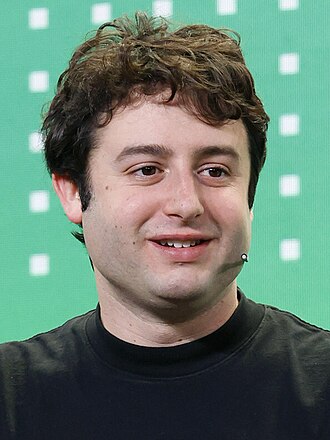 Guest
Dylan Field
Co-founder and CEO of Figma
 Figma2 sources · 30 tips
 Guest
Mihika Kapoor
Product manager (design, engineering and PM hybrid) at Figma, early PM on FigJam
Figma1 source · 17 tips Guest
Yuhki Yamashita
Chief Product Officer at Figma, formerly Head of Design for New Mobility at Uber and PM at Google and Microsoft
Figma1 source · 19 tips