David S. Duncan
Author of Competing Against Luck
Where to hear and read about David S. Duncan1 book
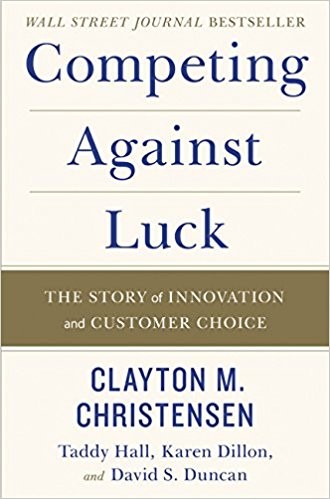
David S. Duncan wrote Competing Against Luck (2016), a book that treats innovation as a problem of cause rather than chance. The idea most worth learning from him is that customers hire products to make progress in a specific circumstance, and finding that job lets you predict what will sell.
What causes us to buy products and services is the stuff that happens to us all day, every day.
Competing Against Luck: The Story of Innovation and Customer Choice
David S. Duncan: the story and the lessons
1Why Duncan's book says innovation does not have to be luck
Duncan starts from executives' own dissatisfaction with how innovation performs. In a McKinsey poll, 84 percent of global executives called innovation extremely important to growth, yet 94 percent were unsatisfied with their results. In 2015 one thousand public companies spent $680 billion on R&D.
Stage-gates, rapid iterations and six-sigma rules look scientific. They create the feeling of progress without causing it.
He argues customer data shows who buys, never why. Profiles and past behavior are correlations. Clayton Christensen's profile (age sixty-four, Boston suburb, Honda minivan) does not explain why he buys the New York Times.
He might hire the paper to skip dull lobby magazines, follow March Madness or look informed to neighbors. Most managers know correlation is not causation and act as if it were, because it feels comfortable.
He treats failed launches as anomalies with causes, not bad luck. Innovation sits where carmaking stood before the quality revolution: managers accept failure as inevitable and patch around it. Fields became reliable once they found the causal mechanism, as Pasteur did for disease and Deming and Juran did for Japanese carmakers.
A good theory gives if-then predictions that depend on the circumstance.
Duncan's book says disruption theory predicts incumbents, not what to build. Even a firm setting out to disrupt has under a 25 percent chance of building exactly the right product.
The open question is how successful firms know where to grow. The book's answer is what makes customers pull a product into their lives.
2How Duncan's Jobs to Be Done theory works
Customers hire products to make progress in a specific circumstance. People rehire a product if it works and fire it if it doesn't. The circumstance covers where, when, with whom and doing what, plus life stage, finances and social pressure.
The same person hires the same product for different jobs at different times, so demographics never reveal the choice.
A fast-food chain's shakes were being hired for a job nobody had named. Cheaper, chunkier and chocolatier shakes did not move sales. Eighteen hours of watching showed many shakes sold before 9:00 a.m. to lone commuters who wanted something to fill a dull drive and fit the cup holder.
The shake beat bananas, doughnuts, bagels and a Snickers bar because it lasted about twenty minutes and kept hunger away until midmorning.
Duncan says to design one solution per job, not an averaged one. Afternoon parents hired a shake to say yes to a child, a different job with rivals like the toy store or a game of catch. Averaging feedback across jobs yields a product that does none of them well.
Every job has functional, social and emotional sides, and the last two can win. A smoker's break and a Facebook break both deliver rest and time with friends, so Facebook partly competes with cigarettes. Pampers sold weakly in China as a cheap containment device and took off once ads showed babies sleeping longer.
Teams that capture only function miss the job.
He separates jobs from needs and themes, which are too broad to design for. Segway answered a general need for personal transport and solved no shared job. By most measures it flopped, ending up mostly in tourist spots and malls.
Jobs are discovered, not created. The rule is to love the job, not your solution to it.
He writes jobs in verbs and nouns and tests them by listing rivals. 'A chocolate shake in a twelve-ounce cup' is a spec, because every answer is a shake. 'Stay occupied and full until a 10:00 a.m. meeting' lets bananas, bagels and coffee compete.
If every option sits in your own category, move up a level and repeat. Words like 'convenient' describe an experience, not a job.
3How Duncan's jobs lens redraws the competition
Unilever held 70 percent of US margarine and still missed the job. Its roughly twenty-one shelf brands differed mainly on fat percentage, while shoppers hired spreads to moisten bread or keep food from burning. Butter overtook margarine by the mid-2000s, and at the end of 2014 Unilever said it would spin spreads off.
The caveats matter: trans fat worries partly drove butter's rise, and the job analysis may have missed some rivals.
Duncan's real rivals are often other categories, or doing nothing. Reed Hastings said Netflix competes with everything people do to relax. BMW redefined its job as mobility and found new rivals in Tesla, Uber and Zipcar.
Airbnb lost on hotel measures but competed with not traveling at all. Chip Conley says 40 percent of its guests would not have traveled or would have stayed with family.
QuickBooks won by serving owners who were jury-rigging Quicken. It offered half the functionality at twice the price and became the global leader in online accounting software. Its real rivals were bookkeepers, spreadsheets and shoeboxes of receipts.
Intuit reached $4 billion in revenue and a $25 billion market cap.
Nailing a poorly served job separates the rare winners from the many failures. Nielsen tracked over twenty thousand launches from 2012 to 2016, and only ninety-two topped $50 million in year one and held sales in year two. Sargento's ultrathin slices cleared $50 million in year one and over $150 million in year two.
SNHU split online adults from campus students and grew online revenue sixteenfold. It moved the online team two miles away, replaced a 24-hour email with a call within ten minutes, and settled aid and credit transfer in days. Online revenue went from $32 million to nearly $535 million.
By fiscal 2016 SNHU had a 34 percent compounded growth rate over six years and more than seventy-five thousand students. It slowed recruiting when growth strained delivery.
4Where Duncan says to hunt for jobs
He says perspective, not a new research tool, is what finds a job. Personas, ethnography, focus groups and competitive analysis stay useful when read through a jobs lens. Barriers and frustrating experiences are the first clue.
The guiding line is 'Perspective is worth 80 I.Q. points.' Asking how to tweak the current offering starts from the wrong assumption.
Your own frustrations and non-buyers are rich sources of jobs. Sal Khan's rough math videos for his cousin won despite being 'cheaper and crappier'. Depend Silhouette briefs looked like normal underwear and earned $60 million in year one, and ING Direct sold to Capital One in 2012 for $9 billion.
Depend buyers had fired staying at home. Many people with incontinence suffered up to two years or withdrew socially rather than use a product.
Workarounds, dreaded chores and odd uses point to hidden jobs. ZzzQuil came from people taking NyQuil just to sleep. Rick Krieger started MinuteClinic's forerunner after hours in an emergency room, and it now has more than a thousand locations in thirty-three states.
Church & Dwight saw baking soda used in laundry, carpets and refrigerators. Baking soda is now under 7 percent of Arm & Hammer's consumer revenue.
Once a source looks promising, he says to drill deep before going wide. Pick one vein, then widen sideways to capture the full context of the struggle. Record functional, social and emotional dimensions before designing anything.
A market with no apparent room to grow may simply have a poorly defined job.
Pampers in China shows the emotional job driving the functional one. A mother said her week's highlight was renewed intimacy with her husband because the baby slept through the night. A study found Pampers babies fell asleep 30 percent faster and slept thirty more minutes.
By 2013 Pampers had about $1.6 billion in China sales and roughly 30 percent share.
5How Duncan says to interview customers
He trusts what people do in a circumstance over what they say. Pleasant Rowland founded American Girl in 1985 after a focus group of mothers rejected the idea, and she sold it to Mattel thirteen years later for $700 million. Sony's research said buyers would reject a Walkman, and it sold over 330 million units.
Sales data is no cure. It mostly records the purchase.
He interviews recent buyers as a timeline back to the first thought of buying. A Costco mattress buyer looked like an impulse shopper at $699. He had actually had a year of back pain, three months of research and a fear of buying with no recourse, and Costco's easy returns removed the last barrier.
Skip feature questions. 'Great innovation insights have more to do with depth than breadth.'
Duncan maps push, pull, habit and anxiety before launch. A switch happens only when the push and pull outweigh habit and anxiety. Losses weigh about twice as much as gains, so the new must be far more appealing, not slightly better.
Health clubs found annual contracts created so much anxiety that people did not join at all.
Every job involves two hires and a firing. The Big Hire is the purchase and the Little Hire is each later use. Only repeated Little Hires prove the job is done, and hiring a product means firing something, even doing nothing.
Airbnb storyboarded forty-five emotional moments for hosts and guests, treating the guest's arrival as the first Little Hire.
A Detroit condo builder found its real job was moving lives. Buyers worried about where the dining table would go. The builder shrank the second bedroom 20 percent, added moving help and storage, and cut options to three.
Cancellations fell from five or six a month to one and a $3,500 price rise held. By 2007 it grew 25 percent while industry sales fell 49 percent.
He designs reassurance and practice runs to cut switching anxiety. ING Direct's cafés handle no teller cash transactions and mainly show that the virtual bank is real. Mercer's Pension Risk Exchange let buyers model buyouts before committing.
Mercer's module became key to its growth.
6How Duncan says to get hired: the job spec and the experience
A job spec has to come before any design. It lists the functional, social and emotional dimensions, the tradeoffs customers accept, every competitor including nonconsumption, and the obstacles and anxieties to remove.
Medtronic's better pacemakers in India sold poorly until it found the barriers. Interviews with over a hundred physicians, nurses, administrators and patients found four barriers: low awareness, poor diagnostics, a confusing care pathway and cost. It added free screenings, a bridge loan approved within two days and patient counselors.
Through December 2015 about 167,000 patients were screened and about 15,000 treated across more than one hundred hospitals in thirty cities.
Experiences that serve the job are the part rivals cannot copy. Rowland's belly band added two cents and twenty-seven seconds to packing, and she kept it because the wait makes unboxing exciting. Cheaper lookalikes from Toys"R"Us, Walmart and Disney made no dent.
American Girl has sold 29 million dolls, and a typical buyer spends over six hundred dollars.
He says to earn a premium by nailing the job, not by lock-in. With jobs-based innovations, customers are grateful for the solution, while premiums forced through printer ink or chargers breed resentment. Milwaukee has held more than 80 percent of the Sawzall and HOLE HAWG job markets for decades.
Duncan tells businesses to say who should not hire them. One restaurateur's early Yelp raves drew foodies hunting a hidden gem to a decent local place, and they wrote bad reviews. Airbnb helps hosts state who should not book.
Volvo shows how a purpose brand is lost by chasing other segments. Volvo made safety its guiding principle from 1927. After Ford bought it in 1999 it chased luxury, was unprofitable by 2005, and was sold to Geely at a loss in 2010.
It grew again in 2015 after refocusing on safety, but may have lost purpose-brand status for good.
7How Duncan says to organize a company around the job
He argues processes are the hardest asset for rivals to copy. Toyota let rival executives tour its plant twice a month and ask anything, yet they asked the wrong questions. SNHU gives tours to would-be competitors, and Paul LeBlanc says richer rivals still cannot easily copy hundreds of linked processes.
Processes blend formal steps with unspoken habits and grow from hundreds of small decisions.
Duncan puts someone in charge of the job instead of reorganizing. In a 2010 Bain study, fewer than a third of 57 major reorgs produced meaningful improvement. At the Mayo Clinic one coordinator sequenced specialists and booked same-day slots, so Christensen's MRI was done by 11:30.
Functional silos will likely stay. The change comes through processes, metrics and culture.
He measures customer progress, not internal efficiency. Intuit tested making QuickBooks trial users phone in to register so sales could upsell them. Revenue rose, but users who only wanted to register hit busy lines and sales pitches.
Intuit now builds a benefit metric per product, such as time saved. Scott Cook said the team had put revenue ahead of customer benefit.
Amazon opens each project with a mock press release naming the job. It is presented to marketers, engineers and analysts together, and every experience and process is derived from it. Amazon tracks when orders are delivered, not shipped.
OnStar found its job by having every employee hear real calls. CEO Chet Huber had all 300 staff spend an hour on call-center calls and they heard crash victims mid-accident. The job became peace of mind while driving, and OnStar at one point earned an estimated $2.5 billion a year in revenue.
Ford announced Wingcast in 2000, built around a product spec, and scrapped it two years after announcing it.
New processes trigger the organization's immune system, so plan for it. The milk shake chain never implemented Bob Moesta's recommendations. Local managers found the changes to routines too hard, and the idea died quietly.
Clear insight into the job does not survive on its own.
8How Duncan says to keep the job alive after launch
After launch, loud sales data pulls companies back to products. Before launch, innovators live in passive data like workarounds and frustrations. Afterward, sales and benchmarks are easy to count, and managers start managing the numbers.
'Passive data needs active management.'
V8 quadrupled sales by competing against celery, then drifted back. V8 pitched itself against peeling and boiling carrots, and sales quadrupled in less than a year. After that team moved on, the line sprawled into variants like Picante and V8 Splash!, and the brand went back to fighting other juices.
Whether V8 truly lost the job is a suspicion based on partial knowledge of its internal workings.
He warns against growth from selling more to the same customers. DeWalt built its name on the best radial arm saw. After Black & Decker bought it in the 1960s, it copied drills and clamps from store shelves.
Confused customers hire the wrong product, then fire it.
Numbers are no more objective than stories, so leaders choose what data to create. Google Flu Trends compared 1,152 data points with fifty million search terms. A study in Science in spring 2014 showed it had greatly overstated US flu cases for over two years, which the researchers put down to 'big data hubris'.
Search data can still point in the right direction. It is just not objective reality.
A clearly stated job works like commander's intent for every employee. TurboTax teams spent weeks ranking about 150 requested features until the job was reframed as 'taxes are done', and prefilling W-2 data raised completion. Before Hurricane Rita, an OnStar employee gave every caller in the crisis area full service after about fifteen seconds of approval.
In early 2016, 95 percent of surveyed SNHU graduates said they would do it all again.
He nests a concrete job under a broad mission and drops jobs others do better. Lifebuoy soap changes color at ten seconds because scrubbing takes about thirty and most people wash for about seven. Deseret News left breaking news to TV and Twitter for next-morning analysis aimed at like-minded believers, about 56 percent of news consumers.
Deseret's social followers rose from the low millions to over 100 million. The mission of helping children reach age five inspired Lifebuoy, but only the specific job enabled the product.
9Where Duncan says the theory stops working
He marks the boundaries of Jobs Theory openly. It does not help where there is no real struggle, where current solutions are good enough, or where choices are pure math such as commodities trading.
Cigarettes do many jobs yet harm the customer. The theory explains why people choose, not whether you should offer the solution.
He treats cases that do not fit as reasons to refine the theory. When a case does not fit, go back to the phenomena, then refine the theory or mark a boundary. Anomalies do not disprove anything.
Stretched too far, a theory loses its power, as happened when 'disruption' came to mean anything clever and new. 'Job' risks the same fate if every motive gets the label.
Competing Against Luck: The Story of Innovation and Customer Choice
Customers do not buy products. They hire them to make progress in a specific circumstance, and that progress has functional, social and emotional sides. Seeing the job, the forces that block switching, and the experiences and processes needed to deliver it turns innovation from luck into something you can predict and build around.
Duncan starts from executives' own dissatisfaction with how innovation performs. In a McKinsey poll, 84 percent of global executives called innovation extremely important to growth, yet 94 percent were unsatisfied with their results. In 2015 one thousand public companies spent $680 billion on R&D.
Stage-gates, rapid iterations and six-sigma rules look scientific. They create the feeling of progress without causing it.
He argues customer data shows who buys, never why. Profiles and past behavior are correlations. Clayton Christensen's profile (age sixty-four, Boston suburb, Honda minivan) does not explain why he buys the New York Times.
He might hire the paper to skip dull lobby magazines, follow March Madness or look informed to neighbors. Most managers know correlation is not causation and act as if it were, because it feels comfortable.
He treats failed launches as anomalies with causes, not bad luck. Innovation sits where carmaking stood before the quality revolution: managers accept failure as inevitable and patch around it. Fields became reliable once they found the causal mechanism, as Pasteur did for disease and Deming and Juran did for Japanese carmakers.
A good theory gives if-then predictions that depend on the circumstance.
Duncan's book says disruption theory predicts incumbents, not what to build. Even a firm setting out to disrupt has under a 25 percent chance of building exactly the right product.
The open question is how successful firms know where to grow. The book's answer is what makes customers pull a product into their lives.
Customers hire products to make progress in a specific circumstance. People rehire a product if it works and fire it if it doesn't. The circumstance covers where, when, with whom and doing what, plus life stage, finances and social pressure.
The same person hires the same product for different jobs at different times, so demographics never reveal the choice.
A fast-food chain's shakes were being hired for a job nobody had named. Cheaper, chunkier and chocolatier shakes did not move sales. Eighteen hours of watching showed many shakes sold before 9:00 a.m. to lone commuters who wanted something to fill a dull drive and fit the cup holder.
The shake beat bananas, doughnuts, bagels and a Snickers bar because it lasted about twenty minutes and kept hunger away until midmorning.
Duncan says to design one solution per job, not an averaged one. Afternoon parents hired a shake to say yes to a child, a different job with rivals like the toy store or a game of catch. Averaging feedback across jobs yields a product that does none of them well.
Every job has functional, social and emotional sides, and the last two can win. A smoker's break and a Facebook break both deliver rest and time with friends, so Facebook partly competes with cigarettes. Pampers sold weakly in China as a cheap containment device and took off once ads showed babies sleeping longer.
Teams that capture only function miss the job.
He separates jobs from needs and themes, which are too broad to design for. Segway answered a general need for personal transport and solved no shared job. By most measures it flopped, ending up mostly in tourist spots and malls.
Jobs are discovered, not created. The rule is to love the job, not your solution to it.
He writes jobs in verbs and nouns and tests them by listing rivals. 'A chocolate shake in a twelve-ounce cup' is a spec, because every answer is a shake. 'Stay occupied and full until a 10:00 a.m. meeting' lets bananas, bagels and coffee compete.
If every option sits in your own category, move up a level and repeat. Words like 'convenient' describe an experience, not a job.
Unilever held 70 percent of US margarine and still missed the job. Its roughly twenty-one shelf brands differed mainly on fat percentage, while shoppers hired spreads to moisten bread or keep food from burning. Butter overtook margarine by the mid-2000s, and at the end of 2014 Unilever said it would spin spreads off.
The caveats matter: trans fat worries partly drove butter's rise, and the job analysis may have missed some rivals.
Duncan's real rivals are often other categories, or doing nothing. Reed Hastings said Netflix competes with everything people do to relax. BMW redefined its job as mobility and found new rivals in Tesla, Uber and Zipcar.
Airbnb lost on hotel measures but competed with not traveling at all. Chip Conley says 40 percent of its guests would not have traveled or would have stayed with family.
QuickBooks won by serving owners who were jury-rigging Quicken. It offered half the functionality at twice the price and became the global leader in online accounting software. Its real rivals were bookkeepers, spreadsheets and shoeboxes of receipts.
Intuit reached $4 billion in revenue and a $25 billion market cap.
Nailing a poorly served job separates the rare winners from the many failures. Nielsen tracked over twenty thousand launches from 2012 to 2016, and only ninety-two topped $50 million in year one and held sales in year two. Sargento's ultrathin slices cleared $50 million in year one and over $150 million in year two.
SNHU split online adults from campus students and grew online revenue sixteenfold. It moved the online team two miles away, replaced a 24-hour email with a call within ten minutes, and settled aid and credit transfer in days. Online revenue went from $32 million to nearly $535 million.
By fiscal 2016 SNHU had a 34 percent compounded growth rate over six years and more than seventy-five thousand students. It slowed recruiting when growth strained delivery.
He says perspective, not a new research tool, is what finds a job. Personas, ethnography, focus groups and competitive analysis stay useful when read through a jobs lens. Barriers and frustrating experiences are the first clue.
The guiding line is 'Perspective is worth 80 I.Q. points.' Asking how to tweak the current offering starts from the wrong assumption.
Your own frustrations and non-buyers are rich sources of jobs. Sal Khan's rough math videos for his cousin won despite being 'cheaper and crappier'. Depend Silhouette briefs looked like normal underwear and earned $60 million in year one, and ING Direct sold to Capital One in 2012 for $9 billion.
Depend buyers had fired staying at home. Many people with incontinence suffered up to two years or withdrew socially rather than use a product.
Workarounds, dreaded chores and odd uses point to hidden jobs. ZzzQuil came from people taking NyQuil just to sleep. Rick Krieger started MinuteClinic's forerunner after hours in an emergency room, and it now has more than a thousand locations in thirty-three states.
Church & Dwight saw baking soda used in laundry, carpets and refrigerators. Baking soda is now under 7 percent of Arm & Hammer's consumer revenue.
Once a source looks promising, he says to drill deep before going wide. Pick one vein, then widen sideways to capture the full context of the struggle. Record functional, social and emotional dimensions before designing anything.
A market with no apparent room to grow may simply have a poorly defined job.
Pampers in China shows the emotional job driving the functional one. A mother said her week's highlight was renewed intimacy with her husband because the baby slept through the night. A study found Pampers babies fell asleep 30 percent faster and slept thirty more minutes.
By 2013 Pampers had about $1.6 billion in China sales and roughly 30 percent share.
He trusts what people do in a circumstance over what they say. Pleasant Rowland founded American Girl in 1985 after a focus group of mothers rejected the idea, and she sold it to Mattel thirteen years later for $700 million. Sony's research said buyers would reject a Walkman, and it sold over 330 million units.
Sales data is no cure. It mostly records the purchase.
He interviews recent buyers as a timeline back to the first thought of buying. A Costco mattress buyer looked like an impulse shopper at $699. He had actually had a year of back pain, three months of research and a fear of buying with no recourse, and Costco's easy returns removed the last barrier.
Skip feature questions. 'Great innovation insights have more to do with depth than breadth.'
Duncan maps push, pull, habit and anxiety before launch. A switch happens only when the push and pull outweigh habit and anxiety. Losses weigh about twice as much as gains, so the new must be far more appealing, not slightly better.
Health clubs found annual contracts created so much anxiety that people did not join at all.
Every job involves two hires and a firing. The Big Hire is the purchase and the Little Hire is each later use. Only repeated Little Hires prove the job is done, and hiring a product means firing something, even doing nothing.
Airbnb storyboarded forty-five emotional moments for hosts and guests, treating the guest's arrival as the first Little Hire.
A Detroit condo builder found its real job was moving lives. Buyers worried about where the dining table would go. The builder shrank the second bedroom 20 percent, added moving help and storage, and cut options to three.
Cancellations fell from five or six a month to one and a $3,500 price rise held. By 2007 it grew 25 percent while industry sales fell 49 percent.
He designs reassurance and practice runs to cut switching anxiety. ING Direct's cafés handle no teller cash transactions and mainly show that the virtual bank is real. Mercer's Pension Risk Exchange let buyers model buyouts before committing.
Mercer's module became key to its growth.
A job spec has to come before any design. It lists the functional, social and emotional dimensions, the tradeoffs customers accept, every competitor including nonconsumption, and the obstacles and anxieties to remove.
Medtronic's better pacemakers in India sold poorly until it found the barriers. Interviews with over a hundred physicians, nurses, administrators and patients found four barriers: low awareness, poor diagnostics, a confusing care pathway and cost. It added free screenings, a bridge loan approved within two days and patient counselors.
Through December 2015 about 167,000 patients were screened and about 15,000 treated across more than one hundred hospitals in thirty cities.
Experiences that serve the job are the part rivals cannot copy. Rowland's belly band added two cents and twenty-seven seconds to packing, and she kept it because the wait makes unboxing exciting. Cheaper lookalikes from Toys"R"Us, Walmart and Disney made no dent.
American Girl has sold 29 million dolls, and a typical buyer spends over six hundred dollars.
He says to earn a premium by nailing the job, not by lock-in. With jobs-based innovations, customers are grateful for the solution, while premiums forced through printer ink or chargers breed resentment. Milwaukee has held more than 80 percent of the Sawzall and HOLE HAWG job markets for decades.
Duncan tells businesses to say who should not hire them. One restaurateur's early Yelp raves drew foodies hunting a hidden gem to a decent local place, and they wrote bad reviews. Airbnb helps hosts state who should not book.
Volvo shows how a purpose brand is lost by chasing other segments. Volvo made safety its guiding principle from 1927. After Ford bought it in 1999 it chased luxury, was unprofitable by 2005, and was sold to Geely at a loss in 2010.
It grew again in 2015 after refocusing on safety, but may have lost purpose-brand status for good.
He argues processes are the hardest asset for rivals to copy. Toyota let rival executives tour its plant twice a month and ask anything, yet they asked the wrong questions. SNHU gives tours to would-be competitors, and Paul LeBlanc says richer rivals still cannot easily copy hundreds of linked processes.
Processes blend formal steps with unspoken habits and grow from hundreds of small decisions.
Duncan puts someone in charge of the job instead of reorganizing. In a 2010 Bain study, fewer than a third of 57 major reorgs produced meaningful improvement. At the Mayo Clinic one coordinator sequenced specialists and booked same-day slots, so Christensen's MRI was done by 11:30.
Functional silos will likely stay. The change comes through processes, metrics and culture.
He measures customer progress, not internal efficiency. Intuit tested making QuickBooks trial users phone in to register so sales could upsell them. Revenue rose, but users who only wanted to register hit busy lines and sales pitches.
Intuit now builds a benefit metric per product, such as time saved. Scott Cook said the team had put revenue ahead of customer benefit.
Amazon opens each project with a mock press release naming the job. It is presented to marketers, engineers and analysts together, and every experience and process is derived from it. Amazon tracks when orders are delivered, not shipped.
OnStar found its job by having every employee hear real calls. CEO Chet Huber had all 300 staff spend an hour on call-center calls and they heard crash victims mid-accident. The job became peace of mind while driving, and OnStar at one point earned an estimated $2.5 billion a year in revenue.
Ford announced Wingcast in 2000, built around a product spec, and scrapped it two years after announcing it.
New processes trigger the organization's immune system, so plan for it. The milk shake chain never implemented Bob Moesta's recommendations. Local managers found the changes to routines too hard, and the idea died quietly.
Clear insight into the job does not survive on its own.
After launch, loud sales data pulls companies back to products. Before launch, innovators live in passive data like workarounds and frustrations. Afterward, sales and benchmarks are easy to count, and managers start managing the numbers.
'Passive data needs active management.'
V8 quadrupled sales by competing against celery, then drifted back. V8 pitched itself against peeling and boiling carrots, and sales quadrupled in less than a year. After that team moved on, the line sprawled into variants like Picante and V8 Splash!, and the brand went back to fighting other juices.
Whether V8 truly lost the job is a suspicion based on partial knowledge of its internal workings.
He warns against growth from selling more to the same customers. DeWalt built its name on the best radial arm saw. After Black & Decker bought it in the 1960s, it copied drills and clamps from store shelves.
Confused customers hire the wrong product, then fire it.
Numbers are no more objective than stories, so leaders choose what data to create. Google Flu Trends compared 1,152 data points with fifty million search terms. A study in Science in spring 2014 showed it had greatly overstated US flu cases for over two years, which the researchers put down to 'big data hubris'.
Search data can still point in the right direction. It is just not objective reality.
A clearly stated job works like commander's intent for every employee. TurboTax teams spent weeks ranking about 150 requested features until the job was reframed as 'taxes are done', and prefilling W-2 data raised completion. Before Hurricane Rita, an OnStar employee gave every caller in the crisis area full service after about fifteen seconds of approval.
In early 2016, 95 percent of surveyed SNHU graduates said they would do it all again.
He nests a concrete job under a broad mission and drops jobs others do better. Lifebuoy soap changes color at ten seconds because scrubbing takes about thirty and most people wash for about seven. Deseret News left breaking news to TV and Twitter for next-morning analysis aimed at like-minded believers, about 56 percent of news consumers.
Deseret's social followers rose from the low millions to over 100 million. The mission of helping children reach age five inspired Lifebuoy, but only the specific job enabled the product.
He marks the boundaries of Jobs Theory openly. It does not help where there is no real struggle, where current solutions are good enough, or where choices are pure math such as commodities trading.
Cigarettes do many jobs yet harm the customer. The theory explains why people choose, not whether you should offer the solution.
He treats cases that do not fit as reasons to refine the theory. When a case does not fit, go back to the phenomena, then refine the theory or mark a boundary. Anomalies do not disprove anything.
Stretched too far, a theory loses its power, as happened when 'disruption' came to mean anything clever and new. 'Job' risks the same fate if every motive gets the label.