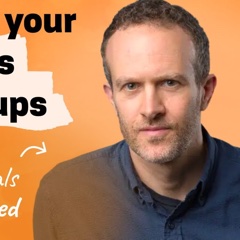
David Heinemeier Hansson
Co-founder of 37signals and creator of Ruby on Rails
Where to hear and read about David Heinemeier Hansson1 episode or test

David Heinemeier Hansson (DHH) co-founded 37signals, the small, profitable company behind Basecamp, HEY and Highrise, and created Ruby on Rails and the Omarchy Linux setup. The thing most worth learning from him is how he arranges an entire business around independence and tight constraints: small teams, low costs, one friendly investor, and products built for himself first.
If you have unlimited time, unlimited money, and unlimited people, you're going to build a blob.
DHH: How to Build a Profitable Company Without Losing Control
David Heinemeier Hansson: the story and the lessons
1How DHH built Basecamp and kept 37signals small
The first Basecamp took 380 hours, built ten hours a week. DHH built the first version as a $15 an hour contractor in Copenhagen, paid partly in Apple gear. He credits the shortage of time for how good it turned out.
The 2004 pitch was "less software": fewer features, less to learn, less to teach. It was set against heavy tools like Microsoft Project.
Seven people ran Basecamp and launched a product a year. By 2007 a team of seven was running Basecamp and launching about one new product a year, four major products in all.
He saw venture-funded teams raise huge sums, hire hundreds and ship bad software. He could not picture what he would do with 100 people on a software product.
37signals ran on 40-hour weeks and took its profits out. While most software peers raised venture money, 37signals was built in Chicago on 40-hour weeks, with a life outside work and profits paid out instead of valuations chased.
The motto was a tiny team building great software, taking no money and producing profit.
DHH expects 37signals to be his last business. He says he has made enough money three times over and would not start another company, because he would not want customers again.
He plans to retire from customers and keep making things, which he calls a retirement from economic exchange rather than from capitalism.
2Why DHH took Bezos's money and turned away every VC
DHH did not trust himself against a big venture check. Around 2005, 40-some VCs called. He had about $8,000 in the bank after spending his roughly $50,000 in savings on an Audi S4, and a $20 or $50 million check could have tempted him.
He had watched businesses pop off, level off and crash, and had seen the inside of dot-com venture-funded companies and disliked what he saw.
They priced Bezos's term sheet so high he should have walked. Jeff Bezos reached out, they refused him flippantly, and his team asked again. They drew a line to the moon and asked to be paid as if that future had already arrived. Bezos accepted.
DHH chose Bezos because he was a builder, not someone who only allocates money, and because his thinking differed from theirs. "We want to be paid as though we were up here."
One friendly investor gave them the nerve to refuse the rest. The money meant that if Basecamp faded, the founders would not be hunting for a job the next Monday. It became the only outside investment 37signals ever took.
At yearly dinners Bezos heard their plans and simply said "That's a good idea," which DHH calls a rocket boost to their brashness. He believes a large VC check six months later could have destroyed the business.
Bezos has been repaid many times over and still holds his stake. 37signals still sends him dividend checks about every quarter.
DHH says he regrets not being more grateful to Bezos for what he calls an incredible gift.
3DHH's case for independence over growth
37signals is structured so no investor or board can steer it. With no investors and no board, the only influence DHH accepts is customers in aggregate, because if no one buys, the business ends.
He says what bothers him most is not bad ideas but people trying to tell him what to do. Open source, where contributors improve his work without a commercial claim, feels purer still.
Money stopped motivating DHH quickly. Having grown up without money, he found its returns diminish very fast. Making things for himself and giving them to the world matters more to him than financial independence.
He calls the "lifestyle business" label a weak critique, since the alternative is begging a VC to make payroll. He says he has a business and a lifestyle.
DHH cuts costs because revenue is out of his hands. He cannot decide whether a customer pays, but he can choose to own servers instead of renting cloud services. He still gets deep satisfaction from striking a $2,000 a month line.
He cites Carnegie: prices and profits swing, but cost savings are permanent. A smaller team of more capable people has a tighter loop and is more fun to work with.
Overhiring wastes people the world could use elsewhere. DHH argues that hiring three times as many people as needed robs the economy of productive work, and that keeping profit makes you want to raise efficiency.
He thinks raising money makes sense for factories or GPUs, but for software it mostly pays programmers to sit around.
DHH says successful founders should buy beautiful things. He bought a yellow Lamborghini after the Bezos investment gave him a few million, and argues spending sends money to craftsmen and shows the independent path pays.
He draws a line at becoming a bore or a braggart. "It is your moral obligation to buy a Ferrari if you do really well."
4Why DHH distrusts abundance
Unlimited time, money and people produce a blob. DHH does not trust himself, Jason Fried or any team to choose well when everything is cheap, because the squeeze is what forces you to pick three of the 100 things customers ask for.
He compares it to the resource curse, where a country with wealth springing from the ground never develops anything else.
He feared teams of two, not Microsoft. In 2004 everyone said Microsoft would make Basecamp a feature of Project. DHH answered that Microsoft can only make software that takes 50,000 people to build.
The real threat was a small team under the same limits, making similarly focused software. He points to Outlook's overlapping versions as what unlimited resources produce.
The greats did their best work with the least. He cites the first Star Wars against Lucas's later work with 100 times the budget, and the shoestring first Terminator, which he says beats Avatar by a thousand times.
Terminator's limits forced a tight story and real focus on the action.
With AI, cutting features is now the deliberate job. Basecamp 5 was the first version built with AI acceleration, and designers took features all the way to completion. Near shipping, DHH saw the balloon expanding and the team cut good features.
Customer surveys name simplicity as the top reason people keep Basecamp, so bloat threatens the core selling point.
He applies the same cut to writing. The first Rework manuscript ran about 50,000 words, and he and Jason cut it to 25,000, shrinking essays from two pages to four paragraphs.
The publisher worried it looked like a pamphlet and padded it with spacing, margins and illustrations.
5How DHH lets software be finished
Many customers treat Basecamp like a printer that should never change. DHH loves his Brother HL-2340DW because it just works the same way every time, and sees a large group of Basecamp customers the same way.
Much of the Basecamp 5 feedback was about moved buttons, including "Why did you mess with my printer?" The tension is that a product that looks 15 years old is hard to sell to new people.
Old Basecamp versions are never shut down. Basecamp has been rewritten three times. The 2004 version stopped selling in 2010 and still makes millions in profit, costing little beyond security upkeep.
Forced upgrades make customers feel they lost control. 37signals promises to keep products running "until the end of the internet" or as long as the business lasts.
Highrise was frozen and still earns millions. Highrise, a CRM and their second biggest hit, stopped evolving because neither DHH nor Jason used it, and it remains a multi-million dollar business.
DHH argues software should be allowed to be done, like a knife or an album.
6How 37signals out-teaches instead of outspending
With no ad budget, 37signals chose to teach. Borrowed from Kathy Sierra's mid-2000s writing, the strategy was to share better insights, writing and open source so some readers reciprocate by buying. It has run for two decades.
At launch they had no money to fight Microsoft in a banner ad war. "We could out-teach them."
A sliver of a huge audience is enough. Out-teaching captures only a small share of the value created, but the internet is big enough that a tiny percent is still a lot.
DHH says he chooses to believe reciprocity works but does not know it is true; it is simply how they built the business.
Feed algorithms broke the delivery, not the reciprocity. The "jab, jab, jab, right hook" approach worked while followers saw every post. Now they only see posts that go medium viral.
He leans on podcasts and newsletters, which reach subscribers directly, and keeps giving ideas and software away anyway.
Taking a gift means owing it a real look. He welcomes grounded feedback, but someone who spends 5 minutes on 4,000 hours of work and then tells him what to do gets no credit.
Paying makes you a customer, and then he will listen and say thank you even to weak advice.
7How DHH builds for himself, from Rails to Omarchy
DHH builds what he wants and assumes others want it too. Rails came from applying Ruby, an obscure Japanese language, to Basecamp. Omarchy came from seeing 75 things wrong with Linux, fixing five, and repeating.
"I know I'm not alone. I know I'm not that special." Many of his tools began as productive procrastination.
He left the Mac over Apple's conduct and found Linux could be beautiful. After more than 20 years on the Mac, he could not keep paying a company he deeply disagreed with. Windows lasted two weeks; Linux took two weeks to commit to.
The r/UnixPorn subreddit showed what Linux could look like, and the Hyprland window manager, built by a teenager, made a keyboard-driven desktop both fast and beautiful.
He hands people a chef's choice, not a kit. Omarchy pre-assembles Arch Linux, Hyprland and curated themes. It installs in about 2 minutes, against the 42 minutes his last Mac took to set up.
People cannot say what they want but recognize quality instantly. "I will not give you a construction kit burger. I will give you an omakase sushi meal."
His familiar-looking first distribution failed. His earlier Ubuntu tweak aimed to feel like Windows or Mac and did not take off. Omarchy is keyboard-driven, starts with a cheat sheet of 15 key bindings, and it did.
Nobody wants a cheaper version of what they already have, and only a tiny fraction cares about free software as a principle.
The best ideas sound stupid or ugly at first. Value hides inside a misconception about what people want, so the real thing can look quirky or off-putting. He first thought the McLaren 720S ugly and now loves it.
When people call his work ugly or doomed, he feels surer he is onto something, though a few people must still like it.
8How DHH works, and how Tobi Lütke changed his mind on AI
DHH needs four uninterrupted hours or the day is lost. A 45-minute chunk gets him nowhere; four hours lets him go all the way into a problem. He cites Paul Graham's builder versus manager schedule.
An introvert, he spends at least half his waking hours alone. Realizing early he could not work eight hours a day beside others was a career breakthrough.
He would quit before working in an office. About 60 people at 37signals work remotely and meet twice a year for a week. His productivity flatlined in open offices.
He keeps a bare desk, which he calls a "pure cocoon," because clutter pulls his mind away.
DHH judged AI by early autocomplete and Tobi Lütke saw further. Autocomplete felt to him like a coworker grabbing his keyboard. Tobi wrote a memo around 2023 or early 2024 saying Shopify had to become a very different company.
As a Shopify board member, DHH sees internal tools he calls better than anything commercial. Tobi's nudging got him to install the tools, and using them, not reading about them, changed his mind.
9The 2021 politics ban and a third of 37signals leaving
DHH let an activist minority grow too long. Signs showed from 2018 and they thought they could manage it. By 2021 he felt it could eat the soul of the company and even thought of retiring.
They banned politics at work and paid people to leave. After banning political discussion in work channels, they offered up to six months' salary to anyone who could not accept it. About 20 of 60 left.
DHH calls it "the best money we've ever spent on anything related to culture, maybe anything at all," though losing a third of staff made him worry about keeping the lights on.
Marc Andreessen, an old VC sparring partner, backed them. Introduced by Tobi Lütke, Andreessen offered help and company while about 40,000 people attacked them on Twitter.
Knowing they were not alone let them hold firm and refuse to apologize or revert.

DHH: How to Build a Profitable Company Without Losing Control
DHH has spent 25 years building Basecamp and other products around one condition: no investor, board or boss gets to tell him what to do. Taking one absurdly priced investment from Jeff Bezos, treating cost and constraint as strengths, and teaching instead of advertising let 37signals stay small, profitable and independent.
The first Basecamp took 380 hours, built ten hours a week. DHH built the first version as a $15 an hour contractor in Copenhagen, paid partly in Apple gear. He credits the shortage of time for how good it turned out.
The 2004 pitch was "less software": fewer features, less to learn, less to teach. It was set against heavy tools like Microsoft Project.
Seven people ran Basecamp and launched a product a year. By 2007 a team of seven was running Basecamp and launching about one new product a year, four major products in all.
He saw venture-funded teams raise huge sums, hire hundreds and ship bad software. He could not picture what he would do with 100 people on a software product.
37signals ran on 40-hour weeks and took its profits out. While most software peers raised venture money, 37signals was built in Chicago on 40-hour weeks, with a life outside work and profits paid out instead of valuations chased.
The motto was a tiny team building great software, taking no money and producing profit.
DHH expects 37signals to be his last business. He says he has made enough money three times over and would not start another company, because he would not want customers again.
He plans to retire from customers and keep making things, which he calls a retirement from economic exchange rather than from capitalism.
DHH did not trust himself against a big venture check. Around 2005, 40-some VCs called. He had about $8,000 in the bank after spending his roughly $50,000 in savings on an Audi S4, and a $20 or $50 million check could have tempted him.
He had watched businesses pop off, level off and crash, and had seen the inside of dot-com venture-funded companies and disliked what he saw.
They priced Bezos's term sheet so high he should have walked. Jeff Bezos reached out, they refused him flippantly, and his team asked again. They drew a line to the moon and asked to be paid as if that future had already arrived. Bezos accepted.
DHH chose Bezos because he was a builder, not someone who only allocates money, and because his thinking differed from theirs. "We want to be paid as though we were up here."
One friendly investor gave them the nerve to refuse the rest. The money meant that if Basecamp faded, the founders would not be hunting for a job the next Monday. It became the only outside investment 37signals ever took.
At yearly dinners Bezos heard their plans and simply said "That's a good idea," which DHH calls a rocket boost to their brashness. He believes a large VC check six months later could have destroyed the business.
Bezos has been repaid many times over and still holds his stake. 37signals still sends him dividend checks about every quarter.
DHH says he regrets not being more grateful to Bezos for what he calls an incredible gift.
37signals is structured so no investor or board can steer it. With no investors and no board, the only influence DHH accepts is customers in aggregate, because if no one buys, the business ends.
He says what bothers him most is not bad ideas but people trying to tell him what to do. Open source, where contributors improve his work without a commercial claim, feels purer still.
Money stopped motivating DHH quickly. Having grown up without money, he found its returns diminish very fast. Making things for himself and giving them to the world matters more to him than financial independence.
He calls the "lifestyle business" label a weak critique, since the alternative is begging a VC to make payroll. He says he has a business and a lifestyle.
DHH cuts costs because revenue is out of his hands. He cannot decide whether a customer pays, but he can choose to own servers instead of renting cloud services. He still gets deep satisfaction from striking a $2,000 a month line.
He cites Carnegie: prices and profits swing, but cost savings are permanent. A smaller team of more capable people has a tighter loop and is more fun to work with.
Overhiring wastes people the world could use elsewhere. DHH argues that hiring three times as many people as needed robs the economy of productive work, and that keeping profit makes you want to raise efficiency.
He thinks raising money makes sense for factories or GPUs, but for software it mostly pays programmers to sit around.
DHH says successful founders should buy beautiful things. He bought a yellow Lamborghini after the Bezos investment gave him a few million, and argues spending sends money to craftsmen and shows the independent path pays.
He draws a line at becoming a bore or a braggart. "It is your moral obligation to buy a Ferrari if you do really well."
Unlimited time, money and people produce a blob. DHH does not trust himself, Jason Fried or any team to choose well when everything is cheap, because the squeeze is what forces you to pick three of the 100 things customers ask for.
He compares it to the resource curse, where a country with wealth springing from the ground never develops anything else.
He feared teams of two, not Microsoft. In 2004 everyone said Microsoft would make Basecamp a feature of Project. DHH answered that Microsoft can only make software that takes 50,000 people to build.
The real threat was a small team under the same limits, making similarly focused software. He points to Outlook's overlapping versions as what unlimited resources produce.
The greats did their best work with the least. He cites the first Star Wars against Lucas's later work with 100 times the budget, and the shoestring first Terminator, which he says beats Avatar by a thousand times.
Terminator's limits forced a tight story and real focus on the action.
With AI, cutting features is now the deliberate job. Basecamp 5 was the first version built with AI acceleration, and designers took features all the way to completion. Near shipping, DHH saw the balloon expanding and the team cut good features.
Customer surveys name simplicity as the top reason people keep Basecamp, so bloat threatens the core selling point.
He applies the same cut to writing. The first Rework manuscript ran about 50,000 words, and he and Jason cut it to 25,000, shrinking essays from two pages to four paragraphs.
The publisher worried it looked like a pamphlet and padded it with spacing, margins and illustrations.
Many customers treat Basecamp like a printer that should never change. DHH loves his Brother HL-2340DW because it just works the same way every time, and sees a large group of Basecamp customers the same way.
Much of the Basecamp 5 feedback was about moved buttons, including "Why did you mess with my printer?" The tension is that a product that looks 15 years old is hard to sell to new people.
Old Basecamp versions are never shut down. Basecamp has been rewritten three times. The 2004 version stopped selling in 2010 and still makes millions in profit, costing little beyond security upkeep.
Forced upgrades make customers feel they lost control. 37signals promises to keep products running "until the end of the internet" or as long as the business lasts.
Highrise was frozen and still earns millions. Highrise, a CRM and their second biggest hit, stopped evolving because neither DHH nor Jason used it, and it remains a multi-million dollar business.
DHH argues software should be allowed to be done, like a knife or an album.
With no ad budget, 37signals chose to teach. Borrowed from Kathy Sierra's mid-2000s writing, the strategy was to share better insights, writing and open source so some readers reciprocate by buying. It has run for two decades.
At launch they had no money to fight Microsoft in a banner ad war. "We could out-teach them."
A sliver of a huge audience is enough. Out-teaching captures only a small share of the value created, but the internet is big enough that a tiny percent is still a lot.
DHH says he chooses to believe reciprocity works but does not know it is true; it is simply how they built the business.
Feed algorithms broke the delivery, not the reciprocity. The "jab, jab, jab, right hook" approach worked while followers saw every post. Now they only see posts that go medium viral.
He leans on podcasts and newsletters, which reach subscribers directly, and keeps giving ideas and software away anyway.
Taking a gift means owing it a real look. He welcomes grounded feedback, but someone who spends 5 minutes on 4,000 hours of work and then tells him what to do gets no credit.
Paying makes you a customer, and then he will listen and say thank you even to weak advice.
DHH builds what he wants and assumes others want it too. Rails came from applying Ruby, an obscure Japanese language, to Basecamp. Omarchy came from seeing 75 things wrong with Linux, fixing five, and repeating.
"I know I'm not alone. I know I'm not that special." Many of his tools began as productive procrastination.
He left the Mac over Apple's conduct and found Linux could be beautiful. After more than 20 years on the Mac, he could not keep paying a company he deeply disagreed with. Windows lasted two weeks; Linux took two weeks to commit to.
The r/UnixPorn subreddit showed what Linux could look like, and the Hyprland window manager, built by a teenager, made a keyboard-driven desktop both fast and beautiful.
He hands people a chef's choice, not a kit. Omarchy pre-assembles Arch Linux, Hyprland and curated themes. It installs in about 2 minutes, against the 42 minutes his last Mac took to set up.
People cannot say what they want but recognize quality instantly. "I will not give you a construction kit burger. I will give you an omakase sushi meal."
His familiar-looking first distribution failed. His earlier Ubuntu tweak aimed to feel like Windows or Mac and did not take off. Omarchy is keyboard-driven, starts with a cheat sheet of 15 key bindings, and it did.
Nobody wants a cheaper version of what they already have, and only a tiny fraction cares about free software as a principle.
The best ideas sound stupid or ugly at first. Value hides inside a misconception about what people want, so the real thing can look quirky or off-putting. He first thought the McLaren 720S ugly and now loves it.
When people call his work ugly or doomed, he feels surer he is onto something, though a few people must still like it.
DHH needs four uninterrupted hours or the day is lost. A 45-minute chunk gets him nowhere; four hours lets him go all the way into a problem. He cites Paul Graham's builder versus manager schedule.
An introvert, he spends at least half his waking hours alone. Realizing early he could not work eight hours a day beside others was a career breakthrough.
He would quit before working in an office. About 60 people at 37signals work remotely and meet twice a year for a week. His productivity flatlined in open offices.
He keeps a bare desk, which he calls a "pure cocoon," because clutter pulls his mind away.
DHH judged AI by early autocomplete and Tobi Lütke saw further. Autocomplete felt to him like a coworker grabbing his keyboard. Tobi wrote a memo around 2023 or early 2024 saying Shopify had to become a very different company.
As a Shopify board member, DHH sees internal tools he calls better than anything commercial. Tobi's nudging got him to install the tools, and using them, not reading about them, changed his mind.
DHH let an activist minority grow too long. Signs showed from 2018 and they thought they could manage it. By 2021 he felt it could eat the soul of the company and even thought of retiring.
They banned politics at work and paid people to leave. After banning political discussion in work channels, they offered up to six months' salary to anyone who could not accept it. About 20 of 60 left.
DHH calls it "the best money we've ever spent on anything related to culture, maybe anything at all," though losing a third of staff made him worry about keeping the lights on.
Marc Andreessen, an old VC sparring partner, backed them. Introduced by Tobi Lütke, Andreessen offered help and company while about 40,000 people attacked them on Twitter.
Knowing they were not alone let them hold firm and refuse to apologize or revert.
 37signals