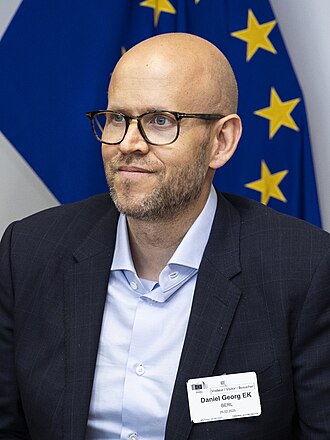
Daniel Ek
Co-founder and CEO of Spotify
Where to hear and read about Daniel Ek1 episode or test
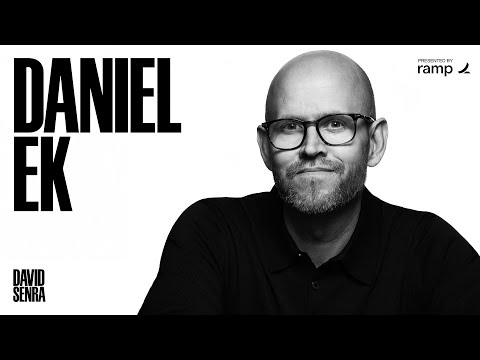
Daniel Ek is the co-founder and CEO of Spotify, who sold his first company at 22 and has spent about two decades building Spotify around his love of music and hard problems. The most useful lesson from him is to learn who you are, aim at impact rather than comfort, and keep handing your job to people who do it better while you find the next place to add value.
Happiness is a trailing indicator of impact.
Daniel Ek, Spotify | David Senra
Daniel Ek: the story and the lessons
1Daniel Ek's path from the Swedish projects to Spotify
Ek grew up an outsider in the projects of Sweden. He was a middle-of-the-pack kid with no father, raised by a mother who gave him everything, and belonged to no social group.
He still feels like an outsider, even in Silicon Valley, which is why he reasons from first principles instead of borrowing American playbooks wholesale. His mother's love gave him the sense that whatever fails, she will still be there.
He loved computers and solving other people's problems as a kid. Ek built things before he knew the word company, and loved sorting out other people's problems, from relationships to everything else.
He played strategy games like Civilization and every business tycoon game, and few first-person shooters. He has loved reading since he was five.
Ek hit his money goal at 22 and fell into his worst year. At about 15 he set a $10 million target from Rich Dad Poor Dad, expecting to reach it at 40; selling his fourth or fifth project got him there at 22.
He spent a year on nightclubs and status, realised people were with him for what money could buy, and walked away for over a year to reflect. He calls it the most depressed he has been, because he had stopped building anything for anyone.
He started Spotify to serve both music fans and creators. Ek loved music and wanted consumers to get what they want while creators got paid, an early goal he describes as a celestial jukebox.
He did not know how to build it, but he learned. He says he would do the work with all the money removed.
Ek weighed acquisition offers only on whether they advanced the mission. Already financially free, he asked whether a buyer cared as much as he did and could further the mission, and never found one.
For at least the first 15 years he cared about nothing else but Spotify. "I considered them, but not for money."
2Why Daniel Ek aims at impact instead of happiness
Ek treats sustained happiness as a result of impact. He feels joy later, looking back on solving a problem no one else could, not in the moment.
He defines impact as deeply personal: a trait you were born with, your effect on others, or being a great father.
His impact question pushed Dara Khosrowshahi into the Uber CEO job. Khosrowshahi first answered "Heck no"; Ek told him he was content, not happy, at Expedia and asked, "Since when is life about happiness? It's about impact."
Ek pointed out that Uber shapes the future of cities and that Khosrowshahi had downshifted to the easy gear. Khosrowshahi took the role and credited the conversation publicly.
Ek only takes on problems worth a decade of his life. If he is not interested enough to spend ten years on it, he will not pursue it.
His co-founder Martin's line guides him: "The value of a company is the sum of all problems solved." He chases a problem even at a 5 or 10% chance of success if solving it would matter hugely.
He calls himself lazy by nature, so he pushes toward hard things. Overcoming adversity gave him his greatest joys, so he deliberately avoids the easy road.
He says he owes it to his younger self, who worked every weekend, not to shift into an easier gear.
3How Daniel Ek stopped copying famous founders
Imitating Jobs, Bezos, Gates and Schultz left Ek disillusioned every time. A style that is not innate to the founder will not have the same impact as when its originator uses it.
He now sees himself as a collaborative coach rather than a Jobs or Musk archetype, and worries young founders read about Zuckerberg and conclude they don't have it.
Ek shadowed Mark Zuckerberg for most of a week. Having never worked inside a big company, and unable to command a 10-person room, he sat in nearly all of Zuckerberg's meetings and interviewed the whole executive team.
He studied the weekly large-group meeting of 20 to 25 people and shamelessly copied a few practices, keeping only what fit him. "I took meeting notes. You know, if I could get him coffee, I would."
He keeps a small circle of people who tell him the truth. His mirrors are his mother, his friend Jack, his wife and Gustav, many for 20 years.
His mother is unimpressed by his impact and reminds him that most of life is not business.
Ek's real project is self-mastery. He describes his whole journey as finding the best version of himself, and says that is now his game.
As a teenager he visited Hare Krishna centers, Jewish centers and mosques to ask where we come from. He calls his eloquence a work product, built through effort as an introvert.
4How Daniel Ek keeps rebuilding his role at Spotify
Ek handed product to Gustav after hearing he wasn't helping. Gustav told him the team was mostly appeasing him in product reviews; after a three-month trial without Ek, the team was happier and decided better.
Ek's first instinct was to fire Gustav, until he recognised it as an emotional reaction. He never took the product meetings back. "He's actually way better than me at doing it."
Each time someone outdoes him, Ek moves to a new value-add. After product he focused on understanding creators' businesses; when Alex did that better, he moved to the space between creators and consumers.
"Okay, well, now I need to find a different way to add value."
He matches his role to the company's stage. Spotify's first ten years were zero-to-one and the last ten were not; the company oscillates between zero-to-one, one-to-100 and optimization.
Parts of Spotify are still zero-to-one, and Ek is fully involved there.
Ek raises the company like a child who must live without him. First you make every decision, then you step in only to stop terrible mistakes, then you are there when needed; in Spotify's 19th year he is mostly at that last stage.
"The job is much more subtle to just be there when they need you."
5Daniel Ek on taste, new ideas and big companies
Ek defines taste as judgment plus curiosity. Spotify's first interface was mostly his taste, designed with Rasmus, but his feedback loop with customers later drifted.
He sees Jobs and Google as two ends of one spectrum, notes Jobs tested ideas on journalists, and aims for as much feedback as possible to sharpen a small team's taste. He has disliked plenty of updates that shipped.
He judges people by their best idea, not their worst. Like an AI model at high temperature, high-variance people hallucinate but also produce brilliance; he would take one great idea in an hour over ten decent ones.
A conversation can be 55 minutes of nothing and two or three minutes that change his life. "Those are my people."
Ek sees big companies as optimizers that squeeze out brilliance. He once thought large companies were bad; now he thinks they excel at doing what they already do better by minimizing mistakes and variance.
Having been 90% internally focused on running the Spotify machine, he now spends freed-up time protecting the first seed of new ideas.
He studies the problem and treats innovation as recombination. Ek listens to smart people describe a problem, then restates it differently to see what it unlocks.
He calls innovation "taking two or more things that were already well known and putting it together in a new way." The best ideas sit where technology, a consumer need and a lasting business model meet.
6Daniel Ek on trust
Ek says trust builds about 1% at a time but breaks at once. One bad interaction can ruin it, and missing trust is why organizations break down and need bureaucracy.
"If you had 100% trust, you wouldn't need any of this stuff, and you would move much faster."
He treats trust as degrees, not yes or no. You trust some people with your life and others with your bank account.
Ek chooses to extend trust because it makes life richer. Betrayals have been only one or two percent of his experience, and he says the more he gives away, the more he gets back.
He wants to be the best entrepreneur coach there ever was, and his colleagues' success gives him the most pride. Money is only "more chips on the table."
7Daniel Ek's personal operating system
Ek manages energy, not time. Some successful people wake at noon and others at 4 AM; he learned what fuels and drains him, and that working out powers his day.
He tried chained 15-minute naps on four hours of sleep; it worked for about three weeks, then one missed nap left him in a severe low for weeks. "If you have time, but you have no energy, you're not going to accomplish anything anyway."
He calls patience his one superpower. Ek says he is not the smartest or most talented, but pairs decades of patience with daily urgency.
His newer company Neko is eight years old and has barely begun. Total focus built Spotify, and only now is he testing whether he can run several things at once.
Ek prefers fewer, better things in friends, ideas and investing. He never thought about investing until 2018, and learned that it rests on temperament and concentration.
He believes AI will make average work easy and rare quality rarer, so obsession with quality matters more.
He relearned his body's signals after years of hard negotiations. Ek gained about 40 pounds during his worst negotiations and lost the sense of when he was hungry.
He learned that he feels full only 20 minutes after eating, so he sizes portions and trusts it will be enough. His best ideas often come after time off.
Ek's core rule is to choose your own game. He keeps Kwame Appiah's line on his wall: the challenge is to figure out what game you're playing.
Many people seeking his advice are playing someone else's game; once you pick yours, he says, you become superhuman at getting things done. His chosen epitaph is "He lived."

Daniel Ek, Spotify | David Senra
Ek explains how he stopped copying famous founders, learned who he is, and rebuilt his role at Spotify around what he does best while handing the rest to people better than him. The moment that makes it worth hearing is when his product chief told him he was not helping in product reviews and Ek stepped back, which freed both him and the team.
Ek grew up an outsider in the projects of Sweden. He was a middle-of-the-pack kid with no father, raised by a mother who gave him everything, and belonged to no social group.
He still feels like an outsider, even in Silicon Valley, which is why he reasons from first principles instead of borrowing American playbooks wholesale. His mother's love gave him the sense that whatever fails, she will still be there.
He loved computers and solving other people's problems as a kid. Ek built things before he knew the word company, and loved sorting out other people's problems, from relationships to everything else.
He played strategy games like Civilization and every business tycoon game, and few first-person shooters. He has loved reading since he was five.
Ek hit his money goal at 22 and fell into his worst year. At about 15 he set a $10 million target from Rich Dad Poor Dad, expecting to reach it at 40; selling his fourth or fifth project got him there at 22.
He spent a year on nightclubs and status, realised people were with him for what money could buy, and walked away for over a year to reflect. He calls it the most depressed he has been, because he had stopped building anything for anyone.
He started Spotify to serve both music fans and creators. Ek loved music and wanted consumers to get what they want while creators got paid, an early goal he describes as a celestial jukebox.
He did not know how to build it, but he learned. He says he would do the work with all the money removed.
Ek weighed acquisition offers only on whether they advanced the mission. Already financially free, he asked whether a buyer cared as much as he did and could further the mission, and never found one.
For at least the first 15 years he cared about nothing else but Spotify. "I considered them, but not for money."
Ek treats sustained happiness as a result of impact. He feels joy later, looking back on solving a problem no one else could, not in the moment.
He defines impact as deeply personal: a trait you were born with, your effect on others, or being a great father.
His impact question pushed Dara Khosrowshahi into the Uber CEO job. Khosrowshahi first answered "Heck no"; Ek told him he was content, not happy, at Expedia and asked, "Since when is life about happiness? It's about impact."
Ek pointed out that Uber shapes the future of cities and that Khosrowshahi had downshifted to the easy gear. Khosrowshahi took the role and credited the conversation publicly.
Ek only takes on problems worth a decade of his life. If he is not interested enough to spend ten years on it, he will not pursue it.
His co-founder Martin's line guides him: "The value of a company is the sum of all problems solved." He chases a problem even at a 5 or 10% chance of success if solving it would matter hugely.
He calls himself lazy by nature, so he pushes toward hard things. Overcoming adversity gave him his greatest joys, so he deliberately avoids the easy road.
He says he owes it to his younger self, who worked every weekend, not to shift into an easier gear.
Imitating Jobs, Bezos, Gates and Schultz left Ek disillusioned every time. A style that is not innate to the founder will not have the same impact as when its originator uses it.
He now sees himself as a collaborative coach rather than a Jobs or Musk archetype, and worries young founders read about Zuckerberg and conclude they don't have it.
Ek shadowed Mark Zuckerberg for most of a week. Having never worked inside a big company, and unable to command a 10-person room, he sat in nearly all of Zuckerberg's meetings and interviewed the whole executive team.
He studied the weekly large-group meeting of 20 to 25 people and shamelessly copied a few practices, keeping only what fit him. "I took meeting notes. You know, if I could get him coffee, I would."
He keeps a small circle of people who tell him the truth. His mirrors are his mother, his friend Jack, his wife and Gustav, many for 20 years.
His mother is unimpressed by his impact and reminds him that most of life is not business.
Ek's real project is self-mastery. He describes his whole journey as finding the best version of himself, and says that is now his game.
As a teenager he visited Hare Krishna centers, Jewish centers and mosques to ask where we come from. He calls his eloquence a work product, built through effort as an introvert.
Ek handed product to Gustav after hearing he wasn't helping. Gustav told him the team was mostly appeasing him in product reviews; after a three-month trial without Ek, the team was happier and decided better.
Ek's first instinct was to fire Gustav, until he recognised it as an emotional reaction. He never took the product meetings back. "He's actually way better than me at doing it."
Each time someone outdoes him, Ek moves to a new value-add. After product he focused on understanding creators' businesses; when Alex did that better, he moved to the space between creators and consumers.
"Okay, well, now I need to find a different way to add value."
He matches his role to the company's stage. Spotify's first ten years were zero-to-one and the last ten were not; the company oscillates between zero-to-one, one-to-100 and optimization.
Parts of Spotify are still zero-to-one, and Ek is fully involved there.
Ek raises the company like a child who must live without him. First you make every decision, then you step in only to stop terrible mistakes, then you are there when needed; in Spotify's 19th year he is mostly at that last stage.
"The job is much more subtle to just be there when they need you."
Ek defines taste as judgment plus curiosity. Spotify's first interface was mostly his taste, designed with Rasmus, but his feedback loop with customers later drifted.
He sees Jobs and Google as two ends of one spectrum, notes Jobs tested ideas on journalists, and aims for as much feedback as possible to sharpen a small team's taste. He has disliked plenty of updates that shipped.
He judges people by their best idea, not their worst. Like an AI model at high temperature, high-variance people hallucinate but also produce brilliance; he would take one great idea in an hour over ten decent ones.
A conversation can be 55 minutes of nothing and two or three minutes that change his life. "Those are my people."
Ek sees big companies as optimizers that squeeze out brilliance. He once thought large companies were bad; now he thinks they excel at doing what they already do better by minimizing mistakes and variance.
Having been 90% internally focused on running the Spotify machine, he now spends freed-up time protecting the first seed of new ideas.
He studies the problem and treats innovation as recombination. Ek listens to smart people describe a problem, then restates it differently to see what it unlocks.
He calls innovation "taking two or more things that were already well known and putting it together in a new way." The best ideas sit where technology, a consumer need and a lasting business model meet.
Ek says trust builds about 1% at a time but breaks at once. One bad interaction can ruin it, and missing trust is why organizations break down and need bureaucracy.
"If you had 100% trust, you wouldn't need any of this stuff, and you would move much faster."
He treats trust as degrees, not yes or no. You trust some people with your life and others with your bank account.
Ek chooses to extend trust because it makes life richer. Betrayals have been only one or two percent of his experience, and he says the more he gives away, the more he gets back.
He wants to be the best entrepreneur coach there ever was, and his colleagues' success gives him the most pride. Money is only "more chips on the table."
Ek manages energy, not time. Some successful people wake at noon and others at 4 AM; he learned what fuels and drains him, and that working out powers his day.
He tried chained 15-minute naps on four hours of sleep; it worked for about three weeks, then one missed nap left him in a severe low for weeks. "If you have time, but you have no energy, you're not going to accomplish anything anyway."
He calls patience his one superpower. Ek says he is not the smartest or most talented, but pairs decades of patience with daily urgency.
His newer company Neko is eight years old and has barely begun. Total focus built Spotify, and only now is he testing whether he can run several things at once.
Ek prefers fewer, better things in friends, ideas and investing. He never thought about investing until 2018, and learned that it rests on temperament and concentration.
He believes AI will make average work easy and rare quality rarer, so obsession with quality matters more.
He relearned his body's signals after years of hard negotiations. Ek gained about 40 pounds during his worst negotiations and lost the sense of when he was hungry.
He learned that he feels full only 20 minutes after eating, so he sizes portions and trusts it will be enough. His best ideas often come after time off.
Ek's core rule is to choose your own game. He keeps Kwame Appiah's line on his wall: the challenge is to figure out what game you're playing.
Many people seeking his advice are playing someone else's game; once you pick yours, he says, you become superhuman at getting things done. His chosen epitaph is "He lived."
 Spotify
