Chris Miller
VP of Product for Growth and AI at HubSpot
Where to hear and read about Chris Miller1 episode or test

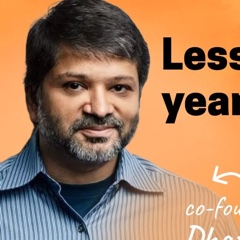
Chris Miller is VP of Product for Growth and AI at HubSpot, where he rose from individual contributor PM by treating every visible problem as his team's. The most useful thing to learn from him is to own neglected problems, define product-led growth as the product leading and humans backing it up, and stay patient through mostly failed experiments.
We look hungry so let's keep feeding us.
Relentless curiosity, radical accountability, and HubSpot’s winning growth formula | Chris Miller
Chris Miller: the story and the lessons
1Chris Miller's path from asking for a PM job to leading growth and AI
Miller got into product management by asking for the job. A founder said the company's problems would be solved by hiring a PM, and Chris asked to do it.
PM was uncommon then and little content or community existed. His world ran on waterfall, with layers of engineering managers and nobody owning the problem from the customer's view, so he learned by painful trial and error.
His first PM job kept him far from end users. The company sold to institutions that white-labeled and resold the product, so the team built to satisfy the buyer, not to delight the user.
He admits he probably shipped a lot of bad product and could not tell whether he was building to get a contract signed or to deliver magical value.
A freemium run-tracking app taught him what product management feels like. The team talked directly to users, sometimes stopping runners outside to ask what motivated them. A huge user dataset let them prove causation, and they had to state a hypothesis before building.
His mentor Farid shaped that discipline, and Chris says that is when he really became a product manager. He compares it to the Wizard of Oz scene where the film turns to color: he had not known he was blind.
He joined HubSpot in 2016 and saw product-led growth before it had a name. He arrived about a year after the free CRM launched, when there was no formed view on getting enterprise value from it. Other PMs often came up through support, while Chris was a growth PM at heart.
He pushed into conversations his title did not entitle him to and was eventually invited to them. He also thinks he bombed his first HubSpot interview, yet the decision maker still saw something to build on.
Miller pitched the CEO on pricing at a party he was not invited to. In Dublin, Chris and designer Mariah Moscato got into a Guinness Storehouse party. The CEO asked what they thought about pricing, they pitched on the spot, and they were invited to present at the next executive meeting.
The contrarian idea swam a little bit upstream, so HubSpot did not go full steam ahead, though many elements reached its pricing over time. The real payoff was being welcome back in that room.
He widened his view by spending time with other teams. He spent time on the sales floor and in other buildings, talking to people on different parts of the business.
Water cooler chats gave him context on how the pieces connect. Hybrid work makes that serendipity harder, so it takes more creativity to share knowledge.
Today he leads growth and AI, two of HubSpot's biggest bets. Growth and AI sit together because one builds the foundational technology and the other decides how customers win with it. He also advises founders on growth strategy as an operator in residence at OpenView.
2How Miller's small growth team took over HubSpot's pricing page
His team ignored its narrow charter and took a neglected business. On paper it was the sales tool activation team. It found a self-service business, then a very small share of subscription revenue, asked the owners if they were working on it, and took it when they said no.
The team chose to ask for forgiveness rather than permission. Chris calls the mindset radical accountability and an ownership mentality.
The pricing page rebuild targeted discoverability, desirability and doability. Discoverability was how people reach the page, desirability was how value props are explained, and doability was removing friction that blocks buying. A page that sent everything to sales became a transactional path for people who just want to buy.
The team that owned it happily handed it over, since it was one less code base to maintain.
The redesign changed the funnel in a step function. On release it changed the physics of the funnel and became the catalyst moment for HubSpot's product-led shift.
Chris sums up the effect on the remit the team earned: "We look hungry so let's keep feeding us."
HubSpot's shift to PLG came from efficiency, not a declared strategy. The company did not call itself a PLG company, and Chris says his team was not the sole driver. Its data and experiments gave leaders conviction to double down.
Revenue tied to go-to-market headcount is hard to scale, so the company wanted more non-linear growth, and customers wanted to try and buy without a sales engagement.
Growth and sales at HubSpot share one goal, so there is no turf war. One of Chris's first metrics was activation rate. The other was how much demand he sent to the sales team.
Connecting people to sales when the product can't answer their questions counts as a win. For people who don't want to talk, the job is a friction-free way to decide alone.
Miller used goodwill pricing to turn Covid urgency into growth. HubSpot lowered prices on some tools and added temporary leniency, which helped its starter business, following the internal phrase "never waste a good crisis".
Companies that never thought about digital marketing suddenly had to. The team did not have this tailwind on its bingo card in March 2020.
3How Chris Miller defines and starts product-led growth
Miller defines PLG as product first, humans as backstop. PLG does not mean fully self-service. Most large PLG companies run a hybrid motion, with people on parts like IT and security reviews or data migration fears.
"Your product's job is to grow revenue and you use humans as a backstop and not the other way around."
He decides where humans belong at each step to activation. Ask who the customer is, how they like to buy, whether the decision is top-down or bottom-up, how complex billing is, and how comfortable the market is with the category. Then ask whether a human is needed at each step.
Use people only where the cost is defensible. Small teams replacing spreadsheets or sticky notes buy without talking to HubSpot, while worried buyers want a person.
He asks founders why they want PLG before choosing a starting point. Reasons vary: more top-of-funnel demand, scarce implementation and success resources, or revenue efficiency. The reason decides the first step.
If top-of-funnel demand is the goal, self-service checkout is a silly place to start. Chris hears these answers as an operator in residence at OpenView.
He warns against hiring a head of growth and giving them nothing. The classic mistake is hiring a growth lead with no tooling, engineers, designer or data, then handing them a big number. Others are expecting quick payback and cutting bait early.
"When you're doing PLG at its core it's still R&D." It needs resources, patience and resilience.
Miller says fix instrumentation and data access before growth work. Product instrumentation and self-serve data access come first, because analyst bottlenecks are a terrible position.
He calls fixing data eating your veggies, because you can't improve what you can't measure.
He says small data is no excuse to skip PLG. Talking to about 10 customers can show what is happening and why, which quant data alone would not.
Experiment results are one more data point. PLG at its core is the product selling the value prop.
Miller expects most growth experiments to fail. Only about 20 to 30 percent of growth experiments win. Winning more than 30 to 40 percent of the time means the bets are too small.
Without resilience, growth PMs grasp for a win and make bets too small to matter.
4How HubSpot fills the funnel under Miller: free value and many channels
HubSpot gives small customers lasting free value so heavy users upgrade. The free software is not gimmicky and does not run out of value on day one. Heavy users hit its limits, buy, and then bring their peers.
"Give value before you extract value." HubSpot's flywheel is attract, engage and delight rather than a tactical loop, because B2B SaaS rarely gets tight loops.
Miller keeps testing new channels because channels can break overnight. A Google or Apple algorithm change can disrupt a whole funnel, and generative AI makes the future of SEO unclear. HubSpot started with SEO and content, then added the free product as a source.
A large share of revenue now flows through the product as the first conversion event. Some tested channels will flop and be sunset.
HubSpot uses free micro apps as a lead channel. Website Grader let people enter a domain and get optimization recommendations, which led naturally to using HubSpot to fix the issues. Newer ones include a brand kit generator and an email signature generator.
Chris says Website Grader worked because it opened the question of what to do next with the results.
Small bets can become products when HubSpot moves without waiting for consensus. Dharmesh's AI copilot ChatSpot was put out to see what happens. It now gets a notable number of sign-ups each month and was not on the roadmap a year earlier.
Chris says a 17-year-old SaaS company can still act with urgency by shipping and reading the data.
5How Chris Miller hires and keeps decisions customer-first
Miller hires growth PMs for curiosity first. He ranks relentless curiosity first, then resilience, coachability and a taste for simple solutions. Growth PM is still a fledgling specialty, so he does not expect ten years of PLG.
Curiosity means an insatiable need to understand and no fear of admitting you don't. The best growth leaders take no pride in complexity as long as the solution delivers the outcome.
His interviews test how candidates think and how self-aware they are. He asks a random estimate, like how many people cross the Longfellow Bridge in a week. He also asks how recent colleagues would describe the candidate in a room without them.
The final number does not matter, only the data points, ballpark and defense. The second question shows honesty about rough edges: you can be the smartest person in the room, but if people don't want to work with you you're probably not going to go very far.
His teams label every problem as business, customer or efficiency. For a business problem, they ask why it has not solved itself to find the customer problem behind it. They also write down assumptions and downstream effects, asking why repeatedly.
This stops a team solving a business problem in a way that hurts customers.
He judges decisions on a two to four year horizon. Decisions that hurt customers but help the business usually mean the time horizon is too short.
You cannot grow forever while hostile to customers unless you have no competition, so a longer view usually favors doing right by them.
He values the mid-market because no customer can hold the roadmap hostage. Enterprise vendors tie revenue to a few customers and end up building bespoke software. HubSpot spreads revenue evenly across its install base.
"There's no single customer who can hold us hostage." Chris says many product people enjoy bespoke work, but he does not.
Miller interviews people who left or never bought. He talks to former and potential customers, including friends running small businesses who chose not to use HubSpot.
Usage data shows what users do, never why. Buying decisions are often emotional, instinctive and tied to brand more than product.
His motto is that details matter, which means having taste. He borrows Stripe's product leaders' idea of taste: going deep enough into something to hold strong, informed opinions.
Taste has a point of view and can be polarizing, and riding the fence is usually not taste. He ties it to talking to customers and reading the data.

Relentless curiosity, radical accountability, and HubSpot’s winning growth formula | Chris Miller
Chris Miller explains how a small growth team at HubSpot took ownership of neglected self-service surfaces, helped shift the company toward a hybrid product-led motion, and what traits and habits make strong growth PMs. The episode is worth hearing for a practical way to scope product-led growth, a list of common PLG mistakes, and the story of a pricing page rebuild that created a step change in the funnel.
Miller got into product management by asking for the job. A founder said the company's problems would be solved by hiring a PM, and Chris asked to do it.
PM was uncommon then and little content or community existed. His world ran on waterfall, with layers of engineering managers and nobody owning the problem from the customer's view, so he learned by painful trial and error.
His first PM job kept him far from end users. The company sold to institutions that white-labeled and resold the product, so the team built to satisfy the buyer, not to delight the user.
He admits he probably shipped a lot of bad product and could not tell whether he was building to get a contract signed or to deliver magical value.
A freemium run-tracking app taught him what product management feels like. The team talked directly to users, sometimes stopping runners outside to ask what motivated them. A huge user dataset let them prove causation, and they had to state a hypothesis before building.
His mentor Farid shaped that discipline, and Chris says that is when he really became a product manager. He compares it to the Wizard of Oz scene where the film turns to color: he had not known he was blind.
He joined HubSpot in 2016 and saw product-led growth before it had a name. He arrived about a year after the free CRM launched, when there was no formed view on getting enterprise value from it. Other PMs often came up through support, while Chris was a growth PM at heart.
He pushed into conversations his title did not entitle him to and was eventually invited to them. He also thinks he bombed his first HubSpot interview, yet the decision maker still saw something to build on.
Miller pitched the CEO on pricing at a party he was not invited to. In Dublin, Chris and designer Mariah Moscato got into a Guinness Storehouse party. The CEO asked what they thought about pricing, they pitched on the spot, and they were invited to present at the next executive meeting.
The contrarian idea swam a little bit upstream, so HubSpot did not go full steam ahead, though many elements reached its pricing over time. The real payoff was being welcome back in that room.
He widened his view by spending time with other teams. He spent time on the sales floor and in other buildings, talking to people on different parts of the business.
Water cooler chats gave him context on how the pieces connect. Hybrid work makes that serendipity harder, so it takes more creativity to share knowledge.
Today he leads growth and AI, two of HubSpot's biggest bets. Growth and AI sit together because one builds the foundational technology and the other decides how customers win with it. He also advises founders on growth strategy as an operator in residence at OpenView.
His team ignored its narrow charter and took a neglected business. On paper it was the sales tool activation team. It found a self-service business, then a very small share of subscription revenue, asked the owners if they were working on it, and took it when they said no.
The team chose to ask for forgiveness rather than permission. Chris calls the mindset radical accountability and an ownership mentality.
The pricing page rebuild targeted discoverability, desirability and doability. Discoverability was how people reach the page, desirability was how value props are explained, and doability was removing friction that blocks buying. A page that sent everything to sales became a transactional path for people who just want to buy.
The team that owned it happily handed it over, since it was one less code base to maintain.
The redesign changed the funnel in a step function. On release it changed the physics of the funnel and became the catalyst moment for HubSpot's product-led shift.
Chris sums up the effect on the remit the team earned: "We look hungry so let's keep feeding us."
HubSpot's shift to PLG came from efficiency, not a declared strategy. The company did not call itself a PLG company, and Chris says his team was not the sole driver. Its data and experiments gave leaders conviction to double down.
Revenue tied to go-to-market headcount is hard to scale, so the company wanted more non-linear growth, and customers wanted to try and buy without a sales engagement.
Growth and sales at HubSpot share one goal, so there is no turf war. One of Chris's first metrics was activation rate. The other was how much demand he sent to the sales team.
Connecting people to sales when the product can't answer their questions counts as a win. For people who don't want to talk, the job is a friction-free way to decide alone.
Miller used goodwill pricing to turn Covid urgency into growth. HubSpot lowered prices on some tools and added temporary leniency, which helped its starter business, following the internal phrase "never waste a good crisis".
Companies that never thought about digital marketing suddenly had to. The team did not have this tailwind on its bingo card in March 2020.
Miller defines PLG as product first, humans as backstop. PLG does not mean fully self-service. Most large PLG companies run a hybrid motion, with people on parts like IT and security reviews or data migration fears.
"Your product's job is to grow revenue and you use humans as a backstop and not the other way around."
He decides where humans belong at each step to activation. Ask who the customer is, how they like to buy, whether the decision is top-down or bottom-up, how complex billing is, and how comfortable the market is with the category. Then ask whether a human is needed at each step.
Use people only where the cost is defensible. Small teams replacing spreadsheets or sticky notes buy without talking to HubSpot, while worried buyers want a person.
He asks founders why they want PLG before choosing a starting point. Reasons vary: more top-of-funnel demand, scarce implementation and success resources, or revenue efficiency. The reason decides the first step.
If top-of-funnel demand is the goal, self-service checkout is a silly place to start. Chris hears these answers as an operator in residence at OpenView.
He warns against hiring a head of growth and giving them nothing. The classic mistake is hiring a growth lead with no tooling, engineers, designer or data, then handing them a big number. Others are expecting quick payback and cutting bait early.
"When you're doing PLG at its core it's still R&D." It needs resources, patience and resilience.
Miller says fix instrumentation and data access before growth work. Product instrumentation and self-serve data access come first, because analyst bottlenecks are a terrible position.
He calls fixing data eating your veggies, because you can't improve what you can't measure.
He says small data is no excuse to skip PLG. Talking to about 10 customers can show what is happening and why, which quant data alone would not.
Experiment results are one more data point. PLG at its core is the product selling the value prop.
Miller expects most growth experiments to fail. Only about 20 to 30 percent of growth experiments win. Winning more than 30 to 40 percent of the time means the bets are too small.
Without resilience, growth PMs grasp for a win and make bets too small to matter.
HubSpot gives small customers lasting free value so heavy users upgrade. The free software is not gimmicky and does not run out of value on day one. Heavy users hit its limits, buy, and then bring their peers.
"Give value before you extract value." HubSpot's flywheel is attract, engage and delight rather than a tactical loop, because B2B SaaS rarely gets tight loops.
Miller keeps testing new channels because channels can break overnight. A Google or Apple algorithm change can disrupt a whole funnel, and generative AI makes the future of SEO unclear. HubSpot started with SEO and content, then added the free product as a source.
A large share of revenue now flows through the product as the first conversion event. Some tested channels will flop and be sunset.
HubSpot uses free micro apps as a lead channel. Website Grader let people enter a domain and get optimization recommendations, which led naturally to using HubSpot to fix the issues. Newer ones include a brand kit generator and an email signature generator.
Chris says Website Grader worked because it opened the question of what to do next with the results.
Small bets can become products when HubSpot moves without waiting for consensus. Dharmesh's AI copilot ChatSpot was put out to see what happens. It now gets a notable number of sign-ups each month and was not on the roadmap a year earlier.
Chris says a 17-year-old SaaS company can still act with urgency by shipping and reading the data.
Miller hires growth PMs for curiosity first. He ranks relentless curiosity first, then resilience, coachability and a taste for simple solutions. Growth PM is still a fledgling specialty, so he does not expect ten years of PLG.
Curiosity means an insatiable need to understand and no fear of admitting you don't. The best growth leaders take no pride in complexity as long as the solution delivers the outcome.
His interviews test how candidates think and how self-aware they are. He asks a random estimate, like how many people cross the Longfellow Bridge in a week. He also asks how recent colleagues would describe the candidate in a room without them.
The final number does not matter, only the data points, ballpark and defense. The second question shows honesty about rough edges: you can be the smartest person in the room, but if people don't want to work with you you're probably not going to go very far.
His teams label every problem as business, customer or efficiency. For a business problem, they ask why it has not solved itself to find the customer problem behind it. They also write down assumptions and downstream effects, asking why repeatedly.
This stops a team solving a business problem in a way that hurts customers.
He judges decisions on a two to four year horizon. Decisions that hurt customers but help the business usually mean the time horizon is too short.
You cannot grow forever while hostile to customers unless you have no competition, so a longer view usually favors doing right by them.
He values the mid-market because no customer can hold the roadmap hostage. Enterprise vendors tie revenue to a few customers and end up building bespoke software. HubSpot spreads revenue evenly across its install base.
"There's no single customer who can hold us hostage." Chris says many product people enjoy bespoke work, but he does not.
Miller interviews people who left or never bought. He talks to former and potential customers, including friends running small businesses who chose not to use HubSpot.
Usage data shows what users do, never why. Buying decisions are often emotional, instinctive and tied to brand more than product.
His motto is that details matter, which means having taste. He borrows Stripe's product leaders' idea of taste: going deep enough into something to hold strong, informed opinions.
Taste has a point of view and can be polarizing, and riding the fence is usually not taste. He ties it to talking to customers and reading the data.
 HubSpot