Asia Paloni
Chief Product Officer at Welltory
Where to hear and read about Asia Paloni1 episode or test
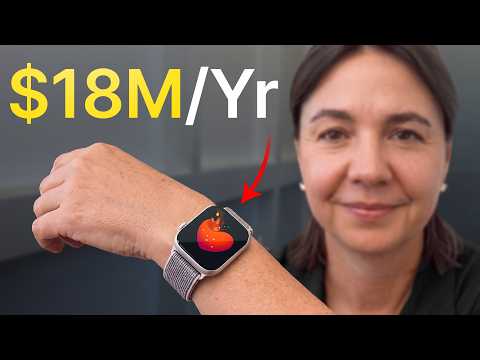
Asia Paloni is Chief Product Officer at Welltory, a 10-year-old health app that reads Apple Watch data and reaches about 18 million in ARR. The thing most worth learning from her is to show each user their own data as the problem, then close on what they lose today if they don't pay.
I think the most powerful proof that we use actually is that we are showing you your own data.
How to Build an $18M/Year Apple Watch App (FREE MASTERCLASS)
Asia Paloni: the story and the lessons
1Asia Paloni and what Welltory sells
Welltory sells back the evenings that fatigue steals. The app reads physiological signals from the watch, shows when in the day energy drains, and suggests personal fixes. The company is 10 years old, with about 18 million ARR and close to 18 million downloads.
Her picture of the user is someone who plans to cook, see their kids or do creative work, then ends up scrolling TikTok on the couch.
Paloni's team reached its onboarding only after failing at it repeatedly. The current flow came after what she describes as failing miserably over and over, especially at the closing step.
She says the last ingredient, the fear-of-loss close, is where she kept failing spectacularly.
The product's value is interpreting data that Apple Health only displays. Apple Health shows a heart rate variability number without interpreting it. Welltory explains what the number means and measures stress as a real-time process, not an abstract HRV comparison.
Higher variability is not always better, and overnight readings say more about rest than single readings taken during the day.
Paloni uses shocking short-term hooks on Meta ads, not long-term promises. Promises like 'you'll have more energy' work poorly on Meta, where people scroll fast. Each ad instead clings to a scary process inside the body, such as cortisol or what happens in the arteries.
The ad can't carry the science, but people already link stress and cortisol to something bad, so the hook still works. In her words: "Those kinds of hooks that promise a long-term value tend to work poorly in like social media on Meta."
Product borrows the promise from the ads, not their features. Marketing and product lived in silos for years, and closing the rift took about a year and a half to two years. Product now takes the overall promise of making invisible body processes visible.
She says it would be a mistake to build the specific features an ad shows, since simplified visuals stand in for features that would be boring to explain.
Paloni gives AI less data and more meaning. Dumping all health data into a chatbot confuses it and produces standard, weak advice. Welltory turns the day's signals into a story of drain and recovery, then layers on the user's own notes.
That lets the AI suggest what triggered each shift, and over longer periods it can tell how a person's health changed and why. Her next frontier is an AI that knows how the body feels and adapts its tone.
2Paloni's six-ingredient framework for onboarding
Paloni builds every onboarding from six ingredients in a set order. The order is human problem, promise, key, mechanism, proof, and fear of missing out. She says the formula can pitch almost anything, not only onboarding.
At Welltory the promise stays curious (hook up your data and we'll show you what's going on), the key is 'sedentary stress', and the mechanism is the app showing in real time when bad stress hits and when you relieve it.
She spends months learning the user's specific emotional problem. The problem has to be specific and felt, including the moment in the day it hurts most. She built her picture of the user from the podcast The Dream, whose host is exhausted and feels her life slipping away.
She says not spending enough time here is the biggest pitch mistake and that no one, AI included, can do it for you: "You have to kind of like sit with it, I think, for many months."
As a former copywriter, she ranks the story arc above the words. She used to fixate on perfect copy per screen, but onboarding only worked once the full arc was in place.
Strong visuals and animation then carry the emotion where the product is invisible. She credits her design team for the animated stress inside the arteries. Her line: "this formula matters a lot more than the actual words I'm using."
Showing users their own data is her strongest proof. The app shows the user's real Apple Watch data back with interpretation, such as '192 minutes' of sedentary stress today. It works before any payment.
Five-star reviews, millions of users, journal publications and university partnerships are scattered through the flow as secondary proof.
She closes with what users lose tonight, not what they could gain. The close says that without paying you won't see when bad stress hits, it keeps draining you, and you'll be just as tired tonight. A benefits ending ('more energy, you'll feel great', an energy bank filling up) converted worse.
The close is scary by design. She gives no data on its effect on churn, refunds or trust.
3How Paloni sequences the Welltory onboarding screens
Paloni puts the health-data sync button on screen one. The first screen skips intro slides and goes straight to the sync ask, with a curiosity hook like 'Your Apple Watch knows what makes you tired and stressed.' Over 90% of users hook up their data.
Every prelude the team tried did worse. She calls the 90% "remarkable in this day and age" but admits the first screen hasn't been tested thoroughly.
She asks for notifications right away, against best practice. Notification permission comes before much value is shown, which most teams treat as a mistake. It worked best for Welltory in that position.
Because the app processes health data, several agreement screens follow, and it states plainly that it never sells or shares data. A teaser shows how much data is being processed while the analysis runs.
Questions segment users, with answer options for both stress and low energy. Over half of women, closer to 70% by her estimate, say they are low on energy or drained. Men say they are sometimes stressed or doing fine, even when their data looks worse.
Six answer options cover both wordings so each person finds one that fits.
A simple question brings users back to why they came. After the permission screens, a screen like 'Ever feel tired even when you haven't done much all day?' slows things down. It is meant to rebuild the emotion, not to win a yes.
The user's own stress number for the day follows. She puts it as wanting them "to come back to an emotional place where they remember why they came here."
Bad news is followed straight away by an empowerment screen. After showing 192 stress minutes, the app shows a day timeline with a blue recovery period and says the body fought back. A 30-day calendar then shows stress building, with only about 20 to 30% relieved unaided.
Telling people they are stressed makes them feel helpless, so the shift to recovery stops the number from feeling hopeless before the paywall.
4What Paloni has learned about paywalls and conversion
Paloni leads the paywall with the problem, not benefits. The big headline is 'Stress is building right now', and 'see what's driving it and how to interrupt it' is only the subheadline. Screens with weekly and monthly progress charts did worse.
She ranks features as the worst pitch and benefits as slightly better. In her view: "benefits are things that actually work better in like brand stories."
She picks fear or benefit framing by whether the app has a daily trigger. Uber and Spotify have trigger moments, so selling the benefit is easy. Health, fitness and probably language learning have none, so loss framing works better.
Her rule: find the moment of deepest pain your product solves, and if the user isn't feeling it, bring them back into that state first.
Welltory keeps a free core and a hardish paywall with no trial. Free covers blood pressure analysis, energy battery, stress built up, activity and sleep score. Paid unlocks the day timeline, trend analysis and activity recommendations.
The paywall shows $99.99 a year, or $8.83 a month, with a monthly plan only sometimes and the option to close it. Pricing tests are limited because Welltory is not big enough to run more. She says the immediate, possibly life-saving signals are kept free.
Most of her conversions come after day one. Over 60% of conversions happen over the following couple of months, after a burst on day one. That is unusual for health and fitness apps.
Users see proactive daily stats and build the habit, so she treats day-one non-converters as not lost and re-exposes the paywall.

How to Build an $18M/Year Apple Watch App (FREE MASTERCLASS)
Welltory's CPO walks through the onboarding of a health app that reads Apple Watch data, covering a six-ingredient pitch framework, personal-data proof and a fear-of-loss close. The app reaches about 18 million ARR and nearly 18 million downloads after 10 years, and over 90% of users sync health data on the first screen.
Welltory sells back the evenings that fatigue steals. The app reads physiological signals from the watch, shows when in the day energy drains, and suggests personal fixes. The company is 10 years old, with about 18 million ARR and close to 18 million downloads.
Her picture of the user is someone who plans to cook, see their kids or do creative work, then ends up scrolling TikTok on the couch.
Paloni's team reached its onboarding only after failing at it repeatedly. The current flow came after what she describes as failing miserably over and over, especially at the closing step.
She says the last ingredient, the fear-of-loss close, is where she kept failing spectacularly.
The product's value is interpreting data that Apple Health only displays. Apple Health shows a heart rate variability number without interpreting it. Welltory explains what the number means and measures stress as a real-time process, not an abstract HRV comparison.
Higher variability is not always better, and overnight readings say more about rest than single readings taken during the day.
Paloni uses shocking short-term hooks on Meta ads, not long-term promises. Promises like 'you'll have more energy' work poorly on Meta, where people scroll fast. Each ad instead clings to a scary process inside the body, such as cortisol or what happens in the arteries.
The ad can't carry the science, but people already link stress and cortisol to something bad, so the hook still works. In her words: "Those kinds of hooks that promise a long-term value tend to work poorly in like social media on Meta."
Product borrows the promise from the ads, not their features. Marketing and product lived in silos for years, and closing the rift took about a year and a half to two years. Product now takes the overall promise of making invisible body processes visible.
She says it would be a mistake to build the specific features an ad shows, since simplified visuals stand in for features that would be boring to explain.
Paloni gives AI less data and more meaning. Dumping all health data into a chatbot confuses it and produces standard, weak advice. Welltory turns the day's signals into a story of drain and recovery, then layers on the user's own notes.
That lets the AI suggest what triggered each shift, and over longer periods it can tell how a person's health changed and why. Her next frontier is an AI that knows how the body feels and adapts its tone.
Paloni builds every onboarding from six ingredients in a set order. The order is human problem, promise, key, mechanism, proof, and fear of missing out. She says the formula can pitch almost anything, not only onboarding.
At Welltory the promise stays curious (hook up your data and we'll show you what's going on), the key is 'sedentary stress', and the mechanism is the app showing in real time when bad stress hits and when you relieve it.
She spends months learning the user's specific emotional problem. The problem has to be specific and felt, including the moment in the day it hurts most. She built her picture of the user from the podcast The Dream, whose host is exhausted and feels her life slipping away.
She says not spending enough time here is the biggest pitch mistake and that no one, AI included, can do it for you: "You have to kind of like sit with it, I think, for many months."
As a former copywriter, she ranks the story arc above the words. She used to fixate on perfect copy per screen, but onboarding only worked once the full arc was in place.
Strong visuals and animation then carry the emotion where the product is invisible. She credits her design team for the animated stress inside the arteries. Her line: "this formula matters a lot more than the actual words I'm using."
Showing users their own data is her strongest proof. The app shows the user's real Apple Watch data back with interpretation, such as '192 minutes' of sedentary stress today. It works before any payment.
Five-star reviews, millions of users, journal publications and university partnerships are scattered through the flow as secondary proof.
She closes with what users lose tonight, not what they could gain. The close says that without paying you won't see when bad stress hits, it keeps draining you, and you'll be just as tired tonight. A benefits ending ('more energy, you'll feel great', an energy bank filling up) converted worse.
The close is scary by design. She gives no data on its effect on churn, refunds or trust.
Paloni puts the health-data sync button on screen one. The first screen skips intro slides and goes straight to the sync ask, with a curiosity hook like 'Your Apple Watch knows what makes you tired and stressed.' Over 90% of users hook up their data.
Every prelude the team tried did worse. She calls the 90% "remarkable in this day and age" but admits the first screen hasn't been tested thoroughly.
She asks for notifications right away, against best practice. Notification permission comes before much value is shown, which most teams treat as a mistake. It worked best for Welltory in that position.
Because the app processes health data, several agreement screens follow, and it states plainly that it never sells or shares data. A teaser shows how much data is being processed while the analysis runs.
Questions segment users, with answer options for both stress and low energy. Over half of women, closer to 70% by her estimate, say they are low on energy or drained. Men say they are sometimes stressed or doing fine, even when their data looks worse.
Six answer options cover both wordings so each person finds one that fits.
A simple question brings users back to why they came. After the permission screens, a screen like 'Ever feel tired even when you haven't done much all day?' slows things down. It is meant to rebuild the emotion, not to win a yes.
The user's own stress number for the day follows. She puts it as wanting them "to come back to an emotional place where they remember why they came here."
Bad news is followed straight away by an empowerment screen. After showing 192 stress minutes, the app shows a day timeline with a blue recovery period and says the body fought back. A 30-day calendar then shows stress building, with only about 20 to 30% relieved unaided.
Telling people they are stressed makes them feel helpless, so the shift to recovery stops the number from feeling hopeless before the paywall.
Paloni leads the paywall with the problem, not benefits. The big headline is 'Stress is building right now', and 'see what's driving it and how to interrupt it' is only the subheadline. Screens with weekly and monthly progress charts did worse.
She ranks features as the worst pitch and benefits as slightly better. In her view: "benefits are things that actually work better in like brand stories."
She picks fear or benefit framing by whether the app has a daily trigger. Uber and Spotify have trigger moments, so selling the benefit is easy. Health, fitness and probably language learning have none, so loss framing works better.
Her rule: find the moment of deepest pain your product solves, and if the user isn't feeling it, bring them back into that state first.
Welltory keeps a free core and a hardish paywall with no trial. Free covers blood pressure analysis, energy battery, stress built up, activity and sleep score. Paid unlocks the day timeline, trend analysis and activity recommendations.
The paywall shows $99.99 a year, or $8.83 a month, with a monthly plan only sometimes and the option to close it. Pricing tests are limited because Welltory is not big enough to run more. She says the immediate, possibly life-saving signals are kept free.
Most of her conversions come after day one. Over 60% of conversions happen over the following couple of months, after a burst on day one. That is unusual for health and fitness apps.
Users see proactive daily stats and build the habit, so she treats day-one non-converters as not lost and re-exposes the paywall.