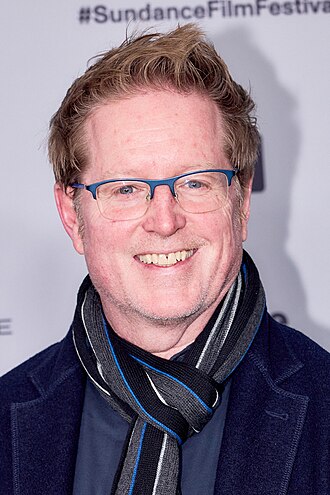
Andrew Stanton
Director of Finding Nemo and WALL-E, second animator at Pixar
Where to hear and read about Andrew Stanton1 episode or test

Andrew Stanton was Pixar's second animator, has worked there for 30 years, and directed Finding Nemo and WALL-E. The habit most worth taking from him is to write the bad sentence first, because stories are dug up through many wrong drafts and the good sentence only comes after them.
you don't get to get to the nice sentence until you've written the bad sentence
Pixar's Secret Storytelling Formula (Andrew Stanton Interview)
Andrew Stanton: the story and the lessons
1Andrew Stanton's path through Pixar
Stanton was Pixar's second animator and has stayed 30 years. He directed Finding Nemo and WALL-E, was executive producer of Inside Out and Ratatouille, and is now working on Toy Story 5.
He joined when Pixar was a small startup off the radar, safe and comfortable enough to fail.
He says he learned entertainment from John Lasseter. Stanton calls Lasseter a natural-born entertainer. The group around him was Stanton, Pete Docter and Joe Ranft, later joined by Lee Unkrich.
Like the Beatles, they wrote what they wanted to hear themselves, and they found this out making commercials before Toy Story. Even broken work came out more entertaining, which Stanton calls an "entertainment green thumb".
Steve Jobs taught him to wait in silence for the right answer. Jobs let a room sit silent until he felt the right response, which kept talk on the core issue. Stanton first read this as guts, then as wisdom.
Jobs told Lasseter that anything built on computers has a shelf life of about five years, and he saw Pixar might make the next Snow White. He spent 8 to 10 years with Pixar, a couple of days a week, which Stanton calls his "10 years in the desert".
Finding Nemo came from Stanton's own overprotective parenting. While working on A Bug's Life he saw his four-year-old son too little, and on weekends he spent the time saying "Don't touch that" and "Don't run into the street".
He guessed this was a common problem for loving parents. The premise, fear denies a good father from being one, took about three years to find.
WALL-E began as the saddest idea the team could find. Four Brain Trust members threw out subjects, and one became A Bug's Life. A robot alone on an abandoned planet of trash, not knowing its job is futile, was the saddest, and it was called Trash Planet for a couple of years.
Pete Docter's attempts went nowhere, so Stanton picked it up after Nemo.
2How Stanton finds a story instead of planning it
Stanton believes a great story already exists and the writer digs it up. He compares writing to an archaeological dig. You take credit for choosing where to dig and for digging hard, not for which bones come up first.
He likens it to Michelangelo finding the statue in the marble.
He reshapes a film late to fit the dinosaur he actually uncovered. Executives ask why the team is digging in one place, and the director promises a Tyrannosaurus Rex from two bones. Pixar structured its production flow so it can shift at the 11th hour.
Most places blink and keep the promised dinosaur. His rule: "fix the story to fit the dinosaur that we actually uncovered rather than the dinosaur we promised".
He writes one sentence naming character, conflict and conclusion. He borrowed the idea of a premise from Lajos Egri's The Art of Dramatic Writing. He keeps a page open, writes sentence after sentence, and treats each as a litmus test, not a rule.
Once the sentence is right, it tells him what to keep and cut in everything written or still to write.
He tells stuck writers to write the bad sentence first. When someone lacks an ending or a middle, he tells them to finish the sentence anyway and promises it will be bad, so the pressure is off.
If you knew the tenth try would nail it, you would not waste the first eight. Talking about the symphony instead of writing it is "whistling on the steps of Carnegie Hall".
He swings between analyzing his pages and just playing. He compares it to a teeter-totter. On one side he looks for structure and meaning, on the other he jams without thinking. He rarely gets it right in the first six drafts and is happy to hit it on the seventh or eighth.
He wants the answer before others must commit to it, like an architect before the house is built.
He writes down every idea and trusts the ones that keep returning. He jots thoughts into his phone so he need not fear forgetting, then gives weight to what still interests him weeks, days or years later.
He also needs a deadline, and promising a date to someone else gets him moving because he is dutiful about promises to others.
After 10 to 15 years of study, he now plans little. He soaked up every lesson he could, and it turned into analysis paralysis. Now he walks into the grocery store without a recipe and sees what he cooks.
He says he needed the first 15 years to prove he could do it, and now needs a new source of challenge.
3How Stanton keeps an audience hooked
Stanton defines drama as anticipation mingled with uncertainty. He credits William Archer. A mystery is only low-hanging fruit. The harder skill is a line of dialogue that makes you dying to hear the reply.
Two people talking becomes drama if a tapping at the window keeps getting louder.
He diagnoses flat drafts by finding where the story unclamped. He pictures a San Francisco cable car gripping a chain that never stops. He asks when the story accidentally let go, or whether it ever gripped.
A second image is a beach ball tossed into a concert crowd: once it lands on you, you ignore the band. A slow or fast film works if you never think about anything else.
He checks every scene for change. Citing Egri, he says even a rock changes, growing moss or drying in the sun. Attention drops when there is not enough change.
Change can be as small as an eye shift or a pause where something active suddenly isn't.
He pairs opposites to create drama in romance and buddy stories. He learned on Toy Story that a buddy story needs opposing agendas or there is no drama. In WALL-E, he is a box and Eve is a circle.
The opposites do not have to be 100% opposed.
He gives each character a spine that never changes. He learned the term from acting coach Judith Weston. Michael Corleone's spine is to please his father, even after the father dies. WALL-E's was to find the beauty.
Don't force one when time runs out. Keep at it until it feels truthful.
He tests dialogue by fearing a really good actor saying it. A line should sound like only that character could say it, and an actor's voice shows at once whether it fits. Tom Hanks coming in for Toy Story was his example.
Woody comes easiest because his voice blends Hanks's sound with Stanton's own cynical but soft nature as a new father. Dory is the most fun, because Stanton is a class clown.
He formatted WALL-E's script so no one could skim it. Readers skim description and jump to dialogue, and WALL-E had almost none. He copied Walter Hill's 1979 Alien draft, which broke lines into short left-justified bursts.
The page then reads at about a minute a page, and a single word like "steam" on its own line marks a moment to savor.
His WALL-E team studied Chaplin and Keaton to learn wordless storytelling. They watched the films at lunch a couple of days a week until they had seen nearly all of them. The subjects were sophisticated and got across with few title cards.
Stanton says dialogue added little to film and may have cost something. Of the experience: "It made you brave."
He wants endings that surprise but feel inevitable. An ending works when you didn't see it coming but no better answer exists. He is now more impressed by quiet films about inner conflict.
For those films, a pause and a sigh can be the most satisfying payoff.
4Stanton on feedback, the Brain Trust and safe failure
Stanton watches how audiences behave in the dark, not what they say. The post-screening Q&A mostly shows what is unclear, like a character name nobody caught. He watches for people laughing, smiling and leaning forward.
If they say they disliked it once the lights come up, he still trusts their behavior: "I believe how they were when the lights were down." A parent says a scene is too dark and the kid shakes their head.
He fixed Nemo's cause, not the notes everyone gave him. Everyone said the father was too neurotic and to recast or rewrite him. Lee Unkrich and the editor suggested moving the flashbacks of the mother's death into one opening scene.
Stanton thought it too dark, but they tried it because it's just a file. Complaints about the father vanished, and he says the notes would have had him change "the wrong thing for the wrong reasons".
The Brain Trust began as five Toy Story makers who refused to split. Lasseter, Ranft, Docter, Stanton and Unkrich were told to make solo films and compared that to telling the Beatles to make solo albums. They chose to act like doctors with individual patients.
The same group made A Bug's Life and was recalled to redo Toy Story 2, like a volunteer fire department.
He says to keep a feedback group under six people. Past about ten people, there is an audience, people feel judged and honesty drops. About 15 years in, it became a club everyone wanted to join, and Stanton felt it lost its mojo.
Members should be a mix of people on and off your show, since objectivity matters more than any rule. "The minute you're over 10 people in a room, there's an audience."
Good feedback makes the writer want to redo the homework. His goal in advising is not to say what is wrong but to inspire the person to try again. He calls constructive criticism an art in itself.
A good small group is where you can admit "I don't know what I'm doing" without losing credibility.
Stanton says a director guards the vision but does not own it. Once the vision is found, the director keeps it and is the constant reference for the crew. He says the lone-director story holds only a modicum of truth.
He says he is not a writer and hopes people will help him "mess with it correctly".
He keeps failure safe by remembering why he plays. Making a film is like playing a new instrument each time, so you must practice and jam. He says he is paid to play baseball and must win the World Series, so he recalls playing for love in the backyard.
He says if you're not falling off your bike trying it all the time, you are playing it too safe.
5Why Stanton writes for himself
Pixar never wrote for kids, only for itself. Stanton kept what he loved as a child, including Sesame Street, Monty Python and Bugs Bunny, and added Lawrence of Arabia and Pulp Fiction. The only check is not accidentally excluding younger ages.
Kids spend their first five years decoding adults talking over their heads, so they read tone and body language. He worries more about adults being too slow.
He says how a story is told matters as much as its content. After the basics, the question is what is worth telling, but the telling is often why you enjoy something more. He would rather have a bad joke told well than a good joke told poorly.
He recommends The Art of Dramatic Writing and How Not to Write a Screenplay as foundations.
Stanton says Pixar's 22 storytelling rules are a myth. The widely shared list came from an ex-Pixar employee, not the studio. Pixar may have followed some of them but has no written tenets.
His verdict: just because it's online doesn't mean it's real.

Pixar's Secret Storytelling Formula (Andrew Stanton Interview)
Andrew Stanton explains how Pixar stories get found rather than planned: you test a one-sentence premise, keep the audience pulled forward, and rewrite until the real story shows itself. The habit worth hearing is his instruction to just write the bad sentence, because the good one only comes after it.
Stanton was Pixar's second animator and has stayed 30 years. He directed Finding Nemo and WALL-E, was executive producer of Inside Out and Ratatouille, and is now working on Toy Story 5.
He joined when Pixar was a small startup off the radar, safe and comfortable enough to fail.
He says he learned entertainment from John Lasseter. Stanton calls Lasseter a natural-born entertainer. The group around him was Stanton, Pete Docter and Joe Ranft, later joined by Lee Unkrich.
Like the Beatles, they wrote what they wanted to hear themselves, and they found this out making commercials before Toy Story. Even broken work came out more entertaining, which Stanton calls an "entertainment green thumb".
Steve Jobs taught him to wait in silence for the right answer. Jobs let a room sit silent until he felt the right response, which kept talk on the core issue. Stanton first read this as guts, then as wisdom.
Jobs told Lasseter that anything built on computers has a shelf life of about five years, and he saw Pixar might make the next Snow White. He spent 8 to 10 years with Pixar, a couple of days a week, which Stanton calls his "10 years in the desert".
Finding Nemo came from Stanton's own overprotective parenting. While working on A Bug's Life he saw his four-year-old son too little, and on weekends he spent the time saying "Don't touch that" and "Don't run into the street".
He guessed this was a common problem for loving parents. The premise, fear denies a good father from being one, took about three years to find.
WALL-E began as the saddest idea the team could find. Four Brain Trust members threw out subjects, and one became A Bug's Life. A robot alone on an abandoned planet of trash, not knowing its job is futile, was the saddest, and it was called Trash Planet for a couple of years.
Pete Docter's attempts went nowhere, so Stanton picked it up after Nemo.
Stanton believes a great story already exists and the writer digs it up. He compares writing to an archaeological dig. You take credit for choosing where to dig and for digging hard, not for which bones come up first.
He likens it to Michelangelo finding the statue in the marble.
He reshapes a film late to fit the dinosaur he actually uncovered. Executives ask why the team is digging in one place, and the director promises a Tyrannosaurus Rex from two bones. Pixar structured its production flow so it can shift at the 11th hour.
Most places blink and keep the promised dinosaur. His rule: "fix the story to fit the dinosaur that we actually uncovered rather than the dinosaur we promised".
He writes one sentence naming character, conflict and conclusion. He borrowed the idea of a premise from Lajos Egri's The Art of Dramatic Writing. He keeps a page open, writes sentence after sentence, and treats each as a litmus test, not a rule.
Once the sentence is right, it tells him what to keep and cut in everything written or still to write.
He tells stuck writers to write the bad sentence first. When someone lacks an ending or a middle, he tells them to finish the sentence anyway and promises it will be bad, so the pressure is off.
If you knew the tenth try would nail it, you would not waste the first eight. Talking about the symphony instead of writing it is "whistling on the steps of Carnegie Hall".
He swings between analyzing his pages and just playing. He compares it to a teeter-totter. On one side he looks for structure and meaning, on the other he jams without thinking. He rarely gets it right in the first six drafts and is happy to hit it on the seventh or eighth.
He wants the answer before others must commit to it, like an architect before the house is built.
He writes down every idea and trusts the ones that keep returning. He jots thoughts into his phone so he need not fear forgetting, then gives weight to what still interests him weeks, days or years later.
He also needs a deadline, and promising a date to someone else gets him moving because he is dutiful about promises to others.
After 10 to 15 years of study, he now plans little. He soaked up every lesson he could, and it turned into analysis paralysis. Now he walks into the grocery store without a recipe and sees what he cooks.
He says he needed the first 15 years to prove he could do it, and now needs a new source of challenge.
Stanton defines drama as anticipation mingled with uncertainty. He credits William Archer. A mystery is only low-hanging fruit. The harder skill is a line of dialogue that makes you dying to hear the reply.
Two people talking becomes drama if a tapping at the window keeps getting louder.
He diagnoses flat drafts by finding where the story unclamped. He pictures a San Francisco cable car gripping a chain that never stops. He asks when the story accidentally let go, or whether it ever gripped.
A second image is a beach ball tossed into a concert crowd: once it lands on you, you ignore the band. A slow or fast film works if you never think about anything else.
He checks every scene for change. Citing Egri, he says even a rock changes, growing moss or drying in the sun. Attention drops when there is not enough change.
Change can be as small as an eye shift or a pause where something active suddenly isn't.
He pairs opposites to create drama in romance and buddy stories. He learned on Toy Story that a buddy story needs opposing agendas or there is no drama. In WALL-E, he is a box and Eve is a circle.
The opposites do not have to be 100% opposed.
He gives each character a spine that never changes. He learned the term from acting coach Judith Weston. Michael Corleone's spine is to please his father, even after the father dies. WALL-E's was to find the beauty.
Don't force one when time runs out. Keep at it until it feels truthful.
He tests dialogue by fearing a really good actor saying it. A line should sound like only that character could say it, and an actor's voice shows at once whether it fits. Tom Hanks coming in for Toy Story was his example.
Woody comes easiest because his voice blends Hanks's sound with Stanton's own cynical but soft nature as a new father. Dory is the most fun, because Stanton is a class clown.
He formatted WALL-E's script so no one could skim it. Readers skim description and jump to dialogue, and WALL-E had almost none. He copied Walter Hill's 1979 Alien draft, which broke lines into short left-justified bursts.
The page then reads at about a minute a page, and a single word like "steam" on its own line marks a moment to savor.
His WALL-E team studied Chaplin and Keaton to learn wordless storytelling. They watched the films at lunch a couple of days a week until they had seen nearly all of them. The subjects were sophisticated and got across with few title cards.
Stanton says dialogue added little to film and may have cost something. Of the experience: "It made you brave."
He wants endings that surprise but feel inevitable. An ending works when you didn't see it coming but no better answer exists. He is now more impressed by quiet films about inner conflict.
For those films, a pause and a sigh can be the most satisfying payoff.
Stanton watches how audiences behave in the dark, not what they say. The post-screening Q&A mostly shows what is unclear, like a character name nobody caught. He watches for people laughing, smiling and leaning forward.
If they say they disliked it once the lights come up, he still trusts their behavior: "I believe how they were when the lights were down." A parent says a scene is too dark and the kid shakes their head.
He fixed Nemo's cause, not the notes everyone gave him. Everyone said the father was too neurotic and to recast or rewrite him. Lee Unkrich and the editor suggested moving the flashbacks of the mother's death into one opening scene.
Stanton thought it too dark, but they tried it because it's just a file. Complaints about the father vanished, and he says the notes would have had him change "the wrong thing for the wrong reasons".
The Brain Trust began as five Toy Story makers who refused to split. Lasseter, Ranft, Docter, Stanton and Unkrich were told to make solo films and compared that to telling the Beatles to make solo albums. They chose to act like doctors with individual patients.
The same group made A Bug's Life and was recalled to redo Toy Story 2, like a volunteer fire department.
He says to keep a feedback group under six people. Past about ten people, there is an audience, people feel judged and honesty drops. About 15 years in, it became a club everyone wanted to join, and Stanton felt it lost its mojo.
Members should be a mix of people on and off your show, since objectivity matters more than any rule. "The minute you're over 10 people in a room, there's an audience."
Good feedback makes the writer want to redo the homework. His goal in advising is not to say what is wrong but to inspire the person to try again. He calls constructive criticism an art in itself.
A good small group is where you can admit "I don't know what I'm doing" without losing credibility.
Stanton says a director guards the vision but does not own it. Once the vision is found, the director keeps it and is the constant reference for the crew. He says the lone-director story holds only a modicum of truth.
He says he is not a writer and hopes people will help him "mess with it correctly".
He keeps failure safe by remembering why he plays. Making a film is like playing a new instrument each time, so you must practice and jam. He says he is paid to play baseball and must win the World Series, so he recalls playing for love in the backyard.
He says if you're not falling off your bike trying it all the time, you are playing it too safe.
Pixar never wrote for kids, only for itself. Stanton kept what he loved as a child, including Sesame Street, Monty Python and Bugs Bunny, and added Lawrence of Arabia and Pulp Fiction. The only check is not accidentally excluding younger ages.
Kids spend their first five years decoding adults talking over their heads, so they read tone and body language. He worries more about adults being too slow.
He says how a story is told matters as much as its content. After the basics, the question is what is worth telling, but the telling is often why you enjoy something more. He would rather have a bad joke told well than a good joke told poorly.
He recommends The Art of Dramatic Writing and How Not to Write a Screenplay as foundations.
Stanton says Pixar's 22 storytelling rules are a myth. The widely shared list came from an ex-Pixar employee, not the studio. Pixar may have followed some of them but has no written tenets.
His verdict: just because it's online doesn't mean it's real.
 Pixar

