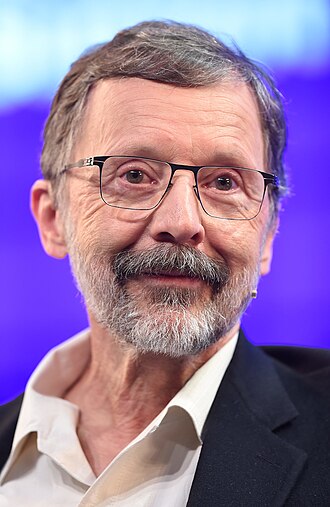
Ed Catmull
Co-founder of Pixar
Where to hear and read about Ed Catmull2 episodes and tests

 David SenraBuilding Pixar, Working With Steve Jobs, and Cultivating Creativity | Ed Catmull

 FoundersEd Catmull (Founder of Pixar)
Ed Catmull is the computer scientist who chased the first computer-animated feature film for two decades, co-founded Pixar, and later ran Disney Animation as well. The most useful thing to learn from him is how he treated culture as the product: he designed rooms, rules and signals so people could be honest about broken work, and he showed that a strong team outlasts any single idea or genius.
How much can I do on my own? It's not the right question. It's how much can I do with others?
Building Pixar, Working With Steve Jobs, and Cultivating Creativity | Ed Catmull
Ed Catmull: the story and the lessons
1Ed Catmull's path from Utah to Lucasfilm
Walt Disney and Einstein were Catmull's boyhood heroes. Every Sunday before 7 p.m. he sat on the floor to watch Disney explain how the magic was made, from synchronized sound in Steamboat Willie to music in Fantasia.
He could not draw well enough to be an animator, so he needed another way in. He also copied Disney's habit of crediting the pioneers he built on.
His father taught him that every challenge means getting smarter. His father, one of 14 children of an Idaho dirt farmer, put himself through college and built the family house by hand. Catmull graduated from the University of Utah in 1969 in physics and computer science.
Utah's light-touch graduate lab became his model for Pixar. Ivan Sutherland and Dave Evans let students chase whatever interested them. Catmull slept on the computer room floor for machine time, and at 26 set his goal: computer animation beautiful enough for movies.
Classmate Jim Clark went on to found Silicon Graphics and Netscape. Catmull later said those four years were so good he wanted to work that way for life.
He turned down Disney in 1973 because it led away from his goal. Disney had no interest in an animator exchange with Utah and offered him work on the Space Mountain ride instead. He declined.
"Nobody in the industry thinks technology is critical."
Catmull published everything to recruit researchers to Long Island. At New York Tech, far from any graphics hotbed, he shared all the group's work so the best people would come to join a bigger community around the new SIGGRAPH.
When George Lucas's team asked him who else they should talk to, he gave a long list of rival names while other candidates held back. That openness set him apart.
His first management job proved half his theories wrong. He had never managed anyone, boxed himself into a corner, and found newer people treated him differently as the boss. By the move to Lucasfilm, about half his theories were right and half were "a crock."
He found the hard part of managing as interesting as the technology.
2How Pixar survived its money-losing early years
George Lucas built the group, then sold it. Star Wars money let Lucas launch a computer division in July 1979. His divorce later put the graphics group up for sale, and over 20 prospects passed.
General Motors backed out one week before signing, which Catmull is thankful for because it opened the way for Steve Jobs.
Jobs spun Pixar out of Lucasfilm and kept funding it. Jobs paid $5 million for the spin-out, pledged $5 million more, and eventually sank 54 million of his own money into Pixar before it turned a profit.
Between 1987 and 1991 he tried three times to sell it, once asking Microsoft for 120 million and being offered 90 million, but could never let it go. Catmull read the attempts as a search for outside validation.
Pixar only turned a corner when it dropped hardware. The Pixar Image Computer sold poorly, and the team had no salespeople, marketers or P&L experience. Pixar went all in on computer animation and laid off more than a third of its staff.
"We had decided to go all in on what we yearned to do from the outset: computer animation."
Pixar gave its people ownership from the start. Borrowing from W. Edwards Deming, Catmull told staff they never needed permission to take responsibility, and anyone who saw a problem should stop the line.
Jobs refused to give Disney Pixar's technology in 1991. Jeffrey Katzenberg argued that funding the first film meant Disney should own the tech. Jobs said Disney was paying for a film, not trade secrets, and was ready to walk away; Katzenberg gave in.
The deal covered three pictures, with Disney financing and distributing.
3Betting Pixar on Toy Story and the fight with Disney
Jobs bet the company on Toy Story to become Eisner's rival. Disney expected quirky boutique films and took most of the returns, around 90/10 or 85/15. Jobs reasoned a hit would make Pixar "Michael Eisner's worst nightmare: a competitor" funded partly by Disney.
Catmull and John Lasseter first said "hell no." Catmull later was amazed Jobs had called the whole sequence right.
Pixar went public one week after Toy Story opened. A 50/50 split meant funding half of each budget, so Pixar needed cash. The IPO raised nearly 140 million, the biggest of 1995, and Eisner came back and accepted the 50/50 split in a five-picture deal.
Jobs set the date before anyone knew how the film would do.
Catmull refused to let Toy Story 2 be a lesser film. Disney planned the sequel as a direct-to-video release that would not count toward the deal. Pixar pushed for a theatrical release, and it became a huge success that changed views on theatrical sequels.
Catmull saw that a company built on quality cannot make one film meant to be lesser. Eisner still refused to count Toy Story 3 under the contract, which turned Jobs against him.
Bob Iger won Jobs by admitting he held a crappy hand. Iger's first words were "I've got a crappy hand. Can we talk?" He admitted Disney Animation was not nearly fixed, and Jobs decided he could partner with him.
Iger had noticed at a Hong Kong parade that the only characters created in the past decade were Pixar's. He then visited Pixar alone, with no entourage, and returned convinced Disney had to buy it.
Disney could inspect Pixar for 15 years and never asked how. The contract gave Disney the right to see all of Pixar's processes. It never used it, even as Pixar rose and Disney fell after The Lion King.
Catmull's theory: Disney assumed the success came from Lasseter, Catmull or Jobs and could not be copied. "You go to your first conclusion, and you stop thinking."
4How Ed Catmull designed the Braintrust
Every Pixar film starts out bad, which makes candor safe. Catmull says all the films now seen as brilliant were once terrible. Since everyone accepts that, critics go after the work, never the person.
The job is to make it suck less. People are not their ideas.
The Braintrust began as a stand-in for an outside critic. Disney's Tom Schumacher once jarred the team out of its fragile loop. When he was leaving, Andrew Stanton proposed a group of directors and writers to review each film.
It failed as an outside voice, since peers always knew what was going on, but it turned into a strong problem-solving group.
The Braintrust gives blunt notes but holds no authority. Five to 30 people review a film and point to the true cause of problems, but the director does not have to follow any suggestion.
The fix has to come from the filmmaker. A director who cannot find the remedy is the wrong filmmaker.
Talk stays on the problem, never on who is right. Presenters feel vulnerable and newcomers fear a failed idea will mark them, so Catmull designed the meeting around those dynamics.
Once or twice per film, ego leaves the room and the group reaches a flow state.
Powerful people stay quiet for the first 10 to 15 minutes. Whoever has real or perceived power sets the tone if they speak first, so leaders held back and entered as fellow filmmakers.
Jobs's voice was too strong for that, so he was kept out and used as the fresh outside voice at board screenings. His notes repeated what colleagues had said, but his clarity made directors finally hear them.
Catmull's job in the room was watching the dynamics. When a session went off the rails, he worked out why and reconvened a smaller group past the posturing.
"I'm not making the movie. I'm just trying to make sure they work well together."
5Catmull's rules for making creative work
The right team matters more than the right idea. The first Toy Story 2 was so bad the team was replaced and Lasseter took over. Woody's dilemma never changed, yet one version failed and the other moved audiences.
"If you give a good idea to a mediocre team they will screw it up. If you give a mediocre idea to a brilliant team they will either fix it or throw it away."
Pixar replaced its development department with backing people. Catmull dropped the studio habit of hunting for ideas and flipped the goal to finding, developing and supporting good people, who then find and own ideas.
The best stories come from directors burning to make them.
Catmull chose hard problems because difficulty makes a film different. An easy idea follows known structure and comes out derivative. A hard one, like a rat who wants to cook, forces something new and needs no secrecy because it is hard to copy.
Since early work always looks bad, he judged whether to continue by the spirit of the team. Pixar finished 21 of the 22 films it started, and Disney Animation 10 of 11 under him.
A director can screw up but cannot lose the team. Most behind-the-scenes work goes into shoring directors up. If the team loses faith, Pixar changes the director, as it first did on Toy Story 2.
The one unfinished film went to Pete Docter, who proposed an idea set inside a little girl's mind. It became Inside Out.
Quality is the best business plan. Lasseter coined the line, and it made everyone feel like a part owner. Pixar was not the lowest-cost producer and may have been the highest.
Catmull contrasts it with GE under Jack Welch, named manager of the century in 2000 after a decade of strong growth, which proved fragile after gutting research and is now split into pieces.
Pixar had no mission statement so it kept asking questions. Catmull sees a mission statement as an answer. The standing question was whether Pixar was doing the right thing and heading the right way.
Process quietly becomes a proxy for the goal. Catmull saw companies let streamlining or output replace making something great, which yields predictable, unoriginal work.
A junior leader defends a bad result with "we followed the process"; an experienced one uses the failure to improve it.
Limits and conflict keep creative work honest. Demand for resources is bottomless, so deadlines force a team to argue over what is truly necessary.
Jobs called a film with no big problems "a very dangerous place to be." Catmull also backs Stanton's rule to pick a hill fast and never run between the hills.
6How Catmull kept Pixar's culture healthy
Technical people and artists were made equal peers. Catmull had seen companies where anyone outside the pivotal group felt second class, so Pixar brought in artists like Stanton and Docter as equals of the technologists.
Even so, three times a group came to feel second class and leaders missed it at first. Executives nod at this balance but do not do it.
He restored fun through instigators, not orders. New hires copied veterans who now went home to their kids, and veterans thought newcomers had no fun; neither side said so. Catmull asked natural instigators to make things happen.
Once people saw irreverence was okay, others did more. "A sense of fun isn't something that you organize top-down."
Catmull corrected people without adding rules. Someone who broke common sense got called on the carpet, but no new rule followed, so nobody had to ask permission.
Animators once rebuilt a truck inside their area over a weekend. It is still there, and the space keeps getting redesigned, which Catmull calls a sign of health.
He protects people from their own drive for excellence. On the Toy Story 2 deadline an exhausted employee left his baby in a hot car, and the baby almost died. Catmull vowed never to make a film that way again.
"It is my job to protect our people from their willingness to pursue excellence at all costs."
7Ed Catmull on ego, mistakes and what comes after success
He studied why smart companies did obviously stupid things. He watched Silicon Valley startups hit magazine covers and flame out because leaders watched competitors and never looked inward.
He asked whether Pixar would do something stupid if it succeeded, and set out to build a sustainable creative culture. He wrote about it in Creativity, Inc.
Reaching his 20-year goal left him adrift. After Toy Story and the IPO he felt hollow, and it took about a year to settle on a new mission: a culture that keeps changing and outlasts him.
He realized film quality was the real North Star, since reviews spent a sentence or two on the computer and the rest on the movie.
Catmull assumes he is wrong about half the time. A Disney executive said his record was better. He insists it only looks better because expecting error lets him catch mistakes sooner.
He rejects asking how much of the success was his. He calls the question an act of separation that was bad for his soul. Success came from many people, including technical staff few know.
Jobs, he notes, never believed it was all due to him.
8What Catmull learned from Steve Jobs and George Lucas
Catmull and Jobs disagreed for weeks without arguing. About a third of the time Jobs proved right, a third Catmull did, and for the rest Catmull did what he wanted after they had talked it through.
Jobs argued because he saw no upside in being wrong, and changed his mind fast once convinced.
Jobs fired two Pixar board members for always agreeing. In the decade after the 1995 IPO, he removed two directors who never disagreed with him.
"If they don't disagree with me, then they aren't bringing any value to the company."
Jobs left story to Pixar's filmmakers. He believed Lasseter and the story people knew narrative better and handled money and negotiations instead.
When Bill Cone argued fiercely for widescreen, Jobs backed down and never raised it again.
Catmull says Jobs grew over 26 years. Early on he overreached with customers and later said he had learned from it. He became fairer, more patient and a fierce defender of the studio.
Catmull points to Becoming Steve Jobs as the best account of that change.
Lucas wanted the whole film industry healthy. He shared Lucasfilm's editing, graphics and audio work because a rival's hit gives audiences a reason to go to the movies.
Lucas and Spielberg celebrated each other's openings, since a viewer can see both Star Wars and Jaws.
Building Pixar, Working With Steve Jobs, and Cultivating Creativity | Ed Catmull
Ed Catmull explains how Pixar was built to protect fragile early ideas through honest, ego-free group problem solving, and why that culture mattered more than any single genius. The result was a studio that finished 21 of the 22 films it started, and a rival that never asked how it worked.
Utah's light-touch graduate lab became his model for Pixar. Ivan Sutherland and Dave Evans let students chase whatever interested them. Catmull slept on the computer room floor for machine time, and at 26 set his goal: computer animation beautiful enough for movies.
Classmate Jim Clark went on to found Silicon Graphics and Netscape. Catmull later said those four years were so good he wanted to work that way for life.
He turned down Disney in 1973 because it led away from his goal. Disney had no interest in an animator exchange with Utah and offered him work on the Space Mountain ride instead. He declined.
"Nobody in the industry thinks technology is critical."
Catmull published everything to recruit researchers to Long Island. At New York Tech, far from any graphics hotbed, he shared all the group's work so the best people would come to join a bigger community around the new SIGGRAPH.
When George Lucas's team asked him who else they should talk to, he gave a long list of rival names while other candidates held back. That openness set him apart.
His first management job proved half his theories wrong. He had never managed anyone, boxed himself into a corner, and found newer people treated him differently as the boss. By the move to Lucasfilm, about half his theories were right and half were "a crock."
He found the hard part of managing as interesting as the technology.
George Lucas built the group, then sold it. Star Wars money let Lucas launch a computer division in July 1979. His divorce later put the graphics group up for sale, and over 20 prospects passed.
General Motors backed out one week before signing, which Catmull is thankful for because it opened the way for Steve Jobs.
Jobs bet the company on Toy Story to become Eisner's rival. Disney expected quirky boutique films and took most of the returns, around 90/10 or 85/15. Jobs reasoned a hit would make Pixar "Michael Eisner's worst nightmare: a competitor" funded partly by Disney.
Catmull and John Lasseter first said "hell no." Catmull later was amazed Jobs had called the whole sequence right.
Pixar went public one week after Toy Story opened. A 50/50 split meant funding half of each budget, so Pixar needed cash. The IPO raised nearly 140 million, the biggest of 1995, and Eisner came back and accepted the 50/50 split in a five-picture deal.
Jobs set the date before anyone knew how the film would do.
Catmull refused to let Toy Story 2 be a lesser film. Disney planned the sequel as a direct-to-video release that would not count toward the deal. Pixar pushed for a theatrical release, and it became a huge success that changed views on theatrical sequels.
Catmull saw that a company built on quality cannot make one film meant to be lesser. Eisner still refused to count Toy Story 3 under the contract, which turned Jobs against him.
Bob Iger won Jobs by admitting he held a crappy hand. Iger's first words were "I've got a crappy hand. Can we talk?" He admitted Disney Animation was not nearly fixed, and Jobs decided he could partner with him.
Iger had noticed at a Hong Kong parade that the only characters created in the past decade were Pixar's. He then visited Pixar alone, with no entourage, and returned convinced Disney had to buy it.
Disney could inspect Pixar for 15 years and never asked how. The contract gave Disney the right to see all of Pixar's processes. It never used it, even as Pixar rose and Disney fell after The Lion King.
Catmull's theory: Disney assumed the success came from Lasseter, Catmull or Jobs and could not be copied. "You go to your first conclusion, and you stop thinking."
The Braintrust began as a stand-in for an outside critic. Disney's Tom Schumacher once jarred the team out of its fragile loop. When he was leaving, Andrew Stanton proposed a group of directors and writers to review each film.
It failed as an outside voice, since peers always knew what was going on, but it turned into a strong problem-solving group.
Talk stays on the problem, never on who is right. Presenters feel vulnerable and newcomers fear a failed idea will mark them, so Catmull designed the meeting around those dynamics.
Once or twice per film, ego leaves the room and the group reaches a flow state.
Powerful people stay quiet for the first 10 to 15 minutes. Whoever has real or perceived power sets the tone if they speak first, so leaders held back and entered as fellow filmmakers.
Jobs's voice was too strong for that, so he was kept out and used as the fresh outside voice at board screenings. His notes repeated what colleagues had said, but his clarity made directors finally hear them.
Catmull's job in the room was watching the dynamics. When a session went off the rails, he worked out why and reconvened a smaller group past the posturing.
"I'm not making the movie. I'm just trying to make sure they work well together."
Catmull chose hard problems because difficulty makes a film different. An easy idea follows known structure and comes out derivative. A hard one, like a rat who wants to cook, forces something new and needs no secrecy because it is hard to copy.
Since early work always looks bad, he judged whether to continue by the spirit of the team. Pixar finished 21 of the 22 films it started, and Disney Animation 10 of 11 under him.
A director can screw up but cannot lose the team. Most behind-the-scenes work goes into shoring directors up. If the team loses faith, Pixar changes the director, as it first did on Toy Story 2.
The one unfinished film went to Pete Docter, who proposed an idea set inside a little girl's mind. It became Inside Out.
Quality is the best business plan. Lasseter coined the line, and it made everyone feel like a part owner. Pixar was not the lowest-cost producer and may have been the highest.
Catmull contrasts it with GE under Jack Welch, named manager of the century in 2000 after a decade of strong growth, which proved fragile after gutting research and is now split into pieces.
Pixar had no mission statement so it kept asking questions. Catmull sees a mission statement as an answer. The standing question was whether Pixar was doing the right thing and heading the right way.
Technical people and artists were made equal peers. Catmull had seen companies where anyone outside the pivotal group felt second class, so Pixar brought in artists like Stanton and Docter as equals of the technologists.
Even so, three times a group came to feel second class and leaders missed it at first. Executives nod at this balance but do not do it.
He restored fun through instigators, not orders. New hires copied veterans who now went home to their kids, and veterans thought newcomers had no fun; neither side said so. Catmull asked natural instigators to make things happen.
Once people saw irreverence was okay, others did more. "A sense of fun isn't something that you organize top-down."
Catmull corrected people without adding rules. Someone who broke common sense got called on the carpet, but no new rule followed, so nobody had to ask permission.
Animators once rebuilt a truck inside their area over a weekend. It is still there, and the space keeps getting redesigned, which Catmull calls a sign of health.
Reaching his 20-year goal left him adrift. After Toy Story and the IPO he felt hollow, and it took about a year to settle on a new mission: a culture that keeps changing and outlasts him.
He realized film quality was the real North Star, since reviews spent a sentence or two on the computer and the rest on the movie.
Catmull assumes he is wrong about half the time. A Disney executive said his record was better. He insists it only looks better because expecting error lets him catch mistakes sooner.
He rejects asking how much of the success was his. He calls the question an act of separation that was bad for his soul. Success came from many people, including technical staff few know.
Jobs, he notes, never believed it was all due to him.
Catmull and Jobs disagreed for weeks without arguing. About a third of the time Jobs proved right, a third Catmull did, and for the rest Catmull did what he wanted after they had talked it through.
Jobs argued because he saw no upside in being wrong, and changed his mind fast once convinced.
Jobs fired two Pixar board members for always agreeing. In the decade after the 1995 IPO, he removed two directors who never disagreed with him.
"If they don't disagree with me, then they aren't bringing any value to the company."
Lucas wanted the whole film industry healthy. He shared Lucasfilm's editing, graphics and audio work because a rival's hit gives audiences a reason to go to the movies.
Lucas and Spielberg celebrated each other's openings, since a viewer can see both Star Wars and Jaws.
Ed Catmull (Founder of Pixar)
Ed Catmull spent over 20 years chasing the first computer animated feature, then had to build a creative culture that could last once the dream came true. His lessons on talent over ideas, candor, quality and protecting people, plus Steve Jobs's bold deal making, show how to keep a company from doing something stupid.
Walt Disney and Einstein were Catmull's boyhood heroes. Every Sunday before 7 p.m. he sat on the floor to watch Disney explain how the magic was made, from synchronized sound in Steamboat Willie to music in Fantasia.
He could not draw well enough to be an animator, so he needed another way in. He also copied Disney's habit of crediting the pioneers he built on.
His father taught him that every challenge means getting smarter. His father, one of 14 children of an Idaho dirt farmer, put himself through college and built the family house by hand. Catmull graduated from the University of Utah in 1969 in physics and computer science.
Utah's light-touch graduate lab became his model for Pixar. Ivan Sutherland and Dave Evans let students chase whatever interested them. Catmull slept on the computer room floor for machine time, and at 26 set his goal: computer animation beautiful enough for movies.
Classmate Jim Clark went on to found Silicon Graphics and Netscape. Catmull later said those four years were so good he wanted to work that way for life.
George Lucas built the group, then sold it. Star Wars money let Lucas launch a computer division in July 1979. His divorce later put the graphics group up for sale, and over 20 prospects passed.
General Motors backed out one week before signing, which Catmull is thankful for because it opened the way for Steve Jobs.
Jobs spun Pixar out of Lucasfilm and kept funding it. Jobs paid $5 million for the spin-out, pledged $5 million more, and eventually sank 54 million of his own money into Pixar before it turned a profit.
Between 1987 and 1991 he tried three times to sell it, once asking Microsoft for 120 million and being offered 90 million, but could never let it go. Catmull read the attempts as a search for outside validation.
Pixar only turned a corner when it dropped hardware. The Pixar Image Computer sold poorly, and the team had no salespeople, marketers or P&L experience. Pixar went all in on computer animation and laid off more than a third of its staff.
"We had decided to go all in on what we yearned to do from the outset: computer animation."
Pixar gave its people ownership from the start. Borrowing from W. Edwards Deming, Catmull told staff they never needed permission to take responsibility, and anyone who saw a problem should stop the line.
Jobs refused to give Disney Pixar's technology in 1991. Jeffrey Katzenberg argued that funding the first film meant Disney should own the tech. Jobs said Disney was paying for a film, not trade secrets, and was ready to walk away; Katzenberg gave in.
The deal covered three pictures, with Disney financing and distributing.
Jobs bet the company on Toy Story to become Eisner's rival. Disney expected quirky boutique films and took most of the returns, around 90/10 or 85/15. Jobs reasoned a hit would make Pixar "Michael Eisner's worst nightmare: a competitor" funded partly by Disney.
Catmull and John Lasseter first said "hell no." Catmull later was amazed Jobs had called the whole sequence right.
Pixar went public one week after Toy Story opened. A 50/50 split meant funding half of each budget, so Pixar needed cash. The IPO raised nearly 140 million, the biggest of 1995, and Eisner came back and accepted the 50/50 split in a five-picture deal.
Jobs set the date before anyone knew how the film would do.
Catmull refused to let Toy Story 2 be a lesser film. Disney planned the sequel as a direct-to-video release that would not count toward the deal. Pixar pushed for a theatrical release, and it became a huge success that changed views on theatrical sequels.
Catmull saw that a company built on quality cannot make one film meant to be lesser. Eisner still refused to count Toy Story 3 under the contract, which turned Jobs against him.
Bob Iger won Jobs by admitting he held a crappy hand. Iger's first words were "I've got a crappy hand. Can we talk?" He admitted Disney Animation was not nearly fixed, and Jobs decided he could partner with him.
Iger had noticed at a Hong Kong parade that the only characters created in the past decade were Pixar's. He then visited Pixar alone, with no entourage, and returned convinced Disney had to buy it.
Every Pixar film starts out bad, which makes candor safe. Catmull says all the films now seen as brilliant were once terrible. Since everyone accepts that, critics go after the work, never the person.
The job is to make it suck less. People are not their ideas.
The Braintrust gives blunt notes but holds no authority. Five to 30 people review a film and point to the true cause of problems, but the director does not have to follow any suggestion.
The fix has to come from the filmmaker. A director who cannot find the remedy is the wrong filmmaker.
The right team matters more than the right idea. The first Toy Story 2 was so bad the team was replaced and Lasseter took over. Woody's dilemma never changed, yet one version failed and the other moved audiences.
"If you give a good idea to a mediocre team they will screw it up. If you give a mediocre idea to a brilliant team they will either fix it or throw it away."
Pixar replaced its development department with backing people. Catmull dropped the studio habit of hunting for ideas and flipped the goal to finding, developing and supporting good people, who then find and own ideas.
The best stories come from directors burning to make them.
Quality is the best business plan. Lasseter coined the line, and it made everyone feel like a part owner. Pixar was not the lowest-cost producer and may have been the highest.
Catmull contrasts it with GE under Jack Welch, named manager of the century in 2000 after a decade of strong growth, which proved fragile after gutting research and is now split into pieces.
Process quietly becomes a proxy for the goal. Catmull saw companies let streamlining or output replace making something great, which yields predictable, unoriginal work.
A junior leader defends a bad result with "we followed the process"; an experienced one uses the failure to improve it.
Limits and conflict keep creative work honest. Demand for resources is bottomless, so deadlines force a team to argue over what is truly necessary.
Jobs called a film with no big problems "a very dangerous place to be." Catmull also backs Stanton's rule to pick a hill fast and never run between the hills.
He protects people from their own drive for excellence. On the Toy Story 2 deadline an exhausted employee left his baby in a hot car, and the baby almost died. Catmull vowed never to make a film that way again.
"It is my job to protect our people from their willingness to pursue excellence at all costs."
He studied why smart companies did obviously stupid things. He watched Silicon Valley startups hit magazine covers and flame out because leaders watched competitors and never looked inward.
He asked whether Pixar would do something stupid if it succeeded, and set out to build a sustainable creative culture. He wrote about it in Creativity, Inc.
Reaching his 20-year goal left him adrift. After Toy Story and the IPO he felt hollow, and it took about a year to settle on a new mission: a culture that keeps changing and outlasts him.
He realized film quality was the real North Star, since reviews spent a sentence or two on the computer and the rest on the movie.
Jobs left story to Pixar's filmmakers. He believed Lasseter and the story people knew narrative better and handled money and negotiations instead.
When Bill Cone argued fiercely for widescreen, Jobs backed down and never raised it again.
Catmull says Jobs grew over 26 years. Early on he overreached with customers and later said he had learned from it. He became fairer, more patient and a fierce defender of the studio.
Catmull points to Becoming Steve Jobs as the best account of that change.