
Alain de Botton
Philosopher, essayist and novelist, founder of The School of Life
Where to hear and read about Alain de Botton1 episode or test
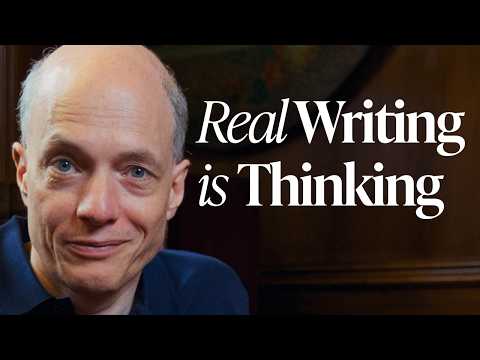
Alain de Botton is a philosopher, essayist and novelist who founded The School of Life and practises psychotherapy one day a week. The thing most worth learning from him is to write from honest attention to your own sensations, not from what you think you are supposed to say.
I just want it to feel like the thing that I most want to write that day.
How to Write Something Truly Beautiful (Alain de Botton Interview)
Alain de Botton: the story and the lessons
1Alain de Botton's path to writing
De Botton began writing as a teenager to master his emotions. Feelings felt bigger than him, and putting words to painful and beautiful states lessened them. The relief has not changed since.
Other people drink, talk, exercise or achieve their pain away. He says he writes it away.
His first book, On Love, was observation of himself. It came from painful, mysterious feelings, and he asked only that it faithfully record his own experience. Readers later asked how he knew that about them.
He calls each person an incredible library of sensations, and says his research authority is empirical observation of himself.
He sees The School of Life as a grown-up teddy bear. As a boarding-school child he invented a teddy bear and comforted it every night. He describes The School of Life as that bear, continued.
He is also a trained psychotherapist and practises one day a week.
2How de Botton writes day to day
He writes one short piece each morning on whatever he most wants. He no longer sits down to work on a book. He wakes, asks what he feels like writing, and writes about 800 words without caring what it is for.
He writes early, before other people's agendas arrive, and slots the piece into one of the roughly 22 books he has on the go.
He builds books from a scrap, like an archaeologist. A broken piece of pot leads you to dig for the rest, and panic does not help. His current novel began with one image of a man leaving a dental hygienist in Wimpole Street in despair.
He calls the book an arbitrary construction of the book industry. People think in sentences, images and fragments, so the form can fit the material.
He waits until a feeling is cooked before writing it. A writer must understand a feeling well enough to introduce a stranger to it. He toyed for three weeks with a thought about a happy couple in a London restaurant, then wrote it in a day as an essay on the debt we pay for our pleasures.
He calls the moment it comes together a boiling point.
De Botton thinks anywhere, not only at the desk. He once felt he had to sit at his desk like a good boy and could not go to the park. Now he goes wherever he thinks best.
Good work could happen on a Sunday at 4 a.m. rather than at 9 a.m. on a Monday. Most of the time-consuming work is in the shower, on a walk or while traveling.
3De Botton's rules for finding honest material
De Botton says attention matters more than discipline. Showing up at the desk is not enough, because the wind has to come. He compares it to sailing with the sail up, or holding a butterfly net.
Scrolling endlessly on a phone loses you your own mind. Most thoughts and sensations go unnoticed because the mind filters them out to function.
He notices what everyone else filters out. A good writer sorts thoughts by loose association, not by what is conventionally important. He says David Foster Wallace on a cruise ship would not report the bars.
The model is a child detained on the way to the park by a brick wall or a patch of moss.
He asks what he would write if there were no rules. Imagine nobody would laugh and you were dead tomorrow, then write that. He first tried 19th-century style novels, dropped the rules, and On Love came out weirder and more original.
Some people liked it.
He treats writer's block as shame and cures it with honesty. Block is a gap between what you feel and what you think you should feel. He asks what he is actually feeling, wanting, and where he actually is.
A friend's rule of thumb was simply to be more honest. He applies the same test to a stuck relationship, even if the thing cannot be said aloud.
His classroom exercise separates the expected from the real. Students go to a park, first write what they are supposed to say about it, then write what was really going on in their minds.
The second account may have nothing to do with the park. The aim is to wake what Emerson called neglected thoughts.
He says good writing voices thoughts everyone has and few say. Citing Emerson, he holds that geniuses do not think differently. They stay faithful to thoughts others neglect through habit, shame or status seeking.
That is why readers say a book described their own life.
He does not hunt for suffering but writes from it. Citing Proust, he says pain gives insight because when things go well you side with the world. Life will supply enough distress without searching for it.
He points to Van Gogh's irises, Agnes Martin's canvases and breakup albums such as Blood on the Tracks.
He admits a lot of writing is revenge. The silenced person gets to have their say on the page. He wrote The Architecture of Happiness because he could not bear living in an ugly part of London.
His anger came from seeing the ugliness as unnecessary, since people had built beautifully in earlier, poorer eras.
4How de Botton writes for readers and views AI
He starts with what he wants to say, then bridges to the reader. Every writer needs an inner reader, because boring talkers stop asking how their words fit into someone else's life.
A friend told him he writes for two readers: his pedantic academic father and his nature-loving Swiss nanny.
When writing on thinkers, he reports what stayed with him. He was never interested in being an academic. He asks what has really stuck after he closes the book and where the thinker took him.
He says this is why his books and School of Life videos on them sold well and differ from what ChatGPT, Wikipedia or an academic would give.
He writes sermons, not lectures. A lecture informs, while a sermon adds story and feeling so that behavior changes. He calls religions the most sophisticated machines for changing inner life and places himself on the sermon side.
He argues that the lone artist since Romanticism has a faint voice because there is no church or movement behind it.
He reads events as myths, not as news. News offers surface novelty, while a good writer asks which eternal story an event repeats. Gericault's Raft of the Medusa began as a news item about a shipwreck and became a picture of France.
He says not knowing what everyone knows protects your own experience.
He uses AI to check a finished draft, not to start. AI only sums up what has already been thought and said. He says it would crush his nascent intuition about what he wants to say.
He uses it for small research questions and as a therapy aid. He would write the essay first, then ask what he missed, though he rarely bothers.

How to Write Something Truly Beautiful (Alain de Botton Interview)
Alain de Botton argues that good writing comes from honest attention to your own sensations and from dropping what you think you are supposed to write. His habit of writing one short piece each morning about whatever he most wants to say, then filing it later, shows how that works in practice.
De Botton began writing as a teenager to master his emotions. Feelings felt bigger than him, and putting words to painful and beautiful states lessened them. The relief has not changed since.
Other people drink, talk, exercise or achieve their pain away. He says he writes it away.
His first book, On Love, was observation of himself. It came from painful, mysterious feelings, and he asked only that it faithfully record his own experience. Readers later asked how he knew that about them.
He calls each person an incredible library of sensations, and says his research authority is empirical observation of himself.
He sees The School of Life as a grown-up teddy bear. As a boarding-school child he invented a teddy bear and comforted it every night. He describes The School of Life as that bear, continued.
He is also a trained psychotherapist and practises one day a week.
He writes one short piece each morning on whatever he most wants. He no longer sits down to work on a book. He wakes, asks what he feels like writing, and writes about 800 words without caring what it is for.
He writes early, before other people's agendas arrive, and slots the piece into one of the roughly 22 books he has on the go.
He builds books from a scrap, like an archaeologist. A broken piece of pot leads you to dig for the rest, and panic does not help. His current novel began with one image of a man leaving a dental hygienist in Wimpole Street in despair.
He calls the book an arbitrary construction of the book industry. People think in sentences, images and fragments, so the form can fit the material.
He waits until a feeling is cooked before writing it. A writer must understand a feeling well enough to introduce a stranger to it. He toyed for three weeks with a thought about a happy couple in a London restaurant, then wrote it in a day as an essay on the debt we pay for our pleasures.
He calls the moment it comes together a boiling point.
De Botton thinks anywhere, not only at the desk. He once felt he had to sit at his desk like a good boy and could not go to the park. Now he goes wherever he thinks best.
Good work could happen on a Sunday at 4 a.m. rather than at 9 a.m. on a Monday. Most of the time-consuming work is in the shower, on a walk or while traveling.
De Botton says attention matters more than discipline. Showing up at the desk is not enough, because the wind has to come. He compares it to sailing with the sail up, or holding a butterfly net.
Scrolling endlessly on a phone loses you your own mind. Most thoughts and sensations go unnoticed because the mind filters them out to function.
He notices what everyone else filters out. A good writer sorts thoughts by loose association, not by what is conventionally important. He says David Foster Wallace on a cruise ship would not report the bars.
The model is a child detained on the way to the park by a brick wall or a patch of moss.
He asks what he would write if there were no rules. Imagine nobody would laugh and you were dead tomorrow, then write that. He first tried 19th-century style novels, dropped the rules, and On Love came out weirder and more original.
Some people liked it.
He treats writer's block as shame and cures it with honesty. Block is a gap between what you feel and what you think you should feel. He asks what he is actually feeling, wanting, and where he actually is.
A friend's rule of thumb was simply to be more honest. He applies the same test to a stuck relationship, even if the thing cannot be said aloud.
His classroom exercise separates the expected from the real. Students go to a park, first write what they are supposed to say about it, then write what was really going on in their minds.
The second account may have nothing to do with the park. The aim is to wake what Emerson called neglected thoughts.
He says good writing voices thoughts everyone has and few say. Citing Emerson, he holds that geniuses do not think differently. They stay faithful to thoughts others neglect through habit, shame or status seeking.
That is why readers say a book described their own life.
He does not hunt for suffering but writes from it. Citing Proust, he says pain gives insight because when things go well you side with the world. Life will supply enough distress without searching for it.
He points to Van Gogh's irises, Agnes Martin's canvases and breakup albums such as Blood on the Tracks.
He admits a lot of writing is revenge. The silenced person gets to have their say on the page. He wrote The Architecture of Happiness because he could not bear living in an ugly part of London.
His anger came from seeing the ugliness as unnecessary, since people had built beautifully in earlier, poorer eras.
He starts with what he wants to say, then bridges to the reader. Every writer needs an inner reader, because boring talkers stop asking how their words fit into someone else's life.
A friend told him he writes for two readers: his pedantic academic father and his nature-loving Swiss nanny.
When writing on thinkers, he reports what stayed with him. He was never interested in being an academic. He asks what has really stuck after he closes the book and where the thinker took him.
He says this is why his books and School of Life videos on them sold well and differ from what ChatGPT, Wikipedia or an academic would give.
He writes sermons, not lectures. A lecture informs, while a sermon adds story and feeling so that behavior changes. He calls religions the most sophisticated machines for changing inner life and places himself on the sermon side.
He argues that the lone artist since Romanticism has a faint voice because there is no church or movement behind it.
He reads events as myths, not as news. News offers surface novelty, while a good writer asks which eternal story an event repeats. Gericault's Raft of the Medusa began as a news item about a shipwreck and became a picture of France.
He says not knowing what everyone knows protects your own experience.
He uses AI to check a finished draft, not to start. AI only sums up what has already been thought and said. He says it would crush his nascent intuition about what he wants to say.
He uses it for small research questions and as a therapy aid. He would write the essay first, then ask what he missed, though he rarely bothers.