
Intuit
A software company behind QuickBooks accounting and TurboTax tax preparation.
Where Intuit comes up1 book
QuickBooks won by offering small businesses that were jury-rigging Quicken half the functionality at twice the price, and Intuit reached $4 billion in revenue. A forced-call registration test raised revenue but added friction, so Intuit moved to customer-benefit metrics like time saved. Lesson: count nonconsumers and workarounds, and judge features by progress toward the job's end state.
- Owners stretched it for bookkeeping
- Jury-rigged to keep books
- Half the functionality
- Twice the price
- Books handled without jargon
Became the global leader
From Intuit page notes
What was said about Intuit
1How QuickBooks beat Quicken workarounds
QuickBooks won by serving owners who were jury-rigging Quicken to keep books. Small businesses stretched Quicken to do their bookkeeping. QuickBooks offered half the functionality at twice the price and became the global leader.
It was aimed at owners who wanted their books handled without jargon. The book's lesson is to size a market by counting nonconsumers and workarounds, not just rivals' sales: "They choose to hire nothing, rather than something that does the job poorly."
2TurboTax and the 'taxes are done' reframe
Intuit stopped ranking TurboTax feature requests and defined the end state as 'taxes are done'. TurboTax teams had been debating around 150 requested features. Once the goal was 'taxes are done', Intuit prefilled W-2 data in one interview chapter in 2015 and completion rates rose noticeably.
The approach is to take small steps that remove customer work and measure completion. The book describes working without a defined end state this way: "It's like navigating without a compass."
3The forced-call registration test
Forcing QuickBooks trial users to call raised revenue but added friction. Intuit tested requiring QuickBooks trial users to call to register for upsells. Revenue rose, but users hit busy phone lines and salespeople.
Intuit now builds per-product metrics such as time saved, so that it measures how well the job gets done and not only revenue and efficiency.
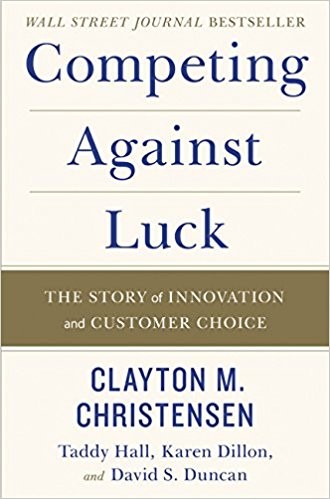
Competing Against Luck: The Story of Innovation and Customer Choice
QuickBooks beat Quicken-jury-rigging rivals with half the functionality at twice the price, aimed at owners wanting books handled without jargon. Intuit reached $4 billion revenue, tested forced-call registration that raised revenue but added friction, and reframed TurboTax as 'taxes are done'.
QuickBooks won by serving owners who were jury-rigging Quicken to keep books. Small businesses stretched Quicken to do their bookkeeping. QuickBooks offered half the functionality at twice the price and became the global leader.
It was aimed at owners who wanted their books handled without jargon. The book's lesson is to size a market by counting nonconsumers and workarounds, not just rivals' sales: "They choose to hire nothing, rather than something that does the job poorly."
Intuit stopped ranking TurboTax feature requests and defined the end state as 'taxes are done'. TurboTax teams had been debating around 150 requested features. Once the goal was 'taxes are done', Intuit prefilled W-2 data in one interview chapter in 2015 and completion rates rose noticeably.
The approach is to take small steps that remove customer work and measure completion. The book describes working without a defined end state this way: "It's like navigating without a compass."
Forcing QuickBooks trial users to call raised revenue but added friction. Intuit tested requiring QuickBooks trial users to call to register for upsells. Revenue rose, but users hit busy phone lines and salespeople.
Intuit now builds per-product metrics such as time saved, so that it measures how well the job gets done and not only revenue and efficiency.
More in Business software
 Business software
Microsoft
A software company founded by Bill Gates and Paul Allen that made BASIC, MS-DOS and Windows.



 47 sources · 106 tips
 Business software
Figma
A collaborative design platform with design, whiteboarding, slides, dev handoff and AI prototyping tools.


 23 sources · 83 tips
 Business software
Shopify
A commerce platform that lets merchants build online stores and sell to customers.
 23 sources · 55 tips
 Business software
Basecamp
A simple project management and team collaboration tool from 37signals.
B10 sources · 47 tips Business software
Atlassian
A software company behind Jira, Confluence, Trello and other team collaboration tools.
13 sources · 40 tips Business software
Slack
A workplace messaging platform for teams, acquired by Salesforce.
25 sources · 46 tips Business software
Airtable
A no-code platform for building collaborative business apps on a real-time database.
9 sources · 43 tips Business software
37signals
A small, independent, profitable software company behind Basecamp, HEY and Highrise, run remotely with about 60 people.
6 sources · 42 tips