Breakneck
Dan Wang's book on China's drive to engineer the future.
Where Breakneck comes up1 episode or test
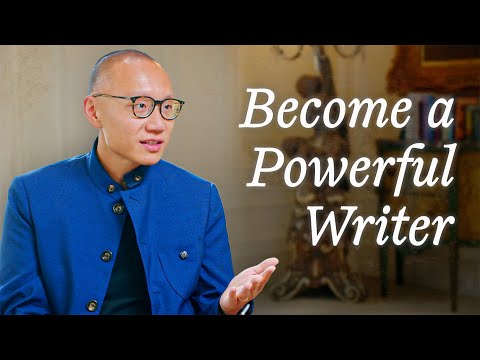
Dan Wang's Breakneck was written without AI, with the proposal drafted largely in Barcelona and a title swapped in almost last minute for "Move fast and break people." He is about 85% satisfied and wishes he had a month more to refine links between sentences. The lesson: build a throughline early, vary where you work, and reserve time to trim instead of sprinting at the end.
- 1Settle the throughlineStructure and narrative before writing
- 2Build the proposal40 to 50 pages, written in Barcelona
- 3Write in varied placesAnn Arbor, Yale office, Austin, Da Nang
- 4Keep AI outWrote the book without AI
- 5Leave time to trimAbout 85% satisfied; wanted another month
From Dan Wang on writing Breakneck
What was said about Breakneck
1How Dan Wang wrote Breakneck
Settle the book's throughline before writing, or you only shuffle facts. Wang says the first hard part of a trade book is a clear structure and narrative to pin your thoughts to. That throughline is also what sells the proposal, a 40 to 50 page document with an opening chapter and chapter outlines.
His agent Toby helped him build the Breakneck proposal, which he wrote largely in Barcelona. The title Breakneck replaced "Move fast and break people" almost at the last minute. "All you're really doing is moving pieces of facts around and that does not make a great book."
Varying where you write keeps a long project moving. Wang wrote Breakneck at home in Ann Arbor and in his Yale Law School office, with short retreats his wife Sylvia arranged: a week in Austin, a long stretch in Da Nang, Vietnam, and the proposal in Barcelona.
Usually a night writer, he became an afternoon person for the book and repeated a mantra to be a "calm, collected Canadian" to hit the deadline. He describes the approach as "just varying it up slightly."
Wang refused the conventions of the China-book genre to keep his own voice. He skipped the dragons and red covers typical of books on China and avoided both airport-book formula and tenure-driven academic dullness, pointing to Stephen Kotkin writing a Stalin biography for Penguin Press as a model.
His voice draws on Stendhal and Mozart's Da Ponte operas for irony and gags, offsetting what he calls official China's status as "one of the least funny entities." The aim is "not to be captured by a genre, not to be captured by a method, but to do it in your personal distinctive way."
Wang kept AI out of the book's sentences while using it to think. He wrote Breakneck without AI, though he uses it like an instant Tyler Cowen to explore music, novels and historical questions.
He advises learning to read, build spreadsheets and use databases first before leaning on AI, as he lived half his life without it.
Leave time to trim; Wang is about 85% satisfied with Breakneck. He says another month would have let him refine the links between sentences and paragraphs. New Yorker essayists told him no writer gets above 85%, so he treats that as the goal.
His annual letters were written in a hasty sprint over the last ten days of December, and he wishes they had been better edited and trimmed. "No writer is ever very satisfied."

Why You Should Write Less Often (Dan Wang Interview)
Wang is about 85% satisfied with it and wishes he had another month to refine links between sentences. He kept AI out of it, wrote the proposal largely in Barcelona, and the title replaced "Move fast and break people" almost last minute.
Settle the book's throughline before writing, or you only shuffle facts. Wang says the first hard part of a trade book is a clear structure and narrative to pin your thoughts to. That throughline is also what sells the proposal, a 40 to 50 page document with an opening chapter and chapter outlines.
His agent Toby helped him build the Breakneck proposal, which he wrote largely in Barcelona. The title Breakneck replaced "Move fast and break people" almost at the last minute. "All you're really doing is moving pieces of facts around and that does not make a great book."
Varying where you write keeps a long project moving. Wang wrote Breakneck at home in Ann Arbor and in his Yale Law School office, with short retreats his wife Sylvia arranged: a week in Austin, a long stretch in Da Nang, Vietnam, and the proposal in Barcelona.
Usually a night writer, he became an afternoon person for the book and repeated a mantra to be a "calm, collected Canadian" to hit the deadline. He describes the approach as "just varying it up slightly."
Wang refused the conventions of the China-book genre to keep his own voice. He skipped the dragons and red covers typical of books on China and avoided both airport-book formula and tenure-driven academic dullness, pointing to Stephen Kotkin writing a Stalin biography for Penguin Press as a model.
His voice draws on Stendhal and Mozart's Da Ponte operas for irony and gags, offsetting what he calls official China's status as "one of the least funny entities." The aim is "not to be captured by a genre, not to be captured by a method, but to do it in your personal distinctive way."
Wang kept AI out of the book's sentences while using it to think. He wrote Breakneck without AI, though he uses it like an instant Tyler Cowen to explore music, novels and historical questions.
He advises learning to read, build spreadsheets and use databases first before leaning on AI, as he lived half his life without it.
Leave time to trim; Wang is about 85% satisfied with Breakneck. He says another month would have let him refine the links between sentences and paragraphs. New Yorker essayists told him no writer gets above 85%, so he treats that as the goal.
His annual letters were written in a hasty sprint over the last ten days of December, and he wishes they had been better edited and trimmed. "No writer is ever very satisfied."
More in News & Media
 News & Media
Substack
A platform where writers publish newsletters and charge readers for subscriptions.

 22 sources · 36 tips
AppAdvice
An app discovery and news site that features app deals and promotions.
 16 sources · 26 tips
 News & Media
The New York Times
A major newspaper that rebuilt a digital bundle with games, cooking and Wirecutter.
10 sources · 29 tips News & Media
Marginal Revolution
Tyler Cowen's economics blog, written daily for over two decades.
3 sources · 18 tips News & Media
TechCrunch
A technology news publication known for startup and funding coverage.
8 sources · 14 tips News & Media
The New Yorker
A weekly magazine of essays, reporting, fiction and humor.
7 sources · 15 tips News & Media
Zinio
A digital newsstand app offering over 6,000 magazines on web, iOS and Android.
4 sources · 13 tips News & Media
Mark Manson
A self-help author and blogger known for The Subtle Art of Not Giving a F*ck.
2 sources · 19 tips