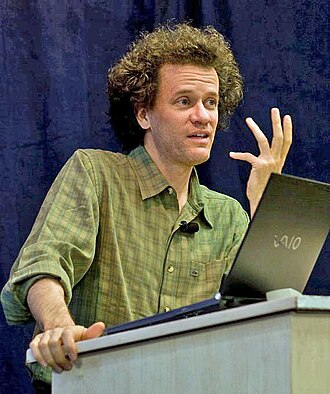
Yann Martel
Novelist, author of Life of Pi
Where to hear and read about Yann Martel1 episode or test

Yann Martel is the novelist who wrote Life of Pi, and he builds each book like an architect before writing it like a traveler. The thing most worth learning from him is to plan the whole path, ending included, and then leave gaps for discovery and for the reader's imagination.
The more you withdraw, the more the reader, the viewer has to come halfway.
How to Become a Novelist Without Writing Lessons (Yann Martel Interview)
Yann Martel: the story and the lessons
1How Yann Martel plans a novel with envelopes
Martel cuts his research into scenes and files them in envelopes. He researched Life of Pi for two and a half years and ended up with about 400 pages of notes. He printed them, cut them up with scissors and filed the pieces in labeled envelopes running from the first scene to the last.
When he writes, he opens an envelope and lays the snippets around his computer, so he never starts from a blank page. He built Son of Nobody the same way, with envelopes for footnotes and fragments. Most writers keep this in a computer file, with a program like Scrivener.
He keeps research notes uncensored, down to single words. For Life of Pi he read on animal behavior, zoo biology, survival at sea, Hinduism, Islam and Christianity. He also saved single words, like bamboozle from an Indian speaker, and small facts such as which turtles live in the Pacific.
Scenes that came to mind were written down fast, without judging them. Those fragments became the raw material he later cut up and filed.
Martel knows his ending and chapter count before the first sentence. Before writing Life of Pi he knew it would have 100 chapters and that chapter 100 would be an excerpt from an investigator's report on a sinking ship.
With a fixed destination, middle scenes can move freely. In the Pacific it hardly matters when Pi sees a whale or a ship. He says endings come easier to him than beginnings, and he can't recall how his stories start.
He treats the plan as a starting point, like a trip. He compares a novel to a family trip to New York: guidebooks and a must-keep reservation at a three-star restaurant, with room to stumble on where Friends was filmed. He discards, expands and moves envelope contents as he writes.
"So what's in the envelopes is the starting point. It's not the finishing point."
Martel never agonized over the first line of Life of Pi. He never liked "this story was born as I was hungry". He couldn't think of a better one and moved on.
Because the book was fully mapped, he did not dwell on the opening more than on the rest. He says an opening has no checklist and only has to work in the context of the whole book.
2Why Martel leaves the reader work to do
Martel treats a book as a co-creation with the reader. A film supplies the visuals and even the music, so the viewer is swept along. A reader builds a hazy movie in the mind, and that building is what engages them.
He says Netflix shows that give you everything are forgettable because you haven't worked for them, while a French art film makes you work hard. Reading is private, which he calls both its strength and its weakness.
He never describes his characters' appearance. Pi and the scholar Harlo Dunn in Son of Nobody get no portrait. Stress a nose and the reader imagines an enormous nose, and mention a scar and they picture a great cut.
He uses words for what they do well, thinking and emotion. Photography handles looks.
Martel puts ordinary characters in extraordinary events. Pi is a shipwreck survivor, and the monkey and donkey of Beatrice and Virgil face the Holocaust. He plans what his characters look upon, not their personality, and says Pi was "at the end of my concerns".
He calls the monkey and donkey "completely banal", then the Holocaust happens to them. He wants a trusted driver who knows the road, so the reader can watch the scenery. Everyone thinks they are normal, so an ordinary character is easy to step into.
He prefers narrow stories with few characters. He loves The Sailor Who Fell from Grace with the Sea and Hamsun's Hunger, about a homeless man in Oslo. Lord of the Rings left him cold because it felt too symphonic and he wanted a solo.
A single individual's story can act as a prism on life. "It's narrow and small, but it reflects the universe."
Martel argues facts alone do not keep a story alive. Almost nothing firm is known of Troy or the life of Jesus, yet the Iliad and the Gospels are foundations of the West. Warren Harding has a million facts and is forgotten.
"You don't want lies, but facts only go so far." Story, wonder and emotion are what last.
3Martel's rules for sentences, rules and endings
Martel alternates long and short sentences. He keeps few rules, but one is not to stack sentences of the same length. Seventeen ten-word sentences in a row bore the reader.
A check he describes is to put each sentence on its own line and look at the right edge, which should look ragged like an accordion.
He calls the comma the drummer of the sentence. Punctuation sets the rhythm. Too few commas confuse the reader and too many kill the flow, and commas are what he agonizes over most.
His next books are each a single sentence with no question marks, so the commas carry the flow. He still adds paragraph breaks because he hates solid columns of text. He uses exclamation marks sparingly, calling them "highly manipulative".
He learned from reading, not creative writing lessons, and breaks rules on purpose. He never took creative writing. He learned from books that moved him, such as Conrad's punctuation, and tests every idea by whether the text feels alive to him as first reader.
He compares it to the photography rule of thirds: know it so breaking it is a choice. But you can't break every rule at once, because readers want a few handrails. The French nouveau roman, which dropped setting and character, was hard to endure.
Martel let his editor veto a clever formatting trick. In Life of Pi he wanted the dialogue between two blind lifeboat passengers to drift across the page as their boats drift. His editor called it clever showing off.
He resisted, then agreed she was right, and set the dialogue flush left.
He ends with closure that still leaves a glow of mystery. An ending should meet the reader's expectations without answering everything, like a funeral that does not forget the deceased. In The Metamorphosis Gregor dies, yet readers still ask what the beetle means.
It should not be rushed or wholly unexpected. He cites the line that an ending should be surprising in the moment but inevitable in retrospect. Genre fiction must fulfil its promise, so a mystery must resolve the murder.
He admires how Agatha Christie hides a clue in plain sight. In Murder on the Orient Express, a coarse Chicago gangster answers a porter in French and nobody notices until the end. Red herrings and smooth writing hide it.
Martel has never solved one of her novels on a first reading.
4Martel on animals, AI and what art owes
Martel uses animals to carry heavy subjects at a distance. People carry few prejudices about animals, and animals come in many shapes, so they are very plastic. A talking animal signals allegory, so in Beatrice and Virgil a monkey and a donkey carry a Holocaust story that avoids the usual historical realism.
He points to Animal Farm, which covered Stalinism in 92 pages rather than 17 tomes. He accepts the risk of being accused of trivializing the Holocaust: "we must be allowed our mistakes".
He lets an animal carry emotion a person could not. In Son of Nobody a dog licks the hand of a woman who has just become a man and is dropping off a key. The dog shows need and abandonment briefly and forcefully, where a pleading person would not.
Martel refuses to write with AI. He has never written with AI and compares it to hiring someone to have sex for you, because he loves the materiality of language. He would use it for dull legal papers, such as charity governance documents, but not for creative work.
He says knowing a text is AI drains its value. "I'd rather read a bad short story by a human than a good one by a computer." He expects publishers to ban AI beyond a spellcheck.
He gives a book away as a gift and only glances at reviews. He sorts reviews into four kinds, and the worst is the bad review that is right. His agent forwards them, he checks whether each is positive, and he does not read closely.
Art is a gift, given with nothing expected back, which he links to the Buddhist idea of passionate detachment. Asked what Richard Parker or the island means, he answers "What is he to you?" Life of Pi did well in Korea, where readers brought their own meaning.
Martel says artists have no special authority beyond their work. He has views on his own books, not special insight on Donald Trump or AI. He says he is no more wise than anyone else on those matters, and maybe less.
He sees art as free because artists owe nobody anything, and that is also its limit.

How to Become a Novelist Without Writing Lessons (Yann Martel Interview)
Yann Martel plans like an architect and then writes like a traveler: he sorts years of research into envelopes, always knows his ending, and leaves room to discover things along the way. The conversation is worth hearing for his physical filing system, his focus on rhythm and punctuation, and his view that readers should co-create the story.
Martel cuts his research into scenes and files them in envelopes. He researched Life of Pi for two and a half years and ended up with about 400 pages of notes. He printed them, cut them up with scissors and filed the pieces in labeled envelopes running from the first scene to the last.
When he writes, he opens an envelope and lays the snippets around his computer, so he never starts from a blank page. He built Son of Nobody the same way, with envelopes for footnotes and fragments. Most writers keep this in a computer file, with a program like Scrivener.
He keeps research notes uncensored, down to single words. For Life of Pi he read on animal behavior, zoo biology, survival at sea, Hinduism, Islam and Christianity. He also saved single words, like bamboozle from an Indian speaker, and small facts such as which turtles live in the Pacific.
Scenes that came to mind were written down fast, without judging them. Those fragments became the raw material he later cut up and filed.
Martel knows his ending and chapter count before the first sentence. Before writing Life of Pi he knew it would have 100 chapters and that chapter 100 would be an excerpt from an investigator's report on a sinking ship.
With a fixed destination, middle scenes can move freely. In the Pacific it hardly matters when Pi sees a whale or a ship. He says endings come easier to him than beginnings, and he can't recall how his stories start.
He treats the plan as a starting point, like a trip. He compares a novel to a family trip to New York: guidebooks and a must-keep reservation at a three-star restaurant, with room to stumble on where Friends was filmed. He discards, expands and moves envelope contents as he writes.
"So what's in the envelopes is the starting point. It's not the finishing point."
Martel never agonized over the first line of Life of Pi. He never liked "this story was born as I was hungry". He couldn't think of a better one and moved on.
Because the book was fully mapped, he did not dwell on the opening more than on the rest. He says an opening has no checklist and only has to work in the context of the whole book.
Martel treats a book as a co-creation with the reader. A film supplies the visuals and even the music, so the viewer is swept along. A reader builds a hazy movie in the mind, and that building is what engages them.
He says Netflix shows that give you everything are forgettable because you haven't worked for them, while a French art film makes you work hard. Reading is private, which he calls both its strength and its weakness.
He never describes his characters' appearance. Pi and the scholar Harlo Dunn in Son of Nobody get no portrait. Stress a nose and the reader imagines an enormous nose, and mention a scar and they picture a great cut.
He uses words for what they do well, thinking and emotion. Photography handles looks.
Martel puts ordinary characters in extraordinary events. Pi is a shipwreck survivor, and the monkey and donkey of Beatrice and Virgil face the Holocaust. He plans what his characters look upon, not their personality, and says Pi was "at the end of my concerns".
He calls the monkey and donkey "completely banal", then the Holocaust happens to them. He wants a trusted driver who knows the road, so the reader can watch the scenery. Everyone thinks they are normal, so an ordinary character is easy to step into.
He prefers narrow stories with few characters. He loves The Sailor Who Fell from Grace with the Sea and Hamsun's Hunger, about a homeless man in Oslo. Lord of the Rings left him cold because it felt too symphonic and he wanted a solo.
A single individual's story can act as a prism on life. "It's narrow and small, but it reflects the universe."
Martel argues facts alone do not keep a story alive. Almost nothing firm is known of Troy or the life of Jesus, yet the Iliad and the Gospels are foundations of the West. Warren Harding has a million facts and is forgotten.
"You don't want lies, but facts only go so far." Story, wonder and emotion are what last.
Martel alternates long and short sentences. He keeps few rules, but one is not to stack sentences of the same length. Seventeen ten-word sentences in a row bore the reader.
A check he describes is to put each sentence on its own line and look at the right edge, which should look ragged like an accordion.
He calls the comma the drummer of the sentence. Punctuation sets the rhythm. Too few commas confuse the reader and too many kill the flow, and commas are what he agonizes over most.
His next books are each a single sentence with no question marks, so the commas carry the flow. He still adds paragraph breaks because he hates solid columns of text. He uses exclamation marks sparingly, calling them "highly manipulative".
He learned from reading, not creative writing lessons, and breaks rules on purpose. He never took creative writing. He learned from books that moved him, such as Conrad's punctuation, and tests every idea by whether the text feels alive to him as first reader.
He compares it to the photography rule of thirds: know it so breaking it is a choice. But you can't break every rule at once, because readers want a few handrails. The French nouveau roman, which dropped setting and character, was hard to endure.
Martel let his editor veto a clever formatting trick. In Life of Pi he wanted the dialogue between two blind lifeboat passengers to drift across the page as their boats drift. His editor called it clever showing off.
He resisted, then agreed she was right, and set the dialogue flush left.
He ends with closure that still leaves a glow of mystery. An ending should meet the reader's expectations without answering everything, like a funeral that does not forget the deceased. In The Metamorphosis Gregor dies, yet readers still ask what the beetle means.
It should not be rushed or wholly unexpected. He cites the line that an ending should be surprising in the moment but inevitable in retrospect. Genre fiction must fulfil its promise, so a mystery must resolve the murder.
He admires how Agatha Christie hides a clue in plain sight. In Murder on the Orient Express, a coarse Chicago gangster answers a porter in French and nobody notices until the end. Red herrings and smooth writing hide it.
Martel has never solved one of her novels on a first reading.
Martel uses animals to carry heavy subjects at a distance. People carry few prejudices about animals, and animals come in many shapes, so they are very plastic. A talking animal signals allegory, so in Beatrice and Virgil a monkey and a donkey carry a Holocaust story that avoids the usual historical realism.
He points to Animal Farm, which covered Stalinism in 92 pages rather than 17 tomes. He accepts the risk of being accused of trivializing the Holocaust: "we must be allowed our mistakes".
He lets an animal carry emotion a person could not. In Son of Nobody a dog licks the hand of a woman who has just become a man and is dropping off a key. The dog shows need and abandonment briefly and forcefully, where a pleading person would not.
Martel refuses to write with AI. He has never written with AI and compares it to hiring someone to have sex for you, because he loves the materiality of language. He would use it for dull legal papers, such as charity governance documents, but not for creative work.
He says knowing a text is AI drains its value. "I'd rather read a bad short story by a human than a good one by a computer." He expects publishers to ban AI beyond a spellcheck.
He gives a book away as a gift and only glances at reviews. He sorts reviews into four kinds, and the worst is the bad review that is right. His agent forwards them, he checks whether each is positive, and he does not read closely.
Art is a gift, given with nothing expected back, which he links to the Buddhist idea of passionate detachment. Asked what Richard Parker or the island means, he answers "What is he to you?" Life of Pi did well in Korea, where readers brought their own meaning.
Martel says artists have no special authority beyond their work. He has views on his own books, not special insight on Donald Trump or AI. He says he is no more wise than anyone else on those matters, and maybe less.
He sees art as free because artists owe nobody anything, and that is also its limit.