Yaniv Gilad
Co-founder and CEO of Listory
Where to hear and read about Yaniv Gilad1 episode or test
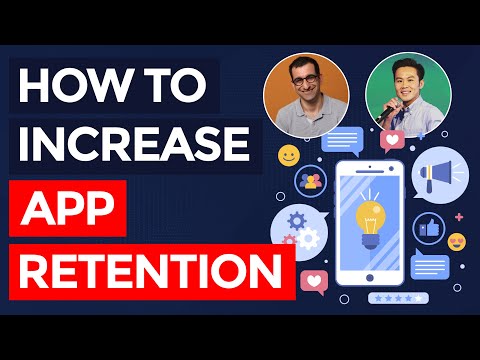
Yaniv Gilad is co-founder and CEO of Listory, a content app built around a finite, curated list of reading. The thing most worth learning from him is that retention comes from many small, well-sized experiments, backed by messaging that promises concrete value.
the more concrete you are in what you're going to get, the better, the expectation will be the better the retention will be as well.
Do This If Your App Retention Sucks
Yaniv Gilad: the story and the lessons
1What Yaniv Gilad built at Listory
Gilad's Listory offers less content so people actually read it. Listory refines the web into a finite list of recommendations picked by experts, newsletters and curators. There is no infinite feed.
The team saw that "the more content you have available, the less you actually consume." The goal is for users to feel happier and smarter, and the app also gives tools to build better content habits.
Listory entered a crowded field, so retention became the main problem. Gilad describes Listory as one more content app among many, which is why retention mattered most to the team.
Listory lifted retention from under 10% to over 40%. The gains showed up in day 2 and week one retention within a couple of months of continuous experimentation. The description cites day 7 retention above 40%.
Gilad credits many small experiments guided by a public manifesto, not any single change.
2Why Listory published a manifesto
Gilad's team wrote down what it believes and does not believe. The manifesto states what the product stands for and rejects, such as no infinite feed and more human curation, less technology.
The team uses it to decide what fits the product and to prioritize features. It began as a tool to align the team before it became a public promise.
The manifesto copied an attitude from Basecamp, not a template. Basecamp and its Hey product inspired the opinionated tone. The manifesto was built from examples, with no template followed.
Listory made the manifesto public to build trust and lock itself in. It sits in the header of listory.com where anyone can open it. It works as a marketing tool that builds trust with users.
Gilad says the beliefs are set publicly "to help us. Kind of burn the bridges."
A highly opinionated team still lets data decide. The team has strong opinions but chose to be data-driven. It sends traffic to different experiences and sees what works, with the manifesto keeping the mission in view.
3How Gilad runs retention experiments
Gilad ran A/A tests first to learn what a stable result looks like. The team showed the same experience to randomized groups of users and noted at what user count and test length the groups converged. That set test length and traffic before any real test.
Listory plans for about 600 users per experiment. In a content freshness test (stories trending in newsletters last week versus last month), results only appeared at around 600 users. Before that the data was too noisy.
Gilad treats 600 as a minimum, not a target, and says it shifts with where the test sits in the funnel.
Gilad tests high in the funnel to learn faster and cheaper. Android store A/B tests count every user who sees the messaging, so the sample size arrives sooner and costs less than testing deep in onboarding.
A test deep in onboarding must first win the install, since users have to find, download and open the app. The messaging tested in the store has to relate to what is tested later.
No single experiment moved retention; many small ones added up. Gilad compares it to lighting a fire: "It's not one match that do it all." You need many twigs, many matches and some oil.
Gilad re-finds the bottleneck after every change. The weak stage could be conversion, day 2 retention, one week retention or frequency. Every change resets the funnel, so an app change may need new store messaging.
His team also learned that its day 2 retention goal was being measured in the wrong place, so he advises checking where the early retention metric is captured.
4How Gilad writes messaging that sets expectations
Gilad leads with a concrete promise, not the mission. A pitch of "read later, not never, set your reading goals" got a much higher response than the mission version, "we want to make you happier and smarter", with a download button.
Messaging is the experiment Listory runs most often. Everyone sells "content that matters", so users tune it out.
Listory's pitch fixes a problem readers already know. People save articles to Pocket or Instapaper and never open them. Listory pitches reaching the stories you never thought you would read.
The belief behind it is that one story inspires more than a scroll of titles. One copy line tested was "Don't procrastinate. Don't read, save for never."
Gilad matches acquisition messaging to the feature under test. Users arrive for a specific reason. If the tested feature does not match it, they leave whatever the experiment shows.
So substantial tests should be full stack, covering the journey from message to app, or you may be targeting the wrong audience.

Do This If Your App Retention Sucks
Retention improves through disciplined experimentation: size experiments properly, test messaging high in the funnel, and keep acquisition promises aligned with the in-app experience. Listory used this approach, plus a public manifesto, to lift retention from under 10% to over 40%.
Gilad's Listory offers less content so people actually read it. Listory refines the web into a finite list of recommendations picked by experts, newsletters and curators. There is no infinite feed.
The team saw that "the more content you have available, the less you actually consume." The goal is for users to feel happier and smarter, and the app also gives tools to build better content habits.
Listory entered a crowded field, so retention became the main problem. Gilad describes Listory as one more content app among many, which is why retention mattered most to the team.
Listory lifted retention from under 10% to over 40%. The gains showed up in day 2 and week one retention within a couple of months of continuous experimentation. The description cites day 7 retention above 40%.
Gilad credits many small experiments guided by a public manifesto, not any single change.
Gilad's team wrote down what it believes and does not believe. The manifesto states what the product stands for and rejects, such as no infinite feed and more human curation, less technology.
The team uses it to decide what fits the product and to prioritize features. It began as a tool to align the team before it became a public promise.
The manifesto copied an attitude from Basecamp, not a template. Basecamp and its Hey product inspired the opinionated tone. The manifesto was built from examples, with no template followed.
Listory made the manifesto public to build trust and lock itself in. It sits in the header of listory.com where anyone can open it. It works as a marketing tool that builds trust with users.
Gilad says the beliefs are set publicly "to help us. Kind of burn the bridges."
A highly opinionated team still lets data decide. The team has strong opinions but chose to be data-driven. It sends traffic to different experiences and sees what works, with the manifesto keeping the mission in view.
Gilad ran A/A tests first to learn what a stable result looks like. The team showed the same experience to randomized groups of users and noted at what user count and test length the groups converged. That set test length and traffic before any real test.
Listory plans for about 600 users per experiment. In a content freshness test (stories trending in newsletters last week versus last month), results only appeared at around 600 users. Before that the data was too noisy.
Gilad treats 600 as a minimum, not a target, and says it shifts with where the test sits in the funnel.
Gilad tests high in the funnel to learn faster and cheaper. Android store A/B tests count every user who sees the messaging, so the sample size arrives sooner and costs less than testing deep in onboarding.
A test deep in onboarding must first win the install, since users have to find, download and open the app. The messaging tested in the store has to relate to what is tested later.
No single experiment moved retention; many small ones added up. Gilad compares it to lighting a fire: "It's not one match that do it all." You need many twigs, many matches and some oil.
Gilad re-finds the bottleneck after every change. The weak stage could be conversion, day 2 retention, one week retention or frequency. Every change resets the funnel, so an app change may need new store messaging.
His team also learned that its day 2 retention goal was being measured in the wrong place, so he advises checking where the early retention metric is captured.
Gilad leads with a concrete promise, not the mission. A pitch of "read later, not never, set your reading goals" got a much higher response than the mission version, "we want to make you happier and smarter", with a download button.
Messaging is the experiment Listory runs most often. Everyone sells "content that matters", so users tune it out.
Listory's pitch fixes a problem readers already know. People save articles to Pocket or Instapaper and never open them. Listory pitches reaching the stories you never thought you would read.
The belief behind it is that one story inspires more than a scroll of titles. One copy line tested was "Don't procrastinate. Don't read, save for never."
Gilad matches acquisition messaging to the feature under test. Users arrive for a specific reason. If the tested feature does not match it, they leave whatever the experiment shows.
So substantial tests should be full stack, covering the journey from message to app, or you may be targeting the wrong audience.