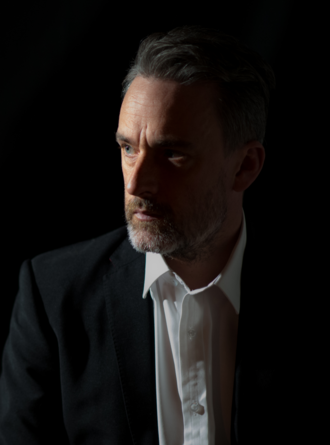
Will Storr
Author of The Science of Storytelling and Stories Are a Deal, ghostwriter and story teacher
Where to hear and read about Will Storr1 episode or test

Will Storr is the author of The Science of Storytelling and A Story Is a Deal, a ghostwriter and a story teacher who builds narrative from character instead of plot. The idea most worth taking is to write your character's flawed belief about controlling the world as one sentence, then build every scene, obstacle and ending around testing it.
we think in stories but we believe in stories.
Learn Storytelling in 72 Minutes (Will Storr Interview)
Will Storr: the story and the lessons
1Why Will Storr starts with character, not plot
Storr builds story from character because plot recipes forget who the story is about. Since Aristotle, teachers have extracted recipes from stories that worked, such as the hero's journey, Save the Cat and John Yorke's Into the Woods. Storr says plot and character are both essential, but character matters far more.
He has written seven books and studies story like a scientist. In his view the most memorable stories have the most memorable characters.
Storr says the hero's journey deserves a salute and then retirement. Joseph Campbell devised it in the 1940s, so it is about 80 years old, and the full version has 22 steps. Storr says evolutionary psychology and neuroscience now tell us far more about storytelling.
He calls it probably the most influential story theory ever, one that produced incredible stories and also a lot of junk.
Storr plans the character change and the midpoint before he drafts. He is an outliner from a family of engineers and wants to know how the character changes and where the big moments fall. A blank page, for him, invites chaos and endless rewriting of material that doesn't fit.
On a literary writing course he watched an award-winning novelist agonize over her second novel while dismissing plot structure as unartistic.
Storr argues that learning craft comes before originality. He calls the idea that a true artist starts from a blank page silly. Picasso and Monet both began with realistic painting before they developed distinct styles, and literary writers who reject craft still absorb structure from reading.
He says the five-act model is broad enough to build almost anything on, and tells writers to read one of these plot books.
2Storr's one-sentence theory of control
Storr defines a character as a one-sentence theory of how to control the world. His stem to complete is 'I am only safe if I'. Scrooge's answer is that he is only safe if he keeps all the money and love to himself, and Willy Loman believes success is all that matters.
Fleabag believes her only value is sexual, and Harry in When Harry Met Sally believes men and women can't be friends. Storr's reasoning is that the brain is a machine for controlling the world, so each person has their own theory of how to do it.
Storr wants the character's belief to be wrong, not immoral. The story begins when the character's model of the world clashes with reality. Michael Corleone believes he is safe if he never becomes a gangster, and that breaks when his father is shot.
Storr says the theory is flawed 'in the sense that it's wrong'.
Storr designs the character before he plots anything. In his workshops writers list plot points but can only describe their hero as a nice person who struggles a bit. He asks how you can know what happens if you don't know the character.
Fleabag's two series come from one idea, that her only value is her body. Without it, Storr says, there is no story.
Storr says one sentence produces deep characters, not shallow ones. Writers resist because it feels reductive, but Storr calls it paradoxical and says it yields the richest characters. Stevens in The Remains of the Day believes in English supremacy, and the whole novel tests that one belief.
He compares it to a bomb: 'It begins as this tiny thing and it kind of explodes in meaning.'
Storr picks the hero who would suffer most inside the premise. For a dystopia of overpopulation, the ideal lead is a misanthrope who hates human company. Then he asks for that person's theory of control, such as being safe only if others stay away.
The what-if supplies the setting and the character's flaw supplies the story.
Storr says writers can build flaws unlike their own. Artists often explore their own damage, but a writer in a Hollywood or HBO writers' room has to write the next Mad Men or Sopranos regardless. You can imagine life for someone who thinks only about success, as Willy Loman does.
Storr knows a character's origin damage but keeps it off the page. The writer should know where the broken belief came from. Shakespeare cut the backstory explaining Hamlet and King Lear from his sources, and the original screenplay of Shame explained its sex addict's bond with his sister before that was cut.
The gap lets viewers form their own theories, as in real life, where nobody learns your origin damage.
Storr lets a character's conscious story clash with an unconscious want. In Transparent, a progressive son says he is fine with his father's transition, then breaks down over nothing. Asked 'Have you mourned the death of your father?', he cries.
Storr says moments where the buried truth surfaces are profound and moving, and he got choked up just describing this one.
3How Storr structures a plot around change
Storr treats a story as a domino chain of change. 'This happens, then this happens' is weak, and each change should trigger the next. He points to The Sopranos, where every event triggers the next so viewers can't stop watching.
People watching random dots invent chasing and hiding, which Storr takes as proof that causality is how the brain reads the world. David Lynch's disconnected events feel like hard work for that reason.
Storr outlines in five acts of character change. Inspired by Freytag's pyramid, the acts run: this is me and it's not working, is there another way, I transform at the midpoint, can I face the pain of change, and is this forever. It is written for commercial stories such as blockbusters and bestsellers.
In Jaws the sheriff decides to go out and fight the shark at the exact middle. In a tragedy the flawed character doubles down instead, ending in death, ostracism or prison.
Storr ends on the scene that shows who the character became. People remember the climax, but the last scene proves the change. Jaws closes with the hero swimming back saying he used to be scared of the ocean, and The Godfather closes with gangsters kissing Michael's ring and calling him Godfather.
Storr uses fewer acts when he wants a literary, realistic story. The Remains of the Day gives acts one and two and only a hint of change in its last few sentences. Storr says acts one, two and a bit of three is what real life looks like.
Full transformation, like a phobic man happily swimming among sharks, is what we want to see but not what happens.
4What keeps a Storr scene gripping
Storr drops the character into the situation that most threatens their belief. Ishiguro set The Remains of the Day in 1950, as British power faded and an American bought the house, not in 1890 at its peak. Core identity is hard to change, so only something dramatic will do it.
Storr also tests a belief by granting it in the extreme. Brewster's Millions gives a man everything he wanted, and he learns it is hollow. Mad Men and White Lotus follow people who have everything and are still unhappy.
Storr says this gives them depth because they are driven by character, not plot.
Storr builds suspense from the threat of change. He cites Hitchcock's point that there is no terror in the bang, only in anticipating it. The ghostly girl in the corner of The Blair Witch Project is terrifying only because everything leads up to it.
Storr checks every scene for who wants what and what blocks them. He says story is always built on obstacle and goal because that is what cooperating groups do. He found this while writing A Story Is a Deal, having missed it in The Science of Storytelling.
Aaron Sorkin's test is to pause at any moment and ask who this is, what they want and what is in the way. Nomadland sets up theme, obstacle and goal in three minutes with almost no words, and Storr says boredom usually means that is unclear.
Storr gives characters trouble in survival, connection or status. The Revenant and Alien are about survival, Stand by Me and Brokeback Mountain about connection, and Whiplash and Barbie about status. Romeo and Juliet, The Godfather and Star Wars hold all three in about equal parts.
He also uses the three buckets to diagnose his own bad days: an ordinary one is trouble in one bucket, and real depression is trouble in two or more.
Storr tells the slow parts of life fast and the fast parts slow. People in a car accident recall little of the day before, vivid detail of the few seconds, and little after. As a ghostwriter, Storr tells clients 'let's make it a moment' and asks what they wore, the weather and what they ate for breakfast.
He hunts for scenes where the client changed or learned something, because those earn the slow, detailed treatment.
5Why Storr says story persuades in business
Storr says companies and leaders run on a story people absorb. A politician must say where things were, why they went wrong and how they will improve. Amazon's 'always day one' is a story, not a statistic, and at work you enter the group's mind.
Storr says stories exist to wire human brains together into groups that cooperate.
Storr says a clear story beats better numbers. An investor told him institutions prefer a fund with 15% returns and a clear story over one with 20% returns and no explanation. Humans did not evolve to understand the world through algorithms and statistics.
His advice is to give a pitch a story about what is good, what we want and how we get there.

Learn Storytelling in 72 Minutes (Will Storr Interview)
Will Storr argues that great stories grow out of character, not plot: give a character one flawed belief about how to control the world, then test it until it breaks or changes. The technique worth taking away is writing that belief as a one-sentence theory of control and building every scene, obstacle and ending around it.
Storr builds story from character because plot recipes forget who the story is about. Since Aristotle, teachers have extracted recipes from stories that worked, such as the hero's journey, Save the Cat and John Yorke's Into the Woods. Storr says plot and character are both essential, but character matters far more.
He has written seven books and studies story like a scientist. In his view the most memorable stories have the most memorable characters.
Storr says the hero's journey deserves a salute and then retirement. Joseph Campbell devised it in the 1940s, so it is about 80 years old, and the full version has 22 steps. Storr says evolutionary psychology and neuroscience now tell us far more about storytelling.
He calls it probably the most influential story theory ever, one that produced incredible stories and also a lot of junk.
Storr plans the character change and the midpoint before he drafts. He is an outliner from a family of engineers and wants to know how the character changes and where the big moments fall. A blank page, for him, invites chaos and endless rewriting of material that doesn't fit.
On a literary writing course he watched an award-winning novelist agonize over her second novel while dismissing plot structure as unartistic.
Storr argues that learning craft comes before originality. He calls the idea that a true artist starts from a blank page silly. Picasso and Monet both began with realistic painting before they developed distinct styles, and literary writers who reject craft still absorb structure from reading.
He says the five-act model is broad enough to build almost anything on, and tells writers to read one of these plot books.
Storr defines a character as a one-sentence theory of how to control the world. His stem to complete is 'I am only safe if I'. Scrooge's answer is that he is only safe if he keeps all the money and love to himself, and Willy Loman believes success is all that matters.
Fleabag believes her only value is sexual, and Harry in When Harry Met Sally believes men and women can't be friends. Storr's reasoning is that the brain is a machine for controlling the world, so each person has their own theory of how to do it.
Storr wants the character's belief to be wrong, not immoral. The story begins when the character's model of the world clashes with reality. Michael Corleone believes he is safe if he never becomes a gangster, and that breaks when his father is shot.
Storr says the theory is flawed 'in the sense that it's wrong'.
Storr designs the character before he plots anything. In his workshops writers list plot points but can only describe their hero as a nice person who struggles a bit. He asks how you can know what happens if you don't know the character.
Fleabag's two series come from one idea, that her only value is her body. Without it, Storr says, there is no story.
Storr says one sentence produces deep characters, not shallow ones. Writers resist because it feels reductive, but Storr calls it paradoxical and says it yields the richest characters. Stevens in The Remains of the Day believes in English supremacy, and the whole novel tests that one belief.
He compares it to a bomb: 'It begins as this tiny thing and it kind of explodes in meaning.'
Storr picks the hero who would suffer most inside the premise. For a dystopia of overpopulation, the ideal lead is a misanthrope who hates human company. Then he asks for that person's theory of control, such as being safe only if others stay away.
The what-if supplies the setting and the character's flaw supplies the story.
Storr says writers can build flaws unlike their own. Artists often explore their own damage, but a writer in a Hollywood or HBO writers' room has to write the next Mad Men or Sopranos regardless. You can imagine life for someone who thinks only about success, as Willy Loman does.
Storr knows a character's origin damage but keeps it off the page. The writer should know where the broken belief came from. Shakespeare cut the backstory explaining Hamlet and King Lear from his sources, and the original screenplay of Shame explained its sex addict's bond with his sister before that was cut.
The gap lets viewers form their own theories, as in real life, where nobody learns your origin damage.
Storr lets a character's conscious story clash with an unconscious want. In Transparent, a progressive son says he is fine with his father's transition, then breaks down over nothing. Asked 'Have you mourned the death of your father?', he cries.
Storr says moments where the buried truth surfaces are profound and moving, and he got choked up just describing this one.
Storr treats a story as a domino chain of change. 'This happens, then this happens' is weak, and each change should trigger the next. He points to The Sopranos, where every event triggers the next so viewers can't stop watching.
People watching random dots invent chasing and hiding, which Storr takes as proof that causality is how the brain reads the world. David Lynch's disconnected events feel like hard work for that reason.
Storr outlines in five acts of character change. Inspired by Freytag's pyramid, the acts run: this is me and it's not working, is there another way, I transform at the midpoint, can I face the pain of change, and is this forever. It is written for commercial stories such as blockbusters and bestsellers.
In Jaws the sheriff decides to go out and fight the shark at the exact middle. In a tragedy the flawed character doubles down instead, ending in death, ostracism or prison.
Storr ends on the scene that shows who the character became. People remember the climax, but the last scene proves the change. Jaws closes with the hero swimming back saying he used to be scared of the ocean, and The Godfather closes with gangsters kissing Michael's ring and calling him Godfather.
Storr uses fewer acts when he wants a literary, realistic story. The Remains of the Day gives acts one and two and only a hint of change in its last few sentences. Storr says acts one, two and a bit of three is what real life looks like.
Full transformation, like a phobic man happily swimming among sharks, is what we want to see but not what happens.
Storr drops the character into the situation that most threatens their belief. Ishiguro set The Remains of the Day in 1950, as British power faded and an American bought the house, not in 1890 at its peak. Core identity is hard to change, so only something dramatic will do it.
Storr also tests a belief by granting it in the extreme. Brewster's Millions gives a man everything he wanted, and he learns it is hollow. Mad Men and White Lotus follow people who have everything and are still unhappy.
Storr says this gives them depth because they are driven by character, not plot.
Storr builds suspense from the threat of change. He cites Hitchcock's point that there is no terror in the bang, only in anticipating it. The ghostly girl in the corner of The Blair Witch Project is terrifying only because everything leads up to it.
Storr checks every scene for who wants what and what blocks them. He says story is always built on obstacle and goal because that is what cooperating groups do. He found this while writing A Story Is a Deal, having missed it in The Science of Storytelling.
Aaron Sorkin's test is to pause at any moment and ask who this is, what they want and what is in the way. Nomadland sets up theme, obstacle and goal in three minutes with almost no words, and Storr says boredom usually means that is unclear.
Storr gives characters trouble in survival, connection or status. The Revenant and Alien are about survival, Stand by Me and Brokeback Mountain about connection, and Whiplash and Barbie about status. Romeo and Juliet, The Godfather and Star Wars hold all three in about equal parts.
He also uses the three buckets to diagnose his own bad days: an ordinary one is trouble in one bucket, and real depression is trouble in two or more.
Storr tells the slow parts of life fast and the fast parts slow. People in a car accident recall little of the day before, vivid detail of the few seconds, and little after. As a ghostwriter, Storr tells clients 'let's make it a moment' and asks what they wore, the weather and what they ate for breakfast.
He hunts for scenes where the client changed or learned something, because those earn the slow, detailed treatment.
Storr says companies and leaders run on a story people absorb. A politician must say where things were, why they went wrong and how they will improve. Amazon's 'always day one' is a story, not a statistic, and at work you enter the group's mind.
Storr says stories exist to wire human brains together into groups that cooperate.
Storr says a clear story beats better numbers. An investor told him institutions prefer a fund with 15% returns and a clear story over one with 20% returns and no explanation. Humans did not evolve to understand the world through algorithms and statistics.
His advice is to give a pitch a story about what is good, what we want and how we get there.