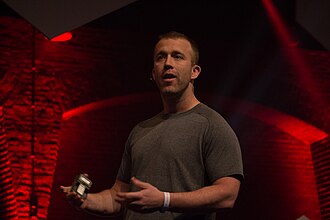
Tucker Max
Memoirist, ghostwriter and memoir coach, author of I Hope They Serve Beer in Hell
Where to hear and read about Tucker Max1 episode or test

Tucker Max is a memoirist, ghostwriter and memoir coach whose party memoirs sold about 5 million copies and who now helps thousands of people write their own. The thing most worth learning from him is that a memoir works through one true sentence after another about what happened and how you felt, not through polished prose.
You could be the most interesting famous person on Earth, I'm still not reading your memoir to learn about you. I'm reading your memoir to learn about me.
The Secret To A New York Times Best Seller – Tucker Max
Tucker Max: the story and the lessons
1Tucker Max's path from party memoirs to memoir coach
Max built his name on memoirs about parties, drinking and sex. Those memoirs have sold about 5 million copies. He has also ghostwritten memoirs for celebrities and has helped thousands of people write their own.
He now says I Hope They Serve Beer in Hell worked because it was an honest, funny memoir at the right time, not because of marketing genius.
Humor let Max feel hard emotions at a safe distance. Jokes let him say what he felt while keeping some distance from it. At the time he could feel only five or ten percent of what was going on inside him.
Readers who loved his books saw past the arrogance to real vulnerability. Rereading them, he sees a sad, messed-up man who could not see it himself, and he feels compassion for him.
Max made truth his number one rule because he was not a great stylist. He says he was a good writer but not one of the greats, so honesty was what he had to offer. He made that commitment early.
His first books sold millions of copies without sentence-level polish, because the honesty carried them.
Max only coaches people who want the truth, not a legacy. He sorts memoir writers into two groups: those who want to tell their story and feel their emotions, and those who want people to think of them a certain way, often CEOs and celebrities. He works with the first group and sends legacy seekers to Scribe.
He says neither group is wrong and he tries not to judge.
Max says his best celebrity book came from someone not yet famous. Tiffany Haddish told the truth before fame taught her not to, including about a violent husband she went back to. It is the only celebrity book where he did not have to sign an NDA.
Other big names told him stories sincerely, then refused to keep them in once editing began. He found that soul-crushing.
2Tucker Max's truth-first method for writing a memoir
Max teaches a three-question algorithm: what happened, how did you feel, what happened next. You choose the events that matter and say how you felt. Then you say what happened next, which shows the links between events and emotions.
Writers who keep going often find their story is not the one they told themselves: they thought it was ABC and it is actually AFG. He says this happens all the time in his program.
Max says to write how you felt, not what you thought. People avoid emotion by thinking, so most writers will supply the thinking anyway. Meaning lives in feeling.
He compares thinking to a spreadsheet of your wine cellar and feeling to how the wine tasted.
Max says you choose what your story means, but not what happened. His parents neglected him but did not abuse him. He now tells it as hardship that also made him independent and a critical thinker.
Deciding the meaning is the therapeutic part. He says it took years of therapy and writing to reach that version.
Max does not plan themes and lets them emerge. He says that nine times out of ten you could not name your themes ahead of time. Tell the truth and they show up.
Novelists may plot arcs, but a memoir is your own experience, so there is nothing to plan.
Max points to Anne Frank to answer "I'm not a good writer.". He says you cannot recall one of her sentences, yet the diary endures because she wrote what she thought and felt.
A safe, loved child wrote it for herself with no one to impress. Oscar Wilde, a master of language, is the opposite case.
Max says readers read a memoir to learn about themselves. Readers use your honest reflections to see themselves more clearly. If you posture to look good, they get almost nothing to see themselves in.
Max says keep lessons out of the story. A memoir goes wrong when the author tells their story and also tells readers what to do. If you want lessons, put them in a separate section after.
David Goggins wanted lessons, so his audiobook puts them in a short interview after each chapter, where they worked.
3How Max turns raw pain into a usable draft
Max's first draft is a private vomit draft. Writers give themselves permission to write fragments, nonsense and garbage, because the draft is only for them. Trying to write emotion already edited is what blocks people.
His students see his own true first drafts and say they look just like theirs. One student in England said it made him believe he could finish a book.
Max writes from scars and does not publish from open wounds. Raw grief poured onto the page is emotional vomit on the reader. For him, editing is how a wound becomes a scar.
He spent a year in grief over his mother before he could write about her, and now writes it from a healed place.
Max keeps raw pain in a journal until he has distance. In 2007 he journaled daily for three months, and the pages were too triggering to reread for eight years. He endorses journaling, citing Pennebaker's research, and started journaling regularly in 2014.
When a story is too raw, he does an MDMA session and writes the next day, then edits later. He does not prescribe a method.
Max tells writers to keep going when they cry. He calls tears a major gift and a sign the writing is healing you. He describes trauma as an unfelt emotion stored in the body that lets go once it is felt.
He says the process is not a replacement for talk therapy with a psychologist.
Max tells writers to decide on publishing only after the manuscript is done. Writers can keep it private, print a few copies for friends, or publish widely. Knowing that frees them to be honest in the draft.
He says people have an absolute epiphany when they learn they have three options.
Max separates your truth from what actually happened. He says there are three truths: yours, theirs and what actually happened. He writes dialogue the way he remembers it and does not claim a photographic memory.
His friend Doug read the Texas story in his first book and said it was true but not how he remembered it. Max kept it as written.
4Max on structure, humor, emotion and titles
Max writes a narrow slice of life, not the whole thing. He says the structure question is mostly answered by deciding which memoir you are writing. If it is the story of a relationship or a passage, chronology is obvious.
He wrote four memoirs that each covered a small stretch of his life. Augusten Burroughs, Donald Miller and Mary Karr wrote three to five each, and he tells people they may have three or four in them.
Max opens with the most intense scene, then tells the whole story. He calls this the one memoir structure that always works. Tell the scene only partway, promise the full story, then step back.
He bought Phil Klay's Redeployment and canceled a meeting after reading its opening, which begins with soldiers shooting dogs.
Max says humor is the true thing everyone feels and nobody says. He compares it to the court jester, who could tell the king the truth because it was framed as a joke. If some people are mad at you, you are probably funny. If everyone is, you are probably a jerk.
He quotes Oscar Wilde: if you tell the truth, make them laugh or they will kill you.
Max finds the joke by first writing something true that might upset people. He writes until he says something he is not supposed to say, then asks how to make it funny. Forcing a joke fails.
He calls the battle of the sexes fertile ground because so much of it is taboo.
Max writes emotion through the body and simple observations. He has writers describe numb hands, jittering legs and sweaty palms, then what the room looks like and what stray thoughts come up. He says much of what people call great writing is a trauma response channeled well.
One example is a chair that looked like a cat had already clawed it, a comparison from his four-year-old self.
Max says a title must win attention, then hint at the content. Attention can come from something counterintuitive, clever or beneficial. I Hope They Serve Beer in Hell signals a bender gone scary.
He says memoirs can succeed with weak titles, citing The Diary of Anne Frank and Educated, because word of mouth sells them.
5Where Max got stuck and what he changed
Max slid back into legacy writing on his own memoir. Stuck on his next book, he found he was writing Tucker Max's next memoir to produce a result, not true sentences.
His fix was to go back to asking what happened and how he felt, then writing the truth about it.
Max took a three-month break when he could not write even a bad draft. He felt his body about to make him sick. He took the break, realized he had been writing for legacy again, and restarted with a single true sentence.
Students in his program stay until the memoir is done, and he refuses to put a clock on emotion.
Max says he got almost everything wrong in his first book. His values and view of the world have changed since. He still counts it as honest, because truth means your own truth at that moment, not being right.
He says he told the truth while dissociated and it still worked.
Max used a coaching group to get past stalling. Despite knowing every trick, he got stuck on his own memoir and started the group partly as forced accountability. By the third month he was showing his rawest drafts.
He once bought coffee, Evian and headphones to avoid writing a sales letter, and shipped it a day late.
Max has writers block one to two hours and never more than three. They pick exact days and times, mornings if possible. Past three hours it is nearly impossible to be productively creative.
When he wrote for a living he blocked four hours and was lucky to get two and a half. He keeps the coaching firm but kind, because writers already carry enough shame.

The Secret To A New York Times Best Seller – Tucker Max
Tucker Max argues that a memoir works when you tell the truth about what happened and how you felt, not when your sentences are fancy. His three-question algorithm, the vomit first draft and the rule to write from scars rather than open wounds give a practical way to get honest material onto the page.
Max built his name on memoirs about parties, drinking and sex. Those memoirs have sold about 5 million copies. He has also ghostwritten memoirs for celebrities and has helped thousands of people write their own.
He now says I Hope They Serve Beer in Hell worked because it was an honest, funny memoir at the right time, not because of marketing genius.
Humor let Max feel hard emotions at a safe distance. Jokes let him say what he felt while keeping some distance from it. At the time he could feel only five or ten percent of what was going on inside him.
Readers who loved his books saw past the arrogance to real vulnerability. Rereading them, he sees a sad, messed-up man who could not see it himself, and he feels compassion for him.
Max made truth his number one rule because he was not a great stylist. He says he was a good writer but not one of the greats, so honesty was what he had to offer. He made that commitment early.
His first books sold millions of copies without sentence-level polish, because the honesty carried them.
Max only coaches people who want the truth, not a legacy. He sorts memoir writers into two groups: those who want to tell their story and feel their emotions, and those who want people to think of them a certain way, often CEOs and celebrities. He works with the first group and sends legacy seekers to Scribe.
He says neither group is wrong and he tries not to judge.
Max says his best celebrity book came from someone not yet famous. Tiffany Haddish told the truth before fame taught her not to, including about a violent husband she went back to. It is the only celebrity book where he did not have to sign an NDA.
Other big names told him stories sincerely, then refused to keep them in once editing began. He found that soul-crushing.
Max teaches a three-question algorithm: what happened, how did you feel, what happened next. You choose the events that matter and say how you felt. Then you say what happened next, which shows the links between events and emotions.
Writers who keep going often find their story is not the one they told themselves: they thought it was ABC and it is actually AFG. He says this happens all the time in his program.
Max says to write how you felt, not what you thought. People avoid emotion by thinking, so most writers will supply the thinking anyway. Meaning lives in feeling.
He compares thinking to a spreadsheet of your wine cellar and feeling to how the wine tasted.
Max says you choose what your story means, but not what happened. His parents neglected him but did not abuse him. He now tells it as hardship that also made him independent and a critical thinker.
Deciding the meaning is the therapeutic part. He says it took years of therapy and writing to reach that version.
Max does not plan themes and lets them emerge. He says that nine times out of ten you could not name your themes ahead of time. Tell the truth and they show up.
Novelists may plot arcs, but a memoir is your own experience, so there is nothing to plan.
Max points to Anne Frank to answer "I'm not a good writer.". He says you cannot recall one of her sentences, yet the diary endures because she wrote what she thought and felt.
A safe, loved child wrote it for herself with no one to impress. Oscar Wilde, a master of language, is the opposite case.
Max says readers read a memoir to learn about themselves. Readers use your honest reflections to see themselves more clearly. If you posture to look good, they get almost nothing to see themselves in.
Max says keep lessons out of the story. A memoir goes wrong when the author tells their story and also tells readers what to do. If you want lessons, put them in a separate section after.
David Goggins wanted lessons, so his audiobook puts them in a short interview after each chapter, where they worked.
Max's first draft is a private vomit draft. Writers give themselves permission to write fragments, nonsense and garbage, because the draft is only for them. Trying to write emotion already edited is what blocks people.
His students see his own true first drafts and say they look just like theirs. One student in England said it made him believe he could finish a book.
Max writes from scars and does not publish from open wounds. Raw grief poured onto the page is emotional vomit on the reader. For him, editing is how a wound becomes a scar.
He spent a year in grief over his mother before he could write about her, and now writes it from a healed place.
Max keeps raw pain in a journal until he has distance. In 2007 he journaled daily for three months, and the pages were too triggering to reread for eight years. He endorses journaling, citing Pennebaker's research, and started journaling regularly in 2014.
When a story is too raw, he does an MDMA session and writes the next day, then edits later. He does not prescribe a method.
Max tells writers to keep going when they cry. He calls tears a major gift and a sign the writing is healing you. He describes trauma as an unfelt emotion stored in the body that lets go once it is felt.
He says the process is not a replacement for talk therapy with a psychologist.
Max tells writers to decide on publishing only after the manuscript is done. Writers can keep it private, print a few copies for friends, or publish widely. Knowing that frees them to be honest in the draft.
He says people have an absolute epiphany when they learn they have three options.
Max separates your truth from what actually happened. He says there are three truths: yours, theirs and what actually happened. He writes dialogue the way he remembers it and does not claim a photographic memory.
His friend Doug read the Texas story in his first book and said it was true but not how he remembered it. Max kept it as written.
Max writes a narrow slice of life, not the whole thing. He says the structure question is mostly answered by deciding which memoir you are writing. If it is the story of a relationship or a passage, chronology is obvious.
He wrote four memoirs that each covered a small stretch of his life. Augusten Burroughs, Donald Miller and Mary Karr wrote three to five each, and he tells people they may have three or four in them.
Max opens with the most intense scene, then tells the whole story. He calls this the one memoir structure that always works. Tell the scene only partway, promise the full story, then step back.
He bought Phil Klay's Redeployment and canceled a meeting after reading its opening, which begins with soldiers shooting dogs.
Max says humor is the true thing everyone feels and nobody says. He compares it to the court jester, who could tell the king the truth because it was framed as a joke. If some people are mad at you, you are probably funny. If everyone is, you are probably a jerk.
He quotes Oscar Wilde: if you tell the truth, make them laugh or they will kill you.
Max finds the joke by first writing something true that might upset people. He writes until he says something he is not supposed to say, then asks how to make it funny. Forcing a joke fails.
He calls the battle of the sexes fertile ground because so much of it is taboo.
Max writes emotion through the body and simple observations. He has writers describe numb hands, jittering legs and sweaty palms, then what the room looks like and what stray thoughts come up. He says much of what people call great writing is a trauma response channeled well.
One example is a chair that looked like a cat had already clawed it, a comparison from his four-year-old self.
Max says a title must win attention, then hint at the content. Attention can come from something counterintuitive, clever or beneficial. I Hope They Serve Beer in Hell signals a bender gone scary.
He says memoirs can succeed with weak titles, citing The Diary of Anne Frank and Educated, because word of mouth sells them.
Max slid back into legacy writing on his own memoir. Stuck on his next book, he found he was writing Tucker Max's next memoir to produce a result, not true sentences.
His fix was to go back to asking what happened and how he felt, then writing the truth about it.
Max took a three-month break when he could not write even a bad draft. He felt his body about to make him sick. He took the break, realized he had been writing for legacy again, and restarted with a single true sentence.
Students in his program stay until the memoir is done, and he refuses to put a clock on emotion.
Max says he got almost everything wrong in his first book. His values and view of the world have changed since. He still counts it as honest, because truth means your own truth at that moment, not being right.
He says he told the truth while dissociated and it still worked.
Max used a coaching group to get past stalling. Despite knowing every trick, he got stuck on his own memoir and started the group partly as forced accountability. By the third month he was showing his rawest drafts.
He once bought coffee, Evian and headphones to avoid writing a sales letter, and shipped it a day late.
Max has writers block one to two hours and never more than three. They pick exact days and times, mornings if possible. Past three hours it is nearly impossible to be productively creative.
When he wrote for a living he blocked four hours and was lucky to get two and a half. He keeps the coaching firm but kind, because writers already carry enough shame.