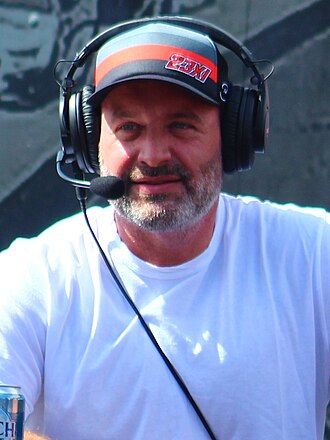
Tom Segura
Stand-up comedian and creator of the Netflix show Bad Thoughts
Where to hear and read about Tom Segura1 episode or test

Tom Segura is a stand-up comedian behind the specials Completely Normal, Sledgehammer and Teacher, and the creator of the Netflix show Bad Thoughts. The most useful thing to learn from him is to capture every thought, including the dumb ones, and test it in front of real people hundreds of times before judging it.
I think the key element to all of what is funny is surprise. Ultimately, you laugh the hardest when you didn't expect it.
How to Make Your Writing Funny (Tom Segura Interview)
Tom Segura: the story and the lessons
1Who Tom Segura is and how his comedy works
Segura makes observational, story-based comedy built on recognition. He takes something people have seen a thousand times and finds the funny detail in it. The audience's reaction he wants is 'Yes, it is.'
He made the specials Completely Normal and Sledgehammer, created the TV show Bad Thoughts, and has appeared on Conan and The Late Show with Stephen Colbert.
He started out copying Chris Rock without noticing. Segura saw Bring the Pain as a high-school junior and was obsessed. His early tapes show a bad Chris Rock impression, down to the crouch, hand gesture, cadence and rhythm.
He holds up Rock as the model of a joke built from a clear premise and broken down from several angles until nothing is left. He says whoever you grew up watching has the most impact.
He moved from the special Teacher straight into Bad Thoughts. That left him no break from stand-up in 25 years, and he says starting over always feels impossible.
When he restarts, he leans on advice from fellow comic Jeff Tate: say every thought and don't filter.
He performs for the thrill of the laugh, not a message. Segura says there is no thrill like getting on stage with an idea and getting people to laugh. He calls it 'the drug' and 'the addiction'.
He is not driven by a need for the world to hear something. He likes performing and likes to laugh.
2Where Segura finds his material
Segura starts from annoyance and a strong stance. Indifference is never funny. 'It's fine, I don't care' dies, while 'this tastes like somebody boiled it' or 'I wish I could bathe in this' both work.
His annoyed 7-year-old is funny because he is bothered by a table in the middle of the room that he keeps running into. 'What's not funny is total indifference.'
He keeps asking exactly why something bothers him. With a 15-minute concert opener, he asks whether the problem is the wasted time or having shown up early, and keeps going.
The mismatch is the joke: it is only 15 minutes and you're still annoyed. 'The joke is in expanding on why it upsets you.'
He reports small overheard moments and awkward interactions. A bank security guard answered 'how you doing?' with the story of his sister in Virginia. A guy answered 'Where are you from?' with 'Seattle. I've got family in Denver.'
A hotel clerk in Charlotte asking 'Oh, Japanese?' became a joke people still yell at him a decade later, and one fan tattooed Segura as a samurai on his thigh. Before stand-up he retold these moments to friends and family.
He says the obvious thing before someone else does. Everyone has stood in the aisle for 15 minutes after the plane reaches the gate, and the first comic to say it gets the laugh. That one had been noticed 60 or 70 times before anyone joked about it.
The hardest feeling is hearing another comic say what you noticed but never articulated. He felt urgency to get his In-N-Out bit into a special because others shared the experience.
He talks constantly to train himself to hear 'that's a thing'. Spotting a joke is a muscle, and talking with certain friends is how he trains it. The skill is noticing mid-conversation that something he just said has legs.
Trying things on friends off stage works like trying them on stage.
He turns to his own life when a topic is crowded. If 15 comics at a club are doing AI bits, he does his only if it is far superior. Otherwise he tells stories about his kids, his mom and his friends.
None of the kid material is invented: his son yanked a duck out of a pond by its neck and asked to take it home. 'No one else has that story.'
He finds comedy in small power exercised hard. Mall cops, TSA agents and bouncers at a middling bar act like they have total power over a small patch of authority.
When a TSA agent tried to embarrass him in line, he called over her supervisor.
3How Segura builds a joke into a bit
Segura writes down every thought, even the dumb ones. Jeff Tate told him to say them all and not filter. An idea dismissed on paper often turns into something better once it is performed and he sees the reaction.
On stage, pressure and adrenaline make something come out of his mouth that he couldn't plan. 'The editor can't come too early.'
He tells the long, fat version first, then cuts. The first telling can run 7 to 10 minutes with no plan for how it should sound. He cuts what isn't needed, then adds jokes where the story needs them and ends on a big punchline.
Solving a bit he knew had something in it is the most rewarding moment. Some bits just work on stage the next day.
He gives every story a reason for being told. He opened the Subway story by saying he never thought he'd play arenas, since booking the Subway spokesman job was once the highlight of his career.
Told as 'I was almost the spokesman for Subway', it gets a shrug. When he skips the framing work, the story still gets laughs but the audience is less into it.
He picks words by sound. 'Yanked' beats 'pulled', 'clipped' beats 'hit', and Yiddish words are universally funny. He tests every version for which is funniest while he writes.
He also picks up phrasings from funny friends, such as hearing that a guy got 'tugged'. Accents and voices paint a picture of the person in a story, and his Peruvian mother's accent is a staple of his act.
He aims for surprise and never repeats a joke. The biggest rush is saying what the audience didn't expect, or making them laugh reluctantly against their own judgment.
A kid who repeats a joke 3,500 times shows how fast the laugh dies.
He wants 200 to 250 runs behind a taped hour. He won't put a big show on sale without that work. A new hour starts as bullet-point ideas, and he has no idea how next week's 10-minute set will go.
Sets that go wrong are part of the process. Being unprepared on a big set is one of the worst feelings. 'There's no substitute for doing tons of sets.'
4How Segura paces and runs a set
Segura builds trust first and saves the darkest material for later. Minutes 5, 10 and 15 build goodwill. By minute 25 the audience is on his side, so he can say the most awful thought.
By then he can also call out reluctant laughers: 'You guys actually do like this.'
He opens on a hard joke. He has tried every opening, from a slow burn to the hardest joke he has, and says each has advantages.
Asked on another night, he might pick differently. He treats openings as experiments.
He uses callbacks sparingly. A few well-placed callbacks show you are paying attention and read as charming and smart. Comics who do 'callback, callback, callback' ruin them.
An hour needs only a few, and dialed-in audiences love them.
He gets silly backstage rather than walking out tense. Goofing off with dumb jokes before a show carries into the best sets. On tour he has a crew of tour manager, security and openers, and being comfortable with them sets the energy.
Walking out thinking 'need to nail it tonight' is worse, and he says the silly mindset can't be forced on command.
He treats 'you can't say that' as an advantage. If people are upset by a statement, the comic already knows the reaction and can build on it. Some comics say the unlikable thing first, then earn it with the jokes that follow.
The opinion doesn't have to be the comic's real one. The set is crafted around the fact that it is unlikable.
5How Segura works on Bad Thoughts and his book
He workshops drafts in the Bad Thoughts writers' room. He brings a few drafts and reads them aloud. Other writers find holes in a story or send it somewhere new.
A line from someone else can spark an idea he would never have had alone. Stand-up friends offer only a tag or a note, so it is not fully collaborative.
He pushed his merch sketch through by playing it dead straight. The sketch began in a van with comedian Kirk Fox, both doubled over laughing. The room found his draft insane, but he insisted it be played as the most sincere thing and kept moving it to the 'we're doing this' side of the board until it was shot.
He casts dramatic actors for the most ridiculous ideas because they give it weight, 'like you're doing Shakespeare'. 'It's funnier if they're not trying to be funny.'
He holds shots long so the real moment lands. American studio films cut about every 3 seconds, while a European film may hold one shot of a man making coffee. The sketch holds a painfully long 25-second door hold.
The wait is what makes it feel real, and he says the realness is what's funny. Netflix tells him to make what he wants.
He found book writing more exposed than stand-up. On the page he can't control cadence, expressions or timing, and he felt crippling anxiety handing over pages. Waiting a week for a response is the opposite of a live crowd's instant reaction.
Editor notes swung from 'this is perfect' to crossed-out pages marked 'Need humor here', which he treated like a math problem. When the book sold well, the publisher asked for another. He said no, needing a break, but would do it again.
6The language joke that came back on Segura
Segura mocked a language slip, then made the same one. He roasted Hilaria Baldwin for asking 'How you say in English?' about a cucumber, though English is her first language. After weeks of Spanish on a South America tour, he froze at an airport autograph and said the same line.
He learned that immersed bilinguals really do lose basic words in their native language. He later apologized on a podcast: 'Sorry, Gloria. It happened to me, too.'

How to Make Your Writing Funny (Tom Segura Interview)
Tom Segura explains how a working comic finds funny material in complaints, small overheard moments and his own life, then builds it through volume, reps and editing. The most useful habit is writing down every thought, even the dumb ones, and testing it in front of people before judging it.
Segura makes observational, story-based comedy built on recognition. He takes something people have seen a thousand times and finds the funny detail in it. The audience's reaction he wants is 'Yes, it is.'
He made the specials Completely Normal and Sledgehammer, created the TV show Bad Thoughts, and has appeared on Conan and The Late Show with Stephen Colbert.
He started out copying Chris Rock without noticing. Segura saw Bring the Pain as a high-school junior and was obsessed. His early tapes show a bad Chris Rock impression, down to the crouch, hand gesture, cadence and rhythm.
He holds up Rock as the model of a joke built from a clear premise and broken down from several angles until nothing is left. He says whoever you grew up watching has the most impact.
He moved from the special Teacher straight into Bad Thoughts. That left him no break from stand-up in 25 years, and he says starting over always feels impossible.
When he restarts, he leans on advice from fellow comic Jeff Tate: say every thought and don't filter.
He performs for the thrill of the laugh, not a message. Segura says there is no thrill like getting on stage with an idea and getting people to laugh. He calls it 'the drug' and 'the addiction'.
He is not driven by a need for the world to hear something. He likes performing and likes to laugh.
Segura starts from annoyance and a strong stance. Indifference is never funny. 'It's fine, I don't care' dies, while 'this tastes like somebody boiled it' or 'I wish I could bathe in this' both work.
His annoyed 7-year-old is funny because he is bothered by a table in the middle of the room that he keeps running into. 'What's not funny is total indifference.'
He keeps asking exactly why something bothers him. With a 15-minute concert opener, he asks whether the problem is the wasted time or having shown up early, and keeps going.
The mismatch is the joke: it is only 15 minutes and you're still annoyed. 'The joke is in expanding on why it upsets you.'
He reports small overheard moments and awkward interactions. A bank security guard answered 'how you doing?' with the story of his sister in Virginia. A guy answered 'Where are you from?' with 'Seattle. I've got family in Denver.'
A hotel clerk in Charlotte asking 'Oh, Japanese?' became a joke people still yell at him a decade later, and one fan tattooed Segura as a samurai on his thigh. Before stand-up he retold these moments to friends and family.
He says the obvious thing before someone else does. Everyone has stood in the aisle for 15 minutes after the plane reaches the gate, and the first comic to say it gets the laugh. That one had been noticed 60 or 70 times before anyone joked about it.
The hardest feeling is hearing another comic say what you noticed but never articulated. He felt urgency to get his In-N-Out bit into a special because others shared the experience.
He talks constantly to train himself to hear 'that's a thing'. Spotting a joke is a muscle, and talking with certain friends is how he trains it. The skill is noticing mid-conversation that something he just said has legs.
Trying things on friends off stage works like trying them on stage.
He turns to his own life when a topic is crowded. If 15 comics at a club are doing AI bits, he does his only if it is far superior. Otherwise he tells stories about his kids, his mom and his friends.
None of the kid material is invented: his son yanked a duck out of a pond by its neck and asked to take it home. 'No one else has that story.'
He finds comedy in small power exercised hard. Mall cops, TSA agents and bouncers at a middling bar act like they have total power over a small patch of authority.
When a TSA agent tried to embarrass him in line, he called over her supervisor.
Segura writes down every thought, even the dumb ones. Jeff Tate told him to say them all and not filter. An idea dismissed on paper often turns into something better once it is performed and he sees the reaction.
On stage, pressure and adrenaline make something come out of his mouth that he couldn't plan. 'The editor can't come too early.'
He tells the long, fat version first, then cuts. The first telling can run 7 to 10 minutes with no plan for how it should sound. He cuts what isn't needed, then adds jokes where the story needs them and ends on a big punchline.
Solving a bit he knew had something in it is the most rewarding moment. Some bits just work on stage the next day.
He gives every story a reason for being told. He opened the Subway story by saying he never thought he'd play arenas, since booking the Subway spokesman job was once the highlight of his career.
Told as 'I was almost the spokesman for Subway', it gets a shrug. When he skips the framing work, the story still gets laughs but the audience is less into it.
He picks words by sound. 'Yanked' beats 'pulled', 'clipped' beats 'hit', and Yiddish words are universally funny. He tests every version for which is funniest while he writes.
He also picks up phrasings from funny friends, such as hearing that a guy got 'tugged'. Accents and voices paint a picture of the person in a story, and his Peruvian mother's accent is a staple of his act.
He aims for surprise and never repeats a joke. The biggest rush is saying what the audience didn't expect, or making them laugh reluctantly against their own judgment.
A kid who repeats a joke 3,500 times shows how fast the laugh dies.
He wants 200 to 250 runs behind a taped hour. He won't put a big show on sale without that work. A new hour starts as bullet-point ideas, and he has no idea how next week's 10-minute set will go.
Sets that go wrong are part of the process. Being unprepared on a big set is one of the worst feelings. 'There's no substitute for doing tons of sets.'
Segura builds trust first and saves the darkest material for later. Minutes 5, 10 and 15 build goodwill. By minute 25 the audience is on his side, so he can say the most awful thought.
By then he can also call out reluctant laughers: 'You guys actually do like this.'
He opens on a hard joke. He has tried every opening, from a slow burn to the hardest joke he has, and says each has advantages.
Asked on another night, he might pick differently. He treats openings as experiments.
He uses callbacks sparingly. A few well-placed callbacks show you are paying attention and read as charming and smart. Comics who do 'callback, callback, callback' ruin them.
An hour needs only a few, and dialed-in audiences love them.
He gets silly backstage rather than walking out tense. Goofing off with dumb jokes before a show carries into the best sets. On tour he has a crew of tour manager, security and openers, and being comfortable with them sets the energy.
Walking out thinking 'need to nail it tonight' is worse, and he says the silly mindset can't be forced on command.
He treats 'you can't say that' as an advantage. If people are upset by a statement, the comic already knows the reaction and can build on it. Some comics say the unlikable thing first, then earn it with the jokes that follow.
The opinion doesn't have to be the comic's real one. The set is crafted around the fact that it is unlikable.
He workshops drafts in the Bad Thoughts writers' room. He brings a few drafts and reads them aloud. Other writers find holes in a story or send it somewhere new.
A line from someone else can spark an idea he would never have had alone. Stand-up friends offer only a tag or a note, so it is not fully collaborative.
He pushed his merch sketch through by playing it dead straight. The sketch began in a van with comedian Kirk Fox, both doubled over laughing. The room found his draft insane, but he insisted it be played as the most sincere thing and kept moving it to the 'we're doing this' side of the board until it was shot.
He casts dramatic actors for the most ridiculous ideas because they give it weight, 'like you're doing Shakespeare'. 'It's funnier if they're not trying to be funny.'
He holds shots long so the real moment lands. American studio films cut about every 3 seconds, while a European film may hold one shot of a man making coffee. The sketch holds a painfully long 25-second door hold.
The wait is what makes it feel real, and he says the realness is what's funny. Netflix tells him to make what he wants.
He found book writing more exposed than stand-up. On the page he can't control cadence, expressions or timing, and he felt crippling anxiety handing over pages. Waiting a week for a response is the opposite of a live crowd's instant reaction.
Editor notes swung from 'this is perfect' to crossed-out pages marked 'Need humor here', which he treated like a math problem. When the book sold well, the publisher asked for another. He said no, needing a break, but would do it again.
Segura mocked a language slip, then made the same one. He roasted Hilaria Baldwin for asking 'How you say in English?' about a cucumber, though English is her first language. After weeks of Spanish on a South America tour, he froze at an airport autograph and said the same line.
He learned that immersed bilinguals really do lose basic words in their native language. He later apologized on a podcast: 'Sorry, Gloria. It happened to me, too.'