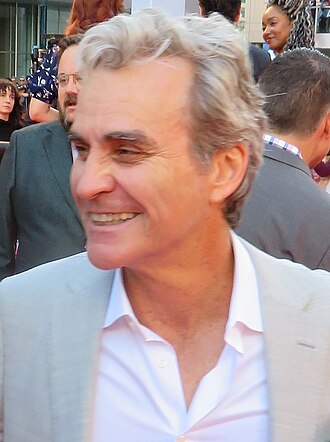
Tom Junod
Narrative nonfiction writer, author of The Falling Man and Can You Say...Hero?
Where to hear and read about Tom Junod1 episode or test

Tom Junod is an Esquire magazine writer whose essays 'The Falling Man' and 'Can You Say...Hero?' became the standard accounts of 9/11's falling man and of Fred Rogers. The thing most worth learning from him is to find the contradiction or secret you are not supposed to say, state it plainly, and build the story out of it.
a secret, something that's not supposed to be said that I try to say.
The Truth About Writing Nobody Wants to Say (Tom Junod Interview)
Tom Junod: the story and the lessons
1Tom Junod's path: a house of secrets and his father's voice
Junod grew up in a beautiful house with something off inside it. His mother looked like a 1940s starlet, and his father, a singer, described himself as a John Garfield type. When Junod was three, his father had an affair with his first friend's mother and the marriage nearly ended.
The house had marble steps and everyone in it was gorgeous. A child can't name such a thing, he says, but he is aware of it. His course as a writer was set there.
He learned as a child to keep quiet about family secrets. After a trip for a hot fudge sundae, he knew without being told not to speak about a locked door and a woman's house. He stayed silent until he wrote his memoir.
He says much of his work holds 'a secret, something that's not supposed to be said that I try to say.'
His father's way of talking became his own prose rhythm. His father, a handbag salesman and singer, spoke musically, with pause, emphasis, pause, emphasis. Junod's ellipses and long sentences copy that, and he writes his memoir in his father's language.
He had already written about his father three times, including the GQ piece 'My Father's Fashion Tips.' Its maxims included that a turtleneck is the most flattering thing a man can wear, and always wear white to the face.
He found long magazine writing by accident while selling handbags. He thought a writer had to be a newspaperman, which he was too slow for, or a novelist, which he doubted he could be. He filled hotel-room nights, and even his business cards, with scenes, and the work was bad.
His first magazine story was written over the weekend before his wedding. The Atlanta editor asked how he learned to do it and said he could be Tom Wolfe. Junod didn't know who Wolfe or Gay Talese was.
Comic books taught him that stories live between two poles. He began reading them at about three. Clark Kent's secret is Superman, Bruce Wayne tries to make right his parents' murder, and Peter Parker lives between Parker and Spider-Man.
He says every hero is a secret and a transformation, and the pull for him was the transformation.
2How Junod wrote The Falling Man
Junod decided to write about the photo the moment he saw it. He saw it on page seven of the paper while on Shelter Island with no TV, and bought the Times, the Post and the Daily News and kept them all. He wrote the piece two years later.
He couldn't get into New York City and wanted to stay with his wife, and he assumed someone else would write it. The unresolved tension in the picture hooked him.
The taboo around the photo is what drew him to it. The photo ran the first day and then almost never again, because people saw it as a violation of a man's most private moment. Junod's rule: if somebody says I can't say it, I really want to say it.
The deeper taboo was the jumpers themselves. A couple hundred people jumped, roughly one in six of those who died in the North Tower. He expected a wave of stories, but no wave came, and the photo only got the name 'the falling man' after his Esquire story.
He moved from scrupulous physics to grand metaphor in one paragraph. The paragraph gives the time, 15 seconds past 9:41 a.m., and the acceleration of 32 feet per second squared. Then it calls the falling man the birth of a new flag, 'a banner composed entirely of steel bars shining in the sun.'
Junod says he risks offense by being objective, then takes liberties with metaphor. The jump between registers makes the paragraph work.
He and a researcher phoned the families of the dead every night. Junod and researcher Andrew Chaikivsky worked lists of the dead and called families. He expected people to hang up.
Instead they asked what he knew and how their loved one died, because nobody else was telling them. Reporting that feels intrusive can be what people most want.
3What Fred Rogers taught Junod about goodness
Junod, the 'bad boy', was sent to profile Fred Rogers in 1998. An editor thought it funny to send him to the good guy, the Presbyterian minister. Rogers answered the door in a bathrobe and sensed what each person needed, and trusted Junod.
The story ended with the two of them praying, and Junod says he felt something give way in him. In Penn Station strangers crouched to whisper in Rogers's ear, and he told Junod, 'Oh, Tom, you wouldn't believe the things I hear.'
Rogers showed him goodness is as much a mystery as evil. Before Rogers, Junod wrote almost only about human evil. Rogers showed him we have no more reason to be good than evil, and yet we are.
This let the spiritual enter his writing as another dimension, not a conversion. Rogers also served as an alternate father model to Junod's own father.
Junod wrote The Falling Man with compassion, which he credits to Rogers. Critics called the story cruel and insensitive, and he worried the bad boy was back. He says he wrote it with 'as much compassion and for one of a better word, love that I could.'
He says he could not have written it without Rogers in his life. The grieving families, meanwhile, wanted the truth.
4Junod's rules for sentences, openings and endings
Junod writes until a sentence raises the hair on his arms. He follows no checklist. Rhythm and word choice can explain a sentence afterward, but he finds it by feel and keeps going until the next sentence gives the same jolt.
'He departs from this earth like an arrow' was the first line of The Falling Man and became his guiding standard.
His first sentence is a bar he sets for himself, not a hook. He writes 'a first sentence that enables me to go on.' Once it is right, the job is to hold every later sentence to its standard.
The last sentence does the mirror job: it lets him stop. He is still a 'right to the last sentence' writer, though he has ended a story or two on a quote at ESPN, which Esquire counted as a failure.
He opens by saying the thing he is not supposed to say. His first magazine sentence was 'Okay, I admit it. I wanted to skewer him.' It tells the reader a human is here, and the man, Atlanta columnist Ron Hudspeth, turned out to be someone Junod liked.
The brutal honesty is a challenge to himself, and he doesn't have to keep the line. He no longer believes a story that offends nobody was done wrong.
He puts both poles of a contradiction in one sentence. In The Falling Man, one dash does it: 'the others who died this way, who jumped.' A line about his father runs through difficult things and ends with 'but man, I loved him.'
He calls the job reconciling, asking how these shapes fit together. A good sentence is one where the two poles rub like tectonic plates.
5How Junod finds what a story is really about
He chooses subjects with a contradiction he can't quite name. The falling man looks resigned and almost flying while he hurtles down at 150 mph. Obama is a good man who orders drone hits.
Once he finds the tension, he states it in the most direct way he can. He picks subjects that gnaw at him and writes toward resolution, like the tonic chord at the end of Beethoven.
Junod rewrites heavily and explodes his drafts. He sums up the stages of writing as 'I'm a genius. I'm a fraud. I survived.' He once managed a near-perfect first draft, with 'The Abortionist,' but now rewrites over and over, almost to a fault.
His first abandoned draft of the memoir ran 230,000 words and still hadn't introduced many main characters.
He tests every draft by asking whether the good stuff got in. His last Esquire story followed a young woman who ran from a Walmart in Marietta, Georgia, and was never seen again. The first draft was flat.
Editor David Granger reminded him that everyone who heard the story became obsessed, and asked why. Junod said it was a mystery, and Granger said, 'Write that.'
He writes 'This is a story about' until the real subject appears. When a draft is full of material but he can't say what it is about, he starts every sentence with that phrase and keeps going. He says it feels like second grade.
It saved 'The Rapist Says He's Sorry,' a National Magazine Award winner in the 1990s. 'I have written a bunch of stories where that has saved me.'
He uses odd forms as scaffolding, then edits them out. He wrote all of book three of his memoir in second person, then changed it back to first before handing it in. He has also written in all caps, with heavy cursing, and as question and answer.
Second person, he says, cuts out extraneous stuff. The goal is 'anything to get you going.'
6Why Junod says writing is bearing witness
He argues the idea that AI can write assumes there is no soul. For Junod, serious writing is the soul bearing witness to the truth, to history and to humanity. Anyone writing seriously from the heart is doing it.
He calls the soul an odd idea, but says it is the part of us that gives meaning to a seemingly meaningless current of atrocity.
Junod reads history through the writers who answered each era. He ties modernism to World War I, Kerouac and the Beats to World War II, and Don DeLillo to Vietnam. Writers meet 'the flow of history.'
He built shelves in a backyard shed on Shelter Island and ordered his books chronologically, from the Bible to Finnegans Wake. The shelf, he says, tells a story of humanity getting nearly everything wrong except bearing witness, which is why he won't give it up.

The Truth About Writing Nobody Wants to Say (Tom Junod Interview)
Tom Junod explains how he finds the sentence, the contradiction and the plain truth that lets a long magazine story stand up. The habit worth hearing is his bag of blunt tricks, like writing 'this is a story about' over and over, for finding what a draft is really about.
Junod grew up in a beautiful house with something off inside it. His mother looked like a 1940s starlet, and his father, a singer, described himself as a John Garfield type. When Junod was three, his father had an affair with his first friend's mother and the marriage nearly ended.
The house had marble steps and everyone in it was gorgeous. A child can't name such a thing, he says, but he is aware of it. His course as a writer was set there.
He learned as a child to keep quiet about family secrets. After a trip for a hot fudge sundae, he knew without being told not to speak about a locked door and a woman's house. He stayed silent until he wrote his memoir.
He says much of his work holds 'a secret, something that's not supposed to be said that I try to say.'
His father's way of talking became his own prose rhythm. His father, a handbag salesman and singer, spoke musically, with pause, emphasis, pause, emphasis. Junod's ellipses and long sentences copy that, and he writes his memoir in his father's language.
He had already written about his father three times, including the GQ piece 'My Father's Fashion Tips.' Its maxims included that a turtleneck is the most flattering thing a man can wear, and always wear white to the face.
He found long magazine writing by accident while selling handbags. He thought a writer had to be a newspaperman, which he was too slow for, or a novelist, which he doubted he could be. He filled hotel-room nights, and even his business cards, with scenes, and the work was bad.
His first magazine story was written over the weekend before his wedding. The Atlanta editor asked how he learned to do it and said he could be Tom Wolfe. Junod didn't know who Wolfe or Gay Talese was.
Comic books taught him that stories live between two poles. He began reading them at about three. Clark Kent's secret is Superman, Bruce Wayne tries to make right his parents' murder, and Peter Parker lives between Parker and Spider-Man.
He says every hero is a secret and a transformation, and the pull for him was the transformation.
Junod decided to write about the photo the moment he saw it. He saw it on page seven of the paper while on Shelter Island with no TV, and bought the Times, the Post and the Daily News and kept them all. He wrote the piece two years later.
He couldn't get into New York City and wanted to stay with his wife, and he assumed someone else would write it. The unresolved tension in the picture hooked him.
The taboo around the photo is what drew him to it. The photo ran the first day and then almost never again, because people saw it as a violation of a man's most private moment. Junod's rule: if somebody says I can't say it, I really want to say it.
The deeper taboo was the jumpers themselves. A couple hundred people jumped, roughly one in six of those who died in the North Tower. He expected a wave of stories, but no wave came, and the photo only got the name 'the falling man' after his Esquire story.
He moved from scrupulous physics to grand metaphor in one paragraph. The paragraph gives the time, 15 seconds past 9:41 a.m., and the acceleration of 32 feet per second squared. Then it calls the falling man the birth of a new flag, 'a banner composed entirely of steel bars shining in the sun.'
Junod says he risks offense by being objective, then takes liberties with metaphor. The jump between registers makes the paragraph work.
He and a researcher phoned the families of the dead every night. Junod and researcher Andrew Chaikivsky worked lists of the dead and called families. He expected people to hang up.
Instead they asked what he knew and how their loved one died, because nobody else was telling them. Reporting that feels intrusive can be what people most want.
Junod, the 'bad boy', was sent to profile Fred Rogers in 1998. An editor thought it funny to send him to the good guy, the Presbyterian minister. Rogers answered the door in a bathrobe and sensed what each person needed, and trusted Junod.
The story ended with the two of them praying, and Junod says he felt something give way in him. In Penn Station strangers crouched to whisper in Rogers's ear, and he told Junod, 'Oh, Tom, you wouldn't believe the things I hear.'
Rogers showed him goodness is as much a mystery as evil. Before Rogers, Junod wrote almost only about human evil. Rogers showed him we have no more reason to be good than evil, and yet we are.
This let the spiritual enter his writing as another dimension, not a conversion. Rogers also served as an alternate father model to Junod's own father.
Junod wrote The Falling Man with compassion, which he credits to Rogers. Critics called the story cruel and insensitive, and he worried the bad boy was back. He says he wrote it with 'as much compassion and for one of a better word, love that I could.'
He says he could not have written it without Rogers in his life. The grieving families, meanwhile, wanted the truth.
Junod writes until a sentence raises the hair on his arms. He follows no checklist. Rhythm and word choice can explain a sentence afterward, but he finds it by feel and keeps going until the next sentence gives the same jolt.
'He departs from this earth like an arrow' was the first line of The Falling Man and became his guiding standard.
His first sentence is a bar he sets for himself, not a hook. He writes 'a first sentence that enables me to go on.' Once it is right, the job is to hold every later sentence to its standard.
The last sentence does the mirror job: it lets him stop. He is still a 'right to the last sentence' writer, though he has ended a story or two on a quote at ESPN, which Esquire counted as a failure.
He opens by saying the thing he is not supposed to say. His first magazine sentence was 'Okay, I admit it. I wanted to skewer him.' It tells the reader a human is here, and the man, Atlanta columnist Ron Hudspeth, turned out to be someone Junod liked.
The brutal honesty is a challenge to himself, and he doesn't have to keep the line. He no longer believes a story that offends nobody was done wrong.
He puts both poles of a contradiction in one sentence. In The Falling Man, one dash does it: 'the others who died this way, who jumped.' A line about his father runs through difficult things and ends with 'but man, I loved him.'
He calls the job reconciling, asking how these shapes fit together. A good sentence is one where the two poles rub like tectonic plates.
He chooses subjects with a contradiction he can't quite name. The falling man looks resigned and almost flying while he hurtles down at 150 mph. Obama is a good man who orders drone hits.
Once he finds the tension, he states it in the most direct way he can. He picks subjects that gnaw at him and writes toward resolution, like the tonic chord at the end of Beethoven.
Junod rewrites heavily and explodes his drafts. He sums up the stages of writing as 'I'm a genius. I'm a fraud. I survived.' He once managed a near-perfect first draft, with 'The Abortionist,' but now rewrites over and over, almost to a fault.
His first abandoned draft of the memoir ran 230,000 words and still hadn't introduced many main characters.
He tests every draft by asking whether the good stuff got in. His last Esquire story followed a young woman who ran from a Walmart in Marietta, Georgia, and was never seen again. The first draft was flat.
Editor David Granger reminded him that everyone who heard the story became obsessed, and asked why. Junod said it was a mystery, and Granger said, 'Write that.'
He writes 'This is a story about' until the real subject appears. When a draft is full of material but he can't say what it is about, he starts every sentence with that phrase and keeps going. He says it feels like second grade.
It saved 'The Rapist Says He's Sorry,' a National Magazine Award winner in the 1990s. 'I have written a bunch of stories where that has saved me.'
He uses odd forms as scaffolding, then edits them out. He wrote all of book three of his memoir in second person, then changed it back to first before handing it in. He has also written in all caps, with heavy cursing, and as question and answer.
Second person, he says, cuts out extraneous stuff. The goal is 'anything to get you going.'
He argues the idea that AI can write assumes there is no soul. For Junod, serious writing is the soul bearing witness to the truth, to history and to humanity. Anyone writing seriously from the heart is doing it.
He calls the soul an odd idea, but says it is the part of us that gives meaning to a seemingly meaningless current of atrocity.
Junod reads history through the writers who answered each era. He ties modernism to World War I, Kerouac and the Beats to World War II, and Don DeLillo to Vietnam. Writers meet 'the flow of history.'
He built shelves in a backyard shed on Shelter Island and ordered his books chronologically, from the Bible to Finnegans Wake. The shelf, he says, tells a story of humanity getting nearly everything wrong except bearing witness, which is why he won't give it up.