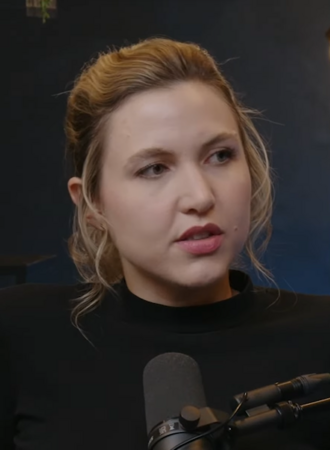
Taylor Tomlinson
Stand-up comedian and author
Where to hear and read about Taylor Tomlinson1 episode or test

Taylor Tomlinson is a stand-up comedian and the author of the book Actually, Nevermind, who builds her material from strong, specific feelings and tests it on live audiences. The thing most worth learning from her is to shorten the loop between writing and audience reaction, then listen honestly to what the reaction says.
you don't know if it's a joke yet until someone laughs at it.
How to Make Your Writing More Funny (Taylor Tomlinson Interview)
Taylor Tomlinson: the story and the lessons
1How Taylor Tomlinson finds her material
Tomlinson mines what makes her angry, what seems stupid and what feels unfair. She sits down with a notebook and a day free of expectations and lists subjects she could talk about for a couple of years. That is about the time it takes to build an hour worth recording.
She leans on old advice from Judy Carter: "write down everything that makes you angry, everything that you think is stupid, everything that you think is unfair".
She writes about subjects where she does not know how she feels. She has many jokes about having kids because she is undecided about having them.
Mixed feelings give her tension and more angles than a settled opinion would.
She starts with something specific to her, then checks who else shares it. If the room laughs, others are going through it too. If it doesn't, it was just her. A plane joke began as a phone note: a laughing baby is as loud as a crying one, and nobody tries to stop it.
Her view: "if you find something that's specific about you, more often times than not, it is more universal than you think".
Tomlinson cannot invent jokes alone at a desk. She writes in cafes, wears AirPods with nothing playing and follows people around a bookstore to overhear them.
Alone she can come up with story ideas but not jokes. At home she can only review a set she already has.
She picks edgy jokes by how the audience sees her. She has a round face and a nice Midwestern daughter vibe, though she is from California, so she has to be careful the audience doesn't start to hate her.
She and friends hand each other jokes they can't pull off but the other person can.
2How Tomlinson tests, tunes and trims a set
Tomlinson writes at 4:00 and learns by 8:00 whether it works. Stand-up gives her a verdict within hours, which she loves, if she is willing to get on stage a lot. Her book took two years to find out.
When someone says they have written hours of jokes, her answer is that they are not jokes until someone laughs.
She records audio of every set and listens back. She doesn't film every show, but she records every one and listens on planes or while walking. She listens for laughs, groans, gasps and silence.
A set never sounds how she thought it went. Some jokes do better or worse than remembered.
She listens for laughter, not applause or cheers. If the room only cheers because people agree, she suspects it is a good point but not yet funny.
Comedians talk a lot about getting woos instead of laughs. She wants the reaction that matches the goal.
Tomlinson writes the bad, derivative material first to get past it. A new comic's first 20 minutes will mostly be ideas others have done better, but they have to be written first.
David Perell compares it to Ed Sheeran's tap: the dirty water runs first, then clean water comes. Starting from "this happened to me" keeps a joke less derivative.
She lands one anchor punchline, then adds tags. She goes on stage with one or two anchor punchlines and riffs from them. The wild lines that work afterward are the tags.
She compares it to drifting into the deep end while holding the side of the pool. Friends such as Sophie Buddle and Dustin Nickerson trade tags with her in the green room.
She varies the rhythm so an hour doesn't go one note. Every joke should be strong, but some get machine-gun laughter and others a slower laugh while people work out the idea.
She has drifted off while watching an hour of one-note jokes. She likens a good hour to an album with different vibes and one coherent whole.
She stops tinkering once the material is tight but not stale. Every special, and the book, had to be declared done at some point.
Keep tinkering and "you'll start messing with it and doubting yourself and making it worse".
3Tomlinson on self-deprecation, grief and oversharing
She learned that too much self-deprecation insults the audience. Around age 21 or 22, while headlining on the road, she would build rapport for 25 minutes and then rant about being trash. Women told her afterward, "if you're annoying or ugly, then what am I?"
Now she swings between overconfident and self-loathing and lands in the middle. Her older-sister jokes show both sides: she takes care of everyone and is always right, and she is also annoying and overbearing.
Her mom jokes only worked well once she had healed. The jokes in her second special, Look at You, worked only some nights for years, though the lines barely changed. They improved after a lot of therapy.
Sometimes the crowd knew she wasn't over it before she did: "people know when you're in control of the ship and when you're not."
She named the tension in the room before a painful bit. She told the crowd early that she is fine and pointed to her success, so they could laugh instead of worrying. A 60-second bit grew into a six-minute chunk.
The joke grew from a real feeling: who is she to complain, given she is still privileged in many ways? In her words, she was "just addressing the tension in the room that then allowed everybody to loosen up and laugh".
Tomlinson now shares enough to be honest without telling everything. After years of oversharing in stand-up and on podcasts, she learned that keeping something private is a choice. Writing her book showed her how much can be said without full disclosure.
She left out even some good things: "I don't need anyone with 20 bucks to have access to that part of me."
4What Tomlinson learned writing Actually, Nevermind
The book needed different hours and a different room than stand-up. For the book she worked 9:30 to 4:30 in an office with the door shut and the Wi-Fi off. For stand-up she starts around 3:00 and writes into the evening.
First-draft work wore her out by 4:30, though editing could run into the evening.
Stand-up trained her to cut, and the book asked her to expand. She was good at the editing stage and suggested cuts to her editor, who once replied that the section she wanted cut was a whole chapter.
In stand-up she tries to get the most ideas into the least words. In the book she had to give every feeling she had about a subject.
She expected the book to be painful, so it was easier. Amy Poehler's earnest memoir prepared her for a hard process. Her approach is to expect the worst and be pleasantly surprised.
When publishers warned her it was a lot of work, she said it was a childhood dream and she didn't expect it to be fun all the time.
She reads writers who admit how hard and scary writing is. She returns most to Anne Lamott's Bird by Bird, first read in high school, and Ann Patchett's The Getaway Car. Learning that great writers feel doubt stopped her from abandoning projects.
Hearing someone "objectively fantastic" voice the fear makes her feel "less crazy". Writers across the board say they think it's garbage, put it out anyway and hope for the best.

How to Make Your Writing More Funny (Taylor Tomlinson Interview)
Taylor Tomlinson explains how a comedian writes: start from strong feelings, test every line on a live audience, and cut hard. Her habit of recording every set and listening back for the kind of laugh, not just the laugh, makes the conversation worth hearing for any writer.
Tomlinson mines what makes her angry, what seems stupid and what feels unfair. She sits down with a notebook and a day free of expectations and lists subjects she could talk about for a couple of years. That is about the time it takes to build an hour worth recording.
She leans on old advice from Judy Carter: "write down everything that makes you angry, everything that you think is stupid, everything that you think is unfair".
She writes about subjects where she does not know how she feels. She has many jokes about having kids because she is undecided about having them.
Mixed feelings give her tension and more angles than a settled opinion would.
She starts with something specific to her, then checks who else shares it. If the room laughs, others are going through it too. If it doesn't, it was just her. A plane joke began as a phone note: a laughing baby is as loud as a crying one, and nobody tries to stop it.
Her view: "if you find something that's specific about you, more often times than not, it is more universal than you think".
Tomlinson cannot invent jokes alone at a desk. She writes in cafes, wears AirPods with nothing playing and follows people around a bookstore to overhear them.
Alone she can come up with story ideas but not jokes. At home she can only review a set she already has.
She picks edgy jokes by how the audience sees her. She has a round face and a nice Midwestern daughter vibe, though she is from California, so she has to be careful the audience doesn't start to hate her.
She and friends hand each other jokes they can't pull off but the other person can.
Tomlinson writes at 4:00 and learns by 8:00 whether it works. Stand-up gives her a verdict within hours, which she loves, if she is willing to get on stage a lot. Her book took two years to find out.
When someone says they have written hours of jokes, her answer is that they are not jokes until someone laughs.
She records audio of every set and listens back. She doesn't film every show, but she records every one and listens on planes or while walking. She listens for laughs, groans, gasps and silence.
A set never sounds how she thought it went. Some jokes do better or worse than remembered.
She listens for laughter, not applause or cheers. If the room only cheers because people agree, she suspects it is a good point but not yet funny.
Comedians talk a lot about getting woos instead of laughs. She wants the reaction that matches the goal.
Tomlinson writes the bad, derivative material first to get past it. A new comic's first 20 minutes will mostly be ideas others have done better, but they have to be written first.
David Perell compares it to Ed Sheeran's tap: the dirty water runs first, then clean water comes. Starting from "this happened to me" keeps a joke less derivative.
She lands one anchor punchline, then adds tags. She goes on stage with one or two anchor punchlines and riffs from them. The wild lines that work afterward are the tags.
She compares it to drifting into the deep end while holding the side of the pool. Friends such as Sophie Buddle and Dustin Nickerson trade tags with her in the green room.
She varies the rhythm so an hour doesn't go one note. Every joke should be strong, but some get machine-gun laughter and others a slower laugh while people work out the idea.
She has drifted off while watching an hour of one-note jokes. She likens a good hour to an album with different vibes and one coherent whole.
She stops tinkering once the material is tight but not stale. Every special, and the book, had to be declared done at some point.
Keep tinkering and "you'll start messing with it and doubting yourself and making it worse".
She learned that too much self-deprecation insults the audience. Around age 21 or 22, while headlining on the road, she would build rapport for 25 minutes and then rant about being trash. Women told her afterward, "if you're annoying or ugly, then what am I?"
Now she swings between overconfident and self-loathing and lands in the middle. Her older-sister jokes show both sides: she takes care of everyone and is always right, and she is also annoying and overbearing.
Her mom jokes only worked well once she had healed. The jokes in her second special, Look at You, worked only some nights for years, though the lines barely changed. They improved after a lot of therapy.
Sometimes the crowd knew she wasn't over it before she did: "people know when you're in control of the ship and when you're not."
She named the tension in the room before a painful bit. She told the crowd early that she is fine and pointed to her success, so they could laugh instead of worrying. A 60-second bit grew into a six-minute chunk.
The joke grew from a real feeling: who is she to complain, given she is still privileged in many ways? In her words, she was "just addressing the tension in the room that then allowed everybody to loosen up and laugh".
Tomlinson now shares enough to be honest without telling everything. After years of oversharing in stand-up and on podcasts, she learned that keeping something private is a choice. Writing her book showed her how much can be said without full disclosure.
She left out even some good things: "I don't need anyone with 20 bucks to have access to that part of me."
The book needed different hours and a different room than stand-up. For the book she worked 9:30 to 4:30 in an office with the door shut and the Wi-Fi off. For stand-up she starts around 3:00 and writes into the evening.
First-draft work wore her out by 4:30, though editing could run into the evening.
Stand-up trained her to cut, and the book asked her to expand. She was good at the editing stage and suggested cuts to her editor, who once replied that the section she wanted cut was a whole chapter.
In stand-up she tries to get the most ideas into the least words. In the book she had to give every feeling she had about a subject.
She expected the book to be painful, so it was easier. Amy Poehler's earnest memoir prepared her for a hard process. Her approach is to expect the worst and be pleasantly surprised.
When publishers warned her it was a lot of work, she said it was a childhood dream and she didn't expect it to be fun all the time.
She reads writers who admit how hard and scary writing is. She returns most to Anne Lamott's Bird by Bird, first read in high school, and Ann Patchett's The Getaway Car. Learning that great writers feel doubt stopped her from abandoning projects.
Hearing someone "objectively fantastic" voice the fear makes her feel "less crazy". Writers across the board say they think it's garbage, put it out anyway and hope for the best.