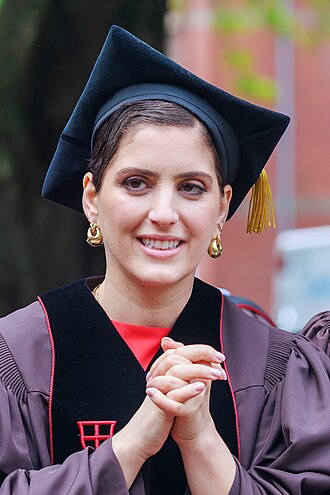
Suleika Jaouad
Author of Between Two Kingdoms and The Book of Alchemy, and writer of The Isolation Journals
Where to hear and read about Suleika Jaouad1 episode or test

Suleika Jaouad is the author of the memoir Between Two Kingdoms and the creativity book The Book of Alchemy, and writes The Isolation Journals newsletter. The thing most worth learning from her is to draft privately by hand toward a question you can't answer, and to treat distance and editing as separate stages.
my first drafts were full of lies
The Most Freeing Writing Lesson You'll Ever Get (Suleika Jaouad Interview)
Suleika Jaouad: the story and the lessons
1How Suleika Jaouad found her voice in a hospital bed
Jaouad began writing for the public from a hospital bed in her twenties. Leukemia at 22 left her feeling exposed and porous to everything. She had been raised by immigrant parents to pull herself up by the bootstraps, and she stopped writing to assert authority.
She let not knowing guide the work and says tender skin served her writing better than thick skin. That path led to a memoir and then a book on creativity.
Pressure to perform killed her writing, and a private journal brought it back. At 22 she opened a Word document believing she had to write something "New York Times"-worthy, and nothing came. In the hospital no one expected anything of her, so she wrote in her journal like a child, for the joy of it.
The journal worked like a reporter's notebook for things she could not say aloud. She stresses the hospital was no day spa: it was hard, isolating and horrific.
Her mother taught her that a mistake on the canvas is where the energy is. Her mother, a visual artist, told her in an attic studio not to cover a mistake up but to keep playing with what made her uncomfortable. Her father is a professor of French and francophone literature.
Jaouad holds the idea of what she wants to make, then forgets it so the subconscious can lead.
2How Jaouad drafts a book
Jaouad writes every first draft by hand in her journal. She does it to trick her brain away from the blinking cursor. There is only so much crossing out you can do on paper, so she reaches what she wants to say before she polishes.
Typing the draft up later is when editing begins. The two formats feel like different genres, which gives her distance. She has worked this way for every column and book since her hospital journaling at 22.
She keeps the judge and the creator apart by choosing the medium. Jaouad says the temptation to edit on a computer is far too great: she starts making a sentence sound beautiful before she knows what she is saying.
David Perell adds that when judge and creator work at once, you shut off the sediment of the mind. The critic has a role, but much later.
She left her phone in the mailbox and wrote for a couple of hours. While writing Between Two Kingdoms she woke up, walked her dog, left the phone in the mailbox, and wrote a couple of hours before retrieving it on the next walk.
She also built self-styled residencies by house-sitting and dog-sitting in remote homes, to be alone in her own brain.
She started Between Two Kingdoms with twenty short scenes. She wrote them stream of consciousness without worrying whether they fit together, then wrote the connective tissue between them. She says she thinks in scenes.
Jaouad distrusts a first draft that tells the surface story. Her early drafts told an aspirational story that fit neatly into her outline. The more interesting story came from digging beneath it, until she reached what she calls the truth beneath the truth beneath the truth.
It took her about six months to let go of the idea she had outlined in her book proposal.
She prints the draft, reads it aloud and rearranges it by hand. Jaouad redlines printed pages. When structure fails she cuts paragraphs apart with scissors and builds a jigsaw on her living room floor.
She also puts key sentences, characters and themes on different colored Post-its and maps them on her walls.
3How Jaouad finds her subject and gets unstuck
Jaouad writes into a question she cannot answer instead of following a plan. She says writing is where she puzzles through what she doesn't understand, and sometimes she never arrives at an answer. Themes announce themselves in the first draft and get clarified in revision.
For Between Two Kingdoms the question was how to move on from illness, and whether anyone can after a traumatic reckoning.
Both her books grew from questions already in her journals. She kept saying she didn't want to write about illness. Cheryl Strayed told her she had no business avoiding the thing she needed to interrogate. The Book of Alchemy came from journaling she had done since childhood.
She has hundreds of journals and had dismissed a book on journaling as unserious and too easy. Her question was too close to see, like something on your forehead that everyone else can read.
Forcing a traumatic memoir through willpower backfired, and she finished two years late. Writing about trauma left her curled on the floor by 3 or 4 p.m. each day. Part of her, the "good student", clung to the book proposal outline.
She had been bullying herself and muscling through when what she needed was distance.
Switching to present tense unlocked Between Two Kingdoms. After about 150 private pages, a writer she admired replied only "It's not working." On a drive to the beach she realized she had written the aftermath of illness in past tense, as if it were behind her.
She changed the first chapters of part two to present tense on a laptop bouncing on her knees, and the writing came alive.
She steps away on purpose and balances it with rigor. Distance is not a break from the writing but something that facilitates it. She pairs butt in chair with time away, using the friend's "bed, bath or bus" idea of sleeping, relaxing or travelling.
She tells avoidance from being out of juice by track record: if you have a history of finishing projects, you can indulge the impulse to step away. Her own bus is painting, walks with her dog, museums and music.
She leans into the prompts she resists. When her journal went recursive she read Susan Sontag, Virginia Woolf and Audre Lorde, picked a page at random, and wrote from what it sparked. Resisted prompts often yield the most interesting writing.
Her prompt newsletter, The Isolation Journals, drew 40,000 subscribers in 24 hours early in the pandemic and now has nearly 300,000 readers. She says everyone prompts themselves and we just call it inspiration.
4Jaouad on feedback, journaling and attention
Jaouad asks readers where the heat is, not what is broken. She asked a first reader "Is it as bad as I think?" and got back "It's not working," which left her defeated. Melissa Febos's heat mapping asks where the page feels warm, then you write into that.
She chooses first readers carefully and names the feedback she wants. Part of her had hoped to hear she was wrong, so she learned to pick readers with care. Perell's "trunk, branch or leaf" tells a reader whether she wants structure or line edits.
This avoids four months of work followed by trunk feedback.
She asked a friend for a pettiness read of her memoir. For the breakup in her first book, a close friend read only for descriptions that were subconsciously a jab. A blind spot is something you can't see, so someone else has to point it out.
She writes "from your side of the door", since people in a memoir never thought the moment was on the record.
She journals most days, even for two minutes. Jaouad writes for anywhere from 2 to 20 minutes, recording small details and moments. She rarely knows in the moment what will become a story, so the journals become source material later.
Writing in ink helps her remember, and even the to-do items that never get crossed off are informative.
When time is short she lists ten images from the last 24 hours. The prompt "Just 10 Images" came from Ash Pearson Story, who wrote it in a NICU. At number eight Jaouad often has nothing, then recalls a detail that would have gone unremembered.
She says "memory begets memory begets memory". Perell found the same on receipt paper: he found about 20 lines within 20 minutes after feeling he had nothing.
She learns from writers who teach her how to pay attention. Jaouad loves Annie Dillard, whose watching of a creek in her suburban neighborhood opens onto a galaxy of thought. She has never taken a walk the same way since first reading Dillard.
Perell reads along with the author's audiobook to hear pauses and emphasis. Jaouad says a memoir is built on attention, not a womb-to-tomb life story, and can cover a single moment or day.

The Most Freeing Writing Lesson You'll Ever Get (Suleika Jaouad Interview)
Suleika Jaouad explains how she gets out of her own way on the page by drafting privately by hand, writing toward questions she can't answer, and treating distance and prompts as part of the work. The habit worth hearing is her split between a loose longhand journal draft and a later, separate typed edit.
Jaouad began writing for the public from a hospital bed in her twenties. Leukemia at 22 left her feeling exposed and porous to everything. She had been raised by immigrant parents to pull herself up by the bootstraps, and she stopped writing to assert authority.
She let not knowing guide the work and says tender skin served her writing better than thick skin. That path led to a memoir and then a book on creativity.
Pressure to perform killed her writing, and a private journal brought it back. At 22 she opened a Word document believing she had to write something "New York Times"-worthy, and nothing came. In the hospital no one expected anything of her, so she wrote in her journal like a child, for the joy of it.
The journal worked like a reporter's notebook for things she could not say aloud. She stresses the hospital was no day spa: it was hard, isolating and horrific.
Her mother taught her that a mistake on the canvas is where the energy is. Her mother, a visual artist, told her in an attic studio not to cover a mistake up but to keep playing with what made her uncomfortable. Her father is a professor of French and francophone literature.
Jaouad holds the idea of what she wants to make, then forgets it so the subconscious can lead.
Jaouad writes every first draft by hand in her journal. She does it to trick her brain away from the blinking cursor. There is only so much crossing out you can do on paper, so she reaches what she wants to say before she polishes.
Typing the draft up later is when editing begins. The two formats feel like different genres, which gives her distance. She has worked this way for every column and book since her hospital journaling at 22.
She keeps the judge and the creator apart by choosing the medium. Jaouad says the temptation to edit on a computer is far too great: she starts making a sentence sound beautiful before she knows what she is saying.
David Perell adds that when judge and creator work at once, you shut off the sediment of the mind. The critic has a role, but much later.
She left her phone in the mailbox and wrote for a couple of hours. While writing Between Two Kingdoms she woke up, walked her dog, left the phone in the mailbox, and wrote a couple of hours before retrieving it on the next walk.
She also built self-styled residencies by house-sitting and dog-sitting in remote homes, to be alone in her own brain.
She started Between Two Kingdoms with twenty short scenes. She wrote them stream of consciousness without worrying whether they fit together, then wrote the connective tissue between them. She says she thinks in scenes.
Jaouad distrusts a first draft that tells the surface story. Her early drafts told an aspirational story that fit neatly into her outline. The more interesting story came from digging beneath it, until she reached what she calls the truth beneath the truth beneath the truth.
It took her about six months to let go of the idea she had outlined in her book proposal.
She prints the draft, reads it aloud and rearranges it by hand. Jaouad redlines printed pages. When structure fails she cuts paragraphs apart with scissors and builds a jigsaw on her living room floor.
She also puts key sentences, characters and themes on different colored Post-its and maps them on her walls.
Jaouad writes into a question she cannot answer instead of following a plan. She says writing is where she puzzles through what she doesn't understand, and sometimes she never arrives at an answer. Themes announce themselves in the first draft and get clarified in revision.
For Between Two Kingdoms the question was how to move on from illness, and whether anyone can after a traumatic reckoning.
Both her books grew from questions already in her journals. She kept saying she didn't want to write about illness. Cheryl Strayed told her she had no business avoiding the thing she needed to interrogate. The Book of Alchemy came from journaling she had done since childhood.
She has hundreds of journals and had dismissed a book on journaling as unserious and too easy. Her question was too close to see, like something on your forehead that everyone else can read.
Forcing a traumatic memoir through willpower backfired, and she finished two years late. Writing about trauma left her curled on the floor by 3 or 4 p.m. each day. Part of her, the "good student", clung to the book proposal outline.
She had been bullying herself and muscling through when what she needed was distance.
Switching to present tense unlocked Between Two Kingdoms. After about 150 private pages, a writer she admired replied only "It's not working." On a drive to the beach she realized she had written the aftermath of illness in past tense, as if it were behind her.
She changed the first chapters of part two to present tense on a laptop bouncing on her knees, and the writing came alive.
She steps away on purpose and balances it with rigor. Distance is not a break from the writing but something that facilitates it. She pairs butt in chair with time away, using the friend's "bed, bath or bus" idea of sleeping, relaxing or travelling.
She tells avoidance from being out of juice by track record: if you have a history of finishing projects, you can indulge the impulse to step away. Her own bus is painting, walks with her dog, museums and music.
She leans into the prompts she resists. When her journal went recursive she read Susan Sontag, Virginia Woolf and Audre Lorde, picked a page at random, and wrote from what it sparked. Resisted prompts often yield the most interesting writing.
Her prompt newsletter, The Isolation Journals, drew 40,000 subscribers in 24 hours early in the pandemic and now has nearly 300,000 readers. She says everyone prompts themselves and we just call it inspiration.
Jaouad asks readers where the heat is, not what is broken. She asked a first reader "Is it as bad as I think?" and got back "It's not working," which left her defeated. Melissa Febos's heat mapping asks where the page feels warm, then you write into that.
She chooses first readers carefully and names the feedback she wants. Part of her had hoped to hear she was wrong, so she learned to pick readers with care. Perell's "trunk, branch or leaf" tells a reader whether she wants structure or line edits.
This avoids four months of work followed by trunk feedback.
She asked a friend for a pettiness read of her memoir. For the breakup in her first book, a close friend read only for descriptions that were subconsciously a jab. A blind spot is something you can't see, so someone else has to point it out.
She writes "from your side of the door", since people in a memoir never thought the moment was on the record.
She journals most days, even for two minutes. Jaouad writes for anywhere from 2 to 20 minutes, recording small details and moments. She rarely knows in the moment what will become a story, so the journals become source material later.
Writing in ink helps her remember, and even the to-do items that never get crossed off are informative.
When time is short she lists ten images from the last 24 hours. The prompt "Just 10 Images" came from Ash Pearson Story, who wrote it in a NICU. At number eight Jaouad often has nothing, then recalls a detail that would have gone unremembered.
She says "memory begets memory begets memory". Perell found the same on receipt paper: he found about 20 lines within 20 minutes after feeling he had nothing.
She learns from writers who teach her how to pay attention. Jaouad loves Annie Dillard, whose watching of a creek in her suburban neighborhood opens onto a galaxy of thought. She has never taken a walk the same way since first reading Dillard.
Perell reads along with the author's audiobook to hear pauses and emphasis. Jaouad says a memoir is built on attention, not a womb-to-tomb life story, and can cover a single moment or day.