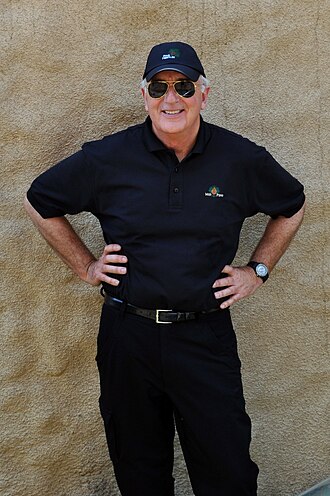
Steven Pressfield
Author of The War of Art and Gates of Fire
Where to hear and read about Steven Pressfield2 episodes and tests

 How I WriteHow to Become a Master Storyteller (Steven Pressfield Interview)
 How I WriteHow to Write Absurdly Good Stories (Steven Pressfield Interview)
Steven Pressfield is the author of The War of Art, Gates of Fire and The Legend of Bagger Vance, who failed at writing for more than a decade before he found his way in. The most useful thing to learn from him is to pair daily, ego-free discipline (cover the canvas, then fix) with a checklist of timeless story principles, each given a fresh spin.
If you have discipline and no talent, you're way better off than if you have giant talent and no discipline.
How to Write Absurdly Good Stories (Steven Pressfield Interview)
Steven Pressfield: the story and the lessons
1How Steven Pressfield became a writer
Pressfield started writing because it looked easy, and stayed because it was his exit. At 22 he was a junior copywriter in New York. His boss, Ed Hannibal, wrote a novel, so Pressfield quit to try the same.
He thought "Oh, I can do that" and calls himself one of those idiots. Once he had fallen through the bottom of everything, writing was the only way out of the paper bag. He never felt he had something to express, and he felt a lot of shame about it.
A failed first book and years of odd jobs came before any breakthrough. After failing badly on a first book, he drove trucks and cabs and carried the typewriter around without touching it. One night he wrote two hours of junk, threw it away, and found himself whistling while washing dishes.
He says he "sat down crazy" and "woke up calm". It still took another twenty-odd years before a book was published.
Ten years as a bad screenwriter taught him what a story is. He spent ten years as a screenwriter, half of it as junior partner to an established writer. Movies have known beats: act one, midpoint, the all-is-lost moment, the second act curtain.
He learned them by being embarrassed in meetings when he couldn't name his second act curtain. As a young screenwriter he was once asked about his all-is-lost moment and had to be taken aside to have it explained. He still uses that model in his head today.
A mentor and a year on $2,700 turned things around. Paul Rink lived in a camper called Moby Dick. They had coffee daily, and he gave Pressfield books to read and the muse prayer. Pressfield then lived a year on $2,700 after 10 to 12 years of failing.
He felt ungifted: a single sentence took him forever and others wrote far better. He thinks talent is overrated in writing and that luck helps, like the right agent at the right time.
His best-known books came early, and he kept widening his work. The Legend of Bagger Vance and Gates of Fire came right out of the box. He is now on roughly his 24th book and says he works as hard as ever.
His blog began in 2007 as a military site about Afghanistan, but readers kept asking about writing. His publicist Callie Archer suggested a weekly writing post, Writing Wednesdays. Ryan Holiday urged him to put his material into a 365-day format, which became The Daily Pressfield with 373 lessons.
2Pressfield's daily writing discipline
Pressfield writes seven days a week and stops when typos pile up. He now does in two hours what once took four, like training at the gym. He ends the day when typos arrive "bang, bang, bang" after a clean stretch.
He reads it as plain exhaustion, as if you run out of glucose, and treats it as the point of diminishing returns.
He shuts everything else off when he sits down to write. Email, agents and calls get a fixed block of full attention. Then he turns the page and nothing comes in while he works.
He budgets about 400 hours for a first draft. The figure came from a thriller writer, maybe Lee Child. Since nobody can write 40 hours a week, he plans roughly twenty 20-hour weeks, then ten or so more drafts. A novel takes two and a half to three years of near full-time work.
There is no coach or classmates, and he says he is in the tunnel alone, except for the muse. That is why he rates discipline above talent.
He treats self-doubt as a sign the work matters. On a two-year book, the first nine months to a year are racked with self-doubt. He says not feeling it would be a bad sign.
He calls doubt a form of Resistance. Keats named the skill of advancing through it negative capability, and Pressfield says it took him 20 years to learn it existed.
He guards his writing time by saying no, even to nice people. A 90-minute hangout plus a 15-minute commute costs one writing block. He passes on Dickens declining a lunch because the trip and the worry would break his whole morning.
He once declined an interview request from David Perell but sent about 30 books to share. His line: "I have to do my work, and I hope you understand".
He trains like a soldier and also prays for inspiration. He says every working artist has a warrior half and an inspired half, and only hard training prepares the instrument to take the voltage when flow arrives. Before work he says Homer's invocation of the Muse aloud.
He sees ideas as gifts from a higher level, which the Hebrew word Neshamah names, and reaching up to it is prayer.
3How Pressfield drafts and revises a novel
His first-draft mantra is to cover the canvas. A first draft only has to get paint on every part of the canvas, knowing it will be bad. A draft with an end gives him something to fix.
He borrows Israeli general Israel Tal's order to tank crews to go around any obstacle and keep advancing. Stopping to fix each problem turns a draft into a war of attrition.
He plans a story on about 60 index cards. A movie is about 60 scenes, one per card, sorted by act on a wall. He starts with a clothesline of the few scenes he knows, such as a great ending, then asks what fills the gaps.
Cards that are boring or repeat another card get replaced as better ideas come. His example is Moby Dick, where Ahab nearly reaches the whale and it escapes.
He fixes the ending first and builds every scene toward it. His rule is to start at the end. Decide the climax, then ask how to build to it so it surprises yet pays off, without shooting his wad too soon.
In Huckleberry Finn, Huck must refuse to turn in Jim. So the book first shows him a full believer in the racism of his time, and midway Jim proves a loyal friend, so the choice costs Huck something.
He digs for fiction like a buried dinosaur and rearranges key scenes. A fiction story is found by digging: you uncover a thigh bone, guess a plant eater, then find it eats meat and adjust. After a first draft he often moves some of his 20 or 30 key scenes around.
Nonfiction ideas are clear beforehand, so it is mostly choosing their order. Fiction is a giant machine with a million parts, and there he keeps asking the goddess what comes next.
He rereads each draft as a stranger or a specific friend. He asks whether a stranger would be sucked in. He sometimes imagines a friend, Jim, or two or three different readers in turn, and asks if each would be bored.
Around draft four or five he will go back to square one. The work is readable but a problem remains. His editor used to send him back at that stage, and now he must find the flaw alone. He recognized one problem while lying in a hotel bed on a three-week trip.
The skill is dropping ego and sunk costs, and nobody teaches it. He says you must pull back and look with cold eyes even in a flow state.
4How Pressfield finds a voice and a style
Pressfield retyped Henry Miller and Hemingway to absorb their craft. He says writing a passage out, then writing it again, sinks in deeper than reading closely. He can't say what he copied, only that he loved how they wrote.
Hunter S. Thompson retyped The Great Gatsby to feel what a great novel is like, and his style still ended up nothing like Fitzgerald's.
He believes everyone is born with an authentic swing. He caddied as a boy and saw how distinctive a born swing can be, such as Jim Furyk's loop. The goal is the style you were born with, not a perfect one.
He worries that online advice makes prose as uniform as video coaching makes golf swings. People won't take the time to find their real voice.
He lets each book choose its own style. The War of Art has a tough-love tone that isn't necessarily Pressfield himself. Gates of Fire, set at Thermopylae, uses a formal, archaic voice modeled on Greek classics translated by Oxford and Cambridge dons around 1890 to 1900.
Characters speak that way too, so readers feel they are reading something from the past.
He seeded Gates of Fire with invented foreign words. He coined English terms and had his friend Dr. Hippocrates Konzios turn them into Greek. A military exercise lasting eight nights became an "eight nighter".
He admits it is a trick that makes readers feel the author knows the era.
Advertising taught him that nobody wants to read your work. Readers fast-forward through ads, and the same is true of a play, a dance or a song. So the work must be compelling, interesting or funny enough to break through.
Length is fine if it stays interesting. He ties this to Robert Greene's dense 48 Laws of Power.
5Pressfield's story beats, from inciting incident to epiphany
He came to trust three acts after fearing they were a formula. Act one hooks, act two complicates and raises the stakes at its midpoint, and act three puts the accelerator down to the climax. A joke has the same shape.
He first feared formula, then found it "so true". He says stories can run to more than three acts, but three usually makes the most sense.
The inciting incident lets the audience glimpse the climax. It ends act one, and everything before it is setup. In Rocky, Apollo Creed picks the Italian Stallion from a book of local fighters, so we already want to see him in the ring.
He also notes a different kind: a strange image, like the horse that follows his cursed warrior in The Arcadian, plants a mystery that pulls readers through.
He checks for a midpoint where the hero chooses sides. In The Godfather, Michael says he will kill Sollozzo and the police captain, and moves from outside the family to inside it. The story gains another gear.
He asks himself while writing whether his hero chooses sides at the midpoint, because it changes what readers think the story is about.
He makes sure the villain takes over act two. Braveheart writer Randall Wallace taught him that act one introduces the hero and in act two the villain must come forward as the obstacle.
In The Godfather, Sollozzo has the Don gunned down and the families go to the mattresses, and that warfare runs the whole act.
He writes the worst possible all-is-lost moment, then finds the way out. About three-quarters through, everything collapses and the hero must move from ego to something greater. Rocky tells Adrian he can't beat Apollo, then decides that going 15 rounds is enough.
The epiphany is often a small, sober shift: the hero trades a dream for a goal he can reach. The writer's challenge is to build the worst collapse first and then find how the character gets out.
He adds a quiet solo moment and a hero at the villain's mercy. Before the climax, Michael finds the gun behind the toilet tank, a subway roars, and he combs his hair. Separately, the hero must fall into the villain's hands at least once, as with Bond under a laser.
Pressfield's partner Shawn Coyne taught him the captured-hero scene. In his own novel the hero is crucified and has a bag of scorpions tied over his head.
6How Pressfield thinks about heroes, villains and suffering
His hero must change, and his villain never does. The hero is capable of self-sacrifice and the villain plays a zero-sum game. Rick in Casablanca begins fighting only for himself and ends by putting Ilsa on the plane and joining the fight.
He says that change is why Casablanca is so satisfying, and he asks whether the hero moves from point A to point Z.
He insists every story has a villain, even nonfiction. In The War of Art the villain is Resistance. A villain can be a person, a thing, a society or an idea in someone's head.
In Silver Linings Playbook it is Bradley Cooper's obsession with his ex-wife, present in every scene. He says without a great villain there isn't a great story.
His mantra is to make your heroes suffer. A story is about learning, and suffering produces the learning. He took the idea from Guy Sajer's The Forgotten Soldier, about German troops retreating from Russia in winter.
Readers enjoy watching heroes suffer because they know they will have to go through the same to get anywhere. Rocky swallowing six raw eggs at dawn is another example.
He loves cursed heroes because everyone feels cursed. Achilles' pride costs him Patroclus. Shane wants to lay down his guns but his past makes him the only man who can save the valley. His own Arcadian hero is doomed to live life after life as a soldier.
He says "I love cursed characters." He also admits he hasn't thought this principle through as deeply as he should.
He keeps the conventions but puts a fresh spin on each. The Coen brothers made The Big Lebowski a detective story with every beat, but the detective is a stoner, so the usual beatings feel new.
He first feared formula, then saw that a hero who doesn't change leaves readers saying whatever. The question is whether you can do it slightly differently.
He uses three actor's questions to find a character's true identity. Stanislavski's questions are who am I, why am I here, and what do I want. Michael Corleone answers them by realizing he is not the Marine heading for a normal life but Vito's son.
The identity revealed is often one the hero didn't expect, and living by it costs something. Cady in Mean Girls gives up being the top girl.
7Mystery, innocence and beauty in Pressfield's stories
He asks what carries the unsolvable mystery in a story. His principle is that the female carries the mystery, and the male pursues it. It need not be a woman: the sea in Moby Dick, the desert in Lawrence of Arabia, the rice fields in Seven Samurai.
The mysteries are birth, death, creativity and life itself. He asks of any idea whether it has the female and a mystery.
He wants the solved case to open onto something bigger. In Chinatown, Gittes learns who did what, but Noah Cross is not arrested and the water scheme goes on.
The detective has solved the story but faces an even bigger thing, and the audience is left a little sadder but wiser.
He lets children and animals carry the divine. When a child or animal arrives in a draft unplanned, he switches to his left brain and asks what it means. The horse in The Arcadian is sent by heaven to restore justice.
He points to the child in The Emperor's New Clothes and the boy calling "Come back, Shane". He chose a horse over an eagle because its heart is four or five times the size of a human heart.
He calls end-of-the-world stakes a cheap shot. He admits he is guilty of them himself. Better to establish that one small thing is vital to the character, then force a choice.
In 45 Years, the husband reaches for his wife's hand after 45 years of marriage and she pulls it away, and that tells us the marriage rested on something false.
He carried one line from Empedocles for 40 years before it became a novel. A quote about a soul wandering for killing gave him the idea for The Arcadian. He knew a story was in it somewhere.
The novel is set in a Spain of the mind, with formal prose like Cervantes meant to cast a spell so magical things can happen.
He insists even the darkest story must be beautiful. Beauty comes from prose, rhythm and a world built with care. He points to Schindler's List, framed with great care in every shot.
He says, "I think an antidote to anxiety is beauty."
How to Become a Master Storyteller (Steven Pressfield Interview)
Pressfield walks through the recurring beats that make stories work, from the inciting incident to the all-is-lost moment, using Rocky, The Godfather, Casablanca and Chinatown. The habit worth stealing is checking every draft against these principles and putting a fresh spin on each one so it never reads as formula.
Ten years as a bad screenwriter taught him what a story is. He spent ten years as a screenwriter, half of it as junior partner to an established writer. Movies have known beats: act one, midpoint, the all-is-lost moment, the second act curtain.
He learned them by being embarrassed in meetings when he couldn't name his second act curtain. As a young screenwriter he was once asked about his all-is-lost moment and had to be taken aside to have it explained. He still uses that model in his head today.
He fixes the ending first and builds every scene toward it. His rule is to start at the end. Decide the climax, then ask how to build to it so it surprises yet pays off, without shooting his wad too soon.
In Huckleberry Finn, Huck must refuse to turn in Jim. So the book first shows him a full believer in the racism of his time, and midway Jim proves a loyal friend, so the choice costs Huck something.
He digs for fiction like a buried dinosaur and rearranges key scenes. A fiction story is found by digging: you uncover a thigh bone, guess a plant eater, then find it eats meat and adjust. After a first draft he often moves some of his 20 or 30 key scenes around.
Nonfiction ideas are clear beforehand, so it is mostly choosing their order. Fiction is a giant machine with a million parts, and there he keeps asking the goddess what comes next.
He came to trust three acts after fearing they were a formula. Act one hooks, act two complicates and raises the stakes at its midpoint, and act three puts the accelerator down to the climax. A joke has the same shape.
He first feared formula, then found it "so true". He says stories can run to more than three acts, but three usually makes the most sense.
The inciting incident lets the audience glimpse the climax. It ends act one, and everything before it is setup. In Rocky, Apollo Creed picks the Italian Stallion from a book of local fighters, so we already want to see him in the ring.
He also notes a different kind: a strange image, like the horse that follows his cursed warrior in The Arcadian, plants a mystery that pulls readers through.
He checks for a midpoint where the hero chooses sides. In The Godfather, Michael says he will kill Sollozzo and the police captain, and moves from outside the family to inside it. The story gains another gear.
He asks himself while writing whether his hero chooses sides at the midpoint, because it changes what readers think the story is about.
He makes sure the villain takes over act two. Braveheart writer Randall Wallace taught him that act one introduces the hero and in act two the villain must come forward as the obstacle.
In The Godfather, Sollozzo has the Don gunned down and the families go to the mattresses, and that warfare runs the whole act.
He writes the worst possible all-is-lost moment, then finds the way out. About three-quarters through, everything collapses and the hero must move from ego to something greater. Rocky tells Adrian he can't beat Apollo, then decides that going 15 rounds is enough.
The epiphany is often a small, sober shift: the hero trades a dream for a goal he can reach. The writer's challenge is to build the worst collapse first and then find how the character gets out.
He adds a quiet solo moment and a hero at the villain's mercy. Before the climax, Michael finds the gun behind the toilet tank, a subway roars, and he combs his hair. Separately, the hero must fall into the villain's hands at least once, as with Bond under a laser.
Pressfield's partner Shawn Coyne taught him the captured-hero scene. In his own novel the hero is crucified and has a bag of scorpions tied over his head.
His hero must change, and his villain never does. The hero is capable of self-sacrifice and the villain plays a zero-sum game. Rick in Casablanca begins fighting only for himself and ends by putting Ilsa on the plane and joining the fight.
He says that change is why Casablanca is so satisfying, and he asks whether the hero moves from point A to point Z.
He loves cursed heroes because everyone feels cursed. Achilles' pride costs him Patroclus. Shane wants to lay down his guns but his past makes him the only man who can save the valley. His own Arcadian hero is doomed to live life after life as a soldier.
He says "I love cursed characters." He also admits he hasn't thought this principle through as deeply as he should.
He keeps the conventions but puts a fresh spin on each. The Coen brothers made The Big Lebowski a detective story with every beat, but the detective is a stoner, so the usual beatings feel new.
He first feared formula, then saw that a hero who doesn't change leaves readers saying whatever. The question is whether you can do it slightly differently.
He uses three actor's questions to find a character's true identity. Stanislavski's questions are who am I, why am I here, and what do I want. Michael Corleone answers them by realizing he is not the Marine heading for a normal life but Vito's son.
The identity revealed is often one the hero didn't expect, and living by it costs something. Cady in Mean Girls gives up being the top girl.
He asks what carries the unsolvable mystery in a story. His principle is that the female carries the mystery, and the male pursues it. It need not be a woman: the sea in Moby Dick, the desert in Lawrence of Arabia, the rice fields in Seven Samurai.
The mysteries are birth, death, creativity and life itself. He asks of any idea whether it has the female and a mystery.
He wants the solved case to open onto something bigger. In Chinatown, Gittes learns who did what, but Noah Cross is not arrested and the water scheme goes on.
The detective has solved the story but faces an even bigger thing, and the audience is left a little sadder but wiser.
He lets children and animals carry the divine. When a child or animal arrives in a draft unplanned, he switches to his left brain and asks what it means. The horse in The Arcadian is sent by heaven to restore justice.
He points to the child in The Emperor's New Clothes and the boy calling "Come back, Shane". He chose a horse over an eagle because its heart is four or five times the size of a human heart.
He calls end-of-the-world stakes a cheap shot. He admits he is guilty of them himself. Better to establish that one small thing is vital to the character, then force a choice.
In 45 Years, the husband reaches for his wife's hand after 45 years of marriage and she pulls it away, and that tells us the marriage rested on something false.
He carried one line from Empedocles for 40 years before it became a novel. A quote about a soul wandering for killing gave him the idea for The Arcadian. He knew a story was in it somewhere.
The novel is set in a Spain of the mind, with formal prose like Cervantes meant to cast a spell so magical things can happen.
He insists even the darkest story must be beautiful. Beauty comes from prose, rhythm and a world built with care. He points to Schindler's List, framed with great care in every shot.
He says, "I think an antidote to anxiety is beauty."
How to Write Absurdly Good Stories (Steven Pressfield Interview)
Pressfield teaches that good stories come from a professional mindset and borrowed screenwriting structure: hero, villain, a known climax, and a heavy dose of suffering. The habit worth hearing is his first-draft mantra, cover the canvas, paired with working out the story on 60 index cards.
Pressfield started writing because it looked easy, and stayed because it was his exit. At 22 he was a junior copywriter in New York. His boss, Ed Hannibal, wrote a novel, so Pressfield quit to try the same.
He thought "Oh, I can do that" and calls himself one of those idiots. Once he had fallen through the bottom of everything, writing was the only way out of the paper bag. He never felt he had something to express, and he felt a lot of shame about it.
A failed first book and years of odd jobs came before any breakthrough. After failing badly on a first book, he drove trucks and cabs and carried the typewriter around without touching it. One night he wrote two hours of junk, threw it away, and found himself whistling while washing dishes.
He says he "sat down crazy" and "woke up calm". It still took another twenty-odd years before a book was published.
Ten years as a bad screenwriter taught him what a story is. He spent ten years as a screenwriter, half of it as junior partner to an established writer. Movies have known beats: act one, midpoint, the all-is-lost moment, the second act curtain.
He learned them by being embarrassed in meetings when he couldn't name his second act curtain. As a young screenwriter he was once asked about his all-is-lost moment and had to be taken aside to have it explained. He still uses that model in his head today.
A mentor and a year on $2,700 turned things around. Paul Rink lived in a camper called Moby Dick. They had coffee daily, and he gave Pressfield books to read and the muse prayer. Pressfield then lived a year on $2,700 after 10 to 12 years of failing.
He felt ungifted: a single sentence took him forever and others wrote far better. He thinks talent is overrated in writing and that luck helps, like the right agent at the right time.
His best-known books came early, and he kept widening his work. The Legend of Bagger Vance and Gates of Fire came right out of the box. He is now on roughly his 24th book and says he works as hard as ever.
His blog began in 2007 as a military site about Afghanistan, but readers kept asking about writing. His publicist Callie Archer suggested a weekly writing post, Writing Wednesdays. Ryan Holiday urged him to put his material into a 365-day format, which became The Daily Pressfield with 373 lessons.
Pressfield writes seven days a week and stops when typos pile up. He now does in two hours what once took four, like training at the gym. He ends the day when typos arrive "bang, bang, bang" after a clean stretch.
He reads it as plain exhaustion, as if you run out of glucose, and treats it as the point of diminishing returns.
He shuts everything else off when he sits down to write. Email, agents and calls get a fixed block of full attention. Then he turns the page and nothing comes in while he works.
He budgets about 400 hours for a first draft. The figure came from a thriller writer, maybe Lee Child. Since nobody can write 40 hours a week, he plans roughly twenty 20-hour weeks, then ten or so more drafts. A novel takes two and a half to three years of near full-time work.
There is no coach or classmates, and he says he is in the tunnel alone, except for the muse. That is why he rates discipline above talent.
He treats self-doubt as a sign the work matters. On a two-year book, the first nine months to a year are racked with self-doubt. He says not feeling it would be a bad sign.
He calls doubt a form of Resistance. Keats named the skill of advancing through it negative capability, and Pressfield says it took him 20 years to learn it existed.
He guards his writing time by saying no, even to nice people. A 90-minute hangout plus a 15-minute commute costs one writing block. He passes on Dickens declining a lunch because the trip and the worry would break his whole morning.
He once declined an interview request from David Perell but sent about 30 books to share. His line: "I have to do my work, and I hope you understand".
He trains like a soldier and also prays for inspiration. He says every working artist has a warrior half and an inspired half, and only hard training prepares the instrument to take the voltage when flow arrives. Before work he says Homer's invocation of the Muse aloud.
He sees ideas as gifts from a higher level, which the Hebrew word Neshamah names, and reaching up to it is prayer.
His first-draft mantra is to cover the canvas. A first draft only has to get paint on every part of the canvas, knowing it will be bad. A draft with an end gives him something to fix.
He borrows Israeli general Israel Tal's order to tank crews to go around any obstacle and keep advancing. Stopping to fix each problem turns a draft into a war of attrition.
He plans a story on about 60 index cards. A movie is about 60 scenes, one per card, sorted by act on a wall. He starts with a clothesline of the few scenes he knows, such as a great ending, then asks what fills the gaps.
Cards that are boring or repeat another card get replaced as better ideas come. His example is Moby Dick, where Ahab nearly reaches the whale and it escapes.
He fixes the ending first and builds every scene toward it. His rule is to start at the end. Decide the climax, then ask how to build to it so it surprises yet pays off, without shooting his wad too soon.
In Huckleberry Finn, Huck must refuse to turn in Jim. So the book first shows him a full believer in the racism of his time, and midway Jim proves a loyal friend, so the choice costs Huck something.
He digs for fiction like a buried dinosaur and rearranges key scenes. A fiction story is found by digging: you uncover a thigh bone, guess a plant eater, then find it eats meat and adjust. After a first draft he often moves some of his 20 or 30 key scenes around.
Nonfiction ideas are clear beforehand, so it is mostly choosing their order. Fiction is a giant machine with a million parts, and there he keeps asking the goddess what comes next.
He rereads each draft as a stranger or a specific friend. He asks whether a stranger would be sucked in. He sometimes imagines a friend, Jim, or two or three different readers in turn, and asks if each would be bored.
Around draft four or five he will go back to square one. The work is readable but a problem remains. His editor used to send him back at that stage, and now he must find the flaw alone. He recognized one problem while lying in a hotel bed on a three-week trip.
The skill is dropping ego and sunk costs, and nobody teaches it. He says you must pull back and look with cold eyes even in a flow state.
Pressfield retyped Henry Miller and Hemingway to absorb their craft. He says writing a passage out, then writing it again, sinks in deeper than reading closely. He can't say what he copied, only that he loved how they wrote.
Hunter S. Thompson retyped The Great Gatsby to feel what a great novel is like, and his style still ended up nothing like Fitzgerald's.
He believes everyone is born with an authentic swing. He caddied as a boy and saw how distinctive a born swing can be, such as Jim Furyk's loop. The goal is the style you were born with, not a perfect one.
He worries that online advice makes prose as uniform as video coaching makes golf swings. People won't take the time to find their real voice.
He lets each book choose its own style. The War of Art has a tough-love tone that isn't necessarily Pressfield himself. Gates of Fire, set at Thermopylae, uses a formal, archaic voice modeled on Greek classics translated by Oxford and Cambridge dons around 1890 to 1900.
Characters speak that way too, so readers feel they are reading something from the past.
He seeded Gates of Fire with invented foreign words. He coined English terms and had his friend Dr. Hippocrates Konzios turn them into Greek. A military exercise lasting eight nights became an "eight nighter".
He admits it is a trick that makes readers feel the author knows the era.
Advertising taught him that nobody wants to read your work. Readers fast-forward through ads, and the same is true of a play, a dance or a song. So the work must be compelling, interesting or funny enough to break through.
Length is fine if it stays interesting. He ties this to Robert Greene's dense 48 Laws of Power.
He writes the worst possible all-is-lost moment, then finds the way out. About three-quarters through, everything collapses and the hero must move from ego to something greater. Rocky tells Adrian he can't beat Apollo, then decides that going 15 rounds is enough.
The epiphany is often a small, sober shift: the hero trades a dream for a goal he can reach. The writer's challenge is to build the worst collapse first and then find how the character gets out.
He insists every story has a villain, even nonfiction. In The War of Art the villain is Resistance. A villain can be a person, a thing, a society or an idea in someone's head.
In Silver Linings Playbook it is Bradley Cooper's obsession with his ex-wife, present in every scene. He says without a great villain there isn't a great story.
His mantra is to make your heroes suffer. A story is about learning, and suffering produces the learning. He took the idea from Guy Sajer's The Forgotten Soldier, about German troops retreating from Russia in winter.
Readers enjoy watching heroes suffer because they know they will have to go through the same to get anywhere. Rocky swallowing six raw eggs at dawn is another example.
He asks what carries the unsolvable mystery in a story. His principle is that the female carries the mystery, and the male pursues it. It need not be a woman: the sea in Moby Dick, the desert in Lawrence of Arabia, the rice fields in Seven Samurai.
The mysteries are birth, death, creativity and life itself. He asks of any idea whether it has the female and a mystery.