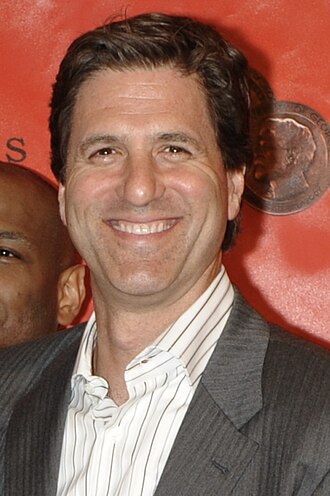
Steven Levitan
Co-creator and showrunner of Modern Family, creator of Just Shoot Me
Where to hear and read about Steven Levitan1 episode or test

Steven Levitan is the co-creator and showrunner of Modern Family and the creator of Just Shoot Me. The most useful thing to learn from him is to build characters whose pairings are already funny, then break the story before writing any script.
the best jokes, the best laughs come out of character
How to Write Freakishly Fast — Steven Levitan
Steven Levitan: the story and the lessons
1How Steven Levitan got to Modern Family
A TV reporter's deadlines trained Levitan to write fast. As a TV reporter he had to take in a scene and go on air two minutes later, and he wrote and edited scripts in time for the six o'clock news.
His first TV writing job gave him a week for a script, which he called an eternity. He calls himself a fast-twitch writer who builds momentum and fixes later, and he values having one slow-twitch voice in the room.
Modern Family began with weekend stories swapped on Monday mornings. Levitan and Christopher Lloyd found their own family stories more compelling than the other show they were developing, so they built the show from them.
Jay's house and the circle where Jay teaches Gloria to ride a bike were real spots near Levitan's home, where he taught his own kids. He says they were constantly stealing from their wives and kids.
He saw a gap: no family show spoke to families as they now were. Raymond had just ended, so they chose a gay couple raising a kid and an immigrant, cross-cultural, cross-generational family, and let smartphones and technology shape how families run.
Modern Family combined a classic family show, a documentary look with interviews, and a gay couple. Levitan says none of the parts was new, and that creativity is connections.
Levitan and Lloyd alternated who won, so nothing stalled. With only two creators nobody could break a tie, so each week one of them won the disputes. Levitan oversaw half the episodes.
While Lloyd shot his episode, Levitan's group rewrote the week's script and broke future stories. Staff moved between the two groups each week. Without a rule, he says, they could argue for an hour.
2Levitan's method for building characters
Levitan draws a crackling line between every pair of characters. He calls it two points in a line. Start with one vivid character, add the next so the line has tension, and keep adding attributes until it crackles.
Every character connects to every other, like bicycle spokes. He and Lloyd spent about six weeks doing nothing but talking about the Modern Family characters and their dynamics. "I want that line between them to crackle."
He trusts well-built pairings over a premise to sustain a show. Many pilots he reads are premise pieces, such as a superhero, and he says they get old. Pairings last. On Frasier the better choice was Niles, who is more Frasier than Frasier.
Sam and Diane work because he is a womanizing jock and she is a snobby academic. Adding Carla means two new lines: she idolizes Sam and hates Diane. Two such characters stuck in an elevator are funny before anyone writes a word.
Levitan gives each character a funny point of view. One of Phil's first defining lines was "I'm the cool dad. That's my thing." He is a nerdy dad who thinks he is as cool as anybody.
He plays like a puppy in a meadow against Claire, who is trying to keep things controlled. Alex is a tense, book-smart nerd, and Haley is shallow and street smart.
He learned that a character left unfigured is painfully hard to write. On an earlier series he called a minor bartender just sarcastic and skipped the homework. She was very hard to write.
He suspects the character a show never figured out is what keeps writers in the room two hours later every night.
3How Levitan breaks stories and writes comedy
Levitan breaks the story first because the draft is the easy part. Each season opened with eight to ten weeks of story breaking, starting June 1 and eating the summer. The room asked "what if" and built stories one episode at a time.
Some stories broke fast, and others left the room with five days and nothing. He tells the joke of the screenwriter who finishes the outline and says he is 90% done.
He gets his laughs from character, not from setup and punchline. The Lion King moment in the pilot is not a joke but shows who the character is. When the full pilot played at the upfronts, the room erupted in laughter and applause.
The first draft had Claire and Mitchell changing the baby while everyone listened on a baby monitor. He wanted something more visceral than talk. He says only well-crafted jokes age well.
Levitan gives each episode a theme that every story feeds. He likes to know what the episode is trying to say, ideally from the start. "15%" asked whether people can change, and the answer was that a little can be enough.
With three or four stories in 21:30 and a 10-second title, each got seven or eight minutes. He later wanted less story so it could breathe, because later episodes became too frenetic.
He asks whether the conflict can be bigger and more meaningful. When a story feels like nothing is happening, he says the conflict is probably too small. Bigger does not mean over the top. It means a wrong that I'm sorry can't fix.
He points to Jim and Pam on The Office, who had little conflict once together, so it came from elsewhere.
Levitan cuts half jokes so the real joke plays better. Single cam does not mean fewer jokes, but a half joke that gets only a chuckle weakens the real one. He told actors to throw jokes away like a drug dealer dropping drugs out of a moving car.
He notes Frasier was among the first to go three pages without a joke, though traditional multicam rooms get nervous. His note: take it down, be more natural, don't force it.
4Levitan on real life, heart and joy
Levitan writes down what real people say, including his own kids. He pulled out his phone to capture his kids' fights at the kitchen table. Alex and Haley's staircase fight used his kids' actual lines.
His breakup advice to his son went badly, then became an Alex story. His son disliked seeing it on TV. His first test for a scene is whether people talk the way people talk.
He keeps his antenna up and trusts the mundane. He says writers should be observant everywhere, as Larry David is when he notices a man double-dipping into the dip.
His room would tell each other to stay observant over the weekend and come back with a story. Some scenes were just what people actually said, written down.
He earns emotion quietly and never pushes it. After Manny's dad cancels, Jay never says "I love you". He says he even got Manny a limo, then takes him along on the trip. Levitan still gets choked up.
His model is the Taxi scene where Louie's pain is revealed, then he grabs Elaine's backside, so the audience goes from laugh to feeling to laugh.
Levitan designed Modern Family on purpose to bring people joy. Tense, upsetting TV bothers him, so he watches little of it. He meant the show as a love letter to our families.
Gay viewers wrote that their conservative parents laughed at Mitch and Cam, which opened the door to coming out. Parents wrote that Jay's discomfort prepared them for a son coming out.
5How Levitan runs a room and what he changed
Levitan sets tone through thousands of small decisions. His notes were small: that feels too jokey, that choice makes a character unlikable, that touch brings a sense of hope. He says tone is set by 10,000 little decisions.
He says the key quality in a second in command is sharing your tone. Lloyd liked clever setups that pay off, while Levitan favored the extremely real, so writers followed whoever led that week.
He decides fast when the room is split and fixes it later. When the room debated, he said he might be wrong but they had to decide and move forward, and if he was wrong they would fix it.
The weekly cycle left no slack: rewrite Monday and Tuesday, table read at Wednesday lunch, and the rewrite done by Friday for a Monday shoot.
He learned to put praise into his notes. He was too direct with writers and, trained by network work to zero in on problems, undermined their confidence. He now explains his process first and says what works, page by page.
He ran a network show for 11 years where the mentality was to fix problems because the rest works. Now: "page three is great. Page four is great."
He now slows down and puts more time into a series' setup. He used to race through drafts, and before Modern Family he had taken some shortcuts in setup. Now he is more deliberate, even when the work isn't sexy.
He says the job never gets old, since every story brings a new problem to write out of.
Levitan treats AI as a research and critique tool, not a source of conviction. He suggests asking AI what a roller coaster designer does, or testing a script against the hero's journey, as long as the writer is discerning and not a slave to it.
He expects smaller writers' rooms and a few lost jobs, and says writers who refuse AI are naive. He worries about the race to build it and about the loss of writers' pride.

How to Write Freakishly Fast — Steven Levitan
Levitan explains that the hard part of writing TV is breaking the story and building character dynamics, not the draft itself, and that the best jokes come out of character rather than setup and punchline. His most reusable technique is the two points in a line method: define each character, then keep adding attributes until the line between every pair crackles.
A TV reporter's deadlines trained Levitan to write fast. As a TV reporter he had to take in a scene and go on air two minutes later, and he wrote and edited scripts in time for the six o'clock news.
His first TV writing job gave him a week for a script, which he called an eternity. He calls himself a fast-twitch writer who builds momentum and fixes later, and he values having one slow-twitch voice in the room.
Modern Family began with weekend stories swapped on Monday mornings. Levitan and Christopher Lloyd found their own family stories more compelling than the other show they were developing, so they built the show from them.
Jay's house and the circle where Jay teaches Gloria to ride a bike were real spots near Levitan's home, where he taught his own kids. He says they were constantly stealing from their wives and kids.
He saw a gap: no family show spoke to families as they now were. Raymond had just ended, so they chose a gay couple raising a kid and an immigrant, cross-cultural, cross-generational family, and let smartphones and technology shape how families run.
Modern Family combined a classic family show, a documentary look with interviews, and a gay couple. Levitan says none of the parts was new, and that creativity is connections.
Levitan and Lloyd alternated who won, so nothing stalled. With only two creators nobody could break a tie, so each week one of them won the disputes. Levitan oversaw half the episodes.
While Lloyd shot his episode, Levitan's group rewrote the week's script and broke future stories. Staff moved between the two groups each week. Without a rule, he says, they could argue for an hour.
Levitan draws a crackling line between every pair of characters. He calls it two points in a line. Start with one vivid character, add the next so the line has tension, and keep adding attributes until it crackles.
Every character connects to every other, like bicycle spokes. He and Lloyd spent about six weeks doing nothing but talking about the Modern Family characters and their dynamics. "I want that line between them to crackle."
He trusts well-built pairings over a premise to sustain a show. Many pilots he reads are premise pieces, such as a superhero, and he says they get old. Pairings last. On Frasier the better choice was Niles, who is more Frasier than Frasier.
Sam and Diane work because he is a womanizing jock and she is a snobby academic. Adding Carla means two new lines: she idolizes Sam and hates Diane. Two such characters stuck in an elevator are funny before anyone writes a word.
Levitan gives each character a funny point of view. One of Phil's first defining lines was "I'm the cool dad. That's my thing." He is a nerdy dad who thinks he is as cool as anybody.
He plays like a puppy in a meadow against Claire, who is trying to keep things controlled. Alex is a tense, book-smart nerd, and Haley is shallow and street smart.
He learned that a character left unfigured is painfully hard to write. On an earlier series he called a minor bartender just sarcastic and skipped the homework. She was very hard to write.
He suspects the character a show never figured out is what keeps writers in the room two hours later every night.
Levitan breaks the story first because the draft is the easy part. Each season opened with eight to ten weeks of story breaking, starting June 1 and eating the summer. The room asked "what if" and built stories one episode at a time.
Some stories broke fast, and others left the room with five days and nothing. He tells the joke of the screenwriter who finishes the outline and says he is 90% done.
He gets his laughs from character, not from setup and punchline. The Lion King moment in the pilot is not a joke but shows who the character is. When the full pilot played at the upfronts, the room erupted in laughter and applause.
The first draft had Claire and Mitchell changing the baby while everyone listened on a baby monitor. He wanted something more visceral than talk. He says only well-crafted jokes age well.
Levitan gives each episode a theme that every story feeds. He likes to know what the episode is trying to say, ideally from the start. "15%" asked whether people can change, and the answer was that a little can be enough.
With three or four stories in 21:30 and a 10-second title, each got seven or eight minutes. He later wanted less story so it could breathe, because later episodes became too frenetic.
He asks whether the conflict can be bigger and more meaningful. When a story feels like nothing is happening, he says the conflict is probably too small. Bigger does not mean over the top. It means a wrong that I'm sorry can't fix.
He points to Jim and Pam on The Office, who had little conflict once together, so it came from elsewhere.
Levitan cuts half jokes so the real joke plays better. Single cam does not mean fewer jokes, but a half joke that gets only a chuckle weakens the real one. He told actors to throw jokes away like a drug dealer dropping drugs out of a moving car.
He notes Frasier was among the first to go three pages without a joke, though traditional multicam rooms get nervous. His note: take it down, be more natural, don't force it.
Levitan writes down what real people say, including his own kids. He pulled out his phone to capture his kids' fights at the kitchen table. Alex and Haley's staircase fight used his kids' actual lines.
His breakup advice to his son went badly, then became an Alex story. His son disliked seeing it on TV. His first test for a scene is whether people talk the way people talk.
He keeps his antenna up and trusts the mundane. He says writers should be observant everywhere, as Larry David is when he notices a man double-dipping into the dip.
His room would tell each other to stay observant over the weekend and come back with a story. Some scenes were just what people actually said, written down.
He earns emotion quietly and never pushes it. After Manny's dad cancels, Jay never says "I love you". He says he even got Manny a limo, then takes him along on the trip. Levitan still gets choked up.
His model is the Taxi scene where Louie's pain is revealed, then he grabs Elaine's backside, so the audience goes from laugh to feeling to laugh.
Levitan designed Modern Family on purpose to bring people joy. Tense, upsetting TV bothers him, so he watches little of it. He meant the show as a love letter to our families.
Gay viewers wrote that their conservative parents laughed at Mitch and Cam, which opened the door to coming out. Parents wrote that Jay's discomfort prepared them for a son coming out.
Levitan sets tone through thousands of small decisions. His notes were small: that feels too jokey, that choice makes a character unlikable, that touch brings a sense of hope. He says tone is set by 10,000 little decisions.
He says the key quality in a second in command is sharing your tone. Lloyd liked clever setups that pay off, while Levitan favored the extremely real, so writers followed whoever led that week.
He decides fast when the room is split and fixes it later. When the room debated, he said he might be wrong but they had to decide and move forward, and if he was wrong they would fix it.
The weekly cycle left no slack: rewrite Monday and Tuesday, table read at Wednesday lunch, and the rewrite done by Friday for a Monday shoot.
He learned to put praise into his notes. He was too direct with writers and, trained by network work to zero in on problems, undermined their confidence. He now explains his process first and says what works, page by page.
He ran a network show for 11 years where the mentality was to fix problems because the rest works. Now: "page three is great. Page four is great."
He now slows down and puts more time into a series' setup. He used to race through drafts, and before Modern Family he had taken some shortcuts in setup. Now he is more deliberate, even when the work isn't sexy.
He says the job never gets old, since every story brings a new problem to write out of.
Levitan treats AI as a research and critique tool, not a source of conviction. He suggests asking AI what a roller coaster designer does, or testing a script against the hero's journey, as long as the writer is discerning and not a slave to it.
He expects smaller writers' rooms and a few lost jobs, and says writers who refuse AI are naive. He worries about the race to build it and about the loss of writers' pride.