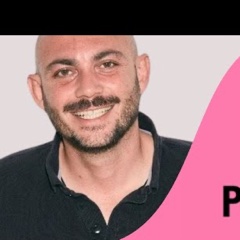
Simon Mizzi
VP of Product Growth at Preply
Where to hear and read about Simon Mizzi1 episode or test

Simon Mizzi is VP of Product Growth at Preply, who came up through backend marketing product at Agoda before joining the human tutor marketplace in July 2021. The thing most worth learning from him is to judge every growth change by the long-term outcome, a subscription, and to add friction only where it gives the user real utility.
we would not claim success on something that increases registrations but not subscriptions at the end
How Preply Built the World’s Largest Language Learning Marketplace
Simon Mizzi: the story and the lessons
1Simon Mizzi's path from Agoda backend to Preply
Mizzi entered product through unglamorous marketing automation at Agoda. He started in marketing at Agoda, a Bangkok-based online travel agency in Booking Holdings. The product team invited him over after noticing he liked building systems.
His first product work was marketing backend automation, not customer-facing features. He later moved to consumer-facing product and stayed eight years in total. He calls the backend start a great entry into product.
Building a keyword system taught him to think in systems at scale. His system automated keyword and ad creation for search ads across 50 languages, handling hundreds of millions, if not billions, of keywords.
He calls it "unsexy" product, work you can't show friends and family. Step one of such a system affects step 15, so skipping that thinking forces a rebuild later. He says the same thinking applies to any product.
He left a job he loved to test whether he could succeed elsewhere. He joined Preply in July 2021 after a recruiter reached out, though he had no plan to leave. At 30 and single, with 8 years at Agoda and 12 in Thailand, he felt that if he didn't try something new now, he never would.
He wanted to know if his success came only from being "groomed" at Agoda. His risk logic was simple: "What is the worst that can happen? I'll just come back to Thailand." He is French, learned to speak Thai, and has long loved languages. He expects to always carry some imposter syndrome.
2How Mizzi measures growth at Preply
Preply defines success as a long-lasting tutor relationship, measured by subscription. Learning takes months, so a paid first lesson is only a leading indicator. People won't commit a relatively large ticket to a tutor they don't trust.
Mizzi would like to push the measure further, to month two and beyond. Every matching improvement is checked against the subscription metric through experimentation.
No Preply team optimizes visits, registrations or trials alone. Every change is judged against subscriptions. Preply has run hundreds of experiments this way.
A gain at one funnel step is often offset by a drop at another, so a team can celebrate a vanity metric while the end result stays flat. The team optimizes for the business and the learner.
Mizzi says the most obvious experiments often create the most value. Across hundreds of tests, matching gains such as information playback, machine learning updates and reviews came from a mix of obvious and less obvious ideas.
He declines to name one favorite experiment, since there have been so many.
3How Preply matches learners with tutors, per Mizzi
Mizzi treats matching as a problem that is never finished. When a four-year employee asked when the team would finally solve matching, he answered that Booking and Amazon have worked on it for 20 years and still haven't solved it completely.
Tutors are harder to match than hotels, because fit depends on vibe, which is not binary. The learner is choosing, over many months, what he calls a "lifelong partner" for learning a language.
He builds matching on learner data, tutor data and an intelligence layer. He calls this the "holy trinity". Learn the learner deeply, such as an exam in three weeks and weak reading, and collect equally deep data on what each tutor can provide.
Machine learning and AI sit in the middle to connect the two sides. Without detail on both sides, the match fails: knowing the need but not whether the tutor can help with that exam is not enough.
Showing learners why a tutor fits them was among the best matching wins. Preply plays back what it knows about the learner and explains why a given tutor suits them.
In his words, if the user doesn't understand the intelligence is there, "it it's all for nothing." A strong algorithm is wasted if the learner can't see it.
Reviews from similar learners build confidence in a match. Seeing another learner enjoy a tutor carries real weight, and the effect is strongest when the reviewer resembles the new learner.
The team mines reviews for what students like about a tutor and why, then plays that back based on the new learner's needs.
4Onboarding, the trial lesson and time to value at Preply
Mizzi's biggest conversion win came from adding friction to onboarding. Preply built a much deeper onboarding questionnaire. He expected no uplift, since friction is bad in travel, but the conversion win was like nothing he had seen before.
The questions qualify high-intent learners and tire out low-intent users who wouldn't have converted anyway. He says the team walks a fine line, adding only friction that gives real utility, such as a better match.
He pushed Preply to optimize the trial lesson itself. The 25 or 50 minute trial lesson is the make or break moment for subscribing. Marketplaces usually optimize before and after the transaction, and Preply long did the same.
The work covers preparing tutors, helping both sides build rapport, and lessons from conversations with hundreds of tutors. It is harder because it means influencing humans, not a platform. He calls it a major unlock.
He defines time to value by working backwards from real progress. For learners, value is progress and talking with other people, which takes months. Just before it is feeling progress in the trial lesson, and before that, getting the right match early.
Defining value as one lesson would lead to different decisions than defining it as a lasting tutor relationship, which he calls a marathon, not a sprint.
Tutor availability is the hardest quality problem at scale. A tutor who isn't free when the learner is free "might as well not exist". Lessons are mostly cross-border, popular tutors fill up, and tutors get sick or take holidays.
Preply works on faster matching and easier scheduling, since a tutor free at 2 p.m. today beats one free in a week.
Mizzi calms learner anxiety by showing what a class looks like. Meeting a stranger online in a language you don't speak is anxiety-inducing. Preply shows what a class is like and offers proof, such as a tutor who helped 10 similar students pass the same exam.
The aim is to let learners "taste the value" while real value is still far off.
5Mizzi on AI at Preply
He uses AI for subtle personalization, not chatbots everywhere. Preply uses AI to tailor page headlines to each user, generate learning plans with the tutor, and translate between students and tutors.
He says he is not a believer in putting a chatbot everywhere, and that classic machine learning still matters at scale. AI should solve real learner problems and can sit in the background, so to the user it is simply value.
Mizzi believes AI will speed up learning but not replace tutors. He rejects the doomsday story of real-time translation and AI tutors. People learn languages to connect with other humans, he says, including cultural nuance.
He flags his bias as someone who works at Preply. Between lessons, AI helps students, and tutors can use it for better exercises and easier work.
AI raised Preply's hiring bar and changed how he interviews. Meeting the AI baseline is no longer enough. If a prototyping tool illustrates an idea in two minutes, he asks why the candidate didn't build one.
He expects candidates to use AI in the interview because they will on the job. He rewrote his questions to test on-the-spot critical thinking, which AI can't do. The growth team has about 10 people across 10 product squads.
6How Simon Mizzi leads and keeps learning
He leads so every team member gives the same answer on direction. Early on he led an output, not a team, which doesn't scale past a few teams. His test is to ask each person separately where the team is going and why.
The answers should match. He pairs that shared direction with the team's expertise and has people help build the north star, because he disliked being handed a vision he couldn't question.
Mizzi tells his team they will be wrong half the time. Statistically you will be wrong 50% of the time, so failure is fine. What matters is a clear hypothesis beforehand and sound analysis afterward.
His line: "It's not okay to not know why you're doing something in the first place or not know why it failed."
He seeks opposing views to avoid having a single way of doing product. Agoda was extremely quantitative, while Preply is both quantitative and qualitative. The chief product officer's remark that there is more than one way to do product started the change.
He now reads, listens and watches to understand why people hold opposite views, keeps what he agrees with, and adds it to his own thinking.

How Preply Built the World’s Largest Language Learning Marketplace
Preply's growth lead explains how a human tutor marketplace measures success by long-term subscriptions, matches learners to tutors, and designs onboarding with deliberate friction. The takeaway is that deliberate friction in onboarding produced the biggest conversion win he had seen, and that optimizing for subscriptions rather than funnel proxies keeps a team honest.
Mizzi entered product through unglamorous marketing automation at Agoda. He started in marketing at Agoda, a Bangkok-based online travel agency in Booking Holdings. The product team invited him over after noticing he liked building systems.
His first product work was marketing backend automation, not customer-facing features. He later moved to consumer-facing product and stayed eight years in total. He calls the backend start a great entry into product.
Building a keyword system taught him to think in systems at scale. His system automated keyword and ad creation for search ads across 50 languages, handling hundreds of millions, if not billions, of keywords.
He calls it "unsexy" product, work you can't show friends and family. Step one of such a system affects step 15, so skipping that thinking forces a rebuild later. He says the same thinking applies to any product.
He left a job he loved to test whether he could succeed elsewhere. He joined Preply in July 2021 after a recruiter reached out, though he had no plan to leave. At 30 and single, with 8 years at Agoda and 12 in Thailand, he felt that if he didn't try something new now, he never would.
He wanted to know if his success came only from being "groomed" at Agoda. His risk logic was simple: "What is the worst that can happen? I'll just come back to Thailand." He is French, learned to speak Thai, and has long loved languages. He expects to always carry some imposter syndrome.
Preply defines success as a long-lasting tutor relationship, measured by subscription. Learning takes months, so a paid first lesson is only a leading indicator. People won't commit a relatively large ticket to a tutor they don't trust.
Mizzi would like to push the measure further, to month two and beyond. Every matching improvement is checked against the subscription metric through experimentation.
No Preply team optimizes visits, registrations or trials alone. Every change is judged against subscriptions. Preply has run hundreds of experiments this way.
A gain at one funnel step is often offset by a drop at another, so a team can celebrate a vanity metric while the end result stays flat. The team optimizes for the business and the learner.
Mizzi says the most obvious experiments often create the most value. Across hundreds of tests, matching gains such as information playback, machine learning updates and reviews came from a mix of obvious and less obvious ideas.
He declines to name one favorite experiment, since there have been so many.
Mizzi treats matching as a problem that is never finished. When a four-year employee asked when the team would finally solve matching, he answered that Booking and Amazon have worked on it for 20 years and still haven't solved it completely.
Tutors are harder to match than hotels, because fit depends on vibe, which is not binary. The learner is choosing, over many months, what he calls a "lifelong partner" for learning a language.
He builds matching on learner data, tutor data and an intelligence layer. He calls this the "holy trinity". Learn the learner deeply, such as an exam in three weeks and weak reading, and collect equally deep data on what each tutor can provide.
Machine learning and AI sit in the middle to connect the two sides. Without detail on both sides, the match fails: knowing the need but not whether the tutor can help with that exam is not enough.
Showing learners why a tutor fits them was among the best matching wins. Preply plays back what it knows about the learner and explains why a given tutor suits them.
In his words, if the user doesn't understand the intelligence is there, "it it's all for nothing." A strong algorithm is wasted if the learner can't see it.
Reviews from similar learners build confidence in a match. Seeing another learner enjoy a tutor carries real weight, and the effect is strongest when the reviewer resembles the new learner.
The team mines reviews for what students like about a tutor and why, then plays that back based on the new learner's needs.
Mizzi's biggest conversion win came from adding friction to onboarding. Preply built a much deeper onboarding questionnaire. He expected no uplift, since friction is bad in travel, but the conversion win was like nothing he had seen before.
The questions qualify high-intent learners and tire out low-intent users who wouldn't have converted anyway. He says the team walks a fine line, adding only friction that gives real utility, such as a better match.
He pushed Preply to optimize the trial lesson itself. The 25 or 50 minute trial lesson is the make or break moment for subscribing. Marketplaces usually optimize before and after the transaction, and Preply long did the same.
The work covers preparing tutors, helping both sides build rapport, and lessons from conversations with hundreds of tutors. It is harder because it means influencing humans, not a platform. He calls it a major unlock.
He defines time to value by working backwards from real progress. For learners, value is progress and talking with other people, which takes months. Just before it is feeling progress in the trial lesson, and before that, getting the right match early.
Defining value as one lesson would lead to different decisions than defining it as a lasting tutor relationship, which he calls a marathon, not a sprint.
Tutor availability is the hardest quality problem at scale. A tutor who isn't free when the learner is free "might as well not exist". Lessons are mostly cross-border, popular tutors fill up, and tutors get sick or take holidays.
Preply works on faster matching and easier scheduling, since a tutor free at 2 p.m. today beats one free in a week.
Mizzi calms learner anxiety by showing what a class looks like. Meeting a stranger online in a language you don't speak is anxiety-inducing. Preply shows what a class is like and offers proof, such as a tutor who helped 10 similar students pass the same exam.
The aim is to let learners "taste the value" while real value is still far off.
He uses AI for subtle personalization, not chatbots everywhere. Preply uses AI to tailor page headlines to each user, generate learning plans with the tutor, and translate between students and tutors.
He says he is not a believer in putting a chatbot everywhere, and that classic machine learning still matters at scale. AI should solve real learner problems and can sit in the background, so to the user it is simply value.
Mizzi believes AI will speed up learning but not replace tutors. He rejects the doomsday story of real-time translation and AI tutors. People learn languages to connect with other humans, he says, including cultural nuance.
He flags his bias as someone who works at Preply. Between lessons, AI helps students, and tutors can use it for better exercises and easier work.
AI raised Preply's hiring bar and changed how he interviews. Meeting the AI baseline is no longer enough. If a prototyping tool illustrates an idea in two minutes, he asks why the candidate didn't build one.
He expects candidates to use AI in the interview because they will on the job. He rewrote his questions to test on-the-spot critical thinking, which AI can't do. The growth team has about 10 people across 10 product squads.
He leads so every team member gives the same answer on direction. Early on he led an output, not a team, which doesn't scale past a few teams. His test is to ask each person separately where the team is going and why.
The answers should match. He pairs that shared direction with the team's expertise and has people help build the north star, because he disliked being handed a vision he couldn't question.
Mizzi tells his team they will be wrong half the time. Statistically you will be wrong 50% of the time, so failure is fine. What matters is a clear hypothesis beforehand and sound analysis afterward.
His line: "It's not okay to not know why you're doing something in the first place or not know why it failed."
He seeks opposing views to avoid having a single way of doing product. Agoda was extremely quantitative, while Preply is both quantitative and qualitative. The chief product officer's remark that there is more than one way to do product started the change.
He now reads, listens and watches to understand why people hold opposite views, keeps what he agrees with, and adds it to his own thinking.