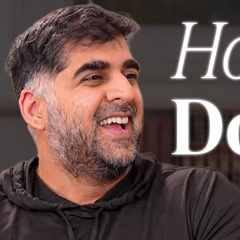
Shaan Puri
Entrepreneur, investor and podcaster, co-founder of the Milk Road newsletter
Where to hear and read about Shaan Puri1 episode or test

Shaan Puri is an entrepreneur, investor and podcaster, co-founder of the Milk Road newsletter, who has turned storytelling and writing into repeatable steps. The habit most worth stealing is choosing the one feeling a single reader should have, working backwards from it, drafting by voice and editing only after walking away.
Tell 100 stories starting with maximum cringe and get to not cringe.
How to Tell an Unforgettable Story (The Shaan Puri Interview)
Shaan Puri: the story and the lessons
1How Shaan Puri learns a skill
Puri studies the best in the world, not business people. He learned storytelling from Aaron Sorkin and comedians such as Hasan Minhaj, not from business writers.
His reasoning is that you learn a skill from people whose whole job is that skill. Copying only people in your own lane makes everything look the same, a 'sea of sameness' in Mr Beast's phrase.
He targets valuable skills nobody admits to practicing. Storytelling and joke telling pay off because few people openly work on them.
'I'm practicing my enthusiasm' doesn't compute as a sentence, he notes, so people expect the skill to arrive by magic.
Puri does 100 deliberate reps, fixing one thing each time. He and Mr Beast give the same advice: make 100 of the thing and improve one element each round, such as a weak hook, a drone-on or no point.
Mr Beast says almost nobody does it, and those who do never need advice again. Puri starts from 'maximum cringe' and asks after every rep what to fix, including whether it should be a story at all.
He imitates a model first, then turns it into a principle. To improve, he deconstructs someone who does it well and asks how it shows up in his own world.
From Gary Halbert's Boron Letters he took the principle that Halbert was writing to his son, not to a crowd, and listed what follows from that.
2Shaan Puri's rules for telling a story
Every scene needs an intention and an obstacle. Puri took this from Aaron Sorkin, who says he could teach his craft in 30 seconds. At any pause you should say what the hero wants, why, what happens if they fail, and who or what blocks them.
If five minutes pass without that being clear, attention drifts. Harry Potter wants to live and Voldemort is trying to kill him. Puri made it the central premise of every story he tells.
Low stakes work when the stakes are an emotion. At an offsite after his company was acquired, Puri sat on the exec team of a 2,000-person company, having never worked anywhere bigger than 20 people. While others gave work updates, he told a Brussels sprouts story about being unable to host his mom.
The stakes were embarrassment and ego. People came up during the break to say it was hilarious. He says the want must be real, not fabricated.
He builds each story around one five-second moment of change. Borrowing from Matthew Dicks' Storyworthy, he says everything before the moment sets it up and everything after shows its result.
The opening and ending should be opposites, as in a rom-com or Scrooge going from hating to loving Christmas. If you can't name the moment, you don't yet have a story. The switch usually comes when the hero is cornered, like Batman leaping without the rope.
Puri proves the 'before' with one concrete image. Tony Robbins convinces you he was a loser by describing washing dishes in the bathtub, not by saying he wasn't doing well.
Puri used this to coach David Perell, asking for one moment such as a review with 'needs improvement' in huge letters. Without a believable before-state, the 'I figured it out and you can too' pitch fails.
He fills the middle with the trigger and the struggle. Puri told Perell his origin story jumped from being laid off to success, with an arbitrary epiphany and a fast-forwarded montage.
He asks what triggered the turnaround, what the person tried first and what resistance they overcame. Pixar's idea is that audiences love a hero for how hard they try, so an instant win earns no sympathy.
He cuts details that muddy the emotional line. Perell's draft mentioned a raise next to doing badly. Puri told him to drop it because it sends a conflicting message.
Keep only what explains how the change came about. A timeline of events is not a story. He quotes the coach line 'Never let the truth get in the way of a great story.'
3How Puri frames ideas and picks the feeling first
He frames the idea instead of chasing a clickbait hook. A hook is about the words in the first line. A frame sets how relevant the idea feels.
He could present one Hasan Minhaj lesson as a comedy tip or as how not to embarrass yourself at a dinner-party intro. Great writers connect ideas that seem unrelated.
Puri's Clubhouse thread told a story and reached about 20 million readers. He wrote 'here's how it goes down' and cast the reader as the Clubhouse founder, with Kanye in your DMs and VCs throwing money.
A dry, jargon-heavy thread on the same topic came from a founder with more credibility, who had raised about $100 million, and it did not travel. He chose not to be the 9,000 IQ guy in an intelligence contest.
Puri works backwards from one emotion for one reader. He heard it from Steven Bartlett, Buzzfeed and a viral-video agency: choose LOL, WTF, OMG or AWW first, write, check the reaction, then juice it up.
Chris Quigley's agency hit 8 out of 10 videos this way. Puri says you write to one distracted person in one moment, not to 119,000 people at once.
He studies Chappelle's reframe of the Netflix dispute. Chappelle told two stories first, the borrowed joke at 15 and the three-card game, so the dispute became a man being hustled instead of a money complaint.
He never asked for a boycott. Viewers decided on their own, the video went viral, and Netflix removed the show.
4Shaan Puri's writing process
He says the story out loud, then writes what he said. His biggest rule is to write like you talk, since school trained people to pretend and use big words.
To beat the blank page he states what the story is, what makes it interesting, and where it starts and ends. Parentheses work like asides on the page, and line breaks stand in for dramatic pauses.
Puri drafts by walking and talking into voice transcription. He can't get a surprising, unjudged draft while sitting and typing, so he saves typing for editing.
People he works with ask how he writes first drafts so fast. He says it made his writing better, though half of Austin thinks he's crazy.
He changes his state before he writes. Citing Miss Excel, he says writers start cold like athletes skipping a warm-up. Physiology comes first (sprints, pushups, 20 air squats, cold water on the face), then focus, then the story you tell yourself.
A poker-champion friend runs wind sprints in the parking lot during tournament breaks to decide better at the table. Puri calls it an arbitrage a less talented person can use.
Puri dumps a draft, then forgets it for 4 to 24 hours. The method comes from Sam Parr: research, a quick brain dump, one read, then a workout or time with the kids before editing.
His old mistake was editing right away. When he returns, problems like a missing takeaway or a weak intro or ending jump out.
He edits by removing rocks from the river. He assumes the draft holds something good and the water wants to flow, so the job is to find what blocks it: a boring part, a weak intro, a missing ending.
Pixar works the same way: every movie starts with suck and each draft removes some. On return he asks whether it gives the intended takeaway and where to punch it up.
5Humor and voice in Puri's writing
Puri treats humor as the sauce, built on surprise. The point is the meal and the laugh makes it easier to take in. A punch line you see coming isn't funny.
He cites Seinfeld's Times piece: the 1976 apartment, the towed car, then still the greatest place he'd lived. Word choice matters, since 'pooper scooper' is funnier than 'no law about cleaning up excrement.' Quote: "humor is the sauce. It's not the entree."
He adds a dash of the opposite of the reader's mood. He asks what emotional state the reader is in for most of the piece, then adds a little Tabasco of the opposite.
On a serious piece about falling in love with the Bible, he set his study in a Schlotzsky's parking lot. Smart plus a little funny beats being the funniest or the smartest.
Puri trains odd humor with Theo Von's rename drill. He first thought Von's brain was simply wired differently, then decided the parts could be practiced.
The drill is to rename one thing six ways, such as 'Jesus' binder' or 'that big brown behavior book.' He found it hard live, and says it trains a different way of thinking.
He writes to one warm reader and answers their doubts. From Gary Halbert he borrowed the habit of writing to one person, such as a young grasshopper, a cousin or his younger self.
He calls out what the reader would be skeptical of or excited about at that moment. That breaks the fourth wall and builds trust.
6How Shaan Puri builds an audience and a voice
He leaves a binge bank instead of judging each post. A stack of content lets a curious stranger fall for you in an hour or two, which beats a resume or portfolio.
He took it from two 21-year-olds, Dylan and Henry, whose videos got few views. Puri says he lacks the willpower to wait for results, so this trick keeps him going.
Puri grew on Twitter by being timely and interesting, not consistent. He went from 20,000 to 400,000 followers while ignoring advice to be consistent and pick a niche, and thinks he'd be at a million if he had followed it.
His metaverse thread spread on its idea, and Zuckerberg later cited it on the Lex Fridman podcast, right after Facebook became Meta. He says you need both things to say and packaging.
He sells one feeling, like a shop with one SKU. A $5,000 personal-branding consultant told him his only SKU is how people feel after consuming his content.
TED sells inspiration, comedy podcasts sell camaraderie, and Twitch sells the rush of playing. He picks the feeling first, then asks which story, framework or nugget delivers it.
Puri pushes early work himself and earns trust over time. A friend's 1, 2, 3 rule: one interesting thing gets 'that's interesting', three get 'you're interesting'. Online it may take 20.
At the start he sends each piece to friends, family and group chats with a personal note on why they'd like it.
7How Puri trained a Milk Road writer
He taught a first-time writer his voice with one fixed format. Puri hired a writer who had never published, edited him for 30 days, then had him hire the next writer.
Each Milk Road email opened the same way: 'Good morning, this is the Milk Road', then a toaster strudel line and a second joke. The goal was a smile and a reason to open that isn't the Bitcoin price.
Puri used a morning voice memo to filter boring topics. The new writer picked topics because they were in the news. Puri had him voice-memo the news each morning before writing anything.
If he would never text it to Puri, it was cut before reaching 200,000 readers. Quote: "If it's not interesting in the voice memo, it's definitely not going to be interesting in long text."

How to Tell an Unforgettable Story (The Shaan Puri Interview)
Shaan Puri breaks storytelling into reusable parts: intention and obstacle, a five-second moment of change, and frames that make an idea relevant. The habit worth stealing is working backwards from the emotion you want the reader to feel, then drafting by voice and editing after you walk away.
Puri studies the best in the world, not business people. He learned storytelling from Aaron Sorkin and comedians such as Hasan Minhaj, not from business writers.
His reasoning is that you learn a skill from people whose whole job is that skill. Copying only people in your own lane makes everything look the same, a 'sea of sameness' in Mr Beast's phrase.
He targets valuable skills nobody admits to practicing. Storytelling and joke telling pay off because few people openly work on them.
'I'm practicing my enthusiasm' doesn't compute as a sentence, he notes, so people expect the skill to arrive by magic.
Puri does 100 deliberate reps, fixing one thing each time. He and Mr Beast give the same advice: make 100 of the thing and improve one element each round, such as a weak hook, a drone-on or no point.
Mr Beast says almost nobody does it, and those who do never need advice again. Puri starts from 'maximum cringe' and asks after every rep what to fix, including whether it should be a story at all.
He imitates a model first, then turns it into a principle. To improve, he deconstructs someone who does it well and asks how it shows up in his own world.
From Gary Halbert's Boron Letters he took the principle that Halbert was writing to his son, not to a crowd, and listed what follows from that.
Every scene needs an intention and an obstacle. Puri took this from Aaron Sorkin, who says he could teach his craft in 30 seconds. At any pause you should say what the hero wants, why, what happens if they fail, and who or what blocks them.
If five minutes pass without that being clear, attention drifts. Harry Potter wants to live and Voldemort is trying to kill him. Puri made it the central premise of every story he tells.
Low stakes work when the stakes are an emotion. At an offsite after his company was acquired, Puri sat on the exec team of a 2,000-person company, having never worked anywhere bigger than 20 people. While others gave work updates, he told a Brussels sprouts story about being unable to host his mom.
The stakes were embarrassment and ego. People came up during the break to say it was hilarious. He says the want must be real, not fabricated.
He builds each story around one five-second moment of change. Borrowing from Matthew Dicks' Storyworthy, he says everything before the moment sets it up and everything after shows its result.
The opening and ending should be opposites, as in a rom-com or Scrooge going from hating to loving Christmas. If you can't name the moment, you don't yet have a story. The switch usually comes when the hero is cornered, like Batman leaping without the rope.
Puri proves the 'before' with one concrete image. Tony Robbins convinces you he was a loser by describing washing dishes in the bathtub, not by saying he wasn't doing well.
Puri used this to coach David Perell, asking for one moment such as a review with 'needs improvement' in huge letters. Without a believable before-state, the 'I figured it out and you can too' pitch fails.
He fills the middle with the trigger and the struggle. Puri told Perell his origin story jumped from being laid off to success, with an arbitrary epiphany and a fast-forwarded montage.
He asks what triggered the turnaround, what the person tried first and what resistance they overcame. Pixar's idea is that audiences love a hero for how hard they try, so an instant win earns no sympathy.
He cuts details that muddy the emotional line. Perell's draft mentioned a raise next to doing badly. Puri told him to drop it because it sends a conflicting message.
Keep only what explains how the change came about. A timeline of events is not a story. He quotes the coach line 'Never let the truth get in the way of a great story.'
He frames the idea instead of chasing a clickbait hook. A hook is about the words in the first line. A frame sets how relevant the idea feels.
He could present one Hasan Minhaj lesson as a comedy tip or as how not to embarrass yourself at a dinner-party intro. Great writers connect ideas that seem unrelated.
Puri's Clubhouse thread told a story and reached about 20 million readers. He wrote 'here's how it goes down' and cast the reader as the Clubhouse founder, with Kanye in your DMs and VCs throwing money.
A dry, jargon-heavy thread on the same topic came from a founder with more credibility, who had raised about $100 million, and it did not travel. He chose not to be the 9,000 IQ guy in an intelligence contest.
Puri works backwards from one emotion for one reader. He heard it from Steven Bartlett, Buzzfeed and a viral-video agency: choose LOL, WTF, OMG or AWW first, write, check the reaction, then juice it up.
Chris Quigley's agency hit 8 out of 10 videos this way. Puri says you write to one distracted person in one moment, not to 119,000 people at once.
He studies Chappelle's reframe of the Netflix dispute. Chappelle told two stories first, the borrowed joke at 15 and the three-card game, so the dispute became a man being hustled instead of a money complaint.
He never asked for a boycott. Viewers decided on their own, the video went viral, and Netflix removed the show.
He says the story out loud, then writes what he said. His biggest rule is to write like you talk, since school trained people to pretend and use big words.
To beat the blank page he states what the story is, what makes it interesting, and where it starts and ends. Parentheses work like asides on the page, and line breaks stand in for dramatic pauses.
Puri drafts by walking and talking into voice transcription. He can't get a surprising, unjudged draft while sitting and typing, so he saves typing for editing.
People he works with ask how he writes first drafts so fast. He says it made his writing better, though half of Austin thinks he's crazy.
He changes his state before he writes. Citing Miss Excel, he says writers start cold like athletes skipping a warm-up. Physiology comes first (sprints, pushups, 20 air squats, cold water on the face), then focus, then the story you tell yourself.
A poker-champion friend runs wind sprints in the parking lot during tournament breaks to decide better at the table. Puri calls it an arbitrage a less talented person can use.
Puri dumps a draft, then forgets it for 4 to 24 hours. The method comes from Sam Parr: research, a quick brain dump, one read, then a workout or time with the kids before editing.
His old mistake was editing right away. When he returns, problems like a missing takeaway or a weak intro or ending jump out.
He edits by removing rocks from the river. He assumes the draft holds something good and the water wants to flow, so the job is to find what blocks it: a boring part, a weak intro, a missing ending.
Pixar works the same way: every movie starts with suck and each draft removes some. On return he asks whether it gives the intended takeaway and where to punch it up.
Puri treats humor as the sauce, built on surprise. The point is the meal and the laugh makes it easier to take in. A punch line you see coming isn't funny.
He cites Seinfeld's Times piece: the 1976 apartment, the towed car, then still the greatest place he'd lived. Word choice matters, since 'pooper scooper' is funnier than 'no law about cleaning up excrement.' Quote: "humor is the sauce. It's not the entree."
He adds a dash of the opposite of the reader's mood. He asks what emotional state the reader is in for most of the piece, then adds a little Tabasco of the opposite.
On a serious piece about falling in love with the Bible, he set his study in a Schlotzsky's parking lot. Smart plus a little funny beats being the funniest or the smartest.
Puri trains odd humor with Theo Von's rename drill. He first thought Von's brain was simply wired differently, then decided the parts could be practiced.
The drill is to rename one thing six ways, such as 'Jesus' binder' or 'that big brown behavior book.' He found it hard live, and says it trains a different way of thinking.
He writes to one warm reader and answers their doubts. From Gary Halbert he borrowed the habit of writing to one person, such as a young grasshopper, a cousin or his younger self.
He calls out what the reader would be skeptical of or excited about at that moment. That breaks the fourth wall and builds trust.
He leaves a binge bank instead of judging each post. A stack of content lets a curious stranger fall for you in an hour or two, which beats a resume or portfolio.
He took it from two 21-year-olds, Dylan and Henry, whose videos got few views. Puri says he lacks the willpower to wait for results, so this trick keeps him going.
Puri grew on Twitter by being timely and interesting, not consistent. He went from 20,000 to 400,000 followers while ignoring advice to be consistent and pick a niche, and thinks he'd be at a million if he had followed it.
His metaverse thread spread on its idea, and Zuckerberg later cited it on the Lex Fridman podcast, right after Facebook became Meta. He says you need both things to say and packaging.
He sells one feeling, like a shop with one SKU. A $5,000 personal-branding consultant told him his only SKU is how people feel after consuming his content.
TED sells inspiration, comedy podcasts sell camaraderie, and Twitch sells the rush of playing. He picks the feeling first, then asks which story, framework or nugget delivers it.
Puri pushes early work himself and earns trust over time. A friend's 1, 2, 3 rule: one interesting thing gets 'that's interesting', three get 'you're interesting'. Online it may take 20.
At the start he sends each piece to friends, family and group chats with a personal note on why they'd like it.
He taught a first-time writer his voice with one fixed format. Puri hired a writer who had never published, edited him for 30 days, then had him hire the next writer.
Each Milk Road email opened the same way: 'Good morning, this is the Milk Road', then a toaster strudel line and a second joke. The goal was a smile and a reason to open that isn't the Bitcoin price.
Puri used a morning voice memo to filter boring topics. The new writer picked topics because they were in the news. Puri had him voice-memo the news each morning before writing anything.
If he would never text it to Puri, it was cut before reaching 200,000 readers. Quote: "If it's not interesting in the voice memo, it's definitely not going to be interesting in long text."