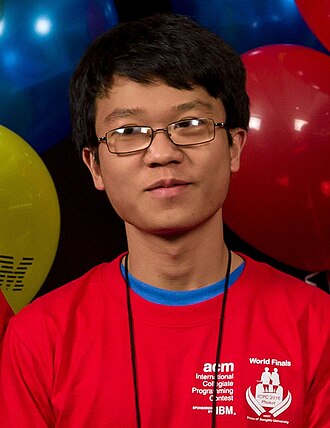
Scott Wu
Co-founder and CEO of Cognition
Where to hear and read about Scott Wu1 episode or test

Scott Wu is co-founder and CEO of Cognition, maker of Devin, an autonomous AI software engineer that works through Slack, Linear and GitHub. The most useful thing to learn from him is to treat an agent as a junior engineer: scope tasks tightly, run several in parallel, and keep human judgment on the hard 10 to 20%.
You want to be giving Devin tasks, not problems.
Inside Devin: The AI engineer that's set to write 50% of its company’s code this year | Scott Wu
Scott Wu: the story and the lessons
1How Scott Wu and Cognition got to Devin
Wu bet on reinforcement learning and agents, with code as the domain. Cognition's founders bet that reinforcement learning, where a model does a task, is graded right or wrong and learns, would make models strong at code. Running code gives automated feedback, so code suits it.
They also bet that products would move from text completion, like GitHub Copilot, to systems that decide, use tools and iterate. Early ChatGPT-style models had used imitation learning.
The founders were longtime competition friends from top AI companies. Wu ran the AI networking startup Lunchclub for about five years. One co-founder was an early engineer at Scale AI and another at Cursor; others came from Neuro, Waymo and a YC machine learning tools startup.
Many of them met in competitive programming and math competitions.
Devin went from an Airbnb hacker house to launch in about four months. It began in November 2023 with an agent loop solving contest problems. A second hacker house produced the idea of a software engineering agent rather than just a coding agent.
The company started in January, prototypes came in February, launch in March 2024 and first customers in April. Self-serve followed in December, and Devin 2.0 shipped a few weeks before the interview.
Even with a clear thesis, Cognition pivoted about eight times. The team always knew it would be coding and agents, yet pivoted about eight times within coding agents in a year and a half.
Talking to Devin mid-task had to be invented. At first you handed off a task and saw only finished code. Wu: "we've pivoted eight times or something within coding agents over the last year and a half".
Wu credits half of Devin's progress to product design, not models. At launch Devin was like a high school CS student, then a college intern, and now a junior engineer. Wu puts progress at 50/50 between model capability and product interface.
Launch had no Slack, GitHub or Linear integration, no interactive planning phase and no way to touch up Devin's code. Wu prefers the phrase jagged intelligence, since Devin beats humans at some things and is worse at others.
The name Devin came from merging the founders' own dev agents. Each co-founder built a virtual developer, DevWalden and DevSteven. Combining them gave the universal dev, Devin.
Wu says the name and the junior buddy framing capture how to use it: delegate tasks, run several, and teach it over time.
2Scott Wu's playbook for working with an AI engineer
Wu hands Devin well-defined tasks, not open-ended problems. Good fits are quick front-end changes, bug fixes, tests and documentation, because they are easy to verify, for example with a preview link.
Bigger projects are possible, but expect to steer Devin more. In the live demo, a one-line request to feature Lenny's newsletter on the Devin site came back as a pull request.
Each Cognition engineer runs up to five Devins at once. You pick the five things to get done that day and give one to each Devin, stepping in only for the 10 to 20% that needs human judgment. A team of about 15 engineers sees Devin merge several hundred pull requests a month.
Steering might mean setting up a class a certain way and changing all downstream references. It took the team some time to make this feel intuitive.
Wu says to onboard Devin like a new junior engineer. Set up the repository first and give Devin its own machine to run the linter, CI and tests. Start with easier tickets, then scale up.
Early users who stared at a blank screen or asked for a huge re-architecture struggled. Wu: "it really is just treat Devin like your new junior engineer."
Wu seeds adoption with a few early adopters. They give Devin the repos, teach it the lint and CI setup and hand it first tasks. Others notice the PRs from "this Devin person" and join.
Devin already knows the repos by the time the rest of the team arrives. Wu admits the product still needs to be more intuitive about getting the most from it.
Devin already writes a quarter of Cognition's own pull requests. Wu expects the share to pass half by year end. It works because tasks are scoped well and Devin does the first 80 to 90%.
The share grew exponentially as both model intelligence and the interface improved. Wu says teams that invest in learning what the agent needs use it more with every update.
Wu calls working with Devin closer to being an architect than a manager. Management is hard because of context, ownership and emotional load, and handing tasks to Devin carries little of that. Devin takes a first pass; if it is great you merge it, and if not you give feedback.
The fear in management is losing control, and here Devin simply becomes part of your flow.
3What Wu thinks about the future of software engineering
Wu sees engineers moving from bricklayers to architects. Defining the problem and designing the solution is only about 10% of an engineer's time today. The other 90% goes to debugging, migrations and upkeep.
He argues the core of the job has always been defining the problem, whether in assembly, Pascal or punch cards.
Wu argues cheaper software means more engineers, not fewer. If engineering gets 10 times faster, he expects society to build far more than 10 times as much software, with more personalized experiences and many more products.
Wu: "software is truly the shining example of Jevons Paradox".
Wu says everyone should still learn to code. Computer science mostly teaches breaking problems down and the model of a computer, such as what a database or garbage collection is. Engineers still drop to assembly to optimize and need to know TCP/IP.
He expects beginners soon to build things just by describing them, but for quite some time you still want to be exact about what to build and how.
Wu says base model intelligence is enough; the work is teaching the real world. Cognition trains no models of its own and works with research teams at the foundation labs. Its effort goes into teaching Devin Datadog, error diagnosis and the GitHub PR flow.
No single model release was a night-and-day change for Devin. Wu calls the job "teaching the model to mirror the complexity of the real world".
Wu bets on stickiness over moats. He says no layer of AI has a barrier that stops competitors entering. Devin learns a team's code base and process, and teammates teach it together in Slack, Linear and GitHub.
He compares Devin to an engineer of five years who wrote half the code and knows everyone, against a day-one hire. Wu: "I think it's often less about moats and more about stickiness."
Wu keeps Cognition focused on coding agents only. He says coding agents have about 20 generations to go, ending in work without reading code, such as saying "make this button rounder". Agentic coding has been the company's space for a year and a half and will be for the next five to ten years.
The focus shapes the usage-based revenue model with ACUs and the ways to reach Devin, such as Slack and issues.
Wu expects AI to spread faster than any earlier technology wave. PCs, the internet and phones were held back by the pace of hardware reaching people. AI has no such limit, so he expects exponential growth.
He says engineers who don't use AI to write code are already falling behind, and that we are firmly past the inflection point for AI code.
4How Wu runs Cognition: product, hiring and mindset
Wu does the few startup basics far harder than seems necessary. His list is move fast, hire great people, build what people want, stay close to customers and think about where things are going. 18 of the team of about 26 or 27 have started a company before.
Wu: "building companies well sometimes just comes down to doing those three to five things just even more than you could possibly expect."
Wu fought to the end to land standout hires. For a young MIT junior, Wu flew to North Carolina and had dinner with his parents. They agreed he would work full time and attend only the classes needed to graduate, and he has been there over a year.
For another young candidate, the team helped hand-write rejection notes to other companies so he would burn no bridges. Wu: "you should fight to all ends basically, to get the folks that you really want to bring in."
Wu keeps separate ask, search and agent modes so users control when work starts. Devin Search and Wiki stay distinct tools even though the core agent can answer the same questions. Specialized question answering is easier to optimize, and users often want to see relevant code before launching a task.
Linear ticket scoping also shows Devin's confidence level before a session begins. Cognition keeps debating how opinionated Devin should be, since most features serve engineering pull requests but people also use it to order DoorDash.
Wu says to give everything to the work and keep self-worth out of the outcome. Startups, even the best, have ups and downs, so you must be okay with wins and losses and move on to the next. Cognition has felt like eight years compressed into one.
He finds detachment makes you more successful, since you give your best when worth isn't at stake.

Inside Devin: The AI engineer that's set to write 50% of its company’s code this year | Scott Wu
Scott Wu explains how Cognition built Devin, an autonomous AI software engineer you work with through Slack, Linear and GitHub, and how to get value from agents in a real engineering team. A 15-engineer team now has Devin author about a quarter of its pull requests, with more than half expected by year end.
Wu bet on reinforcement learning and agents, with code as the domain. Cognition's founders bet that reinforcement learning, where a model does a task, is graded right or wrong and learns, would make models strong at code. Running code gives automated feedback, so code suits it.
They also bet that products would move from text completion, like GitHub Copilot, to systems that decide, use tools and iterate. Early ChatGPT-style models had used imitation learning.
The founders were longtime competition friends from top AI companies. Wu ran the AI networking startup Lunchclub for about five years. One co-founder was an early engineer at Scale AI and another at Cursor; others came from Neuro, Waymo and a YC machine learning tools startup.
Many of them met in competitive programming and math competitions.
Devin went from an Airbnb hacker house to launch in about four months. It began in November 2023 with an agent loop solving contest problems. A second hacker house produced the idea of a software engineering agent rather than just a coding agent.
The company started in January, prototypes came in February, launch in March 2024 and first customers in April. Self-serve followed in December, and Devin 2.0 shipped a few weeks before the interview.
Even with a clear thesis, Cognition pivoted about eight times. The team always knew it would be coding and agents, yet pivoted about eight times within coding agents in a year and a half.
Talking to Devin mid-task had to be invented. At first you handed off a task and saw only finished code. Wu: "we've pivoted eight times or something within coding agents over the last year and a half".
Wu credits half of Devin's progress to product design, not models. At launch Devin was like a high school CS student, then a college intern, and now a junior engineer. Wu puts progress at 50/50 between model capability and product interface.
Launch had no Slack, GitHub or Linear integration, no interactive planning phase and no way to touch up Devin's code. Wu prefers the phrase jagged intelligence, since Devin beats humans at some things and is worse at others.
The name Devin came from merging the founders' own dev agents. Each co-founder built a virtual developer, DevWalden and DevSteven. Combining them gave the universal dev, Devin.
Wu says the name and the junior buddy framing capture how to use it: delegate tasks, run several, and teach it over time.
Wu hands Devin well-defined tasks, not open-ended problems. Good fits are quick front-end changes, bug fixes, tests and documentation, because they are easy to verify, for example with a preview link.
Bigger projects are possible, but expect to steer Devin more. In the live demo, a one-line request to feature Lenny's newsletter on the Devin site came back as a pull request.
Each Cognition engineer runs up to five Devins at once. You pick the five things to get done that day and give one to each Devin, stepping in only for the 10 to 20% that needs human judgment. A team of about 15 engineers sees Devin merge several hundred pull requests a month.
Steering might mean setting up a class a certain way and changing all downstream references. It took the team some time to make this feel intuitive.
Wu says to onboard Devin like a new junior engineer. Set up the repository first and give Devin its own machine to run the linter, CI and tests. Start with easier tickets, then scale up.
Early users who stared at a blank screen or asked for a huge re-architecture struggled. Wu: "it really is just treat Devin like your new junior engineer."
Wu seeds adoption with a few early adopters. They give Devin the repos, teach it the lint and CI setup and hand it first tasks. Others notice the PRs from "this Devin person" and join.
Devin already knows the repos by the time the rest of the team arrives. Wu admits the product still needs to be more intuitive about getting the most from it.
Devin already writes a quarter of Cognition's own pull requests. Wu expects the share to pass half by year end. It works because tasks are scoped well and Devin does the first 80 to 90%.
The share grew exponentially as both model intelligence and the interface improved. Wu says teams that invest in learning what the agent needs use it more with every update.
Wu calls working with Devin closer to being an architect than a manager. Management is hard because of context, ownership and emotional load, and handing tasks to Devin carries little of that. Devin takes a first pass; if it is great you merge it, and if not you give feedback.
The fear in management is losing control, and here Devin simply becomes part of your flow.
Wu sees engineers moving from bricklayers to architects. Defining the problem and designing the solution is only about 10% of an engineer's time today. The other 90% goes to debugging, migrations and upkeep.
He argues the core of the job has always been defining the problem, whether in assembly, Pascal or punch cards.
Wu argues cheaper software means more engineers, not fewer. If engineering gets 10 times faster, he expects society to build far more than 10 times as much software, with more personalized experiences and many more products.
Wu: "software is truly the shining example of Jevons Paradox".
Wu says everyone should still learn to code. Computer science mostly teaches breaking problems down and the model of a computer, such as what a database or garbage collection is. Engineers still drop to assembly to optimize and need to know TCP/IP.
He expects beginners soon to build things just by describing them, but for quite some time you still want to be exact about what to build and how.
Wu says base model intelligence is enough; the work is teaching the real world. Cognition trains no models of its own and works with research teams at the foundation labs. Its effort goes into teaching Devin Datadog, error diagnosis and the GitHub PR flow.
No single model release was a night-and-day change for Devin. Wu calls the job "teaching the model to mirror the complexity of the real world".
Wu bets on stickiness over moats. He says no layer of AI has a barrier that stops competitors entering. Devin learns a team's code base and process, and teammates teach it together in Slack, Linear and GitHub.
He compares Devin to an engineer of five years who wrote half the code and knows everyone, against a day-one hire. Wu: "I think it's often less about moats and more about stickiness."
Wu keeps Cognition focused on coding agents only. He says coding agents have about 20 generations to go, ending in work without reading code, such as saying "make this button rounder". Agentic coding has been the company's space for a year and a half and will be for the next five to ten years.
The focus shapes the usage-based revenue model with ACUs and the ways to reach Devin, such as Slack and issues.
Wu expects AI to spread faster than any earlier technology wave. PCs, the internet and phones were held back by the pace of hardware reaching people. AI has no such limit, so he expects exponential growth.
He says engineers who don't use AI to write code are already falling behind, and that we are firmly past the inflection point for AI code.
Wu does the few startup basics far harder than seems necessary. His list is move fast, hire great people, build what people want, stay close to customers and think about where things are going. 18 of the team of about 26 or 27 have started a company before.
Wu: "building companies well sometimes just comes down to doing those three to five things just even more than you could possibly expect."
Wu fought to the end to land standout hires. For a young MIT junior, Wu flew to North Carolina and had dinner with his parents. They agreed he would work full time and attend only the classes needed to graduate, and he has been there over a year.
For another young candidate, the team helped hand-write rejection notes to other companies so he would burn no bridges. Wu: "you should fight to all ends basically, to get the folks that you really want to bring in."
Wu keeps separate ask, search and agent modes so users control when work starts. Devin Search and Wiki stay distinct tools even though the core agent can answer the same questions. Specialized question answering is easier to optimize, and users often want to see relevant code before launching a task.
Linear ticket scoping also shows Devin's confidence level before a session begins. Cognition keeps debating how opinionated Devin should be, since most features serve engineering pull requests but people also use it to order DoorDash.
Wu says to give everything to the work and keep self-worth out of the outcome. Startups, even the best, have ups and downs, so you must be okay with wins and losses and move on to the next. Cognition has felt like eight years compressed into one.
He finds detachment makes you more successful, since you give your best when worth isn't at stake.