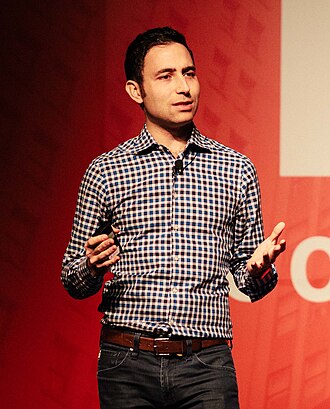
Scott Belsky
Former Chief Strategy Officer and EVP at Adobe, founder of Behance, seed investor and product adviser
Where to hear and read about Scott Belsky2 episodes and tests

 Lenny's PodcastMaking and Leading Products People Love (Scott Belsky) | Lenny & Friends Summit 2024
 Lenny's PodcastLessons on product sense, AI, the first mile experience, and the messy middle | Scott Belsky (Adobe)
Scott Belsky founded Behance, sold it to Adobe, and rose to chief product officer and then chief strategy officer and EVP of design and emerging products. The lesson most worth taking is to build for customers who are lazy, vain and selfish: win the first minutes with simple, well-defaulted products, and keep cutting to protect the core.
empathy for the problems our customers are suffering with outperforms passion for the solutions
Making and Leading Products People Love (Scott Belsky) | Lenny & Friends Summit 2024
Scott Belsky: the story and the lessons
1Scott Belsky's path from Behance to Adobe
Belsky built Behance into a home for 56 million creatives. Behance hosts creatives showing their work. The mission began as a physical product, then grew into books, conferences and a company.
Adobe bought Behance, and Belsky rose there to chief product officer.
Belsky joined Adobe in 2012, left, and came back. He left after three years and returned for seven more. At Adobe he took products to the web and mobile, including Lightroom mobile and Adobe Express.
Belsky lasted as product chief by owning design, product and engineering together. He treats the boundaries between these functions as artificial at best and constraining at worst. Most chief product officers don't oversee engineering, and some don't oversee design.
He says the role wouldn't have interested him otherwise. His main work was breaking those boundaries down so an aligned team could ship better experiences.
Belsky moved to strategy as Adobe's cloud era ended and AI began. His current role covers strategy, corporate development, company-wide design and emerging products such as 3D and immersive work, and stock. He reviews design across every product to raise the bar.
That is hard with legacy products and their baggage. He is also a seed investor and adviser: Pinterest, Uber, Airtable, Flexport and Warby Parker, with Ben Silbermann's first seed angel check at Pinterest. He wrote The Messy Middle.
2How Belsky designs for lazy, vain and selfish customers
Belsky says every new customer is lazy, vain and selfish at first. In the first minutes, people have no patience for more than one line of copy. They want the product to make them look good and give them a quick personal benefit.
Most teams spend the last stretch of building on the product and almost no time on the customer's first mile. "In the first 30 seconds of using a new product, you are lazy, vain, and selfish."
Belsky says deliver shallow value fast, before deep value. Few products get more than 30% of the top of the funnel through, and a team that does is world-class. He prioritizes roadmap items that make people feel successful quickly and defers power-user features.
He frames it as building for the problems you want to have, like users asking for advanced features, instead of users stuck in onboarding or blocked by security issues.
Belsky treats the default state as the product most people see. The default may be the only state most customers ever see, so he argues about it early. Where possible the product should do the task for the user instead of teaching it.
Photoshop now builds new features on top of features so users never have to be taught the steps. "The devil is in the defaults."
Belsky shows users their own progress and reactions, which he calls ego analytics. Behance lets anyone appreciate work without logging in, so creators get feedback sooner. People also progress more when they feel progress, a point from Teresa Amabile's Harvard research.
Instagram staff admit engagement rises after a user posts, which suggests people return to see who saw their content.
Belsky says sell the immediate selfish win, not the long-term promise. Pinterest began as instant utility for bookmarks, with discovery only a hope. Square won on getting small businesses paid faster, not on the terminals, and Stripe won with two lines of code.
Customers distrust long-term promises, so copy should come from the product team and show value now.
Belsky rebuilds onboarding for each new customer cohort. Early customers are willing and forgiving, and later pragmatists are skeptical. When Photoshop fell from hundreds of dollars to about $10 a month, a new, less patient cohort forced a new onboarding.
He expects AI eventually to tailor onboarding to each type of user, instead of one generalized flow.
Belsky tests every screen with three orientation questions. How did I get here, what do I do now, and where do I go next. The test checks that actions are clear, emphasis points where users most likely go, and defaults are right.
He uses it in product reviews and when judging a startup's demo. A messy demo is a red flag, even from a team calling itself design-driven.
Belsky fixed Pinterest's perceived speed with design, not engineering. Around 2011 Pinterest's team was racing on a scalability roadmap. Designers proposed loading each pin's color before the image, and users said the site felt much faster.
Nothing changed under the hood. As AI commoditizes technology, he expects more choices to be made at the surface, so design matters more.
3Why Belsky ships only half of what he plans
Behance got stronger every time Belsky killed a feature. It launched with groups, a tip exchange, circles and work in progress. Each cut raised publishing of projects to a portfolio, the core action.
Behance is far simpler now than at launch over a decade ago. He calls not pruning sooner the greatest mistake his team made.
Belsky launched Behance at its most complicated because he was hedging. He wasn't sure whether people would come for groups, the tip exchange, portfolios or work-in-progress snapshots, so he built all of them.
Killing the tip exchange and then groups raised publishing. Removing portfolio color controls brought 24 hours of complaints, then silence, cleaner portfolios and more publishing.
Belsky prunes like a bonsai master to protect the core. He calls the voice saying "half, half, half" a way of seeing the Matrix. Doing only half of what you want compounds the odds of product-market fit.
Making the product about one thing makes the core action run about ten times faster. When adding a feature, he asks what it can replace or remove.
Belsky says the one differentiating feature must be excellent at launch. An MVP has gravity, because teams always iterate from whatever they first ship. Everything else can be minimal.
"It's hard to iterate your way out of not getting that right."
Belsky builds only what removes brick walls in an MVP. That means sign-up, account connection and Google login. Platform support and sharing are problems you want to have, so they wait.
Belsky says products drift to complexity, then users flee to simple rivals. Users flock to simple products, the team adds power features to monetize, and users leave for simpler ones again. He sees this cycle as fuel for the life cycle of whole industries.
His fix is to keep checking that the product works for the newest cohort.
4What Belsky teaches about empathy and delight
Behance won by asking artists what they suffered from. In focus groups creatives said they didn't need another place for their work, since they had Deviant Art, Facebook and LinkedIn. Their real pains were missing attribution, out-of-date portfolios and no reach to people who might hire them.
The stated want was one thing. The real need was credit from a boss, and that drove adoption.
Belsky says founders who failed had passion for the solution, not empathy. Founders he backed as a seed investor who failed were governed by passion for the end state. They missed product-market fit by about 30 degrees because they never saw the customer's daily life.
"The empathy gives you the solution."
Belsky sits shoulder to shoulder with customers through their whole day. Watching people live their day shows context that data misses: meetings, pings, kids, Netflix.
He notes some of the best products were made by makers who were also the customer.
Belsky puts surprise on the roadmap because novelty precedes utility. Slack's team left HipChat for the animated GIFs, then began using it for things like "anyone want coffee?" Tesla owners talk about the Rainbow Road Easter egg more than how the car drives.
People rave about what a product did that they didn't expect, not about it doing what it should.
Belsky favors consumer products that tilt the market under the hood. Uber built a network effect and tapped excess capacity that was always there. Pinterest sent heavy traffic to each pin's source, so sites added pin buttons themselves.
Most recent consumer apps are momentary interfaces that platforms copy. BeReal's capability is now inside TikTok.
5How Belsky builds teams and makes decisions
Belsky calls designers upstream the cheat code of his career. Designers sit in on customer research and value-proposition debates once reserved for PMs. That builds a golden gut for small trade-offs.
An experienced thinker accepts that 10% of people may get confused if 90% get through far faster.
Belsky says a designer's prototype is worth 100 meetings. When people argue whether a feature makes sense, a prototype makes them agree or disagree and decide. His proudest work came from partnerships with designers.
Belsky hires hybrids to collapse the talent stack. He favors a product leader with a design background, or a growth hacker who also designs. Every time he did it, results beat his expectations.
The hybrid acts as a conduit between functions and unlocks something new in the organization.
Belsky hires for initiative and rewards impact over tenure. At Adobe he replaced tenure awards with impact awards. Hires with initiative, often made because experienced people were unaffordable, exceeded expectations.
Belsky says grafting senior talent matters as much as hiring it. Teams reject new people the way an immune system rejects an organ, so leaders must suppress that reaction. Onboarding often means only a computer and a login.
He says he learned this the hard way many times.
Belsky interviews for introspection and honesty about luck. He asks what someone learned about themselves that reveals a limit in how they work, and whether they consider themselves lucky.
Insecure people may refuse to admit luck. The first question shows whether they stay open at their limits or blame others.
Belsky holds himself to a few level-one priorities and inspects them. He learned from Adobe's CEO, who delegates almost everything but goes very deep on a short list.
"You only can expect what you inspect."
Belsky uses data as a compass and trusts conviction over consensus. Intuition, understanding and empathy pick the mountain, and data helps you climb it. A strong feeling from someone you trust can justify the unpopular, differentiating call.
When frustrated, he leads with a barrage of questions instead of criticism, so the team sees what's wrong or he learns he was wrong.
6Belsky on AI, taste and resourcefulness
Belsky expects taste to matter more as AI absorbs the how. Models are trained on the middle of the distribution, but great decisions fall outside what has been done before. The PM's job shifts from how to do something to what to do.
"It's more about taste than about skill."
Belsky sees AI widening the options product people can explore. The best designers and PMs explore many options, cull, get feedback, then bring the team two or three. AI gives them more time for that.
A Hollywood director asks ChatGPT for five scenarios and uses none, yet learns what he doesn't want. Belsky expects professionals to explore ten times more possibilities, not be replaced.
Belsky expects AI to raise ingenuity per person, not cut hiring. Engineers grew more productive over the years and companies asked more of them. A company with three products might run five, seven or 30.
He also expects collapsed stacks to favor small, flat teams over large dispersed ones.
Belsky tells product people to play with every new AI tool. Experience makes people stuck in their ways, so he tries email drafts and chatbot replies even when he feels fine without them.
He started the monthly Implications newsletter to force himself to understand fast-moving AI news. "Quite simply in one word, play."
Belsky says resourcefulness outlasts resources. For 7 to 10 years teams threw money at servers and headcount instead of refactoring the database or customer service process. Tight budgets force them to refactor and try AI.
"If resources are cards, resourcefulness is like muscle."
7Belsky on the messy middle and backing founders
Belsky's test for quitting is whether conviction has dropped. He asks whether, knowing all they know now, founders have more or less conviction than at the start. More means they are in the messy middle and should stay.
Less means pivot or quit, but never on a bad day.
Belsky sets micro goals and merchandises progress to keep teams going. Humans want constant reward, so he has teams agree on small milestones to celebrate even if they matter little. Leaders must narrate progress.
His picture: driving a team cross-country with blacked-out windows, you announce that you just crossed a state line, or the team goes stir crazy.
Belsky backs founders optimistic on the future and frank about the present. He wants founders who listen and value mission over money. They should name the market size, then what isn't working and what keeps them up at night.
He is wary of promoters who sugarcoat the truth and drop names. He believes nothing extraordinary is ever achieved through ordinary means.
Making and Leading Products People Love (Scott Belsky) | Lenny & Friends Summit 2024
A curated set of product leadership insights from building Behance and overseeing Creative Cloud at Adobe, centered on the idea that users are lazy, vain and selfish and that simple, well-defaulted products win. It matters because the lessons come from killing Behance features to lift core engagement, early Pinterest, Slack and Square examples, and years of product advising.
Belsky built Behance into a home for 56 million creatives. Behance hosts creatives showing their work. The mission began as a physical product, then grew into books, conferences and a company.
Adobe bought Behance, and Belsky rose there to chief product officer.
Belsky joined Adobe in 2012, left, and came back. He left after three years and returned for seven more. At Adobe he took products to the web and mobile, including Lightroom mobile and Adobe Express.
Belsky moved to strategy as Adobe's cloud era ended and AI began. His current role covers strategy, corporate development, company-wide design and emerging products such as 3D and immersive work, and stock. He reviews design across every product to raise the bar.
That is hard with legacy products and their baggage. He is also a seed investor and adviser: Pinterest, Uber, Airtable, Flexport and Warby Parker, with Ben Silbermann's first seed angel check at Pinterest. He wrote The Messy Middle.
Belsky says every new customer is lazy, vain and selfish at first. In the first minutes, people have no patience for more than one line of copy. They want the product to make them look good and give them a quick personal benefit.
Most teams spend the last stretch of building on the product and almost no time on the customer's first mile. "In the first 30 seconds of using a new product, you are lazy, vain, and selfish."
Belsky says deliver shallow value fast, before deep value. Few products get more than 30% of the top of the funnel through, and a team that does is world-class. He prioritizes roadmap items that make people feel successful quickly and defers power-user features.
He frames it as building for the problems you want to have, like users asking for advanced features, instead of users stuck in onboarding or blocked by security issues.
Belsky treats the default state as the product most people see. The default may be the only state most customers ever see, so he argues about it early. Where possible the product should do the task for the user instead of teaching it.
Photoshop now builds new features on top of features so users never have to be taught the steps. "The devil is in the defaults."
Belsky shows users their own progress and reactions, which he calls ego analytics. Behance lets anyone appreciate work without logging in, so creators get feedback sooner. People also progress more when they feel progress, a point from Teresa Amabile's Harvard research.
Instagram staff admit engagement rises after a user posts, which suggests people return to see who saw their content.
Belsky says sell the immediate selfish win, not the long-term promise. Pinterest began as instant utility for bookmarks, with discovery only a hope. Square won on getting small businesses paid faster, not on the terminals, and Stripe won with two lines of code.
Customers distrust long-term promises, so copy should come from the product team and show value now.
Belsky rebuilds onboarding for each new customer cohort. Early customers are willing and forgiving, and later pragmatists are skeptical. When Photoshop fell from hundreds of dollars to about $10 a month, a new, less patient cohort forced a new onboarding.
He expects AI eventually to tailor onboarding to each type of user, instead of one generalized flow.
Belsky tests every screen with three orientation questions. How did I get here, what do I do now, and where do I go next. The test checks that actions are clear, emphasis points where users most likely go, and defaults are right.
He uses it in product reviews and when judging a startup's demo. A messy demo is a red flag, even from a team calling itself design-driven.
Belsky fixed Pinterest's perceived speed with design, not engineering. Around 2011 Pinterest's team was racing on a scalability roadmap. Designers proposed loading each pin's color before the image, and users said the site felt much faster.
Nothing changed under the hood. As AI commoditizes technology, he expects more choices to be made at the surface, so design matters more.
Behance got stronger every time Belsky killed a feature. It launched with groups, a tip exchange, circles and work in progress. Each cut raised publishing of projects to a portfolio, the core action.
Behance is far simpler now than at launch over a decade ago. He calls not pruning sooner the greatest mistake his team made.
Belsky prunes like a bonsai master to protect the core. He calls the voice saying "half, half, half" a way of seeing the Matrix. Doing only half of what you want compounds the odds of product-market fit.
Making the product about one thing makes the core action run about ten times faster. When adding a feature, he asks what it can replace or remove.
Belsky says the one differentiating feature must be excellent at launch. An MVP has gravity, because teams always iterate from whatever they first ship. Everything else can be minimal.
"It's hard to iterate your way out of not getting that right."
Belsky says products drift to complexity, then users flee to simple rivals. Users flock to simple products, the team adds power features to monetize, and users leave for simpler ones again. He sees this cycle as fuel for the life cycle of whole industries.
His fix is to keep checking that the product works for the newest cohort.
Behance won by asking artists what they suffered from. In focus groups creatives said they didn't need another place for their work, since they had Deviant Art, Facebook and LinkedIn. Their real pains were missing attribution, out-of-date portfolios and no reach to people who might hire them.
The stated want was one thing. The real need was credit from a boss, and that drove adoption.
Belsky says founders who failed had passion for the solution, not empathy. Founders he backed as a seed investor who failed were governed by passion for the end state. They missed product-market fit by about 30 degrees because they never saw the customer's daily life.
"The empathy gives you the solution."
Belsky puts surprise on the roadmap because novelty precedes utility. Slack's team left HipChat for the animated GIFs, then began using it for things like "anyone want coffee?" Tesla owners talk about the Rainbow Road Easter egg more than how the car drives.
People rave about what a product did that they didn't expect, not about it doing what it should.
Belsky says a designer's prototype is worth 100 meetings. When people argue whether a feature makes sense, a prototype makes them agree or disagree and decide. His proudest work came from partnerships with designers.
Belsky hires hybrids to collapse the talent stack. He favors a product leader with a design background, or a growth hacker who also designs. Every time he did it, results beat his expectations.
The hybrid acts as a conduit between functions and unlocks something new in the organization.
Belsky hires for initiative and rewards impact over tenure. At Adobe he replaced tenure awards with impact awards. Hires with initiative, often made because experienced people were unaffordable, exceeded expectations.
Belsky says grafting senior talent matters as much as hiring it. Teams reject new people the way an immune system rejects an organ, so leaders must suppress that reaction. Onboarding often means only a computer and a login.
He says he learned this the hard way many times.
Belsky holds himself to a few level-one priorities and inspects them. He learned from Adobe's CEO, who delegates almost everything but goes very deep on a short list.
"You only can expect what you inspect."
Belsky uses data as a compass and trusts conviction over consensus. Intuition, understanding and empathy pick the mountain, and data helps you climb it. A strong feeling from someone you trust can justify the unpopular, differentiating call.
When frustrated, he leads with a barrage of questions instead of criticism, so the team sees what's wrong or he learns he was wrong.
Belsky expects taste to matter more as AI absorbs the how. Models are trained on the middle of the distribution, but great decisions fall outside what has been done before. The PM's job shifts from how to do something to what to do.
"It's more about taste than about skill."
Belsky sets micro goals and merchandises progress to keep teams going. Humans want constant reward, so he has teams agree on small milestones to celebrate even if they matter little. Leaders must narrate progress.
His picture: driving a team cross-country with blacked-out windows, you announce that you just crossed a state line, or the team goes stir crazy.
Lessons on product sense, AI, the first mile experience, and the messy middle | Scott Belsky (Adobe)
Scott Belsky explains how to build product sense through customer empathy, why the first 30 seconds of a product decide so much, and why teams should ship only half of what they plan. He also covers how AI will widen the options product teams can explore and how to decide whether to push through the messy middle or quit.
Belsky built Behance into a home for 56 million creatives. Behance hosts creatives showing their work. The mission began as a physical product, then grew into books, conferences and a company.
Adobe bought Behance, and Belsky rose there to chief product officer.
Belsky lasted as product chief by owning design, product and engineering together. He treats the boundaries between these functions as artificial at best and constraining at worst. Most chief product officers don't oversee engineering, and some don't oversee design.
He says the role wouldn't have interested him otherwise. His main work was breaking those boundaries down so an aligned team could ship better experiences.
Belsky moved to strategy as Adobe's cloud era ended and AI began. His current role covers strategy, corporate development, company-wide design and emerging products such as 3D and immersive work, and stock. He reviews design across every product to raise the bar.
That is hard with legacy products and their baggage. He is also a seed investor and adviser: Pinterest, Uber, Airtable, Flexport and Warby Parker, with Ben Silbermann's first seed angel check at Pinterest. He wrote The Messy Middle.
Belsky says every new customer is lazy, vain and selfish at first. In the first minutes, people have no patience for more than one line of copy. They want the product to make them look good and give them a quick personal benefit.
Most teams spend the last stretch of building on the product and almost no time on the customer's first mile. "In the first 30 seconds of using a new product, you are lazy, vain, and selfish."
Belsky says deliver shallow value fast, before deep value. Few products get more than 30% of the top of the funnel through, and a team that does is world-class. He prioritizes roadmap items that make people feel successful quickly and defers power-user features.
He frames it as building for the problems you want to have, like users asking for advanced features, instead of users stuck in onboarding or blocked by security issues.
Belsky rebuilds onboarding for each new customer cohort. Early customers are willing and forgiving, and later pragmatists are skeptical. When Photoshop fell from hundreds of dollars to about $10 a month, a new, less patient cohort forced a new onboarding.
He expects AI eventually to tailor onboarding to each type of user, instead of one generalized flow.
Belsky tests every screen with three orientation questions. How did I get here, what do I do now, and where do I go next. The test checks that actions are clear, emphasis points where users most likely go, and defaults are right.
He uses it in product reviews and when judging a startup's demo. A messy demo is a red flag, even from a team calling itself design-driven.
Belsky launched Behance at its most complicated because he was hedging. He wasn't sure whether people would come for groups, the tip exchange, portfolios or work-in-progress snapshots, so he built all of them.
Killing the tip exchange and then groups raised publishing. Removing portfolio color controls brought 24 hours of complaints, then silence, cleaner portfolios and more publishing.
Belsky prunes like a bonsai master to protect the core. He calls the voice saying "half, half, half" a way of seeing the Matrix. Doing only half of what you want compounds the odds of product-market fit.
Making the product about one thing makes the core action run about ten times faster. When adding a feature, he asks what it can replace or remove.
Belsky builds only what removes brick walls in an MVP. That means sign-up, account connection and Google login. Platform support and sharing are problems you want to have, so they wait.
Belsky says founders who failed had passion for the solution, not empathy. Founders he backed as a seed investor who failed were governed by passion for the end state. They missed product-market fit by about 30 degrees because they never saw the customer's daily life.
"The empathy gives you the solution."
Belsky sits shoulder to shoulder with customers through their whole day. Watching people live their day shows context that data misses: meetings, pings, kids, Netflix.
He notes some of the best products were made by makers who were also the customer.
Belsky puts surprise on the roadmap because novelty precedes utility. Slack's team left HipChat for the animated GIFs, then began using it for things like "anyone want coffee?" Tesla owners talk about the Rainbow Road Easter egg more than how the car drives.
People rave about what a product did that they didn't expect, not about it doing what it should.
Belsky favors consumer products that tilt the market under the hood. Uber built a network effect and tapped excess capacity that was always there. Pinterest sent heavy traffic to each pin's source, so sites added pin buttons themselves.
Most recent consumer apps are momentary interfaces that platforms copy. BeReal's capability is now inside TikTok.
Belsky calls designers upstream the cheat code of his career. Designers sit in on customer research and value-proposition debates once reserved for PMs. That builds a golden gut for small trade-offs.
An experienced thinker accepts that 10% of people may get confused if 90% get through far faster.
Belsky interviews for introspection and honesty about luck. He asks what someone learned about themselves that reveals a limit in how they work, and whether they consider themselves lucky.
Insecure people may refuse to admit luck. The first question shows whether they stay open at their limits or blame others.
Belsky sees AI widening the options product people can explore. The best designers and PMs explore many options, cull, get feedback, then bring the team two or three. AI gives them more time for that.
A Hollywood director asks ChatGPT for five scenarios and uses none, yet learns what he doesn't want. Belsky expects professionals to explore ten times more possibilities, not be replaced.
Belsky expects AI to raise ingenuity per person, not cut hiring. Engineers grew more productive over the years and companies asked more of them. A company with three products might run five, seven or 30.
He also expects collapsed stacks to favor small, flat teams over large dispersed ones.
Belsky tells product people to play with every new AI tool. Experience makes people stuck in their ways, so he tries email drafts and chatbot replies even when he feels fine without them.
He started the monthly Implications newsletter to force himself to understand fast-moving AI news. "Quite simply in one word, play."
Belsky says resourcefulness outlasts resources. For 7 to 10 years teams threw money at servers and headcount instead of refactoring the database or customer service process. Tight budgets force them to refactor and try AI.
"If resources are cards, resourcefulness is like muscle."
Belsky's test for quitting is whether conviction has dropped. He asks whether, knowing all they know now, founders have more or less conviction than at the start. More means they are in the messy middle and should stay.
Less means pivot or quit, but never on a bad day.
Belsky sets micro goals and merchandises progress to keep teams going. Humans want constant reward, so he has teams agree on small milestones to celebrate even if they matter little. Leaders must narrate progress.
His picture: driving a team cross-country with blacked-out windows, you announce that you just crossed a state line, or the team goes stir crazy.
Belsky backs founders optimistic on the future and frank about the present. He wants founders who listen and value mission over money. They should name the market size, then what isn't working and what keeps them up at night.
He is wary of promoters who sugarcoat the truth and drop names. He believes nothing extraordinary is ever achieved through ordinary means.