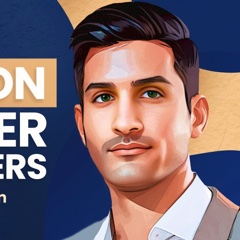
Sahil Bloom
Writer and investor, author of The 5 Types of Wealth
Where to hear and read about Sahil Bloom1 episode or test

Sahil Bloom is a writer and investor and the author of The 5 Types of Wealth, who built a huge audience on Twitter and email by writing ideas that consumed him. The most useful thing to learn from him is his loop of drafting short, testing ideas out loud on people, and protecting the work from metrics.
never let the Quest for more distract you from the beauty of enough
Sahil Bloom’s Content Empire Playbook | How I Write Podcast
Sahil Bloom: the story and the lessons
1How Sahil Bloom started writing
Bloom wrote a monthly reading email for five years with no strategy. He sent a 'what I'm reading' email each month to about ten family and friends, typing the addresses into Mailchimp by hand. It grew to about 2,000 readers, including CEOs, before he stopped in 2020.
He compares it to Howard Marks hand-mailing his memos for about a decade with almost no readers. Both were done for love, not for reach.
He began posting on Twitter on May 12, 2020 with 500 followers. He started during COVID while working in finance. Threads were not a feature yet, so he commented under his own post to go past 140 characters.
He says he grew fast without breaking his quality standards and never chased the trend of the day.
Bloom built a 'Twitter native blog' by linking new ideas to old ones. He copied how Ben Thompson and David Senra connect their ideas, writing threads that tied each new idea back to earlier work. He reached a million followers this way and says he was among the first to do it.
By 2021 everyone wrote threads and most were bad, but unique insight still stood out.
Bloom credits luck for his path as well as work. He names COVID, a talk that led him to quit his job, and the birth of his son as turning points.
2How Bloom grew the newsletter
Two moments drove newsletter growth, and neither was planned. He started the email because readers wanted his threads in their inbox. In May 2021, after talking with David Perell, he took email seriously and sent on a real cadence.
The second came in late 2022, when he hired a team at about 130,000 to 140,000 subscribers.
He hired a newsletter chief of staff after doing the work he hated himself. Bloom was spending about 80% of his time on sponsor slots, collaborations and swaps and 20% on writing. Shane, who had built his website, took over the backend, including web versions for SEO, ads, swaps and lead magnets.
By January 2023 growth went from about 5,000 to 10,000 subscribers a month to 50,000. Lead magnets were the biggest jump.
Bloom judges distribution by cost per engaged subscriber. A subscriber who never opens an email is an infinite cost, however cheap to acquire. He studies other creators' tactics, such as Morning Brew's early referral program, then tests fast and prunes weak subscribers.
The newsletter runs at break even, with sponsor money reinvested in growth. The playbook was later productized as Paperboy, newsletter growth as a service, after ConvertKit's Nathan Barry did not want a services business.
3Bloom's rules for keeping soul while growing
Bloom does not check a post's numbers for 24 hours. He waits a day to see engagement and a week for newsletter open rates. He will still reply to comments without looking at the stats.
He says watching likes pulls you toward platitudes and makes you dissatisfied with work you loved writing. The change improved his happiness and the quality of his output.
He prefers 10,000 connected readers to 100,000 gained cheaply. He refuses to write a cringe TED Talks style post, even if it would bring 5,000 email subscribers. He plans live events to put readers in rooms with big thinkers.
He says he would not be proud to show his son the list posts.
He sees soul and reach as a fifty-year balance. Deeply felt work cannot be published daily, so a huge reach has to be built over a very long horizon. Bloom will not start anything he would not do for 30 to 50 years.
His hardest struggle is staying authentic while growing.
Bloom writes for regular readers, not to impress the smartest. His aim is to help a regular person live slightly better. He applies a status razor: would you do this if you could not tell anyone?
A big word earns its place only if it is accurate. He notes the lines readers repeat back months later are often mundane, not the ones he thought eloquent.
He writes only what he would want to read. Most nonfiction gives its point in 15 pages and then adds 185 of filler, which he refused to write. Before sending, he asks whether he would want to read it.
Perell adds that each piece is a call for the kind of person you want in your life.
4How Bloom finds and tests ideas
Bloom writes only ideas that consume him, with no content calendar. He knows an idea is real when he leaves a conversation wanting to sprint and tell 20 people. After one lunch he had to run on a treadmill to calm down.
He says people don't have ideas, ideas have people.
He sits and walks with no podcast on to let ideas take hold. He calls the gap between consuming and writing the middle layer where the gold is. Bill Gates's think week is his model.
Bloom had to rewire his brain to be comfortable without progress or a goal.
Bloom acts on every new note within 24 hours by explaining it. He talks the idea through with someone and watches where they get confused or what they ask. He explained the Thales story to his wife two days after reading it and says he now remembers it forever.
The habit forces him to boil an idea down to two or three sentences.
He tests ideas on people until the reaction is consistent. Bloom uses David Perell's 'writing from conversation' method. Perell held 'What the Hell Is Going On' for months until Drew Austin was the fifth reaction in a row.
Bloom builds pieces to help readers ask better questions. He cannot give anyone answers about how to live. He takes a known idea that sparked his curiosity, shows how he struggled with it, and helps readers struggle with it a little better.
His test for a piece is that he comes away energized and cannot wait for it to be out in the world.
5How Bloom drafts and edits
Bloom wrote a one-page memo before any private equity presentation. He wrote himself a page on why the investment made sense, while others went straight to PowerPoint. If he could not state the case simply, he knew at once.
He says it "forces you to distill and clarify".
He drafts on Twitter first, then expands. The short form forces the most distilled version of an idea. When he wrote long and then cut, the result was worse.
Constraints are the point: each tweet in a thread had to close off its own idea, and his advice is "when in doubt, just cut."
He keeps writing through the stuck middle. In the creativity study he cites, people's strongest ideas came after a struggling stretch. Ed Sheeran likens it to running a tap until the brown water clears.
Bloom pictures himself sitting with a stuck piece and trudging through the mud.
Bloom hunts for the 'shiny dime' by throwing sludge on the page. The one line that holds a piece together usually shows up late, in the cutting. After weeks on a piece about 'enough,' he woke with the line about never letting the quest for more distract you from the beauty of enough.
Sometimes the line takes years to appear.
He keeps his tools analog to protect his intuition. He prints drafts and edits by hand with a pen, keeps notes in a dot-grid pocket notebook, and uses no AI tools for research.
He cites the centipede who stops walking once it thinks about which leg is fastest. Friends say he has a crazy memory, which he credits to writing things down once.
6How Bloom finished his book
Bloom refused publishers for 18 months until one idea consumed him. Publishers offered to expand a viral thread into a book, but the topic did not consume him. He reasons that a flop means three wasted years only if you did not love the work.
If it sells 10 million copies he will talk about it for life.
He had 5,000 of 75,000 words after nine months. He signed on September 30, 2022 with a one-year deadline and treated it as a joke. Author friends told him first books took three years.
He links the slow start to the lack of real feedback: a book gives none for two years, so motivation has to come from within.
Two non-negotiable morning hours finished the manuscript in three months. From July 1 to September 30 he wrote two hours every morning, when he is most creative. He ties the result to Parkinson's law.
Mark Manson wrote 10,000 words and then 100,000 in his last month in a cabin.
Bloom fears the book won't match his hopes and handles it by loving the work. Expecting it to be his only book sets an unrealistic bar. A friend's question about what inspired him when he felt creative lifted the weight of expectations.
He says that if it flops, he wants to have loved writing it.
Bloom sees a book as what survives after his thinking changes. He cringed at pages he had written nine months earlier. He calls changing your mind on new evidence first-rate intelligence.
A book is what persists once the day-to-day turmoil is scuffed away, and that is when he says you are ready to publish one.

Sahil Bloom’s Content Empire Playbook | How I Write Podcast
Sahil Bloom explains how he writes to clarify his own thinking, then shares ideas aloud and in short form until they land. His most useful habits are the 24 hour rule for acting on notes, delaying engagement stats, and a non-negotiable two hour morning block that finished his book.
Bloom wrote a monthly reading email for five years with no strategy. He sent a 'what I'm reading' email each month to about ten family and friends, typing the addresses into Mailchimp by hand. It grew to about 2,000 readers, including CEOs, before he stopped in 2020.
He compares it to Howard Marks hand-mailing his memos for about a decade with almost no readers. Both were done for love, not for reach.
He began posting on Twitter on May 12, 2020 with 500 followers. He started during COVID while working in finance. Threads were not a feature yet, so he commented under his own post to go past 140 characters.
He says he grew fast without breaking his quality standards and never chased the trend of the day.
Bloom built a 'Twitter native blog' by linking new ideas to old ones. He copied how Ben Thompson and David Senra connect their ideas, writing threads that tied each new idea back to earlier work. He reached a million followers this way and says he was among the first to do it.
By 2021 everyone wrote threads and most were bad, but unique insight still stood out.
Bloom credits luck for his path as well as work. He names COVID, a talk that led him to quit his job, and the birth of his son as turning points.
Two moments drove newsletter growth, and neither was planned. He started the email because readers wanted his threads in their inbox. In May 2021, after talking with David Perell, he took email seriously and sent on a real cadence.
The second came in late 2022, when he hired a team at about 130,000 to 140,000 subscribers.
He hired a newsletter chief of staff after doing the work he hated himself. Bloom was spending about 80% of his time on sponsor slots, collaborations and swaps and 20% on writing. Shane, who had built his website, took over the backend, including web versions for SEO, ads, swaps and lead magnets.
By January 2023 growth went from about 5,000 to 10,000 subscribers a month to 50,000. Lead magnets were the biggest jump.
Bloom judges distribution by cost per engaged subscriber. A subscriber who never opens an email is an infinite cost, however cheap to acquire. He studies other creators' tactics, such as Morning Brew's early referral program, then tests fast and prunes weak subscribers.
The newsletter runs at break even, with sponsor money reinvested in growth. The playbook was later productized as Paperboy, newsletter growth as a service, after ConvertKit's Nathan Barry did not want a services business.
Bloom does not check a post's numbers for 24 hours. He waits a day to see engagement and a week for newsletter open rates. He will still reply to comments without looking at the stats.
He says watching likes pulls you toward platitudes and makes you dissatisfied with work you loved writing. The change improved his happiness and the quality of his output.
He prefers 10,000 connected readers to 100,000 gained cheaply. He refuses to write a cringe TED Talks style post, even if it would bring 5,000 email subscribers. He plans live events to put readers in rooms with big thinkers.
He says he would not be proud to show his son the list posts.
He sees soul and reach as a fifty-year balance. Deeply felt work cannot be published daily, so a huge reach has to be built over a very long horizon. Bloom will not start anything he would not do for 30 to 50 years.
His hardest struggle is staying authentic while growing.
Bloom writes for regular readers, not to impress the smartest. His aim is to help a regular person live slightly better. He applies a status razor: would you do this if you could not tell anyone?
A big word earns its place only if it is accurate. He notes the lines readers repeat back months later are often mundane, not the ones he thought eloquent.
He writes only what he would want to read. Most nonfiction gives its point in 15 pages and then adds 185 of filler, which he refused to write. Before sending, he asks whether he would want to read it.
Perell adds that each piece is a call for the kind of person you want in your life.
Bloom writes only ideas that consume him, with no content calendar. He knows an idea is real when he leaves a conversation wanting to sprint and tell 20 people. After one lunch he had to run on a treadmill to calm down.
He says people don't have ideas, ideas have people.
He sits and walks with no podcast on to let ideas take hold. He calls the gap between consuming and writing the middle layer where the gold is. Bill Gates's think week is his model.
Bloom had to rewire his brain to be comfortable without progress or a goal.
Bloom acts on every new note within 24 hours by explaining it. He talks the idea through with someone and watches where they get confused or what they ask. He explained the Thales story to his wife two days after reading it and says he now remembers it forever.
The habit forces him to boil an idea down to two or three sentences.
He tests ideas on people until the reaction is consistent. Bloom uses David Perell's 'writing from conversation' method. Perell held 'What the Hell Is Going On' for months until Drew Austin was the fifth reaction in a row.
Bloom builds pieces to help readers ask better questions. He cannot give anyone answers about how to live. He takes a known idea that sparked his curiosity, shows how he struggled with it, and helps readers struggle with it a little better.
His test for a piece is that he comes away energized and cannot wait for it to be out in the world.
Bloom wrote a one-page memo before any private equity presentation. He wrote himself a page on why the investment made sense, while others went straight to PowerPoint. If he could not state the case simply, he knew at once.
He says it "forces you to distill and clarify".
He drafts on Twitter first, then expands. The short form forces the most distilled version of an idea. When he wrote long and then cut, the result was worse.
Constraints are the point: each tweet in a thread had to close off its own idea, and his advice is "when in doubt, just cut."
He keeps writing through the stuck middle. In the creativity study he cites, people's strongest ideas came after a struggling stretch. Ed Sheeran likens it to running a tap until the brown water clears.
Bloom pictures himself sitting with a stuck piece and trudging through the mud.
Bloom hunts for the 'shiny dime' by throwing sludge on the page. The one line that holds a piece together usually shows up late, in the cutting. After weeks on a piece about 'enough,' he woke with the line about never letting the quest for more distract you from the beauty of enough.
Sometimes the line takes years to appear.
He keeps his tools analog to protect his intuition. He prints drafts and edits by hand with a pen, keeps notes in a dot-grid pocket notebook, and uses no AI tools for research.
He cites the centipede who stops walking once it thinks about which leg is fastest. Friends say he has a crazy memory, which he credits to writing things down once.
Bloom refused publishers for 18 months until one idea consumed him. Publishers offered to expand a viral thread into a book, but the topic did not consume him. He reasons that a flop means three wasted years only if you did not love the work.
If it sells 10 million copies he will talk about it for life.
He had 5,000 of 75,000 words after nine months. He signed on September 30, 2022 with a one-year deadline and treated it as a joke. Author friends told him first books took three years.
He links the slow start to the lack of real feedback: a book gives none for two years, so motivation has to come from within.
Two non-negotiable morning hours finished the manuscript in three months. From July 1 to September 30 he wrote two hours every morning, when he is most creative. He ties the result to Parkinson's law.
Mark Manson wrote 10,000 words and then 100,000 in his last month in a cabin.
Bloom fears the book won't match his hopes and handles it by loving the work. Expecting it to be his only book sets an unrealistic bar. A friend's question about what inspired him when he felt creative lifted the weight of expectations.
He says that if it flops, he wants to have loved writing it.
Bloom sees a book as what survives after his thinking changes. He cringed at pages he had written nine months earlier. He calls changing your mind on new evidence first-rate intelligence.
A book is what persists once the day-to-day turmoil is scuffed away, and that is when he says you are ready to publish one.