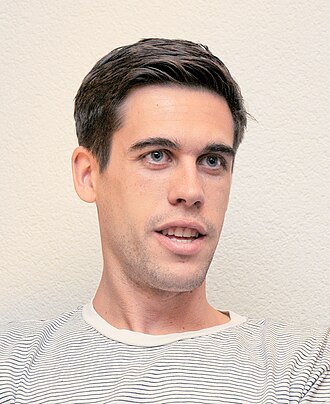
Ryan Holiday
Author of sixteen books and writer of the Daily Stoic email
Where to hear and read about Ryan Holiday1 episode or test

Ryan Holiday is the author of sixteen books and writer of the Daily Stoic email, which reaches a million people. The habit most worth copying is starting the next project before the last one launches, so good or bad news cannot derail the work.
instead of taking an off season, if you just start on the next project, you're insulated
The Simple Steps to Fuel Your Creativity – Ryan Holiday
Ryan Holiday: the story and the lessons
1How Ryan Holiday keeps momentum across books
Holiday starts the next book before the last one lands. Courage Is Calling hit number three on the New York Times list while he was drafting Discipline Is Destiny. His reply to the editor's call was that he would get back to work.
Sales numbers usually arrive the Tuesday or Wednesday after a launch, so he schedules deep work that week. Good news costs a day just as bad news does, because refreshing and celebrating is time not spent writing.
The Obstacle Is the Way taught him launch results are noise. The book did only okay at first, and he was busy writing Ego Is the Enemy. When it later sold out on Amazon after the New England Patriots read it and a big article ran, he didn't care either.
He says the next project protected him from disappointment and, ironically, from ego.
Holiday defines success by what is in his control. He asks whether the book was his best work, whether it was creatively fulfilling, and whether it disrupted his life less than the last one. With his first book, Trust Me, I'm Lying, about 90 of 100 satisfaction units came from its reception.
He wants that ratio to flip but not reach zero, since publishing means wanting to reach people. On his latest New York media run he felt a little disassociated, which he sees as a kind of ingratitude.
Holiday treats quantity as the road to quality. He started with 44 blog posts in 2007 and 2008, and eight years of the daily email gave him practice he counts as about eight books. Long gaps between books make restarting harder, like getting back in shape.
He thinks the Robert Caro model of years on one book may no longer be economically possible. Short books about dead subjects make high output workable, and he plans to keep going until the wheels come off.
Holiday trusts the messy middle because he has been through it. Every project has a trough of despair: a shock the first time, a doubt the second, and by the third he knows this is what happens. His last book does not write his next one, so each starts from zero.
The trap is comparing a half-built draft to a finished book. He does not yet know if the current draft is good, but he knows it will be, and that he won't quit or be rushed.
Holiday says to stop getting ready and start. The blank page is scary because what is on the page is never as good as what is in your head. He cites Seneca: the one thing all fools share is that they are always getting ready to start.
He could not give himself permission to begin Ego Is the Enemy until a dream of being launched in a spaceship convinced him he had waited too long. He calls 'I'm going to do it in the morning' the biggest lie in the world.
2How Holiday builds a book from index cards
Holiday sorts a year of research cards on a fixed day. He began this year's book on his birthday, taking all the cards and asking what the book would be. Until then the research sits in what he calls a doom bucket.
Before Discipline Is Destiny he was tired after about a book a year and had no characters picked. Twenty notes on one theme, written months apart, turned out to be a chapter.
Holiday leaves notes to his future self saying the book exists. He found a white index card in red Sharpie saying it would feel like there was no book, but there was. Within days patterns appeared.
Discipline Is Destiny came together faster than he expected, and it sold better than he thought.
Holiday parks a chapter that lacks material and writes elsewhere. He paused the Queen Elizabeth chapter of Discipline Is Destiny and wrote the sections he had material for, while still reading about her.
The chapter is about 5,000 words, and he read an estimated 5,000 to 10,000 pages for it. Forward momentum mattered more than chronology.
Holiday drafts each chapter as its own self-contained document. A book of three parts and ten chapters becomes 30 or 40 Google Docs of 1,000 to 1,500 words, each of which must work alone with no callbacks.
He is about two thirds through the wisdom book this way and expects to assemble it in about two months. Only then does he see the full word count and adjust the pacing.
Holiday settles the book's shape early through the introduction. The intro sets out the central metaphor, the main thoughts and the central conceit, so he must have cracked most of the book before starting.
He keeps a private intro from the start and revises it to match the final book. He no longer polishes intros early, so he can keep moving.
Holiday counts a day if it adds something real. A recent day had the school run, a run and an hour of writing, about 50 minutes of it on one chapter. He judges a day by whether he made a positive contribution.
His note cards are filed by destination: chapters not yet written, pickups for finished chapters, and a general box for things that may find a home later.
Holiday loops one song while he writes. When a song stops beginning and ending it becomes a trance that puts him in a steady, heightened mood. Shuffle shifts the mood, while a loop keeps him in one.
I Dreamed a Dream was one such song during a book.
3How Holiday edits and handles feedback
Holiday lets a finished draft rest, then cuts hard. Right Thing, Right Now was done in January and could have come out that fall. He sold his publisher the next books on the condition of an extra year, and it came out the following June.
The revision was mostly cutting, from about 85,000 words to 65 or 70,000, then back up to 70,000 after he mended the seams. He kept researching while it rested.
Holiday told his children's story aloud nightly and cut where his son got bored. He wrote a fresh version of the Stoic Virtue fable each night during the pandemic and told it to his son. The finished story runs only about 500 to 800 words.
Reading his early books aloud later showed him they were tighter than his recent ones, each of which was longer than the last.
Holiday tells his editor what book he is writing before taking notes. He asks only for notes that help him do what he is trying to do, and treats the rest as not useful. On Conspiracy he went some rounds with his editor on this basis.
He separates coaching, which he seeks, from feedback, which he mostly ignores. He avoids reviews and reader replies, since the Daily Stoic replies could break his brain.
Holiday expects old certainty to embarrass him and writes with more nuance. Revising The Obstacle Is the Way and Trust Me, I'm Lying for new editions, he found that what made him cringe was certainty, not style.
Ten more years of living show things are a tad more complicated. He cut blunt lines, added things he wished he had known in 2013, and replaced examples he had settled for.
4How Holiday researches and tells stories
Holiday traces every subject back to the oldest books on it. He reads modern work, asks where each idea came from, and follows the bibliography to the central node. Most ideas end at Aristotle, Plato, Herodotus or Thucydides.
Anyone writing on US-China conflict who hasn't read Thucydides misses the assumptions the commentators rest on.
Holiday tests his favorite example against three or four other angles. It is easy to grab one example that confirms what you want to say. He checks it against the full story and similar cases.
He once accepted an offhand quote that roughly said what he wanted. Now he leaves out good material rather than use everything, which is partly why the books keep getting longer. He cites General Mattis on reading hundreds of books about your work.
Holiday credits deeper research, not technique, for better stories. He puts his improvement at 80% material. For Lou Gehrig he read about eight biographies plus obituaries and ESPN pieces.
Contrasting Gehrig with Babe Ruth, who also left something on the table, made the story work. In Stillness Is the Key he paired the missile crisis with negative Kennedy stories to show greatness and weakness together.
Holiday picks familiar people and stacks stories into a pattern. The best stories show something new about someone the reader already has an opinion on. Obscure subjects are not powerful enough for the lessons he teaches.
A story must be a theme and not an aberration, so he layers similar stories to show a trend.
Holiday learned from Marcus Aurelius that specific writing becomes universal. Marcus wrote a private journal in his second language, Greek, never expecting publication, and addressed 'you' to himself. Meditations has lasted 2,000 years.
Holiday bought the Gregory Hays translation on Amazon in 2006 by luck and calls it one of his formative lucky breaks.
Holiday wants biographies that capture the person, not just facts. He follows Plutarch, who found that an offhand remark, a gesture or an encounter reveals more than battle numbers.
He rarely finds a new biography worthy of the old ones, because modern ones are too scholarly. His next project may be a biography, but its style is still open.

The Simple Steps to Fuel Your Creativity – Ryan Holiday
Ryan Holiday explains how he keeps writing momentum across books, from index card research to self-contained chapter drafts to hard cutting passes. The most useful habit is starting the next project before the last one launches, so good or bad news cannot derail the work.
Holiday starts the next book before the last one lands. Courage Is Calling hit number three on the New York Times list while he was drafting Discipline Is Destiny. His reply to the editor's call was that he would get back to work.
Sales numbers usually arrive the Tuesday or Wednesday after a launch, so he schedules deep work that week. Good news costs a day just as bad news does, because refreshing and celebrating is time not spent writing.
The Obstacle Is the Way taught him launch results are noise. The book did only okay at first, and he was busy writing Ego Is the Enemy. When it later sold out on Amazon after the New England Patriots read it and a big article ran, he didn't care either.
He says the next project protected him from disappointment and, ironically, from ego.
Holiday defines success by what is in his control. He asks whether the book was his best work, whether it was creatively fulfilling, and whether it disrupted his life less than the last one. With his first book, Trust Me, I'm Lying, about 90 of 100 satisfaction units came from its reception.
He wants that ratio to flip but not reach zero, since publishing means wanting to reach people. On his latest New York media run he felt a little disassociated, which he sees as a kind of ingratitude.
Holiday treats quantity as the road to quality. He started with 44 blog posts in 2007 and 2008, and eight years of the daily email gave him practice he counts as about eight books. Long gaps between books make restarting harder, like getting back in shape.
He thinks the Robert Caro model of years on one book may no longer be economically possible. Short books about dead subjects make high output workable, and he plans to keep going until the wheels come off.
Holiday trusts the messy middle because he has been through it. Every project has a trough of despair: a shock the first time, a doubt the second, and by the third he knows this is what happens. His last book does not write his next one, so each starts from zero.
The trap is comparing a half-built draft to a finished book. He does not yet know if the current draft is good, but he knows it will be, and that he won't quit or be rushed.
Holiday says to stop getting ready and start. The blank page is scary because what is on the page is never as good as what is in your head. He cites Seneca: the one thing all fools share is that they are always getting ready to start.
He could not give himself permission to begin Ego Is the Enemy until a dream of being launched in a spaceship convinced him he had waited too long. He calls 'I'm going to do it in the morning' the biggest lie in the world.
Holiday sorts a year of research cards on a fixed day. He began this year's book on his birthday, taking all the cards and asking what the book would be. Until then the research sits in what he calls a doom bucket.
Before Discipline Is Destiny he was tired after about a book a year and had no characters picked. Twenty notes on one theme, written months apart, turned out to be a chapter.
Holiday leaves notes to his future self saying the book exists. He found a white index card in red Sharpie saying it would feel like there was no book, but there was. Within days patterns appeared.
Discipline Is Destiny came together faster than he expected, and it sold better than he thought.
Holiday parks a chapter that lacks material and writes elsewhere. He paused the Queen Elizabeth chapter of Discipline Is Destiny and wrote the sections he had material for, while still reading about her.
The chapter is about 5,000 words, and he read an estimated 5,000 to 10,000 pages for it. Forward momentum mattered more than chronology.
Holiday drafts each chapter as its own self-contained document. A book of three parts and ten chapters becomes 30 or 40 Google Docs of 1,000 to 1,500 words, each of which must work alone with no callbacks.
He is about two thirds through the wisdom book this way and expects to assemble it in about two months. Only then does he see the full word count and adjust the pacing.
Holiday settles the book's shape early through the introduction. The intro sets out the central metaphor, the main thoughts and the central conceit, so he must have cracked most of the book before starting.
He keeps a private intro from the start and revises it to match the final book. He no longer polishes intros early, so he can keep moving.
Holiday counts a day if it adds something real. A recent day had the school run, a run and an hour of writing, about 50 minutes of it on one chapter. He judges a day by whether he made a positive contribution.
His note cards are filed by destination: chapters not yet written, pickups for finished chapters, and a general box for things that may find a home later.
Holiday loops one song while he writes. When a song stops beginning and ending it becomes a trance that puts him in a steady, heightened mood. Shuffle shifts the mood, while a loop keeps him in one.
I Dreamed a Dream was one such song during a book.
Holiday lets a finished draft rest, then cuts hard. Right Thing, Right Now was done in January and could have come out that fall. He sold his publisher the next books on the condition of an extra year, and it came out the following June.
The revision was mostly cutting, from about 85,000 words to 65 or 70,000, then back up to 70,000 after he mended the seams. He kept researching while it rested.
Holiday told his children's story aloud nightly and cut where his son got bored. He wrote a fresh version of the Stoic Virtue fable each night during the pandemic and told it to his son. The finished story runs only about 500 to 800 words.
Reading his early books aloud later showed him they were tighter than his recent ones, each of which was longer than the last.
Holiday tells his editor what book he is writing before taking notes. He asks only for notes that help him do what he is trying to do, and treats the rest as not useful. On Conspiracy he went some rounds with his editor on this basis.
He separates coaching, which he seeks, from feedback, which he mostly ignores. He avoids reviews and reader replies, since the Daily Stoic replies could break his brain.
Holiday expects old certainty to embarrass him and writes with more nuance. Revising The Obstacle Is the Way and Trust Me, I'm Lying for new editions, he found that what made him cringe was certainty, not style.
Ten more years of living show things are a tad more complicated. He cut blunt lines, added things he wished he had known in 2013, and replaced examples he had settled for.
Holiday traces every subject back to the oldest books on it. He reads modern work, asks where each idea came from, and follows the bibliography to the central node. Most ideas end at Aristotle, Plato, Herodotus or Thucydides.
Anyone writing on US-China conflict who hasn't read Thucydides misses the assumptions the commentators rest on.
Holiday tests his favorite example against three or four other angles. It is easy to grab one example that confirms what you want to say. He checks it against the full story and similar cases.
He once accepted an offhand quote that roughly said what he wanted. Now he leaves out good material rather than use everything, which is partly why the books keep getting longer. He cites General Mattis on reading hundreds of books about your work.
Holiday credits deeper research, not technique, for better stories. He puts his improvement at 80% material. For Lou Gehrig he read about eight biographies plus obituaries and ESPN pieces.
Contrasting Gehrig with Babe Ruth, who also left something on the table, made the story work. In Stillness Is the Key he paired the missile crisis with negative Kennedy stories to show greatness and weakness together.
Holiday picks familiar people and stacks stories into a pattern. The best stories show something new about someone the reader already has an opinion on. Obscure subjects are not powerful enough for the lessons he teaches.
A story must be a theme and not an aberration, so he layers similar stories to show a trend.
Holiday learned from Marcus Aurelius that specific writing becomes universal. Marcus wrote a private journal in his second language, Greek, never expecting publication, and addressed 'you' to himself. Meditations has lasted 2,000 years.
Holiday bought the Gregory Hays translation on Amazon in 2006 by luck and calls it one of his formative lucky breaks.
Holiday wants biographies that capture the person, not just facts. He follows Plutarch, who found that an offhand remark, a gesture or an encounter reveals more than battle numbers.
He rarely finds a new biography worthy of the old ones, because modern ones are too scholarly. His next project may be a biography, but its style is still open.