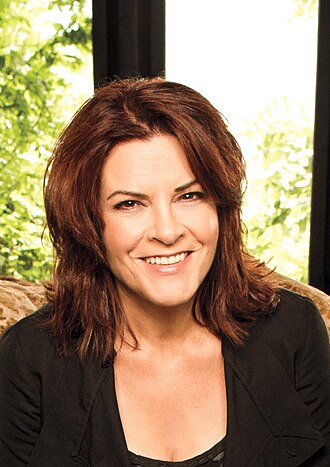
Rosanne Cash
Grammy-winning singer-songwriter and memoirist
Where to hear and read about Rosanne Cash1 episode or test

Rosanne Cash is a Grammy-winning singer-songwriter and memoirist who writes lyrics, essays and a memoir with the same songwriter's ear. The thing most worth learning from her is to build craft by taking masters apart line by line, so that skill can carry instinct when grief, anger and half-understood images arrive.
If you want to let it go, great. But you better know how to do it first.
Learn Songwriting in 67 Minutes — Rosanne Cash
Rosanne Cash: the story and the lessons
1Rosanne Cash's path to writing
Cash loved words and rhythm long before she learned craft. As a toddler she asked her mother what signs said, and she won a poetry contest at age 9. Her goal is unchanged after half a century: people think she can write and she wants to write.
She can hear a writer's cadence on the page and loves finding a rhythm she hasn't met.
Joni Mitchell showed her that a woman could be a songwriter. Hearing Mitchell as a teenager broke an idea she had absorbed, that a woman should keep her feelings private and that men were the poets.
Watching her father's fame made Cash distrust pretense. She saw fame literally kill people, so she never saw it as glamorous. Her father was truly connected to individual fans but not to the millions, only to an idea of an audience.
Her rule is to be careful, manage it, and be as truthful with yourself as you can, or it could destroy you. Pretense makes her anxious in others and in herself, including acting like she knows more than she does.
She sorted what she inherited from each parent. From her mother she kept discipline and routine. From her father she kept work ethic, respect for his audience and sensitivity to others' suffering.
She set aside her mother's focus on appearances and her father's self-destructiveness. Both parents are gone, so the expectations she feels now are all in her head. Her father knew thousands of songs and worked hard at writing, which taught her the nobility of the art.
A humiliating dream in the 1980s ended her dabbling. Mid-album, she dreamed of a party where Linda Ronstadt sat on a sofa with an old man she knew only as Art. When she tried to join their talk, Art looked at her coldly, and she woke humiliated.
The dream told her she could go much deeper and hadn't. She ends the story with "I wasn't going to be a dilettante." She had already written Ronstadt's line about refining skills and kept it in her wallet.
2How Rosanne Cash built her craft
Cash copied out Dylan's lyrics by hand in her twenties. She wrote them down and asked how he got from one line to the next and why it works. She studied Positively 4th Street and Subterranean Homesick Blues to see why they make sense.
She noticed how far Dylan stepped out of the expected and then came back around. "How did he get from that to that? And why does that work?"
She studied many songwriting traditions, not only her own. She took apart Guy Clark's story songs, Appalachian ballads, the Beatles, Elton John and Joni Mitchell, asking how tied each song was to its writer's life and voice.
She values the inside rules of each tradition: Appalachian ballads carried oral history between generations, and the Delta blues documented darkness, violence, beauty and hope.
Cash makes students build a rhyme scheme, then take it apart. In college master classes, students often don't notice where they dropped a scheme or missed a rhyme.
She compares it to Picasso, who could draw excellent portraits before he let go of representation. There are reasons these things work, and they are important to know.
Cash teaches writers to write the furniture of a feeling. She tells young writers not to write about loss and love with big words. Get specific about the window, the door, the coffee cup, the clock ticking, the wind that blew through.
The concrete details resonate, and the reader supplies the theme.
Skill keeps the channel open for instinct. She carries Linda Ronstadt's line: refine your skills so you can support your instincts. You only get the level of work your acquired skills can reach.
Instinct and surprise arrive, but craft decides how good the result is.
A tight form can rescue a risky metaphor. She holds up Sea of Heartbreak, whose sea and ship metaphor could be kitsch in lesser hands. The melody and a tight, simple rhyme scheme make it yearning, like a painting.
She calls its first line, "The lights in the harbor don't shine for me," perfect.
3How Cash starts and finishes a song
Most of her songs begin as a seen image. At the piano she saw headlights on a road, kept playing, and the first verse came. Only later did she see it was about parents and children watching over each other.
Eight Gods of Harlem grew from a half-heard Spanish phrase on a subway staircase. She follows an intriguing image even when she can't yet say what it means.
She writes about what she doesn't yet understand. She calls such songs postcards from the future. Writing is how she finds out what she already knows.
"You write about it and then you go, 'Oh, that's what that is.'" She cites Joni Mitchell's Both Sides Now, written young, before Mitchell had lived it.
Cash keeps ambiguity but insists on clear intent behind it. Songs differ from streamlined prose because sometimes you don't want people to understand clearly. She doesn't want to kill the mystery in service of clarity.
A clarity of intent behind the ambiguity is what draws a listener in without being able to say what a line means.
For The Killing Fields she planned the shape first. The song was meant to be about Arkansas lynchings, written the summer George Floyd was murdered. She chose an Appalachian narrative ballad with no choruses, moving from the present deep into the past and back.
She saw the last line first: "What we were then is not who we are now." The hard part was filling the middle with images.
She walks away at the wall and returns the next day. Every project goes from a burst of inspiration to a wall, then slogging, until something opens. She steps away for a day, a week or a month, and the way through bubbles up.
A few songs arrived in 10 minutes with almost no editing, which she calls freebies. Even then there is always an edit at the end.
Cash edits by following her own red flags. She watches for too many nature metaphors, a pet adjective, and words that feel too literal or too expected. When she feels uneasy, she changes the line.
She looks for small bursts of "yes, that works, that's new."
She now takes feedback from her husband and co-writer. She once refused feedback on songs in process. Now John Leventhal writes the music while she writes lyrics, and he gives unsolicited notes.
His comments sometimes start an argument, and then she often agrees the line is weak.
4How Cash turns anger and grief into songs
Anger pulled her out of her own head. She wrote Roses in the Fire after tossing her husband's roses into the fireplace, and knew in that moment it was a great line. The song has the energy of real rage.
She calls anger a wind that blows through your house and finds it clarifying. She advises not publishing what you write in anger right away, but it is a generative emotion.
Cash treats grief as information for art. She finds grief as clarifying as anger, if not more. It is a prism of sadness, anger and a strange exhilaration, and it can't be talked away like worry.
She says art is where people put grief so it doesn't destroy them. Real grief can be heard in a voice, and she thinks it stays there once experienced.
Her father's death turned a Psalm line into a song. She had read the Psalms to her father in his last months, when his sight had failed. After he died, "I'm the sparrow on the roof" jumped out and opened The World Unseen.
The next line, "I'm the list of everyone I have to lose," came from asking whether a person is just separate arrangements of grief.
She lives with grief rather than seeking comfort. She points to Rilke's letters to the bereaved, collected as The Dark Interval, which offered no overt solace and invited people to let grief go through them like a storm.
She also cites Nick Cave, who took huge loss and used it to expand his heart and his art. Fear of grief and anger, she says, keeps us frozen.
Cash defines courage in songwriting as getting over yourself. She is not feeding children in refugee camps, so talk of courage feels pretentious to her. Her version is to stop tormenting herself with reasons why and why not, and just do it.
5Cash on blocks, doubt and staying awake
She says the cure for a block is to stop worrying. When months pass without writing, she reminds herself it has happened before. After each baby she didn't write for about two years, then the work came back.
The first time it really freaked her out. Her mantra is don't stop working, just stop worrying.
Worry, she says, shuts the space for bigger ideas. She calls writing a way of being in the world: overheard conversations, images, standing in front of a great painting at the Met.
Worry distracts as much as the phone or the news. "It closes the space for anything bigger to happen."
Cash now treats her inner critic as part of the process. She still hears the voice saying someone else is a better songwriter and she should stop. She used to believe it, and now recognizes it as part of the process.
She borrows advice on bad gigs from John Stewart: get over it, because a live show is two hours and then over forever.
Making a different kind of art restarted her writing. After several months of writer's block, she went to France and made cyanotypes and monoprints with friends. She came back wanting to finish her songs.
It had happened before: she once gave up writing and painted, then wanted to write again. She says painting follows the same cycle as songwriting.
6What Cash believes about songs and prose
Her memoir was written as a songwriter would write it. She did not write it as a journalist or in chronological order. Themes return and words echo from paragraph to paragraph, then tie up at the end.
Prose has no rhyme scheme, so the structure of that house is different, and looser. Forcing it would be clunky.
Cash says a song is its own art form, not poetry's poor cousin. She copied Dylan's lyrics to make them stand alone, but a song needs a melody.
"It's not a poor cousin of poetry. It's its own thing."
She wants love songs to be a prism, not one note. Trying too hard, pretension and misplaced earnestness leave her cold. She cites Nick Cave's Into My Arms, which opens with "I don't believe in an interventionist God" and then turns to asking God to send the loved one into his arms.
She finds much of modern pop led by the track, not the lyric. She calls lyrics as an adjunct to a beat legitimate, but it interests her less. Pop still sings about breakups and loss, without the depth of the songs it came from.
A lyric-driven song doesn't have to be complex: Annie Lennox's Why is pure longing, with lyric, voice and track in balance.
Cash believes a voice deepens as a life is lived. Ray Charles told her you sing better at 50 than at 20 because your life shows up in your voice. She sings better now than 40 or 50 years ago because she knows her voice's contours and weak spots.
Losing top notes forces her to find something else to do. She says refinement means shedding ideas of what she should do, along with pretense and insecurity.

Learn Songwriting in 67 Minutes — Rosanne Cash
Rosanne Cash explains how a songwriter's habits carry over to prose: study the masters line by line, learn the rules before breaking them, and let images and hard emotions lead you to what you didn't know you knew. The technique worth hearing is copying out a great writer's lyrics by hand and asking how each line got from one place to the next.
Cash loved words and rhythm long before she learned craft. As a toddler she asked her mother what signs said, and she won a poetry contest at age 9. Her goal is unchanged after half a century: people think she can write and she wants to write.
She can hear a writer's cadence on the page and loves finding a rhythm she hasn't met.
Joni Mitchell showed her that a woman could be a songwriter. Hearing Mitchell as a teenager broke an idea she had absorbed, that a woman should keep her feelings private and that men were the poets.
Watching her father's fame made Cash distrust pretense. She saw fame literally kill people, so she never saw it as glamorous. Her father was truly connected to individual fans but not to the millions, only to an idea of an audience.
Her rule is to be careful, manage it, and be as truthful with yourself as you can, or it could destroy you. Pretense makes her anxious in others and in herself, including acting like she knows more than she does.
She sorted what she inherited from each parent. From her mother she kept discipline and routine. From her father she kept work ethic, respect for his audience and sensitivity to others' suffering.
She set aside her mother's focus on appearances and her father's self-destructiveness. Both parents are gone, so the expectations she feels now are all in her head. Her father knew thousands of songs and worked hard at writing, which taught her the nobility of the art.
A humiliating dream in the 1980s ended her dabbling. Mid-album, she dreamed of a party where Linda Ronstadt sat on a sofa with an old man she knew only as Art. When she tried to join their talk, Art looked at her coldly, and she woke humiliated.
The dream told her she could go much deeper and hadn't. She ends the story with "I wasn't going to be a dilettante." She had already written Ronstadt's line about refining skills and kept it in her wallet.
Cash copied out Dylan's lyrics by hand in her twenties. She wrote them down and asked how he got from one line to the next and why it works. She studied Positively 4th Street and Subterranean Homesick Blues to see why they make sense.
She noticed how far Dylan stepped out of the expected and then came back around. "How did he get from that to that? And why does that work?"
She studied many songwriting traditions, not only her own. She took apart Guy Clark's story songs, Appalachian ballads, the Beatles, Elton John and Joni Mitchell, asking how tied each song was to its writer's life and voice.
She values the inside rules of each tradition: Appalachian ballads carried oral history between generations, and the Delta blues documented darkness, violence, beauty and hope.
Cash makes students build a rhyme scheme, then take it apart. In college master classes, students often don't notice where they dropped a scheme or missed a rhyme.
She compares it to Picasso, who could draw excellent portraits before he let go of representation. There are reasons these things work, and they are important to know.
Cash teaches writers to write the furniture of a feeling. She tells young writers not to write about loss and love with big words. Get specific about the window, the door, the coffee cup, the clock ticking, the wind that blew through.
The concrete details resonate, and the reader supplies the theme.
Skill keeps the channel open for instinct. She carries Linda Ronstadt's line: refine your skills so you can support your instincts. You only get the level of work your acquired skills can reach.
Instinct and surprise arrive, but craft decides how good the result is.
A tight form can rescue a risky metaphor. She holds up Sea of Heartbreak, whose sea and ship metaphor could be kitsch in lesser hands. The melody and a tight, simple rhyme scheme make it yearning, like a painting.
She calls its first line, "The lights in the harbor don't shine for me," perfect.
Most of her songs begin as a seen image. At the piano she saw headlights on a road, kept playing, and the first verse came. Only later did she see it was about parents and children watching over each other.
Eight Gods of Harlem grew from a half-heard Spanish phrase on a subway staircase. She follows an intriguing image even when she can't yet say what it means.
She writes about what she doesn't yet understand. She calls such songs postcards from the future. Writing is how she finds out what she already knows.
"You write about it and then you go, 'Oh, that's what that is.'" She cites Joni Mitchell's Both Sides Now, written young, before Mitchell had lived it.
Cash keeps ambiguity but insists on clear intent behind it. Songs differ from streamlined prose because sometimes you don't want people to understand clearly. She doesn't want to kill the mystery in service of clarity.
A clarity of intent behind the ambiguity is what draws a listener in without being able to say what a line means.
For The Killing Fields she planned the shape first. The song was meant to be about Arkansas lynchings, written the summer George Floyd was murdered. She chose an Appalachian narrative ballad with no choruses, moving from the present deep into the past and back.
She saw the last line first: "What we were then is not who we are now." The hard part was filling the middle with images.
She walks away at the wall and returns the next day. Every project goes from a burst of inspiration to a wall, then slogging, until something opens. She steps away for a day, a week or a month, and the way through bubbles up.
A few songs arrived in 10 minutes with almost no editing, which she calls freebies. Even then there is always an edit at the end.
Cash edits by following her own red flags. She watches for too many nature metaphors, a pet adjective, and words that feel too literal or too expected. When she feels uneasy, she changes the line.
She looks for small bursts of "yes, that works, that's new."
She now takes feedback from her husband and co-writer. She once refused feedback on songs in process. Now John Leventhal writes the music while she writes lyrics, and he gives unsolicited notes.
His comments sometimes start an argument, and then she often agrees the line is weak.
Anger pulled her out of her own head. She wrote Roses in the Fire after tossing her husband's roses into the fireplace, and knew in that moment it was a great line. The song has the energy of real rage.
She calls anger a wind that blows through your house and finds it clarifying. She advises not publishing what you write in anger right away, but it is a generative emotion.
Cash treats grief as information for art. She finds grief as clarifying as anger, if not more. It is a prism of sadness, anger and a strange exhilaration, and it can't be talked away like worry.
She says art is where people put grief so it doesn't destroy them. Real grief can be heard in a voice, and she thinks it stays there once experienced.
Her father's death turned a Psalm line into a song. She had read the Psalms to her father in his last months, when his sight had failed. After he died, "I'm the sparrow on the roof" jumped out and opened The World Unseen.
The next line, "I'm the list of everyone I have to lose," came from asking whether a person is just separate arrangements of grief.
She lives with grief rather than seeking comfort. She points to Rilke's letters to the bereaved, collected as The Dark Interval, which offered no overt solace and invited people to let grief go through them like a storm.
She also cites Nick Cave, who took huge loss and used it to expand his heart and his art. Fear of grief and anger, she says, keeps us frozen.
Cash defines courage in songwriting as getting over yourself. She is not feeding children in refugee camps, so talk of courage feels pretentious to her. Her version is to stop tormenting herself with reasons why and why not, and just do it.
She says the cure for a block is to stop worrying. When months pass without writing, she reminds herself it has happened before. After each baby she didn't write for about two years, then the work came back.
The first time it really freaked her out. Her mantra is don't stop working, just stop worrying.
Worry, she says, shuts the space for bigger ideas. She calls writing a way of being in the world: overheard conversations, images, standing in front of a great painting at the Met.
Worry distracts as much as the phone or the news. "It closes the space for anything bigger to happen."
Cash now treats her inner critic as part of the process. She still hears the voice saying someone else is a better songwriter and she should stop. She used to believe it, and now recognizes it as part of the process.
She borrows advice on bad gigs from John Stewart: get over it, because a live show is two hours and then over forever.
Making a different kind of art restarted her writing. After several months of writer's block, she went to France and made cyanotypes and monoprints with friends. She came back wanting to finish her songs.
It had happened before: she once gave up writing and painted, then wanted to write again. She says painting follows the same cycle as songwriting.
Her memoir was written as a songwriter would write it. She did not write it as a journalist or in chronological order. Themes return and words echo from paragraph to paragraph, then tie up at the end.
Prose has no rhyme scheme, so the structure of that house is different, and looser. Forcing it would be clunky.
Cash says a song is its own art form, not poetry's poor cousin. She copied Dylan's lyrics to make them stand alone, but a song needs a melody.
"It's not a poor cousin of poetry. It's its own thing."
She wants love songs to be a prism, not one note. Trying too hard, pretension and misplaced earnestness leave her cold. She cites Nick Cave's Into My Arms, which opens with "I don't believe in an interventionist God" and then turns to asking God to send the loved one into his arms.
She finds much of modern pop led by the track, not the lyric. She calls lyrics as an adjunct to a beat legitimate, but it interests her less. Pop still sings about breakups and loss, without the depth of the songs it came from.
A lyric-driven song doesn't have to be complex: Annie Lennox's Why is pure longing, with lyric, voice and track in balance.
Cash believes a voice deepens as a life is lived. Ray Charles told her you sing better at 50 than at 20 because your life shows up in your voice. She sings better now than 40 or 50 years ago because she knows her voice's contours and weak spots.
Losing top notes forces her to find something else to do. She says refinement means shedding ideas of what she should do, along with pretense and insecurity.