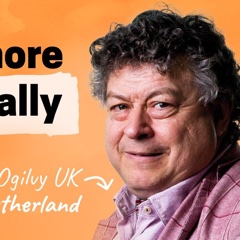
Rory Sutherland
Vice Chairman of Ogilvy UK, author of Alchemy, founder of Nudgestock
Where to hear and read about Rory Sutherland1 book · 1 episode or test
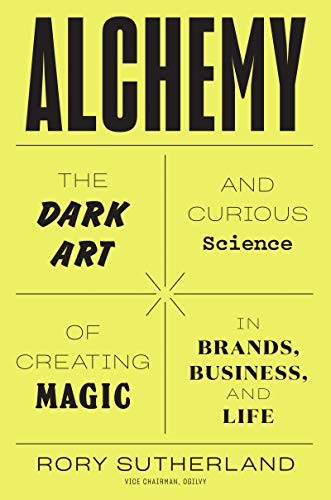 Book · notes comingAlchemy

 Lenny's PodcastWhat most people miss about marketing | Rory Sutherland (Vice Chairman of Ogilvy UK, author)
Rory Sutherland is vice chairman of Ogilvy UK, author of Alchemy and founder of Nudgestock, who argues products succeed through psychology, timing and marketing as much as logic. The lesson most worth taking is to be consistent, distinctive and famous, and to work on psychology, technology and economics in parallel.
Be consistent, be distinctive and be famous.
What most people miss about marketing | Rory Sutherland (Vice Chairman of Ogilvy UK, author)
Rory Sutherland: the story and the lessons
1Rory Sutherland and the case for psycho-logic
Sutherland designs and markets products with psychology, not pure logic. He is vice chairman of Ogilvy UK, wrote Alchemy (2019) and founded Nudgestock, billed as the world's biggest festival of behavioral science and creativity.
His starting claim is that business runs on a reductionist maths and finance model where effects are proportionate, while psychology behaves more like complexity theory, full of butterfly effects.
He says marketing is the forgotten cause of most product success. Success erases the memory of the marketing behind it. Ads praising electricity in the home ran for about 30 years from 1916, and getting people onto dial-up internet in the late 1990s was a real job.
He calls Steve Jobs a pitch man and a brilliant salesman, not a technologist, and means it as a compliment. Apple's engineers did not respect him because he could not code.
He blames multiple-choice schooling for our habit of linear thinking. In the ship puzzle (27 goats, three sheep, 25 cows), even bright children try to compute the captain's age instead of answering that it is impossible to tell.
Real decisions have several right answers, missing information and irrelevant facts, yet we still select and promote people on these artificial skills.
Sutherland treats reason as one human skill among several. He draws on John Ralston Saul's Voltaire's Bastards and Herbert Simon's idea of decision-making under uncertainty. The evolved brain copes with imperfect information and imperfect trust.
Habit, copying and unpredictability look irrational but are cheap ways to survive. The hare zigzags at random because a predictable hare gives the dog a tell, a point he took from Robert Trivers.
2Why Sutherland says good products fail and weak ones win
Sutherland says a good product does not automatically win. He lists the Meta Portal TV, Google Glass, the wine box and the Japanese toilet as strong products that failed to cross the chasm. Portal cost about $120 and held roughly $500 worth of equipment.
Reviews of Portal put nine paragraphs of privacy worry before one of praise. He owned about four and bought another when he heard it was being discontinued.
He tells builders to retry ideas that failed earlier. Failure may be bad timing or poor marketing. Around 2003 he ordered groceries online from Food Ferry and people laughed in his face, and in 1989 strangers shouted abuse at him for using a mobile phone on Oxford Street.
He says the 'definition of insanity' quote is wrong, because repeating an action in a complex system can give a different result. Many early online ideas, such as the Chumby, were simply mistimed.
He says early adopter image can block mainstream adoption. Google Glass went only to developers, who are not the people you want walking round a bar wearing it. The Ford and Edison electric car became known as a women's car.
Today many drivers see electric car owners as smug, though few owners buy for the environment. His advice is to choose who gets the product first.
Sutherland favours social proof over benefit arguments. An AI analysis found the best predictor of heat pump adoption was three neighbours already having one. Environmental and savings arguments moved people less.
His line: "We're not prepared to be the first person with the worst solution."
He reminds marketers that they are a minority mindset. People in marketing score high on openness to experience, while most people prefer habit and fitting in. He was an air fryer evangelist 15 years ago, when six in 500 people owned one.
Evangelising like a cult can put ordinary people off, so he keeps reminding himself he is an outlier.
3Sutherland's rules for distinctive product design
Sutherland says keep odd details because idiosyncrasies count double. In the 1990s Jaguar planned to remove its low reading-light switch as inconsistent, until Ogilvy's New York creative director said to keep it. Rolls-Royce kept its headlamp pedal.
The Doubletree check-in cookie works the same way, earning attention far beyond its cost.
He shows an irrational offer can beat a cheaper rational one. MCI's Friends and Family gave 20% off calls to numbers you nominated and drew more interest than a 15 to 20% cut across the board.
The discount started at 10% and was eventually raised to about 25%. Ed Carter brought it to BT in the UK.
He advises aiming for maximally advanced yet acceptable, not reinvention. He borrows the phrase from Raymond Loewy. The iPhone was preceded by the iPod, and people prefer to migrate their behavior rather than reinvent it.
A BBC 4 buyer paid about £24,000 ($30,000) for the Danish series The Killing, which worked because Denmark is just the right amount of weird.
He backs one clear function over added features. Sony's Akio Morita refused to add recording to the Walkman, though it would have cost 50 cents to a dollar per unit. The Walkman grew out of the Talkman dictating machine.
One function means no ambiguity about what the device is for and a binary buy decision.
He says a small set of choices beats full customization. McDonald's replaced the diner's endless egg options with the question of whether you want a Big Mac. Tesla offers two interiors, two wheel sizes, five basic colours and two premium ones.
Configuring a luxury electric Range Rover pushes the price towards a house.
He warns against engineering out the cues that show a product works. Loewy made a fan so quiet that people did not believe it ran. Sutherland warned an engineer building a machine-learning-quieted razor not to go too far.
The crackle and vibration on the face convince us the razor is working: "If you make it too quiet, we genuinely won't believe it's working."
4How Sutherland thinks about brand and fame
Sutherland's brand rule is to be consistent, distinctive and famous. Keep the visual identity and promise consistent, make it distinctive, and aim for fame. Past a threshold, customers find you, suggest new uses and give you the benefit of the doubt.
He quotes Eric Johnson: a great brand means you play the game of capitalism on easy mode. Famous companies also get cheaper hires and a second chance after a mistake.
He compares brand building to a pension that compounds. For years a pension looks like a waste of a few hundred pounds a month, then the money has grown. Finance uses addition and division, but brands follow power laws.
His rough guess is that marketing is about four times as valuable as short-term metrics suggest: "We're being evaluated by the wrong maths and also we're being evaluated over the wrong timeframe."
He says familiar names feel safer, which makes fame commercially useful. No one gets fired for buying IBM, and a delayed BA flight is forgiven where a delayed Ryanair flight is not. Asked how they heard of a brand, customers cannot say.
Famous people have reputational skin in the game, so they take more care not to disappoint. A luxury car only rich people know conveys no prestige.
5How Sutherland would run teams and decisions
Sutherland says give small teams a clear goal and freedom. Octopus Energy and its software arm Kraken give teams of 10 to 20 wide freedom on how to reach a very clear objective.
He says narrow metrics get gamed or obeyed grudgingly, and calls quarterly target culture 'Soviet-style capitalism'. The Soviets at least had a five-year plan.
He points to teams of about ten, where obligation works. Shopify's Toby Shannon modelled customer service teams on sports sides. They were extraordinarily happy and motivated despite being less lean than one manager over 100 people.
Skipping a sick day in a team of ten means eight or nine colleagues work harder. The instinct to reciprocate does not scale to a large group.
He prefers simple human briefs to counting speed and output. AO tells staff to treat the customer like their grandmother. Zappos refuses to measure call speed, and one call lasted seven hours.
Cost-cutting removes discretionary judgment, and people go to work partly to use their ethics and sense of fairness.
He wants psychology, technology and economics worked in parallel. Marketing and innovation are two sides of the same coin, so do not leave marketing to the end. Wrigley began with soap powder, then baking powder, and became a gum company because people liked the free gum more.
He says firms work in series because they copy the production-line mindset, and stories told backwards look linear when the real process never was.
He adds a second lock: review key decisions logically, then creatively. Herodotus says the ancient Persians debated everything twice, once sober and once drunk, and acted only if both rounds agreed.
Creative people present to rational people for approval, but engineers and accountants never take their answer to 'some wacky people' for a more cunning idea.
What most people miss about marketing | Rory Sutherland (Vice Chairman of Ogilvy UK, author)
Marketing and behavioral science show why good products fail, why odd and limited products can win, and why metrics-driven logic misleads product and brand decisions. The episode gives practical rules on distinctiveness, fame, simplicity, team size and timing, backed by cases from Sony, Zappos, Shopify, Jaguar and MCI.
Sutherland designs and markets products with psychology, not pure logic. He is vice chairman of Ogilvy UK, wrote Alchemy (2019) and founded Nudgestock, billed as the world's biggest festival of behavioral science and creativity.
His starting claim is that business runs on a reductionist maths and finance model where effects are proportionate, while psychology behaves more like complexity theory, full of butterfly effects.
He says marketing is the forgotten cause of most product success. Success erases the memory of the marketing behind it. Ads praising electricity in the home ran for about 30 years from 1916, and getting people onto dial-up internet in the late 1990s was a real job.
He calls Steve Jobs a pitch man and a brilliant salesman, not a technologist, and means it as a compliment. Apple's engineers did not respect him because he could not code.
He blames multiple-choice schooling for our habit of linear thinking. In the ship puzzle (27 goats, three sheep, 25 cows), even bright children try to compute the captain's age instead of answering that it is impossible to tell.
Real decisions have several right answers, missing information and irrelevant facts, yet we still select and promote people on these artificial skills.
Sutherland treats reason as one human skill among several. He draws on John Ralston Saul's Voltaire's Bastards and Herbert Simon's idea of decision-making under uncertainty. The evolved brain copes with imperfect information and imperfect trust.
Habit, copying and unpredictability look irrational but are cheap ways to survive. The hare zigzags at random because a predictable hare gives the dog a tell, a point he took from Robert Trivers.
Sutherland says a good product does not automatically win. He lists the Meta Portal TV, Google Glass, the wine box and the Japanese toilet as strong products that failed to cross the chasm. Portal cost about $120 and held roughly $500 worth of equipment.
Reviews of Portal put nine paragraphs of privacy worry before one of praise. He owned about four and bought another when he heard it was being discontinued.
He tells builders to retry ideas that failed earlier. Failure may be bad timing or poor marketing. Around 2003 he ordered groceries online from Food Ferry and people laughed in his face, and in 1989 strangers shouted abuse at him for using a mobile phone on Oxford Street.
He says the 'definition of insanity' quote is wrong, because repeating an action in a complex system can give a different result. Many early online ideas, such as the Chumby, were simply mistimed.
He says early adopter image can block mainstream adoption. Google Glass went only to developers, who are not the people you want walking round a bar wearing it. The Ford and Edison electric car became known as a women's car.
Today many drivers see electric car owners as smug, though few owners buy for the environment. His advice is to choose who gets the product first.
Sutherland favours social proof over benefit arguments. An AI analysis found the best predictor of heat pump adoption was three neighbours already having one. Environmental and savings arguments moved people less.
His line: "We're not prepared to be the first person with the worst solution."
He reminds marketers that they are a minority mindset. People in marketing score high on openness to experience, while most people prefer habit and fitting in. He was an air fryer evangelist 15 years ago, when six in 500 people owned one.
Evangelising like a cult can put ordinary people off, so he keeps reminding himself he is an outlier.
Sutherland says keep odd details because idiosyncrasies count double. In the 1990s Jaguar planned to remove its low reading-light switch as inconsistent, until Ogilvy's New York creative director said to keep it. Rolls-Royce kept its headlamp pedal.
The Doubletree check-in cookie works the same way, earning attention far beyond its cost.
He shows an irrational offer can beat a cheaper rational one. MCI's Friends and Family gave 20% off calls to numbers you nominated and drew more interest than a 15 to 20% cut across the board.
The discount started at 10% and was eventually raised to about 25%. Ed Carter brought it to BT in the UK.
He advises aiming for maximally advanced yet acceptable, not reinvention. He borrows the phrase from Raymond Loewy. The iPhone was preceded by the iPod, and people prefer to migrate their behavior rather than reinvent it.
A BBC 4 buyer paid about £24,000 ($30,000) for the Danish series The Killing, which worked because Denmark is just the right amount of weird.
He backs one clear function over added features. Sony's Akio Morita refused to add recording to the Walkman, though it would have cost 50 cents to a dollar per unit. The Walkman grew out of the Talkman dictating machine.
One function means no ambiguity about what the device is for and a binary buy decision.
He says a small set of choices beats full customization. McDonald's replaced the diner's endless egg options with the question of whether you want a Big Mac. Tesla offers two interiors, two wheel sizes, five basic colours and two premium ones.
Configuring a luxury electric Range Rover pushes the price towards a house.
He warns against engineering out the cues that show a product works. Loewy made a fan so quiet that people did not believe it ran. Sutherland warned an engineer building a machine-learning-quieted razor not to go too far.
The crackle and vibration on the face convince us the razor is working: "If you make it too quiet, we genuinely won't believe it's working."
Sutherland's brand rule is to be consistent, distinctive and famous. Keep the visual identity and promise consistent, make it distinctive, and aim for fame. Past a threshold, customers find you, suggest new uses and give you the benefit of the doubt.
He quotes Eric Johnson: a great brand means you play the game of capitalism on easy mode. Famous companies also get cheaper hires and a second chance after a mistake.
He compares brand building to a pension that compounds. For years a pension looks like a waste of a few hundred pounds a month, then the money has grown. Finance uses addition and division, but brands follow power laws.
His rough guess is that marketing is about four times as valuable as short-term metrics suggest: "We're being evaluated by the wrong maths and also we're being evaluated over the wrong timeframe."
He says familiar names feel safer, which makes fame commercially useful. No one gets fired for buying IBM, and a delayed BA flight is forgiven where a delayed Ryanair flight is not. Asked how they heard of a brand, customers cannot say.
Famous people have reputational skin in the game, so they take more care not to disappoint. A luxury car only rich people know conveys no prestige.
Sutherland says give small teams a clear goal and freedom. Octopus Energy and its software arm Kraken give teams of 10 to 20 wide freedom on how to reach a very clear objective.
He says narrow metrics get gamed or obeyed grudgingly, and calls quarterly target culture 'Soviet-style capitalism'. The Soviets at least had a five-year plan.
He points to teams of about ten, where obligation works. Shopify's Toby Shannon modelled customer service teams on sports sides. They were extraordinarily happy and motivated despite being less lean than one manager over 100 people.
Skipping a sick day in a team of ten means eight or nine colleagues work harder. The instinct to reciprocate does not scale to a large group.
He prefers simple human briefs to counting speed and output. AO tells staff to treat the customer like their grandmother. Zappos refuses to measure call speed, and one call lasted seven hours.
Cost-cutting removes discretionary judgment, and people go to work partly to use their ethics and sense of fairness.
He wants psychology, technology and economics worked in parallel. Marketing and innovation are two sides of the same coin, so do not leave marketing to the end. Wrigley began with soap powder, then baking powder, and became a gum company because people liked the free gum more.
He says firms work in series because they copy the production-line mindset, and stories told backwards look linear when the real process never was.
He adds a second lock: review key decisions logically, then creatively. Herodotus says the ancient Persians debated everything twice, once sober and once drunk, and acted only if both rounds agreed.
Creative people present to rational people for approval, but engineers and accountants never take their answer to 'some wacky people' for a more cunning idea.