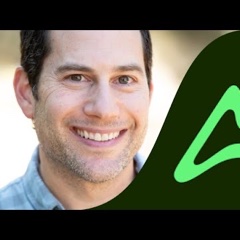
Ron Schneidermann
Former CEO of AllTrails, joined in 2015 as COO and CMO
Where to hear and read about Ron Schneidermann1 episode or test

Ron Schneidermann joined AllTrails in 2015 as COO and CMO, then became CEO and led it from a hardcore backcountry niche to more than a million subscribers. The most useful lesson is to rebuild brand, product and price for the mainstream user, and to lean on cheap free search traffic to reach them.
the single best thing you can do is create your own reachable audience
How AllTrails Crossed the Chasm to 1M+ Subscribers
Ron Schneidermann: the story and the lessons
1How Ron Schneidermann came to AllTrails and kept it lean
Schneidermann came from ski tickets and Yelp growth. He spent nine years at Liftopia, a ski ticket startup he co-founded, then ran growth at Yelp. He had been thinking of joining a VC.
Over coffee, AllTrails' founder opened Google Analytics and showed him the web traffic. Schneidermann had never had that much free traffic.
He joined a six-person team as COO and CMO in 2015. AllTrails had about a million registered users and roughly 20,000 active subscribers. The subscription had launched in 2014, early for the market.
The handshake deal was to grow the company and sell it. Another CEO was brought in, and Schneidermann took the COO and CMO roles.
Skipping venture money forced AllTrails to become profitable. Cash was easy to raise in 2015 to 2017, but the team stayed lean to control its own destiny. It turned profitable in 2017, and inbound buyer interest arrived in 2018.
He avoided a strategic buyer and took a growth equity partner. A strategic buyer would usually have disbanded AllTrails, so he partnered with the growth equity fund Spectrum Equity, which made him CEO.
His stated aim was to open the outdoors to everyone, tearing down barriers to entry and giving people confidence through information.
A tight early niche gave focus, but he is not a zero-to-one person. Early users emailed him directly, so the relationship felt one to one, and the community spread word of mouth. A specific niche also showed which of the endless ideas rose to the top.
He says zero-to-one people are the scrappiest hustlers, always running some scheme, and that he is not one of them.
2How AllTrails crossed from hardcore hikers to the mainstream
Schneidermann judged the hardcore niche too small to build on. Rivals were all building complicated backcountry mapping tools. He chose to target everyday people instead.
Rivals leaned on lingo and topo lines. He wanted none of that flare.
He changed imagery and copy first because a tiny team could do it in a day. The team was one iOS developer, one Android developer and two web developers, so product work was slow. He audited the copy himself, including the onboarding emails in Mailchimp, and swapped the lone-wolf climber look for families and people of different ages, colors and sizes.
His view: 'if all you see are just fit lean 20-year-old white guys it's gonna be really really hard to grow to the masses.'
He simplified the product so casual users needed no manual. Catering to the core pulls a product toward bells and whistles. AllTrails made conscious trade-offs against power users and treated Apple-style simplicity as a guiding principle.
He says it took years to get close. Power features also hurt future power users who don't yet understand the product.
He cut 50,000 trails to about 4,000 vetted ones, then rebuilt. A full-time US staff checks every trail for minimum metadata and content. The catalog has since grown to 475,000 trails.
A platform for the masses needed trustworthy data, and the cutback was the price of getting it.
A reputation leaderboard backfired and taught him to think A to B to C. Points for trails, edits, reviews and photos lifted content, but users past a threshold had edits auto-approved and raced for the leaderboard. One user uploaded 600 to 800 photos from a camera snapping every 10 seconds, and fake trails such as Planet Hollywood to a Circle K in Las Vegas appeared.
His lesson is that the path from A to B to C decides a company, not picturing Z.
3How Schneidermann sets and tests pricing
He read every review before touching the price. He spent his first weeks reading every App Store and Play Store review, blog post and Reddit thread. A common theme was that the $50 annual price was too expensive for people who hike only a few days a year.
He didn't want to flip the table overnight because the platform already had momentum.
He picked $30 over $15 when both tested the same. A web test of $50 against $30 and $15 showed $30 and $15 performing alike. $15 left no room for discounts or offers, so $30 won and held for years.
When the math is a wash, he applied a strategic lens rather than defaulting to the lower price.
He raised the price to $36 only after adding functionality. The move came as costs climbed and substantial new functionality shipped. By then the company was larger, so it used more thorough testing and consultants, who validated $36.
The research confirmed what the team already suspected.
As AllTrails grew he built an in-house research team. It works 12 to 18 months ahead of the roadmap. A six-figure analysis for each market would not scale, and international pricing based on GDP or purchasing power is still guesswork.
Maximizing revenue and maximizing subscribers are different questions, and the answer differs by market.
He still trusts his gut after the data is in. He calls momentum the company's rallying cry and says statistical significance is rarely available to a company focused on it.
'you can have all the best data in the world but it still comes down to a gut decision.'
4How Schneidermann grows AllTrails: SEO, content and new countries
A low price made organic channels essential. He lumps SEO, PR and word of mouth together as organic growth. Search also pulled back people who had installed the app and forgotten it.
Mobile use flipped from about 30% to 70% within a couple of years of 2015, which made turning a search visit into an app install easy.
He layers fresh reviews and photos on curated trail pages. Curated data such as start and end points, elevation, difficulty and dog-friendliness is the base. Recent photos, ratings and reviews, even from that morning, build trust and feed the SEO flywheel.
He keeps most users free and spends heavily on content. Over 90% of users are on the free tier, and the company spends millions of dollars a year producing trail content.
Free users feed the search and word-of-mouth funnel for a low-priced subscription, and giving content away serves the mission of getting people outside.
He seeds trail pages in new countries before demand exists. Empty supply costs nothing, unlike marketplaces that lose drivers or hosts when demand is slow. Coverage started where North American users already traveled, and the team curated the first trails.
Tourist searches need only about the top 20% of a country's trails, while local searchers set a much higher bar. Poland took off this year without warning.
He opens paid acquisition and PR country by country. Once a market has minimum content density, paid acquisition and PR open the funnel. France, Germany and the UK differ a lot, so he decides by country, not region.
The team is still building strategic finance markers that signal a market is about to take off.
He treats translation and localization as separate, human jobs. In 2019 the team went from 15 to about 30 people while adding French, German and Spanish. Machine translation fails local searchers, and each language multiplies QA, support and marketing work.
Twelve more languages came in 2022 or 2023. German's long words break buttons and headers, so solving it covers most European languages.
5Schneidermann on AI, owned audiences and staying focused
He uses AI only for narrow problems and never for trail data. He calls much of AI a solution looking for a problem. The first gains came in the back office from tools like Copilot, Gemini and Grammarly, and in the app AI summarizes reviews on trails that have up to 10,000 of them.
'we're not using AI to create new trails we can't we cannot afford the hallucinations.' Users are sent into the backcountry.
He pushes users into channels AllTrails owns. As search shifts toward AI answer engines, he wants as many people as possible reachable by email, push notifications or in-app messages. AllTrails was a launch partner for OpenAI's GPT store, but it has not replaced Google.
He compares it to companies built on Facebook that collapsed when its algorithm changed.
He warns against paid ads once early adopters run out. He doesn't see how a new app grows today except by buying its way in. Sustaining 40 to 50% plus growth year after year gets harder at scale.
Guest host Phil Carter's version of the warning: LTVs go down and CACs go up past the early adopters. Schneidermann sees product-driven growth as the highest-leverage path.
He keeps AllTrails small and focused only on trails. The company has about 220 people, maybe 240 by year end, and he says more would mean more bureaucracy. After the 2023 app of the year win, 2024 went to rebuilding the product end to end.
AllTrails already covers hiking, trail running, mountain biking and backpacking, and will not move to other outdoor activities. The remote-first company closes on the first Friday of each month for Trail Day.

How AllTrails Crossed the Chasm to 1M+ Subscribers
AllTrails moved from a niche of hardcore backcountry users to casual mainstream hikers by changing its imagery, copy, product simplicity, pricing and content quality. The episode covers how that shift, an SEO-led free funnel and a careful international rollout took the app from about 20,000 subscribers in 2015 to 1 million active subscribers by 2021.
Schneidermann came from ski tickets and Yelp growth. He spent nine years at Liftopia, a ski ticket startup he co-founded, then ran growth at Yelp. He had been thinking of joining a VC.
Over coffee, AllTrails' founder opened Google Analytics and showed him the web traffic. Schneidermann had never had that much free traffic.
He joined a six-person team as COO and CMO in 2015. AllTrails had about a million registered users and roughly 20,000 active subscribers. The subscription had launched in 2014, early for the market.
The handshake deal was to grow the company and sell it. Another CEO was brought in, and Schneidermann took the COO and CMO roles.
Skipping venture money forced AllTrails to become profitable. Cash was easy to raise in 2015 to 2017, but the team stayed lean to control its own destiny. It turned profitable in 2017, and inbound buyer interest arrived in 2018.
He avoided a strategic buyer and took a growth equity partner. A strategic buyer would usually have disbanded AllTrails, so he partnered with the growth equity fund Spectrum Equity, which made him CEO.
His stated aim was to open the outdoors to everyone, tearing down barriers to entry and giving people confidence through information.
A tight early niche gave focus, but he is not a zero-to-one person. Early users emailed him directly, so the relationship felt one to one, and the community spread word of mouth. A specific niche also showed which of the endless ideas rose to the top.
He says zero-to-one people are the scrappiest hustlers, always running some scheme, and that he is not one of them.
Schneidermann judged the hardcore niche too small to build on. Rivals were all building complicated backcountry mapping tools. He chose to target everyday people instead.
Rivals leaned on lingo and topo lines. He wanted none of that flare.
He changed imagery and copy first because a tiny team could do it in a day. The team was one iOS developer, one Android developer and two web developers, so product work was slow. He audited the copy himself, including the onboarding emails in Mailchimp, and swapped the lone-wolf climber look for families and people of different ages, colors and sizes.
His view: 'if all you see are just fit lean 20-year-old white guys it's gonna be really really hard to grow to the masses.'
He simplified the product so casual users needed no manual. Catering to the core pulls a product toward bells and whistles. AllTrails made conscious trade-offs against power users and treated Apple-style simplicity as a guiding principle.
He says it took years to get close. Power features also hurt future power users who don't yet understand the product.
He cut 50,000 trails to about 4,000 vetted ones, then rebuilt. A full-time US staff checks every trail for minimum metadata and content. The catalog has since grown to 475,000 trails.
A platform for the masses needed trustworthy data, and the cutback was the price of getting it.
A reputation leaderboard backfired and taught him to think A to B to C. Points for trails, edits, reviews and photos lifted content, but users past a threshold had edits auto-approved and raced for the leaderboard. One user uploaded 600 to 800 photos from a camera snapping every 10 seconds, and fake trails such as Planet Hollywood to a Circle K in Las Vegas appeared.
His lesson is that the path from A to B to C decides a company, not picturing Z.
He read every review before touching the price. He spent his first weeks reading every App Store and Play Store review, blog post and Reddit thread. A common theme was that the $50 annual price was too expensive for people who hike only a few days a year.
He didn't want to flip the table overnight because the platform already had momentum.
He picked $30 over $15 when both tested the same. A web test of $50 against $30 and $15 showed $30 and $15 performing alike. $15 left no room for discounts or offers, so $30 won and held for years.
When the math is a wash, he applied a strategic lens rather than defaulting to the lower price.
He raised the price to $36 only after adding functionality. The move came as costs climbed and substantial new functionality shipped. By then the company was larger, so it used more thorough testing and consultants, who validated $36.
The research confirmed what the team already suspected.
As AllTrails grew he built an in-house research team. It works 12 to 18 months ahead of the roadmap. A six-figure analysis for each market would not scale, and international pricing based on GDP or purchasing power is still guesswork.
Maximizing revenue and maximizing subscribers are different questions, and the answer differs by market.
He still trusts his gut after the data is in. He calls momentum the company's rallying cry and says statistical significance is rarely available to a company focused on it.
'you can have all the best data in the world but it still comes down to a gut decision.'
A low price made organic channels essential. He lumps SEO, PR and word of mouth together as organic growth. Search also pulled back people who had installed the app and forgotten it.
Mobile use flipped from about 30% to 70% within a couple of years of 2015, which made turning a search visit into an app install easy.
He layers fresh reviews and photos on curated trail pages. Curated data such as start and end points, elevation, difficulty and dog-friendliness is the base. Recent photos, ratings and reviews, even from that morning, build trust and feed the SEO flywheel.
He keeps most users free and spends heavily on content. Over 90% of users are on the free tier, and the company spends millions of dollars a year producing trail content.
Free users feed the search and word-of-mouth funnel for a low-priced subscription, and giving content away serves the mission of getting people outside.
He seeds trail pages in new countries before demand exists. Empty supply costs nothing, unlike marketplaces that lose drivers or hosts when demand is slow. Coverage started where North American users already traveled, and the team curated the first trails.
Tourist searches need only about the top 20% of a country's trails, while local searchers set a much higher bar. Poland took off this year without warning.
He opens paid acquisition and PR country by country. Once a market has minimum content density, paid acquisition and PR open the funnel. France, Germany and the UK differ a lot, so he decides by country, not region.
The team is still building strategic finance markers that signal a market is about to take off.
He treats translation and localization as separate, human jobs. In 2019 the team went from 15 to about 30 people while adding French, German and Spanish. Machine translation fails local searchers, and each language multiplies QA, support and marketing work.
Twelve more languages came in 2022 or 2023. German's long words break buttons and headers, so solving it covers most European languages.
He uses AI only for narrow problems and never for trail data. He calls much of AI a solution looking for a problem. The first gains came in the back office from tools like Copilot, Gemini and Grammarly, and in the app AI summarizes reviews on trails that have up to 10,000 of them.
'we're not using AI to create new trails we can't we cannot afford the hallucinations.' Users are sent into the backcountry.
He pushes users into channels AllTrails owns. As search shifts toward AI answer engines, he wants as many people as possible reachable by email, push notifications or in-app messages. AllTrails was a launch partner for OpenAI's GPT store, but it has not replaced Google.
He compares it to companies built on Facebook that collapsed when its algorithm changed.
He warns against paid ads once early adopters run out. He doesn't see how a new app grows today except by buying its way in. Sustaining 40 to 50% plus growth year after year gets harder at scale.
Guest host Phil Carter's version of the warning: LTVs go down and CACs go up past the early adopters. Schneidermann sees product-driven growth as the highest-leverage path.
He keeps AllTrails small and focused only on trails. The company has about 220 people, maybe 240 by year end, and he says more would mean more bureaucracy. After the 2023 app of the year win, 2024 went to rebuilding the product end to end.
AllTrails already covers hiking, trail running, mountain biking and backpacking, and will not move to other outdoor activities. The remote-first company closes on the first Friday of each month for Trail Day.