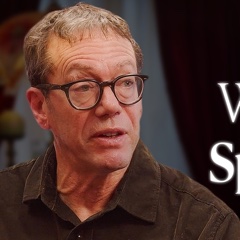
Robert Greene
Author of The 48 Laws of Power
Where to hear and read about Robert Greene2 episodes and tests

 How I WriteThe Hard Truths of Being a Writer (Robert Greene Interview)
 How I WriteHow to Write a Killer Story — Robert Greene
Robert Greene is the author of The 48 Laws of Power, The Laws of Human Nature and a book on the sublime that he wrote by hand after a stroke. The thing most worth learning from him is a method: hunt for dramatic stories, sort them onto note cards by theme, then rewrite each chapter until one theme and one felt purpose remain.
if what you're writing isn't alive in you, it won't be alive in what you write.
The Hard Truths of Being a Writer (Robert Greene Interview)
Robert Greene: the story and the lessons
1Robert Greene's long road to The 48 Laws of Power
Greene had his first success at almost 40 after years of failure. He published The 48 Laws of Power at almost 40. Before that he never held a job longer than 11 months.
He says he knows what it is to feel depressed and suicidal, and he never wants to lose that feeling. His parents always wanted more despite straight A's, so he never felt good about himself. That history is the source of his empathy for people stuck in bad jobs.
He moved from disposable journalism to Hollywood in search of lasting work. Journalism lasted about three days, and he says he thinks in terms of a thousand years. After failed novels in Europe he came back to Los Angeles for his sick father and became a director's assistant.
He has held about 80 jobs in all. At times he was starving and his parents helped. Researching a coyote screenplay at the UCLA library honed his research skills.
Screenwriting taught him to show action and build a story around a theme. A screenplay cannot enter a character's mind, only dialogue and action. That discipline shaped how he tells stories in every book.
He disliked the hypocrisy, power games and false praise of Hollywood. He says eight people would come in and change your writing.
The 48 Laws of Power grew out of anger and a cheap apartment. He says the book came out of deep anger at Hollywood and the world. A book packager supported him while he wrote it, and he lived on ramen in a cheap East Village apartment.
He wrote it fast in his late 30s. He thinks its shortness, which he did not agonize over, helped make it a bestseller.
2How Greene wrote his sublime book after a stroke
The stroke made him write the book he had delayed for 20 years. The stroke paralyzed his right side. The book was meant to follow his war book, but the 50 Cent project and Mastery got in the way.
He had planned to cross the Amazon jungle and the Gobi Desert and swim with dolphins. Instead he could barely walk out his front door, so he had to feel the sublime at a desk. He thinks that makes it easier for readers to relate to.
He built a slow hybrid method of handwriting, dictation and one-handed editing. He wrote each chapter in one notebook, rewrote it in a second, then copied it back into the first. Then he dictated it, printed it and edited the paper by hand. About 100 notebooks went into the book, which took seven years.
He couldn't skip sentences because he was recreating and editing the whole chapter each time. He calls it how not to write a book, and excruciating and exciting at the same time.
He put himself in each chapter's mood with a different kind of music. He played cosmic composers for the cosmic sublime, ancient Greek music for the pagan sublime and his childhood records for the childhood chapter.
He says a book written without the author feeling it shows its deadness on the page. He finds academic books on the sublime unsublime for this reason.
Age and the stroke traded speed for depth. He says he now needs double the effort for the effervescent style he wrote with in his late 30s. The stroke left him some brain damage, so he must focus twice as hard.
He thinks his off-kilter brain is sometimes useful. He also says the older experience would not have worked in his late 30s: everything happens in its season.
He organizes a book around an image of a circle with points outside it. For the sublime he pictures the circle of what a culture calls normal. Each of the 12 chapters is a point outside it, such as the interspecies sublime, meant to give the reader a small electric shock.
The book began with twenty or so chapters and was whittled to twelve.
3How Greene finds stories and runs his note cards
Greene picks stories with drama and high stakes, and hunts for them himself. He looks for stories such as people killed for their opinions, because everyone faces death. Plain biographical facts are not enough, a story needs oomph.
He tried UCLA grad students and a USC professor's PhD student as researchers. They couldn't sit with boredom, had egos, ignored his process and lacked a sense of drama.
Browsing a library shelf led him to his best sources. For The 48 Laws of Power he walked into a library section on con artists with about 200 books. A long out-of-print book, The Power of the Charlatan, turned out to be a gold mine.
A German wrote it in the 1930s and never mentioned Nazism, yet its 17th-century charlatans clearly evoked the rise of the Nazis. Most candidate books get dropped fast.
He puts every fact on a theme onto a note card. For the envy chapter in The Laws of Human Nature, a 500 to 600 page Mary Shelley biography became five cards. Each card records an instance of envy and its page.
He had used cards as a child after his mother showed him a drawer of them. The cards tamed the flood of material for The 48 Laws of Power. Dense theory, like Heinz Kohut on narcissism, gets picked apart into layman's terms.
He sorts cards into themes, and the themes become chapters. Before each chapter he goes through all the cards, jots the salient points on paper and sees the chapter's shape emerge.
Each chapter is built from cards around one story that opens it.
He saves good stories before he knows where they fit. He read about Harriet Tubman early for the sublime book without knowing her place. Later she fit his chapter on the day perfectly, and the research was already done.
For an animals chapter, an octopus story was good but not great. A Werner Herzog blurb on one of his own books pointed him to a golden book.
He reads a second, third and even fourth source for color. For Tubman he read several biographies at the last minute, plus books by escaped slaves, rather than lean on one book.
Single biographies often have missing pieces. He wants color and detail that one author did not supply.
4Greene's rules for building a chapter that comes alive
Greene lets one theme govern every detail in a story. For Tubman he cut a rich life down to the voice of God in her head and her feeling of fate. Everything that does not serve that thread goes.
Every color, sound and smell must trace back to the theme. He says each detail is like a hologram with the whole embedded in it.
He shows action and cuts the character's inner monologue. He told the story of a Renaissance mercenary who saved a city and was beheaded by listing only what he did and what was done to him. In his con artist stories you never learn who the con artist is.
The lesson lands without anyone's thoughts. He says every story needs a theme that is a lesson, not a moral, and he knows this is out of fashion.
He pairs a universal emotion with particular physical detail. The emotion is universal: facing death, envy, someone on the verge of failure. The details stay particular, so the reader sees, smells and hears the scene.
He points to Leonardo da Vinci, whose paintings feel real through intense focus on detail. Small words and cues put the reader inside the character.
He turns abstract ideas into sensations the body recognizes. In a chapter on an entity inside you, he describes the physical signs in your blood and heartbeat so the idea stops being a concept.
He cannot connect to jargon-heavy writing unless it ties to real feeling, and he cites a feminist book on daemons he could not relate to.
He walks the reader through a scene so the contrast does the arguing. Rather than lecture that modern cities are ugly, he leads the reader down ancient Babylon's processional path to the Ishtar Gate, past the ziggurat and the Hanging Gardens.
The reader concludes alone: why is our world not like that? He calls himself a big believer in sneaking in messages.
He makes each chapter one organic whole with no repeated ideas. An idea in the story's interpretation cannot return elsewhere, so he keeps inventing new ones. A chapter takes four or five months.
He compares the grind to a climber who sees the top, then slips as the oxygen thins and has to climb again.
5Why Greene rewrites hundreds of times and trusts doubt
Greene says the real writing happens in the rewriting. A first draft takes a couple of months, then the grind begins. He rewrites a story hundreds of times, which he admits may be an exaggeration, cutting everything extraneous.
"I'm cutting everything out that's extraneous."
He distrusts the excitement of drafting. As a young writer he wrote drunk or high and found the pages nonsense the next day or ten years later. He says excitement leads to bad places nine times out of ten.
"When you're most excited, you're probably writing your worst crap." The reward comes only when the chapter is finished.
He keeps his doubt because it pushes him to something better. After eight books he still fears he can't solve each chapter, though he always has. Settling for good enough would weaken the books' effect.
"If you don't have doubt, then you're never going to make something better."
When a chapter isn't clicking he puts in one more ounce of effort. He says moments of satisfaction at finishing a chapter are not that many. His editor praises each chapter as better than the last, so he feels he must not let the standard fall.
6Greene's voice: timeless, controlled and unpreachy
He writes for readers 20, 30 or 100 years out. He avoids anything cute, clever or colloquial, even though his editors hate that he writes does not instead of doesn't. He aims for the crispness that makes Machiavelli read as modern after 500 years.
He says cute writing will feel dated in 5 or 10 years.
He presents the lesson and lets readers judge for themselves. In The 48 Laws of Power he shows what 'crush your enemy totally' meant in history without calling it evil. He says condemning it would treat readers like children.
He believes a book can't change anyone's morals, and that preaching never leads to anything important.
He keeps anger as a controlled undertone instead of venting. He calls controlled rage ten times more powerful than venting and points to Malcolm X, whose anger sat as an undertone. Everyone represses a dark side, so art with anger in it draws people in.
He kept the vehemence of 48 Laws in later books but changed its degree. It fit war and the book for 50 Cent, but not Seduction, Mastery, Human Nature or the sublime book.
He writes by ear and cuts any rhythm that turns awkward. He thinks orally, so his prose has strings of commas and an 'and so' dropped in. His wife edits his chapters and softens the strangeness.
He calls Nietzsche the number one influence on his style, and he credits Nietzsche and Dostoevsky with teaching him what aliveness sounds like.
He views every idea from many angles and contradicts himself. He calls a dead idea one you only borrowed, as in much academic writing. To make it alive he argues against himself and asks where he is wrong.
That is why many of his books include reversals where the opposite could be true.
7How Greene learned to see strangely: the sublime and defamiliarization
Greene defines the sublime as a jolt from outside culture's circle. He says every culture draws a circle of what is real and moral, and a glimpse outside feels like an electric shock. He calls it a deep need that goes back thousands of years.
He insists the sublime is terror and awe at once, not a dainty word. Under the night sky you feel how small you are, and without that terror there is no feeling of eternity.
He makes familiar things strange by asking what they actually are. A dollar bill is green paint on manufactured paper standing for a quantity only humans agree on. He applied the same questioning to the self in his chapter on the daemon.
The method comes from his Zen practice, where asking what is the mind? makes consciousness itself look strange.
He shifts perspective to see the thing from the other side. J. A. Baker, obsessed with a peregrine hawk, realized it saw him as an ugly pink biped that can't fly. Greene says poets like Shelley and painters like Cézanne get their power from such angles.
"What if you shifted that perspective and you saw the bird looking at you?"
He studies deeply so wonder arrives with knowledge attached. To make flowers feel new, he thinks about the era before flowers, their link with insects and St. Augustine's line that flowers want to be admired.
Nabokov saw a butterfly at seven, then became a scientist who studied butterflies in depth.
He uses automatic writing to meet his unconscious. He writes by hand whatever comes to mind with no filter, then analyzes the pages for patterns. His own mind circled the same associations, which showed him non-rational patterns in his thinking.
The 1920s Surrealists such as André Breton began the practice. He included it in the book as an exercise for reaching the daemon.
He begins strange ideas from a personal feeling he tries to explain. In the sublime book he explains why history feels alive, as when he watches 1940s and 50s Japanese films and feels he knows the room despite never visiting Japan.
His editor had not seen anyone describe it this way, because other books are academic and abstract.
8Greene on craft, spirit and creativity
Greene says craft and feeling each fail without the other. You must learn and master the conventions of your form. Once you are very good the writing can lose its spirit, so you go back and infuse it.
He cites Flaubert, who could spend 3 days on one word yet became Madame Bovary while writing her. "One without the other is kind of meaningless."
He pushes to maximum frustration because the breakthrough comes right after. Scriabin, trained in strict convention, could not find the new sound inside him. Then his fifth sonata poured out in six days.
Greene says this is the point where the cloud is about to burst. He says Coltrane spent about 10 years absorbing every musical pattern before he created A Love Supreme.
He stays porous and fights the shell that comes with age. He says the sublime depends on how sensitive you are, like a photographic negative in developer. Politics, ego and hurt build a shell as you age, and you have to struggle against it.
Einstein kept the wonder he felt at 3 when given a compass. The adult must add discipline, since the book took 7 years of intense labor.
He thinks lasting creativity needs discipline first, then looseness. The truly creative learn and grind, then loosen up around thirty, keeping the rich soil of experience but regaining the looseness they had at eighteen.
College drugs gave him wild thoughts but nothing lasting, because wild youthful creativity has no roots. He says he cannot give a precise scientific answer, and that Mastery is his way of explaining the mystery.
He loves characters without judging them, as Dostoevsky does. He says Dostoevsky brings even villains to life with a kind of love and without judgment. Kirillov, who plans his own suicide years ahead, is unforgettable.
He calls this bringing people to life as they are an act of grace, and he is considering writing fiction himself.
9Greene's advice on purpose, publishers and AI
He asks why a book has to be written before starting it. He says many books fail because the author writes for fame, money or attention. His mission for The Laws of Human Nature was the reality under the social surface, and the 580-page book sold over a million copies.
For the sublime book the mission is making readers feel it. He says if you must communicate something important, you probably will, if you are disciplined.
He tells young writers to be reckless and use their anger. Live cheaply, write what only you would write, and ignore what a publisher might say. He says a new, interesting book will find its audience.
"Bring your anger into play. Bring what's unconventional about you into play."
He says publishers sand books toward the conventional. He was left alone for 7 years because he had earned so much for his publisher. A first-time author gets no such leeway.
His friend Brent Underwood was asked to make Ghost Town Living more practical, with self-help lessons. Greene says only three or four publishing companies remain, and he may self-publish future books.
He uses AI for obscure facts and never for writing. He sometimes uses AI-filtered search to find facts that once took hours. He never lets it compose paragraphs or answer how to write.
AI writing is soulless because it has no experience, depression or frustration behind it. He advises young writers to stay away from it and keep the resistance the material gives them.
He sees finished books as proof of a life not wasted. He says he could die tomorrow and feel no regret, because he expressed what he wanted. The rewards are never immediate and writing is lonely, boring and frustrating.
The Hard Truths of Being a Writer (Robert Greene Interview)
Robert Greene explains how he wrote his book on the sublime by hand after a stroke, and why a book only comes alive if the writer feels it while writing. The memorable technique is defamiliarization: asking a chain of questions and shifting perspective until familiar things look strange, then pairing that openness with hard-won craft.
He moved from disposable journalism to Hollywood in search of lasting work. Journalism lasted about three days, and he says he thinks in terms of a thousand years. After failed novels in Europe he came back to Los Angeles for his sick father and became a director's assistant.
He has held about 80 jobs in all. At times he was starving and his parents helped. Researching a coyote screenplay at the UCLA library honed his research skills.
The 48 Laws of Power grew out of anger and a cheap apartment. He says the book came out of deep anger at Hollywood and the world. A book packager supported him while he wrote it, and he lived on ramen in a cheap East Village apartment.
He wrote it fast in his late 30s. He thinks its shortness, which he did not agonize over, helped make it a bestseller.
The stroke made him write the book he had delayed for 20 years. The stroke paralyzed his right side. The book was meant to follow his war book, but the 50 Cent project and Mastery got in the way.
He had planned to cross the Amazon jungle and the Gobi Desert and swim with dolphins. Instead he could barely walk out his front door, so he had to feel the sublime at a desk. He thinks that makes it easier for readers to relate to.
He built a slow hybrid method of handwriting, dictation and one-handed editing. He wrote each chapter in one notebook, rewrote it in a second, then copied it back into the first. Then he dictated it, printed it and edited the paper by hand. About 100 notebooks went into the book, which took seven years.
He couldn't skip sentences because he was recreating and editing the whole chapter each time. He calls it how not to write a book, and excruciating and exciting at the same time.
He put himself in each chapter's mood with a different kind of music. He played cosmic composers for the cosmic sublime, ancient Greek music for the pagan sublime and his childhood records for the childhood chapter.
He says a book written without the author feeling it shows its deadness on the page. He finds academic books on the sublime unsublime for this reason.
He organizes a book around an image of a circle with points outside it. For the sublime he pictures the circle of what a culture calls normal. Each of the 12 chapters is a point outside it, such as the interspecies sublime, meant to give the reader a small electric shock.
The book began with twenty or so chapters and was whittled to twelve.
He walks the reader through a scene so the contrast does the arguing. Rather than lecture that modern cities are ugly, he leads the reader down ancient Babylon's processional path to the Ishtar Gate, past the ziggurat and the Hanging Gardens.
The reader concludes alone: why is our world not like that? He calls himself a big believer in sneaking in messages.
Greene defines the sublime as a jolt from outside culture's circle. He says every culture draws a circle of what is real and moral, and a glimpse outside feels like an electric shock. He calls it a deep need that goes back thousands of years.
He insists the sublime is terror and awe at once, not a dainty word. Under the night sky you feel how small you are, and without that terror there is no feeling of eternity.
He makes familiar things strange by asking what they actually are. A dollar bill is green paint on manufactured paper standing for a quantity only humans agree on. He applied the same questioning to the self in his chapter on the daemon.
The method comes from his Zen practice, where asking what is the mind? makes consciousness itself look strange.
He shifts perspective to see the thing from the other side. J. A. Baker, obsessed with a peregrine hawk, realized it saw him as an ugly pink biped that can't fly. Greene says poets like Shelley and painters like Cézanne get their power from such angles.
"What if you shifted that perspective and you saw the bird looking at you?"
He studies deeply so wonder arrives with knowledge attached. To make flowers feel new, he thinks about the era before flowers, their link with insects and St. Augustine's line that flowers want to be admired.
Nabokov saw a butterfly at seven, then became a scientist who studied butterflies in depth.
He uses automatic writing to meet his unconscious. He writes by hand whatever comes to mind with no filter, then analyzes the pages for patterns. His own mind circled the same associations, which showed him non-rational patterns in his thinking.
The 1920s Surrealists such as André Breton began the practice. He included it in the book as an exercise for reaching the daemon.
Greene says craft and feeling each fail without the other. You must learn and master the conventions of your form. Once you are very good the writing can lose its spirit, so you go back and infuse it.
He cites Flaubert, who could spend 3 days on one word yet became Madame Bovary while writing her. "One without the other is kind of meaningless."
He pushes to maximum frustration because the breakthrough comes right after. Scriabin, trained in strict convention, could not find the new sound inside him. Then his fifth sonata poured out in six days.
Greene says this is the point where the cloud is about to burst. He says Coltrane spent about 10 years absorbing every musical pattern before he created A Love Supreme.
He stays porous and fights the shell that comes with age. He says the sublime depends on how sensitive you are, like a photographic negative in developer. Politics, ego and hurt build a shell as you age, and you have to struggle against it.
Einstein kept the wonder he felt at 3 when given a compass. The adult must add discipline, since the book took 7 years of intense labor.
He loves characters without judging them, as Dostoevsky does. He says Dostoevsky brings even villains to life with a kind of love and without judgment. Kirillov, who plans his own suicide years ahead, is unforgettable.
He calls this bringing people to life as they are an act of grace, and he is considering writing fiction himself.
He asks why a book has to be written before starting it. He says many books fail because the author writes for fame, money or attention. His mission for The Laws of Human Nature was the reality under the social surface, and the 580-page book sold over a million copies.
For the sublime book the mission is making readers feel it. He says if you must communicate something important, you probably will, if you are disciplined.
He tells young writers to be reckless and use their anger. Live cheaply, write what only you would write, and ignore what a publisher might say. He says a new, interesting book will find its audience.
"Bring your anger into play. Bring what's unconventional about you into play."
He says publishers sand books toward the conventional. He was left alone for 7 years because he had earned so much for his publisher. A first-time author gets no such leeway.
His friend Brent Underwood was asked to make Ghost Town Living more practical, with self-help lessons. Greene says only three or four publishing companies remain, and he may self-publish future books.
He uses AI for obscure facts and never for writing. He sometimes uses AI-filtered search to find facts that once took hours. He never lets it compose paragraphs or answer how to write.
AI writing is soulless because it has no experience, depression or frustration behind it. He advises young writers to stay away from it and keep the resistance the material gives them.
How to Write a Killer Story — Robert Greene
Robert Greene explains how he builds timeless, story-driven books: hunt for dramatic stories, sort research onto note cards, then rewrite each chapter until it feels alive. The note card system and the habit of cutting everything that does not serve a chapter's single theme are worth hearing in detail.
Greene had his first success at almost 40 after years of failure. He published The 48 Laws of Power at almost 40. Before that he never held a job longer than 11 months.
He says he knows what it is to feel depressed and suicidal, and he never wants to lose that feeling. His parents always wanted more despite straight A's, so he never felt good about himself. That history is the source of his empathy for people stuck in bad jobs.
He moved from disposable journalism to Hollywood in search of lasting work. Journalism lasted about three days, and he says he thinks in terms of a thousand years. After failed novels in Europe he came back to Los Angeles for his sick father and became a director's assistant.
He has held about 80 jobs in all. At times he was starving and his parents helped. Researching a coyote screenplay at the UCLA library honed his research skills.
Screenwriting taught him to show action and build a story around a theme. A screenplay cannot enter a character's mind, only dialogue and action. That discipline shaped how he tells stories in every book.
He disliked the hypocrisy, power games and false praise of Hollywood. He says eight people would come in and change your writing.
The 48 Laws of Power grew out of anger and a cheap apartment. He says the book came out of deep anger at Hollywood and the world. A book packager supported him while he wrote it, and he lived on ramen in a cheap East Village apartment.
He wrote it fast in his late 30s. He thinks its shortness, which he did not agonize over, helped make it a bestseller.
The stroke made him write the book he had delayed for 20 years. The stroke paralyzed his right side. The book was meant to follow his war book, but the 50 Cent project and Mastery got in the way.
He had planned to cross the Amazon jungle and the Gobi Desert and swim with dolphins. Instead he could barely walk out his front door, so he had to feel the sublime at a desk. He thinks that makes it easier for readers to relate to.
Age and the stroke traded speed for depth. He says he now needs double the effort for the effervescent style he wrote with in his late 30s. The stroke left him some brain damage, so he must focus twice as hard.
He thinks his off-kilter brain is sometimes useful. He also says the older experience would not have worked in his late 30s: everything happens in its season.
He organizes a book around an image of a circle with points outside it. For the sublime he pictures the circle of what a culture calls normal. Each of the 12 chapters is a point outside it, such as the interspecies sublime, meant to give the reader a small electric shock.
The book began with twenty or so chapters and was whittled to twelve.
Greene picks stories with drama and high stakes, and hunts for them himself. He looks for stories such as people killed for their opinions, because everyone faces death. Plain biographical facts are not enough, a story needs oomph.
He tried UCLA grad students and a USC professor's PhD student as researchers. They couldn't sit with boredom, had egos, ignored his process and lacked a sense of drama.
Browsing a library shelf led him to his best sources. For The 48 Laws of Power he walked into a library section on con artists with about 200 books. A long out-of-print book, The Power of the Charlatan, turned out to be a gold mine.
A German wrote it in the 1930s and never mentioned Nazism, yet its 17th-century charlatans clearly evoked the rise of the Nazis. Most candidate books get dropped fast.
He puts every fact on a theme onto a note card. For the envy chapter in The Laws of Human Nature, a 500 to 600 page Mary Shelley biography became five cards. Each card records an instance of envy and its page.
He had used cards as a child after his mother showed him a drawer of them. The cards tamed the flood of material for The 48 Laws of Power. Dense theory, like Heinz Kohut on narcissism, gets picked apart into layman's terms.
He sorts cards into themes, and the themes become chapters. Before each chapter he goes through all the cards, jots the salient points on paper and sees the chapter's shape emerge.
Each chapter is built from cards around one story that opens it.
He saves good stories before he knows where they fit. He read about Harriet Tubman early for the sublime book without knowing her place. Later she fit his chapter on the day perfectly, and the research was already done.
For an animals chapter, an octopus story was good but not great. A Werner Herzog blurb on one of his own books pointed him to a golden book.
He reads a second, third and even fourth source for color. For Tubman he read several biographies at the last minute, plus books by escaped slaves, rather than lean on one book.
Single biographies often have missing pieces. He wants color and detail that one author did not supply.
Greene lets one theme govern every detail in a story. For Tubman he cut a rich life down to the voice of God in her head and her feeling of fate. Everything that does not serve that thread goes.
Every color, sound and smell must trace back to the theme. He says each detail is like a hologram with the whole embedded in it.
He shows action and cuts the character's inner monologue. He told the story of a Renaissance mercenary who saved a city and was beheaded by listing only what he did and what was done to him. In his con artist stories you never learn who the con artist is.
The lesson lands without anyone's thoughts. He says every story needs a theme that is a lesson, not a moral, and he knows this is out of fashion.
He pairs a universal emotion with particular physical detail. The emotion is universal: facing death, envy, someone on the verge of failure. The details stay particular, so the reader sees, smells and hears the scene.
He points to Leonardo da Vinci, whose paintings feel real through intense focus on detail. Small words and cues put the reader inside the character.
He turns abstract ideas into sensations the body recognizes. In a chapter on an entity inside you, he describes the physical signs in your blood and heartbeat so the idea stops being a concept.
He cannot connect to jargon-heavy writing unless it ties to real feeling, and he cites a feminist book on daemons he could not relate to.
He makes each chapter one organic whole with no repeated ideas. An idea in the story's interpretation cannot return elsewhere, so he keeps inventing new ones. A chapter takes four or five months.
He compares the grind to a climber who sees the top, then slips as the oxygen thins and has to climb again.
Greene says the real writing happens in the rewriting. A first draft takes a couple of months, then the grind begins. He rewrites a story hundreds of times, which he admits may be an exaggeration, cutting everything extraneous.
"I'm cutting everything out that's extraneous."
He distrusts the excitement of drafting. As a young writer he wrote drunk or high and found the pages nonsense the next day or ten years later. He says excitement leads to bad places nine times out of ten.
"When you're most excited, you're probably writing your worst crap." The reward comes only when the chapter is finished.
He keeps his doubt because it pushes him to something better. After eight books he still fears he can't solve each chapter, though he always has. Settling for good enough would weaken the books' effect.
"If you don't have doubt, then you're never going to make something better."
When a chapter isn't clicking he puts in one more ounce of effort. He says moments of satisfaction at finishing a chapter are not that many. His editor praises each chapter as better than the last, so he feels he must not let the standard fall.
He writes for readers 20, 30 or 100 years out. He avoids anything cute, clever or colloquial, even though his editors hate that he writes does not instead of doesn't. He aims for the crispness that makes Machiavelli read as modern after 500 years.
He says cute writing will feel dated in 5 or 10 years.
He presents the lesson and lets readers judge for themselves. In The 48 Laws of Power he shows what 'crush your enemy totally' meant in history without calling it evil. He says condemning it would treat readers like children.
He believes a book can't change anyone's morals, and that preaching never leads to anything important.
He keeps anger as a controlled undertone instead of venting. He calls controlled rage ten times more powerful than venting and points to Malcolm X, whose anger sat as an undertone. Everyone represses a dark side, so art with anger in it draws people in.
He kept the vehemence of 48 Laws in later books but changed its degree. It fit war and the book for 50 Cent, but not Seduction, Mastery, Human Nature or the sublime book.
He writes by ear and cuts any rhythm that turns awkward. He thinks orally, so his prose has strings of commas and an 'and so' dropped in. His wife edits his chapters and softens the strangeness.
He calls Nietzsche the number one influence on his style, and he credits Nietzsche and Dostoevsky with teaching him what aliveness sounds like.
He views every idea from many angles and contradicts himself. He calls a dead idea one you only borrowed, as in much academic writing. To make it alive he argues against himself and asks where he is wrong.
That is why many of his books include reversals where the opposite could be true.
He begins strange ideas from a personal feeling he tries to explain. In the sublime book he explains why history feels alive, as when he watches 1940s and 50s Japanese films and feels he knows the room despite never visiting Japan.
His editor had not seen anyone describe it this way, because other books are academic and abstract.
He thinks lasting creativity needs discipline first, then looseness. The truly creative learn and grind, then loosen up around thirty, keeping the rich soil of experience but regaining the looseness they had at eighteen.
College drugs gave him wild thoughts but nothing lasting, because wild youthful creativity has no roots. He says he cannot give a precise scientific answer, and that Mastery is his way of explaining the mystery.
He asks why a book has to be written before starting it. He says many books fail because the author writes for fame, money or attention. His mission for The Laws of Human Nature was the reality under the social surface, and the 580-page book sold over a million copies.
For the sublime book the mission is making readers feel it. He says if you must communicate something important, you probably will, if you are disciplined.
He sees finished books as proof of a life not wasted. He says he could die tomorrow and feel no regret, because he expressed what he wanted. The rewards are never immediate and writing is lonely, boring and frustrating.