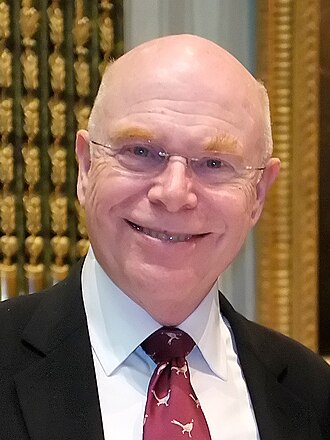
Richard Rumelt
Author of Good Strategy/Bad Strategy and The Crux; longtime strategy professor at UCLA Anderson
Where to hear and read about Richard Rumelt1 book · 1 episode or test
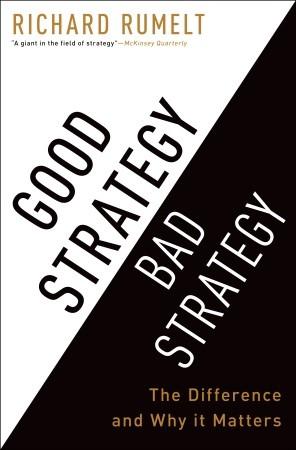 Book · notes comingGood Strategy Bad Strategy
 Lenny's PodcastGood Strategy, Bad Strategy | Richard Rumelt
Richard Rumelt is a UCLA Anderson strategy professor and author of Good Strategy Bad Strategy and The Crux, who trained as an engineer and advises firms like Microsoft, Apple and Intel. The one thing most worth learning from him is to name the single hard problem you can actually solve and set coherent actions against it, instead of writing a list of goals.
Strategy isn't picking a strategy out of a list of common strategies.
Good Strategy, Bad Strategy | Richard Rumelt
Richard Rumelt: the story and the lessons
1Who Richard Rumelt is and how he came to define strategy
Rumelt came to strategy from spacecraft engineering, not business. He trained as an electrical engineer and designed spacecraft for NASA. Business diagrams struck him as unintellectual next to Z-transforms.
He later became a longtime UCLA Anderson professor after time on the Harvard Business School faculty. His clients include Microsoft, Apple, Intel and US Army Special Operations Command.
He could not define strategy until he saw it as problem solving. His wife Kate told him he could not write a book on something he could not define. That was around 2004 and 2005.
The result was Good Strategy Bad Strategy (2011), followed by The Crux. Readers wrote to thank him for naming the endless meetings and documents that were not strategy.
Rumelt learned to build tension in writing from his teen-fiction-author daughter. His daughter Cassandra taught him that readable writing needs tension. He tries to create it in Good Strategy, Bad Strategy as a pull between the right way and the wrong way.
At 14 she asked what romance is. He said a barrier, and she offered "he's a vampire and she's not."
2Rumelt's kernel of good strategy and why most strategy is bad
Rumelt defines strategy as a design for facing one high-stakes challenge. The word comes from the Greek Strategos, the ten leaders Athens elected to handle issues like a Persian invasion, a plague or money for a new temple. A challenge can also be good news, such as finding oil in the back 40.
Frameworks like 2x2s and five forces analyze a problem but are not strategy. They only feed it.
Every strategy needs a diagnosis, a guiding policy and coherent action. The diagnosis explains what makes the challenge hard. The guiding policy is the approach, including what you will not do, and the actions carry it out without fighting each other.
If any one of the three is missing, Rumelt says it is not really a strategy. Coherent action is the part most easily left out.
Rumelt turns a goal into a diagnosis by asking what makes it hard. 'We are not growing fast enough' or 'we want to open Australia' is a wish. When a CEO wanted Australia, the answer to what makes it hard was that they knew nobody there.
A real diagnosis says 'because.' That barrier rarely makes it into the plan, and it should.
The most common bad strategy skips the diagnosis and lists goals. Seventeen intelligence agencies wrote a plan to 'work together more effectively' without asking why coordination is hard. US 15-year-olds rank near the bottom of about 30 countries on PISA math, and the response was to send more people to college.
Fluff and incoherent actions are more fun to describe, but the missing diagnosis is the more frequent flaw. What stays mysterious to him is why so many leaders create bad strategy and call it strategy.
Rumelt says 'priority' means the first thing, so 17 priorities is a laundry list. A client had 17 priorities. He says each extra yes risks turning a nascent good strategy into a bad one.
"We're more effective when we concentrate on a few things, a few people."
He checks plans for actions that contradict each other. CEO after CEO announces they will grow and also raise profit, though growth needs investment and return needs less of it. He calls it baby talk.
Burning less oil while importing more is the same kind of incoherence. Microsoft's response to AI is his example of the kernel working: diagnose the challenge, invest in a major leader, build it into search, then do it.
3How Rumelt thinks about power, focus and thinking again
Rumelt says focus is the basic source of power in strategy. At age nine at summer camp he could not burn cloth with a magnifying glass. A counselor handed him a black thread from his T-shirt and it smoked.
Large organizations keep losing focus because different interests are funded for different purposes, so effort gradually diffuses. Aiming at a target you can affect is "obvious when you say it, not so obvious as you live it."
He defines power as an asymmetry that makes a contest uneven. Equal rivals only meet at 50/50, so there is no basis for a strategy. Power can be leverage, being first to see something, reputation, relationships or an invention.
To find yours, ask how your team differs and what it knows that others do not. If you are small, shrink the space you look at to one market or customer set until the edge shows.
Rumelt says inherited strengths can become handicaps. Gerstner saw that IBM was respected inside every large corporation and told it to bear hug its customers. When computing moved to the cloud, those same customers hesitated and held IBM back.
Rumelt sums it up as: the opposite side of power is what you inherit.
He tells would-be restaurateurs to name their edge over the odds. A new restaurant is a poor bet by default. Training under a successful chef is an edge, and wanting to succeed is not.
His blunt advice without a real source of advantage is to invest in the S&P 500.
He sees user base size and data as the strongest tech power today. Network effects began with telephones and now drive social media. Google's search volume makes it hard for Bing to catch up, and AI may strengthen the leader.
The way around a giant is to specialize and own an approach the leader does not use.
Rumelt treats a first diagnosis as a floating plank, not the answer. A first idea in a confusing situation feels like salvation to someone overboard. Ask whether a bigger piece of wood is nearby.
He read the front pages from September 1928 and concluded that car ownership saturated in 1929. "The most important intellectual tool we have is to think again."
4Rumelt on finding the crux, choosing and deciding
Rumelt starts by finding the crux, the hardest part of the problem. The term comes from climbing, where the crux is the hardest move on a route. I. M. Pei built the Louvre entrance from glass so a new building would not hide the old one.
Musk asked why reusing a rocket is so hard, since it burns up on reentry at 18,000 mph, and turned it around to land on its engines. For Voyager, Jupiter's position was off by thousands of miles, so it was photographed against the stars halfway there to triangulate.
He says insight comes from immersion and cannot be scheduled. Insight is scary because it is not guaranteed. Leaders want to be first but prefer to pick from a list of common strategies.
It can arrive while driving, in the shower or the next day. Darwin said his insight on selection came as he stepped off a carriage onto a village green.
Rumelt tells clients to call it an action agenda, not a strategy. State the problem, then list what you will do about it. Skip mission, vision and values, which he says are not prerequisites.
Steps run six to twelve months for a small company and two to three years for a big one. They are things to do, not goals to hit. "Don't call it strategy, call it an action agenda."
He picks a challenge that is both important and addressable. List your ambitions, then ask which you can make progress on today and what holds you back. At 25 his own list included a top professorship, a Morgan Plus 4 and flying aircraft, and most were out of reach.
The choice sits where closeness to your ambition overlaps with what you can address.
Rumelt insists on one decider who makes the hard choices. Action shifts power inside an organization, so people resist it. A strategy that tries to give everyone what they want ends up like a city committee adding park benches and birds.
Nokia replaced engineers with lawyers and accountants and used a matrix organization. Its CEO kept pounding the desk that somebody should make a touchscreen phone, but no one had the authority.
He runs a foundry to produce an action agenda in a few days. The CEO and seven or eight senior people spend two to four days together with Rumelt facilitating. They put 25 to 50 problems on the wall, see they cannot solve them all, and pick one or two.
Outside experts come in when the group cannot tell if something is addressable. Senior executives usually already know the challenges, so expensive consultants are not required.
5Rumelt's advice for startups, learning and hiring
Rumelt tells founders to state the bet clearly, then be ready to switch. His research found the initial customer and product usually do not work as planned. Survivors change both over a year or two until something clicks, like a truffle hound searching.
"You've got to be convinced of the certainty that you're going to win, and you've got to be willing to shift when things aren't working." He calls the ability to do both human.
He distrusts forecasts, so he wants the agenda to adapt fast. The first cars sold in quantity in the US were electric delivery vehicles. World War I sent thousands of gasoline trucks to Europe, and veterans who learned to fix them bought them back as farm trucks.
He likes the Arab saying that he who forecasts the future lies, even if he tells the truth. A rich company can afford a wrong bet, but a startup has to be fast.
He hunts for startup ideas with the value denial exercise. Ask what you should be able to buy but cannot. His example was lost baggage on a nonstop Los Angeles to Paris flight, when in Hong Kong luggage checked in downtown arrives at the airport.
Then imagine the perfect version of an ordinary thing, as Salesforce.com did by asking why software should not be a webpage like Amazon. Check whether regulation blocks the opportunity.
Rumelt says strategy has no equations, so he learns it from history. Unlike engineering, you cannot compute the answer, so strategic thinking works by analogy to earlier events. He recommends business history, biographies and war history.
Rockefeller is remembered as a robber baron, but he cut kerosene from $1 to 10 cents a gallon. He also recommends The Innovator's Dilemma, Playing to Win and Only the Paranoid Survive.
He interviews for real experience, not repeated theory. He asks what hard thing the person did, why it was hard and how they got it done. He also asks which past strategy they find interesting and why it worked or failed.
He wants to know whether they understand the world or only repeat what a professor said last year.
Rumelt thinks the fix is often to stop a bad habit. His wife Kate had a ski stance that years of coaching could not fix. A three-day Aspen program cured it by having the instructor yell "Don't do that" each time she stepped the ski out.
He keeps a long list of things not to do and is thinking of a fourth book, Don't Do That. He is unsure the idea carries over to business.
Good Strategy, Bad Strategy | Richard Rumelt
Strategy is a design for overcoming one high-stakes challenge, built from a diagnosis, a guiding policy and coherent action, and it is best treated as an action agenda rather than a document of goals. Rumelt shows how to find your source of power, pick a challenge that is both important and addressable, and avoid the bad strategy of goal lists, fluff and 17 priorities.
Rumelt came to strategy from spacecraft engineering, not business. He trained as an electrical engineer and designed spacecraft for NASA. Business diagrams struck him as unintellectual next to Z-transforms.
He later became a longtime UCLA Anderson professor after time on the Harvard Business School faculty. His clients include Microsoft, Apple, Intel and US Army Special Operations Command.
He could not define strategy until he saw it as problem solving. His wife Kate told him he could not write a book on something he could not define. That was around 2004 and 2005.
The result was Good Strategy Bad Strategy (2011), followed by The Crux. Readers wrote to thank him for naming the endless meetings and documents that were not strategy.
Rumelt learned to build tension in writing from his teen-fiction-author daughter. His daughter Cassandra taught him that readable writing needs tension. He tries to create it in Good Strategy, Bad Strategy as a pull between the right way and the wrong way.
At 14 she asked what romance is. He said a barrier, and she offered "he's a vampire and she's not."
Rumelt defines strategy as a design for facing one high-stakes challenge. The word comes from the Greek Strategos, the ten leaders Athens elected to handle issues like a Persian invasion, a plague or money for a new temple. A challenge can also be good news, such as finding oil in the back 40.
Frameworks like 2x2s and five forces analyze a problem but are not strategy. They only feed it.
Every strategy needs a diagnosis, a guiding policy and coherent action. The diagnosis explains what makes the challenge hard. The guiding policy is the approach, including what you will not do, and the actions carry it out without fighting each other.
If any one of the three is missing, Rumelt says it is not really a strategy. Coherent action is the part most easily left out.
Rumelt turns a goal into a diagnosis by asking what makes it hard. 'We are not growing fast enough' or 'we want to open Australia' is a wish. When a CEO wanted Australia, the answer to what makes it hard was that they knew nobody there.
A real diagnosis says 'because.' That barrier rarely makes it into the plan, and it should.
The most common bad strategy skips the diagnosis and lists goals. Seventeen intelligence agencies wrote a plan to 'work together more effectively' without asking why coordination is hard. US 15-year-olds rank near the bottom of about 30 countries on PISA math, and the response was to send more people to college.
Fluff and incoherent actions are more fun to describe, but the missing diagnosis is the more frequent flaw. What stays mysterious to him is why so many leaders create bad strategy and call it strategy.
Rumelt says 'priority' means the first thing, so 17 priorities is a laundry list. A client had 17 priorities. He says each extra yes risks turning a nascent good strategy into a bad one.
"We're more effective when we concentrate on a few things, a few people."
He checks plans for actions that contradict each other. CEO after CEO announces they will grow and also raise profit, though growth needs investment and return needs less of it. He calls it baby talk.
Burning less oil while importing more is the same kind of incoherence. Microsoft's response to AI is his example of the kernel working: diagnose the challenge, invest in a major leader, build it into search, then do it.
Rumelt says focus is the basic source of power in strategy. At age nine at summer camp he could not burn cloth with a magnifying glass. A counselor handed him a black thread from his T-shirt and it smoked.
Large organizations keep losing focus because different interests are funded for different purposes, so effort gradually diffuses. Aiming at a target you can affect is "obvious when you say it, not so obvious as you live it."
He defines power as an asymmetry that makes a contest uneven. Equal rivals only meet at 50/50, so there is no basis for a strategy. Power can be leverage, being first to see something, reputation, relationships or an invention.
To find yours, ask how your team differs and what it knows that others do not. If you are small, shrink the space you look at to one market or customer set until the edge shows.
Rumelt says inherited strengths can become handicaps. Gerstner saw that IBM was respected inside every large corporation and told it to bear hug its customers. When computing moved to the cloud, those same customers hesitated and held IBM back.
Rumelt sums it up as: the opposite side of power is what you inherit.
He tells would-be restaurateurs to name their edge over the odds. A new restaurant is a poor bet by default. Training under a successful chef is an edge, and wanting to succeed is not.
His blunt advice without a real source of advantage is to invest in the S&P 500.
He sees user base size and data as the strongest tech power today. Network effects began with telephones and now drive social media. Google's search volume makes it hard for Bing to catch up, and AI may strengthen the leader.
The way around a giant is to specialize and own an approach the leader does not use.
Rumelt treats a first diagnosis as a floating plank, not the answer. A first idea in a confusing situation feels like salvation to someone overboard. Ask whether a bigger piece of wood is nearby.
He read the front pages from September 1928 and concluded that car ownership saturated in 1929. "The most important intellectual tool we have is to think again."
Rumelt starts by finding the crux, the hardest part of the problem. The term comes from climbing, where the crux is the hardest move on a route. I. M. Pei built the Louvre entrance from glass so a new building would not hide the old one.
Musk asked why reusing a rocket is so hard, since it burns up on reentry at 18,000 mph, and turned it around to land on its engines. For Voyager, Jupiter's position was off by thousands of miles, so it was photographed against the stars halfway there to triangulate.
He says insight comes from immersion and cannot be scheduled. Insight is scary because it is not guaranteed. Leaders want to be first but prefer to pick from a list of common strategies.
It can arrive while driving, in the shower or the next day. Darwin said his insight on selection came as he stepped off a carriage onto a village green.
Rumelt tells clients to call it an action agenda, not a strategy. State the problem, then list what you will do about it. Skip mission, vision and values, which he says are not prerequisites.
Steps run six to twelve months for a small company and two to three years for a big one. They are things to do, not goals to hit. "Don't call it strategy, call it an action agenda."
He picks a challenge that is both important and addressable. List your ambitions, then ask which you can make progress on today and what holds you back. At 25 his own list included a top professorship, a Morgan Plus 4 and flying aircraft, and most were out of reach.
The choice sits where closeness to your ambition overlaps with what you can address.
Rumelt insists on one decider who makes the hard choices. Action shifts power inside an organization, so people resist it. A strategy that tries to give everyone what they want ends up like a city committee adding park benches and birds.
Nokia replaced engineers with lawyers and accountants and used a matrix organization. Its CEO kept pounding the desk that somebody should make a touchscreen phone, but no one had the authority.
He runs a foundry to produce an action agenda in a few days. The CEO and seven or eight senior people spend two to four days together with Rumelt facilitating. They put 25 to 50 problems on the wall, see they cannot solve them all, and pick one or two.
Outside experts come in when the group cannot tell if something is addressable. Senior executives usually already know the challenges, so expensive consultants are not required.
Rumelt tells founders to state the bet clearly, then be ready to switch. His research found the initial customer and product usually do not work as planned. Survivors change both over a year or two until something clicks, like a truffle hound searching.
"You've got to be convinced of the certainty that you're going to win, and you've got to be willing to shift when things aren't working." He calls the ability to do both human.
He distrusts forecasts, so he wants the agenda to adapt fast. The first cars sold in quantity in the US were electric delivery vehicles. World War I sent thousands of gasoline trucks to Europe, and veterans who learned to fix them bought them back as farm trucks.
He likes the Arab saying that he who forecasts the future lies, even if he tells the truth. A rich company can afford a wrong bet, but a startup has to be fast.
He hunts for startup ideas with the value denial exercise. Ask what you should be able to buy but cannot. His example was lost baggage on a nonstop Los Angeles to Paris flight, when in Hong Kong luggage checked in downtown arrives at the airport.
Then imagine the perfect version of an ordinary thing, as Salesforce.com did by asking why software should not be a webpage like Amazon. Check whether regulation blocks the opportunity.
Rumelt says strategy has no equations, so he learns it from history. Unlike engineering, you cannot compute the answer, so strategic thinking works by analogy to earlier events. He recommends business history, biographies and war history.
Rockefeller is remembered as a robber baron, but he cut kerosene from $1 to 10 cents a gallon. He also recommends The Innovator's Dilemma, Playing to Win and Only the Paranoid Survive.
He interviews for real experience, not repeated theory. He asks what hard thing the person did, why it was hard and how they got it done. He also asks which past strategy they find interesting and why it worked or failed.
He wants to know whether they understand the world or only repeat what a professor said last year.
Rumelt thinks the fix is often to stop a bad habit. His wife Kate had a ski stance that years of coaching could not fix. A three-day Aspen program cured it by having the instructor yell "Don't do that" each time she stepped the ski out.
He keeps a long list of things not to do and is thinking of a fourth book, Don't Do That. He is unsure the idea carries over to business.