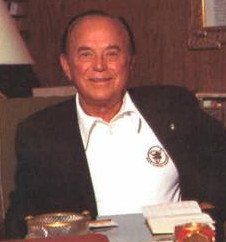
Ray Kroc
Builder of McDonald's into a global chain, author of Grinding It Out
Where to hear and read about Ray Kroc1 book · 1 episode or test
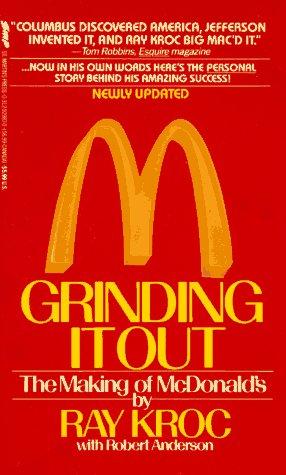 Book · notes comingGrinding It Out

 FoundersThe Making of McDonald's: The Biography of Ray Kroc
Ray Kroc sold paper cups and milkshake mixers for 30 years before turning the McDonald brothers' California hamburger stand into a chain of about 4,000 restaurants by 1977, a story he tells in Grinding It Out. The main thing to learn from him is that how a business makes money matters more than what it sells: McDonald's became an empire only once it owned the land under each store.
I was an overnight success all right, but 30 years is a long, long night.
The Making of McDonald's: The Biography of Ray Kroc
Ray Kroc: the story and the lessons
1Ray Kroc's 30 years before McDonald's
Kroc turned dreams into action from boyhood and treated work as play. Classmates called him "Danny Dreamer," and he ran a lemonade stand and worked hard at it. He dropped out of high school and lied about his age to drive a Red Cross ambulance in World War I.
A fellow driver who had also lied about his age stayed in camp drawing. His name was Walt Disney. Kroc kept the ethic all his life: "for me work was play."
He held two jobs at once to get ahead. He sold paper cups by day and played piano at a radio station until 2 a.m., then was back selling at 7 a.m., with only Sunday off.
His ambition strained his first marriage to Ethel long before McDonald's. He admitted the time he spent away was unfair to her, and said he was determined to "live well and have nice things."
A failed Florida detour taught Kroc to commit to one job. Slow winters for paper cups sent him to the mid-1920s Florida real estate boom, where he cold-called Chicago tourists. The boom vanished just as his approach started working.
He then played piano at an illegal Palm Island nightclub run by a rum runner for $110 a week, and a raid put the whole band in jail. Back in Chicago he vowed, "I intended to devote every ounce of my energy to selling," and sold paper cups for 17 years.
His father's ruin in a land bubble shaped his drive for security. His father kept pyramiding land holdings in the 1920s boom, mistook luck for skill, and was left with deeds he could not sell. He died of a cerebral hemorrhage in 1930.
On the day he died he had two pieces of paper: his last paycheck and a garnishment notice for the entire amount. Kroc kept the same relentless drive even after he became wealthy.
Kroc bet his home on the multimixer and paid dearly for control. At 35 he left a secure job at Lily Tulip to sell the multimixer, but his employer held the contract, so he gave it 60% of his new firm for $6,000 of startup capital. Two years later it asked $68,000 for that stake, and he raised his home mortgage and ended about $100,000 in debt.
Ethel refused to help and told him he was starting over "as if you were 20." He later called the deal "a satanic setup but I didn't see that then."
He refused to worry about more than one thing at a time. He called the struggle the first phase of "grinding it out," which became his book's title. He would not let fretting cost him sleep because he needed to be fresh for customers in the morning.
2How Ray Kroc found the McDonald brothers
Kroc saw his mixer market shrinking and went looking for something new. By the early 1950s, after 15 years selling the multimixer, he saw drugstores and soda fountains cutting back on milkshakes. "I knew that I had to find a new product."
An odd pattern in his orders sent him to California. Buyers kept asking for a mixer like the McDonald brothers had. Curious, he went to see their stand and found eight multimixers making 40 shakes at a time, a full lot, and customers leaving with bags of hamburgers.
That night he pictured restaurants everywhere, each with eight mixers pushing cash into his pockets.
The brothers' system worked because it had few details to get right. Menu and service were stripped to a minimum, so the brothers could focus on quality at every step, and the system was easy to copy as a prototype.
Kroc summed up the principle: "make every detail perfect and limit the number of details to perfect."
When the brothers wanted no growth, Kroc offered to open stores himself. Mac McDonald said they were in a position to enjoy life and needed no more problems. When Dick asked who could open the restaurants, Kroc answered, "well what about me," and flew home in 1954 with a signed contract at age 52.
He never thought of copying them. As a salesman he saw a complete package he could sell, and he felt "the name McDonald's was exactly right."
Kroc signed a weak contract and acted as his own lawyer. He got 1.9% of franchise sales and passed 0.5% to the brothers, leaving 1.4% of a 15 cent hamburger. Any change to the plans required both brothers' signatures sent by registered mail.
The brothers approved changes by phone, such as a basement for his first building, but never in writing, so he was in default from the start. He mainly saw the stores as a way to sell more multimixers, not as the real opportunity.
3How Harry Sonneborn made McDonald's a real estate company
Kroc's franchise cut could not fund a uniform system. Keeping every store uniform required ongoing training, constant performance review and full-time research, and 1.4% of sales could not pay for it. Kroc could hardly pay his bills.
Kroc said uniformity depended on preparation methods operators would accept because they beat anything they could invent themselves.
Sonneborn's fix was to own the land and lease it to franchisees. McDonald's bought or developed sites and required franchisees to lease from it, creating steady upfront revenue and capital for more land. Kroc called it "a stroke of financing genius."
Kroc backed it by going into hock for his house and his car. The principle in one line: "you build it by owning the land upon which that burger is cooked."
Real estate opened money a franchise contract never could. Banks would not lend against a 1.4% contract, but they would write mortgages on land, and Sonneborn then brought in life insurance companies. The chain grew from a few dozen stores to about 4,000 by 1977.
Expansion fed on itself: lease income paid for more land, and more land allowed more stores.
The lesson is that the model, not the product, made Kroc rich. The product stayed a hamburger. Kroc's shift fits the same pattern as Ralph Lauren moving to licensing and Daniel Ludwig earning more hauling oil than lumber.
After his wife died, the couple's gifts to charity came to close to $2 billion.
Kroc had a partner who saw the size of the opportunity. Sonneborn told Dick McDonald the company would one day be bigger than F.W. Woolworth. Dick replied, "I thought you had a genuine nut on your hands Ray."
Kroc himself told a lunch companion they would one day be a billion-dollar company, and the man froze mid bite.
4How Ray Kroc protected the downside and bought out the brothers
A con artist franchisee pushed Kroc to build company stores. After one franchisee cost about $400,000, Kroc proposed building about 10 company-run stores so McDonald's could restart under another name if the brothers enforced the default.
He sold 22% of the company for $1.5 million despite hating dilution. In 1959 three insurers put in $1.5 million for 22% of the stock. "The appeal of $1.5 million was irresistible."
The insurers sold within a few years for $7 to $10 million. Held until 1973, the stake would have been worth over $500 million.
Kroc paid $2.7 million to stop sharing future sales with the brothers. He asked Dick McDonald to name a price, heard $2.7 million, and borrowed it from 12 educational and charitable institutions nicknamed the 12 apostles, who took the brothers' half percent of sales in return.
The lenders made $12 million and the total cost was about $14 million. On 1977 sales above $3 billion, that half percent would be $15 million a year: "peanuts compared to what the corporation earned."
5Why Ray Kroc treated advertising as an investment
Kroc split the world into begrudgers and promoters. The brothers refused to put 1% of sales into a shared ad campaign. Kroc saw the begrudger as treating ads as pure expense, and the promoter as seeing the money "coming back to me with interest."
The brothers were content with what they had. Kroc was obsessed with making McDonald's the biggest.
He funded ads without raising prices, and they paid back. When California growth stayed slow, an employee proposed a $180,000 TV campaign paid for by a one-penny price rise. Kroc approved the campaign but refused the price increase, judging that skipping the ads would cost far more.
The ads drew Californians into the parking lots "as though blindfolds had been removed from their eyes."
6Ray Kroc's rules for running McDonald's
Kroc demanded perfection and did the dirty work himself. While still selling multimixers full time, he helped open the first store each morning, mopped restrooms in a good suit, then took the train to Chicago by 9:00. He came back at night and screamed at manager Ed over an unlit sign or litter in the lot.
"Perfection was what I wanted in McDonald's. Everything else was secondary." He made no attempt to seem likable.
He believed authority should go with the job. Kroc backed decentralized management and accepted some wrong decisions as the price of growing strong people. "Sit on them and they will be stifled. The best ones go elsewhere."
His rule was that less is more in corporate management.
Kroc grabbed opportunities when they appeared. He said the multimixer "appeared" and he "grabbed it," and that the philosophy worked the same as when he earned $35 a week.
He ranked persistence above talent, genius and education. His favorite saying was "press on," and his headquarters slogan read "nothing recedes like success." With 4,000 restaurants open he was thinking about number 10,000.
"Persistence and determination alone are omnipotent." He kept working at McDonald's until he died, even from a wheelchair.
Kroc saw his late start as 30 years of preparation. At 52 to 54, country club acquaintances laughed at his hamburger venture. When the chain took off he compared himself to show business stars who work quietly for years before a break.
7What Ray Kroc's religion of McDonald's cost
Kroc put McDonald's ahead of God and family at work. "I believe in God, family and McDonald's, and in the office the order is reversed." Anyone slowing growth became a problem to solve.
That faith explains the screaming over litter, pushing out partners, and firing people who had been with him for decades.
He rewarded devoted staff with stock, then removed them. He gave Sonneborn 20% and June Martino 10%, which made both rich, while both neglected their families. June never made it to a single birthday party or graduation of her two sons, and Kroc later asked her to retire.
Kroc admitted he knew both were neglecting their families, while his own home was already in a cold war with Ethel and his daughter.
Kroc broke with Sonneborn over a construction freeze. In 1967 bankers warned Sonneborn of a recession and he froze all new construction. Kroc confronted him the next morning and Sonneborn resigned.
Sure the company would fail without him, Sonneborn sold his stock for a few million dollars, a stake Kroc says would have been worth over $100 million. Kroc called it "his lack of faith in us," and the two did not speak for almost a decade.
His pursuit of a franchisee's wife ended two marriages. Kroc fell for Joanie, who ran a store with her husband, divorced Ethel and gave her everything but his McDonald's stock, then married Jane Dobbins Green within two weeks of meeting her.
Rich and expanding, he still called himself miserable: "some men are bachelors by nature and I am not." He divorced Jane and married Joanie in 1969, by which time McDonald's was public and he owned the San Diego Padres.
The Making of McDonald's: The Biography of Ray Kroc
Ray Kroc spent 30 years selling paper cups and milkshake mixers before turning a small California hamburger stand into McDonald's, and the story shows that how you structure a business matters more than which business you are in. The decision that made him wealthy was Harry Sonneborn's idea to own the real estate under each franchise instead of living on a 1.4% cut of a 15 cent hamburger.
Kroc turned dreams into action from boyhood and treated work as play. Classmates called him "Danny Dreamer," and he ran a lemonade stand and worked hard at it. He dropped out of high school and lied about his age to drive a Red Cross ambulance in World War I.
A fellow driver who had also lied about his age stayed in camp drawing. His name was Walt Disney. Kroc kept the ethic all his life: "for me work was play."
He held two jobs at once to get ahead. He sold paper cups by day and played piano at a radio station until 2 a.m., then was back selling at 7 a.m., with only Sunday off.
His ambition strained his first marriage to Ethel long before McDonald's. He admitted the time he spent away was unfair to her, and said he was determined to "live well and have nice things."
A failed Florida detour taught Kroc to commit to one job. Slow winters for paper cups sent him to the mid-1920s Florida real estate boom, where he cold-called Chicago tourists. The boom vanished just as his approach started working.
He then played piano at an illegal Palm Island nightclub run by a rum runner for $110 a week, and a raid put the whole band in jail. Back in Chicago he vowed, "I intended to devote every ounce of my energy to selling," and sold paper cups for 17 years.
His father's ruin in a land bubble shaped his drive for security. His father kept pyramiding land holdings in the 1920s boom, mistook luck for skill, and was left with deeds he could not sell. He died of a cerebral hemorrhage in 1930.
On the day he died he had two pieces of paper: his last paycheck and a garnishment notice for the entire amount. Kroc kept the same relentless drive even after he became wealthy.
Kroc bet his home on the multimixer and paid dearly for control. At 35 he left a secure job at Lily Tulip to sell the multimixer, but his employer held the contract, so he gave it 60% of his new firm for $6,000 of startup capital. Two years later it asked $68,000 for that stake, and he raised his home mortgage and ended about $100,000 in debt.
Ethel refused to help and told him he was starting over "as if you were 20." He later called the deal "a satanic setup but I didn't see that then."
He refused to worry about more than one thing at a time. He called the struggle the first phase of "grinding it out," which became his book's title. He would not let fretting cost him sleep because he needed to be fresh for customers in the morning.
Kroc saw his mixer market shrinking and went looking for something new. By the early 1950s, after 15 years selling the multimixer, he saw drugstores and soda fountains cutting back on milkshakes. "I knew that I had to find a new product."
An odd pattern in his orders sent him to California. Buyers kept asking for a mixer like the McDonald brothers had. Curious, he went to see their stand and found eight multimixers making 40 shakes at a time, a full lot, and customers leaving with bags of hamburgers.
That night he pictured restaurants everywhere, each with eight mixers pushing cash into his pockets.
The brothers' system worked because it had few details to get right. Menu and service were stripped to a minimum, so the brothers could focus on quality at every step, and the system was easy to copy as a prototype.
Kroc summed up the principle: "make every detail perfect and limit the number of details to perfect."
When the brothers wanted no growth, Kroc offered to open stores himself. Mac McDonald said they were in a position to enjoy life and needed no more problems. When Dick asked who could open the restaurants, Kroc answered, "well what about me," and flew home in 1954 with a signed contract at age 52.
He never thought of copying them. As a salesman he saw a complete package he could sell, and he felt "the name McDonald's was exactly right."
Kroc signed a weak contract and acted as his own lawyer. He got 1.9% of franchise sales and passed 0.5% to the brothers, leaving 1.4% of a 15 cent hamburger. Any change to the plans required both brothers' signatures sent by registered mail.
The brothers approved changes by phone, such as a basement for his first building, but never in writing, so he was in default from the start. He mainly saw the stores as a way to sell more multimixers, not as the real opportunity.
Kroc's franchise cut could not fund a uniform system. Keeping every store uniform required ongoing training, constant performance review and full-time research, and 1.4% of sales could not pay for it. Kroc could hardly pay his bills.
Kroc said uniformity depended on preparation methods operators would accept because they beat anything they could invent themselves.
Sonneborn's fix was to own the land and lease it to franchisees. McDonald's bought or developed sites and required franchisees to lease from it, creating steady upfront revenue and capital for more land. Kroc called it "a stroke of financing genius."
Kroc backed it by going into hock for his house and his car. The principle in one line: "you build it by owning the land upon which that burger is cooked."
Real estate opened money a franchise contract never could. Banks would not lend against a 1.4% contract, but they would write mortgages on land, and Sonneborn then brought in life insurance companies. The chain grew from a few dozen stores to about 4,000 by 1977.
Expansion fed on itself: lease income paid for more land, and more land allowed more stores.
The lesson is that the model, not the product, made Kroc rich. The product stayed a hamburger. Kroc's shift fits the same pattern as Ralph Lauren moving to licensing and Daniel Ludwig earning more hauling oil than lumber.
After his wife died, the couple's gifts to charity came to close to $2 billion.
Kroc had a partner who saw the size of the opportunity. Sonneborn told Dick McDonald the company would one day be bigger than F.W. Woolworth. Dick replied, "I thought you had a genuine nut on your hands Ray."
Kroc himself told a lunch companion they would one day be a billion-dollar company, and the man froze mid bite.
A con artist franchisee pushed Kroc to build company stores. After one franchisee cost about $400,000, Kroc proposed building about 10 company-run stores so McDonald's could restart under another name if the brothers enforced the default.
He sold 22% of the company for $1.5 million despite hating dilution. In 1959 three insurers put in $1.5 million for 22% of the stock. "The appeal of $1.5 million was irresistible."
The insurers sold within a few years for $7 to $10 million. Held until 1973, the stake would have been worth over $500 million.
Kroc paid $2.7 million to stop sharing future sales with the brothers. He asked Dick McDonald to name a price, heard $2.7 million, and borrowed it from 12 educational and charitable institutions nicknamed the 12 apostles, who took the brothers' half percent of sales in return.
The lenders made $12 million and the total cost was about $14 million. On 1977 sales above $3 billion, that half percent would be $15 million a year: "peanuts compared to what the corporation earned."
Kroc split the world into begrudgers and promoters. The brothers refused to put 1% of sales into a shared ad campaign. Kroc saw the begrudger as treating ads as pure expense, and the promoter as seeing the money "coming back to me with interest."
The brothers were content with what they had. Kroc was obsessed with making McDonald's the biggest.
He funded ads without raising prices, and they paid back. When California growth stayed slow, an employee proposed a $180,000 TV campaign paid for by a one-penny price rise. Kroc approved the campaign but refused the price increase, judging that skipping the ads would cost far more.
The ads drew Californians into the parking lots "as though blindfolds had been removed from their eyes."
Kroc demanded perfection and did the dirty work himself. While still selling multimixers full time, he helped open the first store each morning, mopped restrooms in a good suit, then took the train to Chicago by 9:00. He came back at night and screamed at manager Ed over an unlit sign or litter in the lot.
"Perfection was what I wanted in McDonald's. Everything else was secondary." He made no attempt to seem likable.
He believed authority should go with the job. Kroc backed decentralized management and accepted some wrong decisions as the price of growing strong people. "Sit on them and they will be stifled. The best ones go elsewhere."
His rule was that less is more in corporate management.
Kroc grabbed opportunities when they appeared. He said the multimixer "appeared" and he "grabbed it," and that the philosophy worked the same as when he earned $35 a week.
He ranked persistence above talent, genius and education. His favorite saying was "press on," and his headquarters slogan read "nothing recedes like success." With 4,000 restaurants open he was thinking about number 10,000.
"Persistence and determination alone are omnipotent." He kept working at McDonald's until he died, even from a wheelchair.
Kroc saw his late start as 30 years of preparation. At 52 to 54, country club acquaintances laughed at his hamburger venture. When the chain took off he compared himself to show business stars who work quietly for years before a break.
Kroc put McDonald's ahead of God and family at work. "I believe in God, family and McDonald's, and in the office the order is reversed." Anyone slowing growth became a problem to solve.
That faith explains the screaming over litter, pushing out partners, and firing people who had been with him for decades.
He rewarded devoted staff with stock, then removed them. He gave Sonneborn 20% and June Martino 10%, which made both rich, while both neglected their families. June never made it to a single birthday party or graduation of her two sons, and Kroc later asked her to retire.
Kroc admitted he knew both were neglecting their families, while his own home was already in a cold war with Ethel and his daughter.
Kroc broke with Sonneborn over a construction freeze. In 1967 bankers warned Sonneborn of a recession and he froze all new construction. Kroc confronted him the next morning and Sonneborn resigned.
Sure the company would fail without him, Sonneborn sold his stock for a few million dollars, a stake Kroc says would have been worth over $100 million. Kroc called it "his lack of faith in us," and the two did not speak for almost a decade.
His pursuit of a franchisee's wife ended two marriages. Kroc fell for Joanie, who ran a store with her husband, divorced Ethel and gave her everything but his McDonald's stock, then married Jane Dobbins Green within two weeks of meeting her.
Rich and expanding, he still called himself miserable: "some men are bachelors by nature and I am not." He divorced Jane and married Joanie in 1969, by which time McDonald's was public and he owned the San Diego Padres.