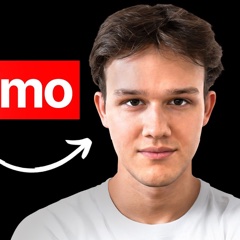
Rafael Kramer
Serial app and game builder, three exits, marketing and distribution specialist
Where to hear and read about Rafael Kramer1 episode or test

Rafael Kramer is a serial app and game builder with three exits who built his career on distribution: spotting a trend early, building something cheap around it and getting it in front of millions on TikTok and through influencers. The lesson most worth taking is how he pairs a fast, cheap build with an audience-first view of the user, and his own admission that distribution alone has never produced a product that lasts.
I've never been a product guy. I just want to like market stuff. That's what I'm good at.
this 14 yr old makes $100k/mo PROFIT building apps with ai (here's how)
Rafael Kramer: the story and the lessons
1Rafael Kramer's path from meme games to consumer apps
Kramer began building meme games with no-code tools at 13. He had zero coding experience and used no-code tools because speed was the only thing that mattered. His first payout was $30 on the dashboard, from about 5,000 downloads.
He has since turned viral memes into apps more than 50 times and earned about 100 million social views.
His first exit was a company that helped influencers launch games. He founded it at 15, grew it to about 10 employees and sold it at 17 for at least six figures. Its Escape the Toilet game got two to three million downloads across iOS and Android in about two weeks.
The game was later taken down, for a reason he can't disclose. He says his first $100k month at 14 felt more impressive than the exit.
He moved from games to consumer apps in 2025 because they are cheaper. A game needs 3D animation and models, while an app only has to solve a problem and then be promoted. DeBloat AI was the third of three consumer apps he launched that year and the only one that did well.
The developers he hired for levels and characters never cracked retention, so the games' success came from big-influencer distribution rather than an inherently good game.
His third exit was a small relationship-coach app sold for the app itself. Amanda AI let users upload a text screenshot and get it analyzed. TikTok restricted its ads because of the relationship advice niche.
He stopped working on it once DeBloat AI took off, and the buyer wanted the app, not the numbers. He thinks the branding was weak.
2How Kramer turned the DaBaby meme into 2 million downloads
Kramer built a game around the DaBaby car meme in one night. He saw the meme, built the game in an all-nighter that day and shipped it. It got about 2 million downloads and made over $100k in a month, when he was 14.
A meme is flat, so you see it and scroll. In a game you can be the DaBaby car yourself, which makes people share it. "I would find something that pops off, find it early, make a game, put on the app store, and then make videos about it and hope they go viral." He used Buildbox, which he says is no longer usable, and hired Unity developers once money came in.
He posted dev-log TikToks and built in features viewers suggested. About nine videos at 100k to a million views each drove the first 300k to 400k downloads. The first TikTok got about 4 million views.
He A/B tested hooks and added ideas from the comments, such as two new characters on day four of the log. Trending topics get pushed out naturally, and the only other rule was to not be boring.
After the first wave, chart rankings and friends did the distributing. The game reached number two overall on the App Store and number one in racing. Strangers clicked out of curiosity at seeing DaBaby's face in the top charts, and friends challenged each other's high scores.
He says the K factor had much more of a role than the actual TikToks once the game passed about 300k downloads.
Ads were the only revenue, and they paid about 10 cents per user. He used Google AdMob, with an ad after every second death and a 30-second ad to revive. There were no in-app purchases.
Ad income starts at a few hundred to a few thousand players a day. Well-monetized mobile games reach 80 cents to $1 per user, and he says better monetization could have earned much more.
3How Kramer finds and launches consumer apps
Kramer finds app ideas in TikTok comment sections. Debloating transformation videos drew about 100 people asking how it was done, and no real solution existed beyond pills people didn't trust. That became DeBloat AI.
He calls the comment section "a really good indicator of how strong a problem is." The idea first came from doom scrolling.
He put a face scan and an exaggerated rating before the paywall. Users took a photo and saw a slightly inflated result before paying. Having completed the scan created sunk cost, and the rating created urgency to fix it.
It came from understanding that users were insecure and wanted to solve that problem. He called it one of the things that worked well.
He ran about eight faceless UGC accounts paid by CPM. The accounts mostly posted slideshows rather than faces. Pay was tiny next to the installs it produced, and DeBloat AI reached about 40,000 downloads.
Creators had to work out how to get views on their own, so the incentive did the managing. He found them through a friend running the same strategy, and he says a few high school students who doom scroll can learn the skill.
Kramer outsources editing early and keeps scripts and ideas in-house. He calls editing low leverage. He hires one editor for the whole video and judges them on whether it holds attention, not on captions or motion graphics.
Twitter posts and Discord servers found editors better than Upwork, and free samples filtered out weak ones. Scripts did not work when outsourced.
As the marketer, he owns the user's point of view. A technical co-founder builds the product while Kramer decides how it is framed. He stays out of Figma and says what to do and why it will work.
He picks which angles onboarding presents based on why the user feels insecure, and he credits the same habit for his views and downloads.
He sees room in apps for people unlike typical founders. At 14 he would have downloaded his own meme game, which helped him build it. He notes a plant app that makes roughly $3 million a month and sees room for apps aimed at older users.
The ad's persona carries into onboarding, because the same feelings drive both.
4Kramer's rules for working with influencers
Kramer positions himself as one of them before sending a DM. A credible Instagram profile with mutual followers, a few decent posts and a blue check beat cold emailing. Relationship managers once cold-emailed 50 to 100 influencers a day.
He DMs influencers constantly to keep connections warm. After DMing three one night, he woke to two replies, and his response rate has improved over time.
He judges influencers by comment quality, not followers or views. He checks whether commenters reply to each other or just post flame emojis. A creator with 5 million followers and 2 million views per video still flopped on a game.
Some creators charge $5,000 a post and get no downloads. Past promotions aren't required, because an influencer can be coached on a good one.
He picks creators whose content can become a game. Skibidi Toilet fans had a story universe they could only watch, and the game let them enter it. A generic runner game would be boring.
He never watched Skibidi Toilet before making the game and imagined the viewers' view instead. He calls that the essence of a distribution person: turning an audience's feeling into a product.
Kramer gives influencers half the game and does not script them. He used a 50/50 split, weekly update calls and character updates, even when he didn't use every idea. The Skibidi Toilet creator's one YouTube Shorts promo got over 50 million views.
"You really have to make them feel like it's their game, which it is." He expects an app would need a different deal, and he hasn't tried it.
He sees ads first and retainer influencers second for consumer apps. Ads are the most logical channel: spend $100, get $150 back, then make more good ads. Friends with a few well-matched influencers on retainer report about 3x return.
DeBloat AI was his first real ad run, and he says he isn't an ads expert but wants to get good at it.
5Where Kramer's model falls short and what he is changing
Kramer says distribution got downloads but retention was never cracked. The meme and influencer games earned about 10 cents per user and were gimmicky, built to look good in a TikTok video.
He says he can reliably get views and downloads but has never had a product he is proud of long term.
He thinks he sold DeBloat AI too early. Downloads cost a few cents at first but saturated within days. Profit then fell to about 30% of ad spend for a few weeks, and copycats now make $20k to $30k a month.
"We probably should have scaled it more before selling it to be honest."
The $100k figure was one month, and trend-chasing mostly fails. The $100k month came at 14, and no ongoing profit figures are given. He says dozens of attempts at chasing big trends fail across the internet.
The Skibidi Toilet game was also taken down, for a reason he won't disclose.
He calls AI influencer marketing a cash grab but works with the team. Hyper-realistic AI influencers run before-and-after videos that many viewers believe are real. He DM'd the team as soon as they launched and is building an app with them.
He says he does not agree with a recent looks-maxing app built on them, and he is training others to make the same videos.
Kramer plans one wellness product he can stand behind. He wants to build a therapy, wellness and mental health product, and plans to reveal the idea on Twitter within a couple of weeks.
He doesn't want to be 25 and known as the founder of a Skibidi toilet mobile game. He counts hiring, firing, mistakes and wrong influencer picks as the knowledge he will apply.

this 14 yr old makes $100k/mo PROFIT building apps with ai (here's how)
A distribution-first founder explains how he turned viral memes into ad-monetized mobile games, then moved into consumer apps using faceless UGC, TikTok ads and influencer partnerships. His meme game hit about 2 million downloads and over $100k in a month when he was 14.
Kramer began building meme games with no-code tools at 13. He had zero coding experience and used no-code tools because speed was the only thing that mattered. His first payout was $30 on the dashboard, from about 5,000 downloads.
He has since turned viral memes into apps more than 50 times and earned about 100 million social views.
His first exit was a company that helped influencers launch games. He founded it at 15, grew it to about 10 employees and sold it at 17 for at least six figures. Its Escape the Toilet game got two to three million downloads across iOS and Android in about two weeks.
The game was later taken down, for a reason he can't disclose. He says his first $100k month at 14 felt more impressive than the exit.
He moved from games to consumer apps in 2025 because they are cheaper. A game needs 3D animation and models, while an app only has to solve a problem and then be promoted. DeBloat AI was the third of three consumer apps he launched that year and the only one that did well.
The developers he hired for levels and characters never cracked retention, so the games' success came from big-influencer distribution rather than an inherently good game.
His third exit was a small relationship-coach app sold for the app itself. Amanda AI let users upload a text screenshot and get it analyzed. TikTok restricted its ads because of the relationship advice niche.
He stopped working on it once DeBloat AI took off, and the buyer wanted the app, not the numbers. He thinks the branding was weak.
Kramer built a game around the DaBaby car meme in one night. He saw the meme, built the game in an all-nighter that day and shipped it. It got about 2 million downloads and made over $100k in a month, when he was 14.
A meme is flat, so you see it and scroll. In a game you can be the DaBaby car yourself, which makes people share it. "I would find something that pops off, find it early, make a game, put on the app store, and then make videos about it and hope they go viral." He used Buildbox, which he says is no longer usable, and hired Unity developers once money came in.
He posted dev-log TikToks and built in features viewers suggested. About nine videos at 100k to a million views each drove the first 300k to 400k downloads. The first TikTok got about 4 million views.
He A/B tested hooks and added ideas from the comments, such as two new characters on day four of the log. Trending topics get pushed out naturally, and the only other rule was to not be boring.
After the first wave, chart rankings and friends did the distributing. The game reached number two overall on the App Store and number one in racing. Strangers clicked out of curiosity at seeing DaBaby's face in the top charts, and friends challenged each other's high scores.
He says the K factor had much more of a role than the actual TikToks once the game passed about 300k downloads.
Ads were the only revenue, and they paid about 10 cents per user. He used Google AdMob, with an ad after every second death and a 30-second ad to revive. There were no in-app purchases.
Ad income starts at a few hundred to a few thousand players a day. Well-monetized mobile games reach 80 cents to $1 per user, and he says better monetization could have earned much more.
Kramer finds app ideas in TikTok comment sections. Debloating transformation videos drew about 100 people asking how it was done, and no real solution existed beyond pills people didn't trust. That became DeBloat AI.
He calls the comment section "a really good indicator of how strong a problem is." The idea first came from doom scrolling.
He put a face scan and an exaggerated rating before the paywall. Users took a photo and saw a slightly inflated result before paying. Having completed the scan created sunk cost, and the rating created urgency to fix it.
It came from understanding that users were insecure and wanted to solve that problem. He called it one of the things that worked well.
He ran about eight faceless UGC accounts paid by CPM. The accounts mostly posted slideshows rather than faces. Pay was tiny next to the installs it produced, and DeBloat AI reached about 40,000 downloads.
Creators had to work out how to get views on their own, so the incentive did the managing. He found them through a friend running the same strategy, and he says a few high school students who doom scroll can learn the skill.
Kramer outsources editing early and keeps scripts and ideas in-house. He calls editing low leverage. He hires one editor for the whole video and judges them on whether it holds attention, not on captions or motion graphics.
Twitter posts and Discord servers found editors better than Upwork, and free samples filtered out weak ones. Scripts did not work when outsourced.
As the marketer, he owns the user's point of view. A technical co-founder builds the product while Kramer decides how it is framed. He stays out of Figma and says what to do and why it will work.
He picks which angles onboarding presents based on why the user feels insecure, and he credits the same habit for his views and downloads.
He sees room in apps for people unlike typical founders. At 14 he would have downloaded his own meme game, which helped him build it. He notes a plant app that makes roughly $3 million a month and sees room for apps aimed at older users.
The ad's persona carries into onboarding, because the same feelings drive both.
Kramer positions himself as one of them before sending a DM. A credible Instagram profile with mutual followers, a few decent posts and a blue check beat cold emailing. Relationship managers once cold-emailed 50 to 100 influencers a day.
He DMs influencers constantly to keep connections warm. After DMing three one night, he woke to two replies, and his response rate has improved over time.
He judges influencers by comment quality, not followers or views. He checks whether commenters reply to each other or just post flame emojis. A creator with 5 million followers and 2 million views per video still flopped on a game.
Some creators charge $5,000 a post and get no downloads. Past promotions aren't required, because an influencer can be coached on a good one.
He picks creators whose content can become a game. Skibidi Toilet fans had a story universe they could only watch, and the game let them enter it. A generic runner game would be boring.
He never watched Skibidi Toilet before making the game and imagined the viewers' view instead. He calls that the essence of a distribution person: turning an audience's feeling into a product.
Kramer gives influencers half the game and does not script them. He used a 50/50 split, weekly update calls and character updates, even when he didn't use every idea. The Skibidi Toilet creator's one YouTube Shorts promo got over 50 million views.
"You really have to make them feel like it's their game, which it is." He expects an app would need a different deal, and he hasn't tried it.
He sees ads first and retainer influencers second for consumer apps. Ads are the most logical channel: spend $100, get $150 back, then make more good ads. Friends with a few well-matched influencers on retainer report about 3x return.
DeBloat AI was his first real ad run, and he says he isn't an ads expert but wants to get good at it.
Kramer says distribution got downloads but retention was never cracked. The meme and influencer games earned about 10 cents per user and were gimmicky, built to look good in a TikTok video.
He says he can reliably get views and downloads but has never had a product he is proud of long term.
He thinks he sold DeBloat AI too early. Downloads cost a few cents at first but saturated within days. Profit then fell to about 30% of ad spend for a few weeks, and copycats now make $20k to $30k a month.
"We probably should have scaled it more before selling it to be honest."
The $100k figure was one month, and trend-chasing mostly fails. The $100k month came at 14, and no ongoing profit figures are given. He says dozens of attempts at chasing big trends fail across the internet.
The Skibidi Toilet game was also taken down, for a reason he won't disclose.
He calls AI influencer marketing a cash grab but works with the team. Hyper-realistic AI influencers run before-and-after videos that many viewers believe are real. He DM'd the team as soon as they launched and is building an app with them.
He says he does not agree with a recent looks-maxing app built on them, and he is training others to make the same videos.
Kramer plans one wellness product he can stand behind. He wants to build a therapy, wellness and mental health product, and plans to reveal the idea on Twitter within a couple of weeks.
He doesn't want to be 25 and known as the founder of a Skibidi toilet mobile game. He counts hiring, firing, mistakes and wrong influencer picks as the knowledge he will apply.