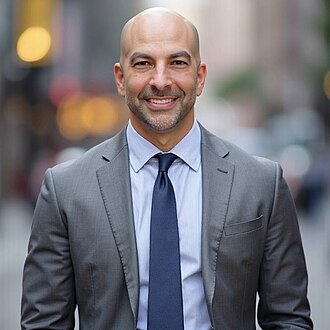
Peter Attia
Physician and longevity expert, author of Outlive
Where to hear and read about Peter Attia1 episode or test

Peter Attia is a physician and longevity expert who wrote the bestselling book Outlive after a long fight with publishers, agents and his own perfectionism. The most useful thing to learn from him is to build complex ideas on a simple framework, carry them with stories, and cut hard, reading every sentence aloud before calling it done.
I just need to provide the best rendition of my voice
Meet the Stanford Surgeon Turned Podcaster — Peter Attia
Peter Attia: the story and the lessons
1How Peter Attia wrote Outlive and nearly lost it
A recurring dream of falling eggs became the book's opening image. In the dream he stands on a dim street in residency scrubs, catching one egg and missing two, then catching one and missing three.
Medicine 2.0 is a softer glove. Medicine 3.0 takes the basket from the thrower, going upstream to stop the cause.
He opened with the first patient he saw die. The story from early in his second year of medical school contrasts fast death, which medicine handles well, with slow death, which it handles poorly.
Stories are not data, but people are storied creatures who need an anchor.
The publisher and the agent both walked away in 2020. The editor who bought the book left within three months, and the new one saw a late, costly liability because he kept saying it was not ready. The April ultimatum arrived in February 2020 while he was stranded by a blizzard in Norway.
His agent had her secretary tell him he would work with someone else. He did not look at the book for nine months and wired back the advance he had taken.
One friend's praise revived the book in December 2020. Michael Ovitz judged it potentially great and proposed pitching one person at Penguin before shopping it around. Attia and co-author Bill Gifford spent two weeks stripping comments from the file, and the editor said yes.
Attia says he had lost track of where the file was: "That's how little I cared." The Penguin deal in early 2021 started 21 months of work that ended in September 2022.
Leaving medicine felt like a mistake for years, then proved necessary. Medical school plus residency took ten years, and he felt he had wasted them. His original plan was an engineering PhD, which would have prepared him better for the risk work at McKinsey.
He called sunk costs a fallacy: you will be 50 one day, so be 50 doing what you want. "I had to leave to come back," and on a very different path.
He would not have started the book had he known the cost. In 2016 he had no podcast. By 2022 he interviewed a top expert every week, which made a book look unnecessary.
He is glad he did not know how hard it would be. A book still reaches people, like his parents, whom a podcast does not.
2How Attia builds ideas on frameworks and stories
Attia runs the whole book on objective, then strategy, then tactics. The rule is never to skip a step. Tactics keep changing, so the objective and strategy are what keep the book relevant in ten years.
A Sun Tzu line anchors it: strategy without tactics is the slowest route to victory, tactics without strategy the noise before defeat. Each chapter opens with a quote, and smaller frameworks sit inside chapters, such as stability, strength and aerobic base for exercise.
His frameworks came from years of drawing at a whiteboard with patients. Before Covid he drew in every in-person visit and kept redrawing until the shape held. The Four Horsemen began as four pillars, then became three pillars on a foundation.
Metabolic disease touches all of them, so it became the foundation. Frameworks make a body of ideas complete and free of overlap.
He tests an idea by asking if it can be explained over dinner. He could not explain stability in 30 seconds, but could over a meal. Complex ideas do not fit an elevator pitch.
If you cannot explain it over dinner, he says, you have not found the essence yet.
Attia ties abstract goals to a specific physical scene. Lifting 40 lbs becomes picking a grandchild out of a crib. Walking 18 holes of golf at 90 trains differently from swimming a mile in a lake.
A vague goal like "track and field" cannot be trained for, because a shot putter, hurdler and sprinter train very differently.
He dropped "dot product" because it needed its own explanation. He used to call longevity the dot product of lifespan and healthspan. He switched to "a function of" lifespan and healthspan, since readers would need math to follow the shorthand.
The subtitle follows the same logic of putting science first: "science and art of" longevity.
Attia turns big numbers into an image the reader can see. He admires Robert Kurson's line in Rocket Men that flying Apollo 8 at 69 miles above the Moon is like throwing a dart at a peach from 28 feet and grazing the fuzz.
His test for any big number is to ask what your dart and your peach are. Publishing lore says each formula cuts book sales in half.
3Attia's rules for cutting and editing
About 80% of his work with his co-author was cutting. A whole fifth pillar on drugs, supplements and hormones went from chapter to appendix to out of the book, about 100 pages.
He kept fearing the book would lose meaning without a favorite paragraph, and was told one sentence already made the point. He likens it to carving a statue: you cut things away to see the object better.
Attia reads every sentence aloud before calling a book edited. Reading the audiobook in December 2022, he found sentences that looked fine on the page but were far too long spoken. He fixed them even though the book was typeset and the publisher was losing patience.
Sam Harris told him "you are not editing a book until you are reading it out loud." He found it unbearable and did it only once.
He cut the stability chapter down to a few stories. Stability means moving without losing force, like a race car with no energy leaking between engine, chassis and tires. The first draft ran on with many people from his journey.
The final version keeps a few stories. He accepts it is far less complete but judges it more digestible, which matters more.
By the final edits he rarely wanted cut material back. Most late changes made things a little clearer, not restored a paragraph. He thinks rereading the cuts would show the book is no better with them.
The most benefit comes in the final 10 to 20% of the time, when the cutting is harshest.
He zooms out on painful stories and skips the blow by blow. Chapter 17, the personal chapter, was written alone over a year, and only about 20% of what he wrote made it in. Gifford helped him step back to 30,000 feet and hit only certain points.
Writing was easy because he lifted material and diagrams from his journals. Deciding to be that open about his faults was the hard part.
He ends a nonfiction book on what readers should do. He wants readers' lives to differ in six months, one year and five years. When companies invite him to speak, he asks what they want people to do differently afterward.
If the answer is only entertainment, he tells them to hire someone who can juggle. His book ends on emotional health, which he calls arguably the most important pillar of healthspan.
4What Attia teaches about nutrition, exercise and longevity
Attia is agnostic about diet and teaches principles instead. The first chapter is titled "nutritional biochemistry" on purpose, to separate diet from religion. He sees about 5,000 variations of the "one true diet" pitch, from vegan and carnivore to paleo and Mediterranean.
The most common criticism is that he dismisses nutrition, which he calls patently untrue. The book has 17 chapters: three on exercise, two on nutrition, one on everything else.
He puts exercise first because nutrition is a dampened signal. Exercise has a broader dynamic range: skipping it has a huge downside and doing it well a huge upside. With nutrition, getting it wrong costs a lot but getting it right lifts little.
Total calories and protein are the first and second order terms. Fat type and carb count are third order, and anything more complicated is fifth, sixth or seventh order.
He has patients define what they want from their last decade. Training works backward from a specific goal, which he calls backcasting from the centenarian decathlon. This is a core organizing principle of his practice.
He might even carry his clubs for one hole just to show yourself that you're tough.
Attia says to focus on quality of life, and length follows. If quality of life is poor, length of life does not matter. Lifespan and healthspan are related but not the same.
He keeps the word "longevity" but defines it himself, because the word is shorthand for silly things. Delaying chronic disease is, he says, the mathematical equivalent of lifespan extension.
His own change is the proof he offers readers. He long believed he was defective and that his flaws were hardwired. Doubting that belief let him begin dismantling the narrative that nearly destroyed his life.
His message: if I can change, you can. He was not keen to be open but judged it the right way to show change is possible.
5How Attia works with co-authors, researchers and fear
He argued for depth with his co-author until both understood. Attia always wanted to go deeper and Bill Gifford shallower. Attia pulled back, and Gifford asked him to explain again, until they settled in the middle.
He calls it "iron sharpening iron". In many marriages one person gives up over the rug, but neither did, so it was slower and the book was better.
A reader outside his field caught jargon he no longer saw. He and Gifford argued for a month over the word extracorporeal. Gifford said it almost lost him, and Attia said explaining it would take ten words.
A footnote was the compromise. The heart and cancer chapters were the biggest struggle for jargon.
Attia hired his own fact checker because the publisher had none. He used an analyst who had never seen the book, so he was not contaminated by it. The book has 38 pages of references and readers have caught very few mistakes.
The publisher said it could not check the science. Attia answered that the book is 98% science. Checking covers both the fact and its interpretation.
He flagged half-remembered studies in margin comments for his researcher. He tagged head of research Bob Kaplan in Google Doc comments with the year, journal and figure he recalled, and kept writing.
Sometimes Kaplan found the citation, and sometimes he told Attia he was misremembering.
Attia protected one full writing day a week at his own desk. At least three weeks out of four, he kept a day free of patients, outside calls and podcast work. The rest was nights and weekends.
He considered going away to write but stayed home, since being away from his family and routine would add stress.
He wrote in his own voice instead of copying writers he admires. He aimed above USA Today, near the Wall Street Journal, but readable by a high schooler. Harder words came from medicine, not highbrow ambition.
He says he can't write or speak like Sam Harris, so he gave the best rendition of his own voice. He expects to disagree with parts of the book in one, five and ten years, which means more explaining later.

Meet the Stanford Surgeon Turned Podcaster — Peter Attia
Peter Attia explains how he turned dense medical science into a bestselling book by building it on frameworks, stories and ruthless cuts, with a co-author who pushed back. The most useful habit is reading every sentence aloud in the final edit and cutting what the reader does not need, even paragraphs you love.
A recurring dream of falling eggs became the book's opening image. In the dream he stands on a dim street in residency scrubs, catching one egg and missing two, then catching one and missing three.
Medicine 2.0 is a softer glove. Medicine 3.0 takes the basket from the thrower, going upstream to stop the cause.
He opened with the first patient he saw die. The story from early in his second year of medical school contrasts fast death, which medicine handles well, with slow death, which it handles poorly.
Stories are not data, but people are storied creatures who need an anchor.
The publisher and the agent both walked away in 2020. The editor who bought the book left within three months, and the new one saw a late, costly liability because he kept saying it was not ready. The April ultimatum arrived in February 2020 while he was stranded by a blizzard in Norway.
His agent had her secretary tell him he would work with someone else. He did not look at the book for nine months and wired back the advance he had taken.
One friend's praise revived the book in December 2020. Michael Ovitz judged it potentially great and proposed pitching one person at Penguin before shopping it around. Attia and co-author Bill Gifford spent two weeks stripping comments from the file, and the editor said yes.
Attia says he had lost track of where the file was: "That's how little I cared." The Penguin deal in early 2021 started 21 months of work that ended in September 2022.
Leaving medicine felt like a mistake for years, then proved necessary. Medical school plus residency took ten years, and he felt he had wasted them. His original plan was an engineering PhD, which would have prepared him better for the risk work at McKinsey.
He called sunk costs a fallacy: you will be 50 one day, so be 50 doing what you want. "I had to leave to come back," and on a very different path.
He would not have started the book had he known the cost. In 2016 he had no podcast. By 2022 he interviewed a top expert every week, which made a book look unnecessary.
He is glad he did not know how hard it would be. A book still reaches people, like his parents, whom a podcast does not.
Attia runs the whole book on objective, then strategy, then tactics. The rule is never to skip a step. Tactics keep changing, so the objective and strategy are what keep the book relevant in ten years.
A Sun Tzu line anchors it: strategy without tactics is the slowest route to victory, tactics without strategy the noise before defeat. Each chapter opens with a quote, and smaller frameworks sit inside chapters, such as stability, strength and aerobic base for exercise.
His frameworks came from years of drawing at a whiteboard with patients. Before Covid he drew in every in-person visit and kept redrawing until the shape held. The Four Horsemen began as four pillars, then became three pillars on a foundation.
Metabolic disease touches all of them, so it became the foundation. Frameworks make a body of ideas complete and free of overlap.
He tests an idea by asking if it can be explained over dinner. He could not explain stability in 30 seconds, but could over a meal. Complex ideas do not fit an elevator pitch.
If you cannot explain it over dinner, he says, you have not found the essence yet.
Attia ties abstract goals to a specific physical scene. Lifting 40 lbs becomes picking a grandchild out of a crib. Walking 18 holes of golf at 90 trains differently from swimming a mile in a lake.
A vague goal like "track and field" cannot be trained for, because a shot putter, hurdler and sprinter train very differently.
He dropped "dot product" because it needed its own explanation. He used to call longevity the dot product of lifespan and healthspan. He switched to "a function of" lifespan and healthspan, since readers would need math to follow the shorthand.
The subtitle follows the same logic of putting science first: "science and art of" longevity.
Attia turns big numbers into an image the reader can see. He admires Robert Kurson's line in Rocket Men that flying Apollo 8 at 69 miles above the Moon is like throwing a dart at a peach from 28 feet and grazing the fuzz.
His test for any big number is to ask what your dart and your peach are. Publishing lore says each formula cuts book sales in half.
About 80% of his work with his co-author was cutting. A whole fifth pillar on drugs, supplements and hormones went from chapter to appendix to out of the book, about 100 pages.
He kept fearing the book would lose meaning without a favorite paragraph, and was told one sentence already made the point. He likens it to carving a statue: you cut things away to see the object better.
Attia reads every sentence aloud before calling a book edited. Reading the audiobook in December 2022, he found sentences that looked fine on the page but were far too long spoken. He fixed them even though the book was typeset and the publisher was losing patience.
Sam Harris told him "you are not editing a book until you are reading it out loud." He found it unbearable and did it only once.
He cut the stability chapter down to a few stories. Stability means moving without losing force, like a race car with no energy leaking between engine, chassis and tires. The first draft ran on with many people from his journey.
The final version keeps a few stories. He accepts it is far less complete but judges it more digestible, which matters more.
By the final edits he rarely wanted cut material back. Most late changes made things a little clearer, not restored a paragraph. He thinks rereading the cuts would show the book is no better with them.
The most benefit comes in the final 10 to 20% of the time, when the cutting is harshest.
He zooms out on painful stories and skips the blow by blow. Chapter 17, the personal chapter, was written alone over a year, and only about 20% of what he wrote made it in. Gifford helped him step back to 30,000 feet and hit only certain points.
Writing was easy because he lifted material and diagrams from his journals. Deciding to be that open about his faults was the hard part.
He ends a nonfiction book on what readers should do. He wants readers' lives to differ in six months, one year and five years. When companies invite him to speak, he asks what they want people to do differently afterward.
If the answer is only entertainment, he tells them to hire someone who can juggle. His book ends on emotional health, which he calls arguably the most important pillar of healthspan.
Attia is agnostic about diet and teaches principles instead. The first chapter is titled "nutritional biochemistry" on purpose, to separate diet from religion. He sees about 5,000 variations of the "one true diet" pitch, from vegan and carnivore to paleo and Mediterranean.
The most common criticism is that he dismisses nutrition, which he calls patently untrue. The book has 17 chapters: three on exercise, two on nutrition, one on everything else.
He puts exercise first because nutrition is a dampened signal. Exercise has a broader dynamic range: skipping it has a huge downside and doing it well a huge upside. With nutrition, getting it wrong costs a lot but getting it right lifts little.
Total calories and protein are the first and second order terms. Fat type and carb count are third order, and anything more complicated is fifth, sixth or seventh order.
He has patients define what they want from their last decade. Training works backward from a specific goal, which he calls backcasting from the centenarian decathlon. This is a core organizing principle of his practice.
He might even carry his clubs for one hole just to show yourself that you're tough.
Attia says to focus on quality of life, and length follows. If quality of life is poor, length of life does not matter. Lifespan and healthspan are related but not the same.
He keeps the word "longevity" but defines it himself, because the word is shorthand for silly things. Delaying chronic disease is, he says, the mathematical equivalent of lifespan extension.
His own change is the proof he offers readers. He long believed he was defective and that his flaws were hardwired. Doubting that belief let him begin dismantling the narrative that nearly destroyed his life.
His message: if I can change, you can. He was not keen to be open but judged it the right way to show change is possible.
He argued for depth with his co-author until both understood. Attia always wanted to go deeper and Bill Gifford shallower. Attia pulled back, and Gifford asked him to explain again, until they settled in the middle.
He calls it "iron sharpening iron". In many marriages one person gives up over the rug, but neither did, so it was slower and the book was better.
A reader outside his field caught jargon he no longer saw. He and Gifford argued for a month over the word extracorporeal. Gifford said it almost lost him, and Attia said explaining it would take ten words.
A footnote was the compromise. The heart and cancer chapters were the biggest struggle for jargon.
Attia hired his own fact checker because the publisher had none. He used an analyst who had never seen the book, so he was not contaminated by it. The book has 38 pages of references and readers have caught very few mistakes.
The publisher said it could not check the science. Attia answered that the book is 98% science. Checking covers both the fact and its interpretation.
He flagged half-remembered studies in margin comments for his researcher. He tagged head of research Bob Kaplan in Google Doc comments with the year, journal and figure he recalled, and kept writing.
Sometimes Kaplan found the citation, and sometimes he told Attia he was misremembering.
Attia protected one full writing day a week at his own desk. At least three weeks out of four, he kept a day free of patients, outside calls and podcast work. The rest was nights and weekends.
He considered going away to write but stayed home, since being away from his family and routine would add stress.
He wrote in his own voice instead of copying writers he admires. He aimed above USA Today, near the Wall Street Journal, but readable by a high schooler. Harder words came from medicine, not highbrow ambition.
He says he can't write or speak like Sam Harris, so he gave the best rendition of his own voice. He expects to disagree with parts of the book in one, five and ten years, which means more explaining later.