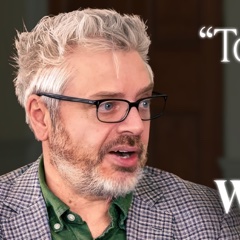
Paul Harding
Pulitzer Prize winning novelist and writing teacher
Where to hear and read about Paul Harding1 episode or test

Paul Harding is a novelist and writing teacher who won the Pulitzer Prize for his first novel, Tinkers, and who was a drummer before that. The thing most worth learning from him is to slow down and describe exactly what is there in fresh language, then write far more than you need and distill it.
I think that your writing can only be as good as the best stuff that you've read.
Pulitzer Winner Breaks Down the Art of Writing (Paul Harding Interview)
Paul Harding: the story and the lessons
1Paul Harding's path to Tinkers and the Pulitzer
Harding started Tinkers at 30 as a short story for his MFA application. A seven-month fellowship let him expand the story from the inside out. Its first, middle and last five pages are still the core of the book.
He says winning at 25 would have "popped my rivets". Winning at 43 or 44, after years of touring, kept him grounded.
His early political stories failed, and lyric pastoral writing worked. His early stories about justice and the distribution of wealth were, in his words, "propaganda, just crap". When he turned to transcendentalist, lyric pastoral writing, the work improved.
He dropped the wisecracking identity his friends expected, and they howled at the quiet new writing. A week after writing in his own voice he would reread it and ask who wrote that.
He learned of the Pulitzer in spring 2010 while teaching in Iowa. He kept refreshing the page that day, thought it was a joke, then ended up on the floor of his small apartment. That afternoon he was due to teach Henry James's "The Beast in the Jungle".
Ninety seconds after the news he was interviewing with the Associated Press.
Harding trained his mind to forget the prize and get back to work. He treats the question of how to follow up as a concrete mental problem to work at. His own check: if his biggest problem is following up a Pulitzer-winning debut, "life's pretty good".
He disciplines himself so the prize falls away when he returns to the next manuscript.
2How Paul Harding learns to see and chooses his words
Harding tells students to slow down, and treats patience as learnable. It is the one message he would put on his headstone. He says he is still as impatient as anyone in private life, so he practices patience as a skill.
One two or three page passage in Tinkers came out nearly finished. Other passages took years of returning before the right expression came.
He drops the prefabricated phrases we use to get through the day. Before a scene he admits he is drawn to it but does not know what he will find. He observes what is actually there before words arrive, which he calls working up his chops at observing things before language.
Daily life runs on reflex, so he says that kind of language "will not work in good writing".
He pushes a literal image one step further until it becomes metaphor. The opening of Tinkers came from his dying grandfather hallucinating cracks in the ceiling. Harding kept asking what happens next: the ceiling caves in, then wires, roof, clouds, blue sky, stars, and finally black like a funeral shroud.
Every step stayed literal and drew on memories of insulating and plumbing that house. Readers still ask what the shroud means, and he answers that he doesn't know, but it means something.
He describes things in the vocabulary of their opposites. Clouds are silent, so he asks what they would sound like, and they become stampeding buffalo, mountain ranges or stones. He then runs the result through a character's mind to see how it develops.
His rule of thumb: "If something is a liquid, describe it as a solid or something as a gas, describe it as a liquid." He also asks how Keats would describe a passage of Bach or AC/DC.
Harding reads the dictionary daily and follows ordinary words back in time. He traces plain words to their earliest quotations, such as the Webster's 1913 definitions. He found that the suffix -ly was never put on negative words, and that temptation once meant a true test of character.
He never uses a meaning so archaic that the reader is lost. Context carries them, and the older sense gives the sentence more depth.
He swapped ornament for precision after a heartbroken adolescence. At sixteen, heartbroken in a bird sanctuary at 4:15, he slathered on adjectives. Now he describes how the light moves and what the trees look like with a botanist's exactness.
He feared precision would sound clinical, and it came out more beautiful. His job, he says, is "to write about it very precisely".
3How Harding builds characters and leaves meaning open
Harding makes description do the work of characterization. He borrowed Marilyn Robinson's word co-extensive and stopped shifting gears between interior and exterior. He renders Boston Common as layers of color and light, then lets a character notice it like a painter.
He gives the literal thing first, such as a creek and a willow, then the character's experience of it. When the character calls the willow death, the reader senses something is wrong with that character. "Description actually becomes character."
He gives each character a private set of verbs, images and colors. He lives alongside a character for years and notices which verbs, light and colors keep appearing, never forcing them. Once a character owns buffaloes and stampedes, no other character gets them.
Places have their own repertoires too, which then refract through the character's.
He describes what happened without trying to explain it. He knew only that a character in Tinkers left his family, so he wrote what it was like for the one who left and for those left behind. He tells students to think of portraiture, which depicts richly without explaining the sitter.
"To describe it doesn't mean I'm explaining it."
Harding leaves out the lesson so the reader keeps thinking. A message like be kind to strangers is trivial, and once readers have a point they never have to think about it again. He brings the reader to a moment and says look what I found.
He thinks telling readers what to think would be fraudulent. Fiction works by recognition, as when a character says "Here I go again. I know better" and readers see themselves.
4Harding's drafting and revision routine
Harding writes about a thousand pages to distill a 150-page book. He follows false starts and cul-de-sacs in case he misses the best part of the novel, letting the manuscript get cluttered before cutting back until nothing is ornamental. He says a bad draft is an insurance policy, because you cannot theorize your way to the right sentence.
Twenty pages written to perfect one paragraph were not wasted. Even on his fourth novel he does the same amount of work, only faster, and may write 150 pages in a month and decide they are not the book.
He prints the whole manuscript every six to eight weeks and marks it. He reads it with a blue pen, so by publication he has revised it many times. He kept rewriting even on book tour, changing scenes as he read them aloud.
For a reprint of Tinkers he made about 250 changes, mostly commas.
A former drummer, he counts the beats in a sentence. He often knows how many beats a sentence has before he knows what it means. Short monosyllables suit the choppy tinker passage, while polysyllables tumble the reader along faster.
He keeps prose angular and avoids symmetry and internal rhyme that turn singsong.
Harding keeps his agent and editor out for years while drafting. He says of outside voices, "I don't want you in my house while I'm building it." He wants to ask the work what it means, since the work is the greatest authority on its own meaning.
He adds that some brilliant writers thrive on a dozen readers, so the point is to learn what you need rather than follow a rule about what a real writer does.
He writes for the dozen readers who want depth, not everyone. At each sentence he hears billions of people stampeding for the exits, while a dozen come down from the cheap seats to the front row. Those dozen are who he writes for.
Trying to please everybody pleases no one.
He measures his pages against the best book he has read. He tells students that writing can only be as good as the best they have read, and he asks whether they are trying to write a crappy book. He calls wanting to match your favorite book ambition rooted in reverence, not ego.
He notes that Melville was trying to match Hamlet, and he wants readers to notice the writers he borrows from.

Pulitzer Winner Breaks Down the Art of Writing (Paul Harding Interview)
Paul Harding argues that good sentences come from slowing down, observing exactly what is there, and refusing the off-the-rack language we use to get through the day. The technique worth hearing is his habit of describing things in the vocabulary of their opposites, then drafting about a thousand pages to distill a 150-page book.
Harding started Tinkers at 30 as a short story for his MFA application. A seven-month fellowship let him expand the story from the inside out. Its first, middle and last five pages are still the core of the book.
He says winning at 25 would have "popped my rivets". Winning at 43 or 44, after years of touring, kept him grounded.
His early political stories failed, and lyric pastoral writing worked. His early stories about justice and the distribution of wealth were, in his words, "propaganda, just crap". When he turned to transcendentalist, lyric pastoral writing, the work improved.
He dropped the wisecracking identity his friends expected, and they howled at the quiet new writing. A week after writing in his own voice he would reread it and ask who wrote that.
He learned of the Pulitzer in spring 2010 while teaching in Iowa. He kept refreshing the page that day, thought it was a joke, then ended up on the floor of his small apartment. That afternoon he was due to teach Henry James's "The Beast in the Jungle".
Ninety seconds after the news he was interviewing with the Associated Press.
Harding trained his mind to forget the prize and get back to work. He treats the question of how to follow up as a concrete mental problem to work at. His own check: if his biggest problem is following up a Pulitzer-winning debut, "life's pretty good".
He disciplines himself so the prize falls away when he returns to the next manuscript.
Harding tells students to slow down, and treats patience as learnable. It is the one message he would put on his headstone. He says he is still as impatient as anyone in private life, so he practices patience as a skill.
One two or three page passage in Tinkers came out nearly finished. Other passages took years of returning before the right expression came.
He drops the prefabricated phrases we use to get through the day. Before a scene he admits he is drawn to it but does not know what he will find. He observes what is actually there before words arrive, which he calls working up his chops at observing things before language.
Daily life runs on reflex, so he says that kind of language "will not work in good writing".
He pushes a literal image one step further until it becomes metaphor. The opening of Tinkers came from his dying grandfather hallucinating cracks in the ceiling. Harding kept asking what happens next: the ceiling caves in, then wires, roof, clouds, blue sky, stars, and finally black like a funeral shroud.
Every step stayed literal and drew on memories of insulating and plumbing that house. Readers still ask what the shroud means, and he answers that he doesn't know, but it means something.
He describes things in the vocabulary of their opposites. Clouds are silent, so he asks what they would sound like, and they become stampeding buffalo, mountain ranges or stones. He then runs the result through a character's mind to see how it develops.
His rule of thumb: "If something is a liquid, describe it as a solid or something as a gas, describe it as a liquid." He also asks how Keats would describe a passage of Bach or AC/DC.
Harding reads the dictionary daily and follows ordinary words back in time. He traces plain words to their earliest quotations, such as the Webster's 1913 definitions. He found that the suffix -ly was never put on negative words, and that temptation once meant a true test of character.
He never uses a meaning so archaic that the reader is lost. Context carries them, and the older sense gives the sentence more depth.
He swapped ornament for precision after a heartbroken adolescence. At sixteen, heartbroken in a bird sanctuary at 4:15, he slathered on adjectives. Now he describes how the light moves and what the trees look like with a botanist's exactness.
He feared precision would sound clinical, and it came out more beautiful. His job, he says, is "to write about it very precisely".
Harding makes description do the work of characterization. He borrowed Marilyn Robinson's word co-extensive and stopped shifting gears between interior and exterior. He renders Boston Common as layers of color and light, then lets a character notice it like a painter.
He gives the literal thing first, such as a creek and a willow, then the character's experience of it. When the character calls the willow death, the reader senses something is wrong with that character. "Description actually becomes character."
He gives each character a private set of verbs, images and colors. He lives alongside a character for years and notices which verbs, light and colors keep appearing, never forcing them. Once a character owns buffaloes and stampedes, no other character gets them.
Places have their own repertoires too, which then refract through the character's.
He describes what happened without trying to explain it. He knew only that a character in Tinkers left his family, so he wrote what it was like for the one who left and for those left behind. He tells students to think of portraiture, which depicts richly without explaining the sitter.
"To describe it doesn't mean I'm explaining it."
Harding leaves out the lesson so the reader keeps thinking. A message like be kind to strangers is trivial, and once readers have a point they never have to think about it again. He brings the reader to a moment and says look what I found.
He thinks telling readers what to think would be fraudulent. Fiction works by recognition, as when a character says "Here I go again. I know better" and readers see themselves.
Harding writes about a thousand pages to distill a 150-page book. He follows false starts and cul-de-sacs in case he misses the best part of the novel, letting the manuscript get cluttered before cutting back until nothing is ornamental. He says a bad draft is an insurance policy, because you cannot theorize your way to the right sentence.
Twenty pages written to perfect one paragraph were not wasted. Even on his fourth novel he does the same amount of work, only faster, and may write 150 pages in a month and decide they are not the book.
He prints the whole manuscript every six to eight weeks and marks it. He reads it with a blue pen, so by publication he has revised it many times. He kept rewriting even on book tour, changing scenes as he read them aloud.
For a reprint of Tinkers he made about 250 changes, mostly commas.
A former drummer, he counts the beats in a sentence. He often knows how many beats a sentence has before he knows what it means. Short monosyllables suit the choppy tinker passage, while polysyllables tumble the reader along faster.
He keeps prose angular and avoids symmetry and internal rhyme that turn singsong.
Harding keeps his agent and editor out for years while drafting. He says of outside voices, "I don't want you in my house while I'm building it." He wants to ask the work what it means, since the work is the greatest authority on its own meaning.
He adds that some brilliant writers thrive on a dozen readers, so the point is to learn what you need rather than follow a rule about what a real writer does.
He writes for the dozen readers who want depth, not everyone. At each sentence he hears billions of people stampeding for the exits, while a dozen come down from the cheap seats to the front row. Those dozen are who he writes for.
Trying to please everybody pleases no one.
He measures his pages against the best book he has read. He tells students that writing can only be as good as the best they have read, and he asks whether they are trying to write a crappy book. He calls wanting to match your favorite book ambition rooted in reverence, not ego.
He notes that Melville was trying to match Hamlet, and he wants readers to notice the writers he borrows from.