Patrick Campbell
Founder and CEO of ProfitWell, bootstrapped and sold for over $200 million
Where to hear and read about Patrick Campbell1 episode or test
Patrick Campbell is the founder and CEO of ProfitWell, which he bootstrapped and sold for over $200 million, and he is known for his work on pricing and retention. The most useful thing to learn from him is to run a few unglamorous basics on a fixed tempo: customer research, a pricing action each quarter, tactical retention and a pool of warm leads.
values aren't values unless there's an actual trade-off
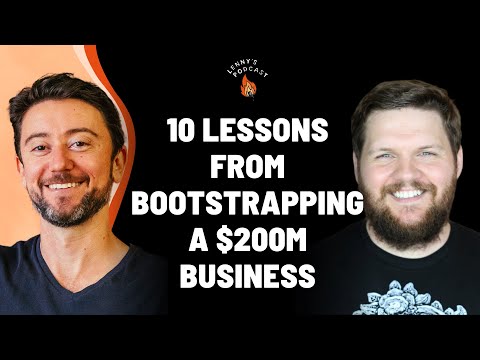
10 lessons on bootstrapping a $200m business | Patrick Campbell (ProfitWell)
Patrick Campbell: the story and the lessons
1Patrick Campbell's path to ProfitWell
Campbell bootstrapped ProfitWell with no funding and sold it for over $200 million. He built the subscription metrics and pricing company without outside money and became known for his work on pricing and retention.
Campbell started as an entry-level NSA analyst and left after about a year. The job meant solving puzzles about how other parties will react. He left after just over a year because of the bureaucracy, though it was one of his most fulfilling jobs.
It taught him to distrust his first reaction, since a surprising event usually has linked causes elsewhere.
Before product-market fit, Campbell stayed in hostels to meet buyers. A talk on pricing drew follow-up questions that were worth more than a Zoom interview.
He says being in person is the best way to learn early on.
ProfitWell tried to sell its metrics product, then made it free. Campbell says people won't pay for a SaaS analytics tool, because analysts do everything in spreadsheets anyway. ProfitWell gave a clean UI and pushed data into spreadsheets, email and databases.
Paid products were monetized separately on a pay-for-performance model. His advice to analytics startups is to go up market into a data product or go very niche.
2Why Campbell says ProfitWell should have raised money
Campbell says bootstrapping is for cash-flow businesses and funding is for billion-dollar goals. He believes ProfitWell could have reached a billion dollar exit, or kept going, if it had funded its growth earlier.
He expects this to offend indie friends who point to Basecamp and Wistia. His view is that founders got hooked on efficiency and skipped the step that makes a big company possible.
He would raise only with a clear path to $1 billion in annual revenue. If you can't see that path, the idea probably isn't venture scale. The path can take 20 years.
Money is plentiful, so a weak idea can still raise, which he sees as the danger.
A founder who sells for $400 to $500 million may net less than a cash-flow founder. He compares a founder on the funding treadmill with one who built a $50 million cash-flowing business.
He also calls a $10 million software business an achievement worth celebrating.
For his next company he plans to bootstrap the first 18 to 24 months. That keeps equity in his hands while the idea takes shape, before he raises.
3Campbell's pricing playbook
Campbell does one pricing action every quarter and tracks revenue per customer. Most companies put time and money into acquisition and retention and nothing into monetization because it feels nebulous. He sets a pricing committee of two people in a tiny company and about eight core people in a large one.
Put a recurring calendar invite every three months. You will snooze it, but measuring the number triggers action. Levers include price, packaging, add-ons, discounts, localization and freemium.
Campbell calls the value metric the best pricing lever pound for pound. Charging by usage (per user, per video, per thousand visits) means a Disney-sized customer pays differently from a small startup. Expansion revenue is typically double, and downgrades run about 20 to 25 percent higher.
Customers upgrade as usage grows, so nobody has to be resold on a higher tier. It is harder for consumer companies and very hard for physical goods.
He raises prices once a year if NPS is above 20. Most companies change price only once every three years, so many are overdue.
He skips it only if the product isn't improving and support and NPS are poor. If politics blocks pricing work, a price increase is a tight, concrete place to start, though it still needs data, sales proof and enablement.
4Campbell on tactical retention
Campbell says product teams miss tactical retention while chasing strategic retention. Payment failures, term optimization, cancellation flows and offboarding typically make up 25 to 40 percent of the churn problem past product-market fit. About two months of work fixes much of it.
The fix for failed cards is a simple marketing-style funnel, which he calls "not rocket science". He suggests finance teams own it, since product teams look to the future.
His cancellation flow asks two multiple-choice questions in 18 to 30 seconds. First ask why they are leaving, then what they liked about the product. The second question taps nostalgia and breaks the momentum of a customer on a freight train to cancel.
The advice comes from about 2 million cancellation flows, and free text gave roughly one useful answer in a hundred. Answers plus engagement and plan data decide the offer: salvage, pause or maintenance plan.
Campbell finds products retain best when used daily or when they need no login. Products in the middle, used occasionally, see the worst churn, which he calls "death". The data came from about $30 billion in ARR through ProfitWell Metrics.
ProfitWell's retention tool is set up for the customer with prebuilt emails and flows, so they get value without having to use it.
5How Campbell builds demand in a crowded market
Campbell commits to 10 non-sales customer conversations a month. A company started today faces 16 times the competitors of ten years ago, so guessing no longer works. Only 1 in 5 companies has personas and 1 in 10 does research quarterly. Those that do grow 15 to 20 percent faster.
Alternatively send one survey that takes 30 to 45 seconds, and don't open with "what's your email". Research informs the decision and doesn't make it.
He meets prospects in person with cheap events matched to lead priority. People you have met show 10 to 30 percent higher willingness to pay, about 20 percent lower churn and 15 to 20 percent higher expansion revenue. This held for scaled products too.
Priority 1 leads get one-on-one coffees, and priority 2 and 3 leads go to meetups. Lunch and learns drew 10 to 20 Priority One leads, and meetups drew 100 or more people each.
Campbell builds a warm pool in the middle of the funnel. About 80 percent of sales and marketing budgets go to the top and bottom, where efficiency has plummeted. Freemium converts retain 10 to 20 percent better and give about double the NPS.
He used to write that freemium was terrible and is now a convert. At the sale ProfitWell ran eight niche shows, including Pricing Page Teardown and Boxed Out for subscription e-commerce.
Campbell ran a competitive intelligence program but kept it away from product. ProfitWell sent automated white-label NPS and research surveys to competitors' customers under third-party brands. He also phoned loyal competitor customers every quarter or two to ask why they hadn't switched.
He calls "don't focus on your competitors" terrible advice. ProfitWell skipped comparison pages because it quickly became the leader, but he says challengers should publish honest ones.
6How Campbell builds teams and keeps them shipping
Campbell says shipping tempo matters more than org design. He sets a mission, a mission metric and guiding principles at the top. ProfitWell's mission was to automate subscription growth, measured by revenue running on ProfitWell, with the principle of being the most helpful brand in SaaS.
Each org leader then sets a shipping target, such as launches per month. At ProfitWell, marketing agreed on one medium launch a month and one big one a quarter, and product supplied one item a month to position.
He treats missed tempo as an org problem, not a people problem. A hire judged weak nine months in often had no expectation set. Talking through the gap exposes real causes, like too few resources or two teams not talking.
He uses problem, cause, solution instead of the five whys. State the problem, list its causes, rank them by size, then match solutions to the biggest. He learned the method in school debate.
For the metrics product's growth problem, causes included unwilling payers and a dense market, so the answer was freemium plus pay-for-performance products. For an angry support ticket, the cause is a slow reply, so the first line apologizes for the delay.
ProfitWell's values forced trade-offs, led by the most charitable interpretation. Staff assume the other person didn't know and talk to them directly instead of escalating to HR. Anyone who can't take that view has to go, and the culture improved once it was enforced.
He notes that sending staff to HR infantilizes smart people, and that once the company passed 20 people small frictions started to pile up.
Campbell screens for culture in the interview and ends with a Slack case study. He raises values and trade-offs with candidates and tells them it is fine if they don't fit. The final round describes an indirectly offensive Slack reply and asks what the candidate and the company should do.
About 10 percent of candidates wanted zero tolerance. He tells every candidate he has never seen this at ProfitWell, so they don't feel fear.
He likes hiring veterans, intelligence alumni and people from customer insight teams. They bring a way of thinking startups rarely grow themselves. Hallmark, an early pricing customer, had 119 people in customer insights and research.
He warns that long-tenured government staff can be a risk because the work is bureaucratic. ProfitWell had no formal veteran hiring program.

10 lessons on bootstrapping a $200m business | Patrick Campbell (ProfitWell)
Patrick Campbell covers ten topics from bootstrapping ProfitWell to a $200 million sale: pricing cadence, tactical retention, shipping tempo, customer research, local sales and middle-of-funnel strategy. The result is a set of concrete benchmarks and routines, such as pricing metrics that double expansion revenue and cancellation flows that recover churn.
Campbell bootstrapped ProfitWell with no funding and sold it for over $200 million. He built the subscription metrics and pricing company without outside money and became known for his work on pricing and retention.
Campbell started as an entry-level NSA analyst and left after about a year. The job meant solving puzzles about how other parties will react. He left after just over a year because of the bureaucracy, though it was one of his most fulfilling jobs.
It taught him to distrust his first reaction, since a surprising event usually has linked causes elsewhere.
Before product-market fit, Campbell stayed in hostels to meet buyers. A talk on pricing drew follow-up questions that were worth more than a Zoom interview.
He says being in person is the best way to learn early on.
ProfitWell tried to sell its metrics product, then made it free. Campbell says people won't pay for a SaaS analytics tool, because analysts do everything in spreadsheets anyway. ProfitWell gave a clean UI and pushed data into spreadsheets, email and databases.
Paid products were monetized separately on a pay-for-performance model. His advice to analytics startups is to go up market into a data product or go very niche.
Campbell says bootstrapping is for cash-flow businesses and funding is for billion-dollar goals. He believes ProfitWell could have reached a billion dollar exit, or kept going, if it had funded its growth earlier.
He expects this to offend indie friends who point to Basecamp and Wistia. His view is that founders got hooked on efficiency and skipped the step that makes a big company possible.
He would raise only with a clear path to $1 billion in annual revenue. If you can't see that path, the idea probably isn't venture scale. The path can take 20 years.
Money is plentiful, so a weak idea can still raise, which he sees as the danger.
A founder who sells for $400 to $500 million may net less than a cash-flow founder. He compares a founder on the funding treadmill with one who built a $50 million cash-flowing business.
He also calls a $10 million software business an achievement worth celebrating.
For his next company he plans to bootstrap the first 18 to 24 months. That keeps equity in his hands while the idea takes shape, before he raises.
Campbell does one pricing action every quarter and tracks revenue per customer. Most companies put time and money into acquisition and retention and nothing into monetization because it feels nebulous. He sets a pricing committee of two people in a tiny company and about eight core people in a large one.
Put a recurring calendar invite every three months. You will snooze it, but measuring the number triggers action. Levers include price, packaging, add-ons, discounts, localization and freemium.
Campbell calls the value metric the best pricing lever pound for pound. Charging by usage (per user, per video, per thousand visits) means a Disney-sized customer pays differently from a small startup. Expansion revenue is typically double, and downgrades run about 20 to 25 percent higher.
Customers upgrade as usage grows, so nobody has to be resold on a higher tier. It is harder for consumer companies and very hard for physical goods.
He raises prices once a year if NPS is above 20. Most companies change price only once every three years, so many are overdue.
He skips it only if the product isn't improving and support and NPS are poor. If politics blocks pricing work, a price increase is a tight, concrete place to start, though it still needs data, sales proof and enablement.
Campbell says product teams miss tactical retention while chasing strategic retention. Payment failures, term optimization, cancellation flows and offboarding typically make up 25 to 40 percent of the churn problem past product-market fit. About two months of work fixes much of it.
The fix for failed cards is a simple marketing-style funnel, which he calls "not rocket science". He suggests finance teams own it, since product teams look to the future.
His cancellation flow asks two multiple-choice questions in 18 to 30 seconds. First ask why they are leaving, then what they liked about the product. The second question taps nostalgia and breaks the momentum of a customer on a freight train to cancel.
The advice comes from about 2 million cancellation flows, and free text gave roughly one useful answer in a hundred. Answers plus engagement and plan data decide the offer: salvage, pause or maintenance plan.
Campbell finds products retain best when used daily or when they need no login. Products in the middle, used occasionally, see the worst churn, which he calls "death". The data came from about $30 billion in ARR through ProfitWell Metrics.
ProfitWell's retention tool is set up for the customer with prebuilt emails and flows, so they get value without having to use it.
Campbell commits to 10 non-sales customer conversations a month. A company started today faces 16 times the competitors of ten years ago, so guessing no longer works. Only 1 in 5 companies has personas and 1 in 10 does research quarterly. Those that do grow 15 to 20 percent faster.
Alternatively send one survey that takes 30 to 45 seconds, and don't open with "what's your email". Research informs the decision and doesn't make it.
He meets prospects in person with cheap events matched to lead priority. People you have met show 10 to 30 percent higher willingness to pay, about 20 percent lower churn and 15 to 20 percent higher expansion revenue. This held for scaled products too.
Priority 1 leads get one-on-one coffees, and priority 2 and 3 leads go to meetups. Lunch and learns drew 10 to 20 Priority One leads, and meetups drew 100 or more people each.
Campbell builds a warm pool in the middle of the funnel. About 80 percent of sales and marketing budgets go to the top and bottom, where efficiency has plummeted. Freemium converts retain 10 to 20 percent better and give about double the NPS.
He used to write that freemium was terrible and is now a convert. At the sale ProfitWell ran eight niche shows, including Pricing Page Teardown and Boxed Out for subscription e-commerce.
Campbell ran a competitive intelligence program but kept it away from product. ProfitWell sent automated white-label NPS and research surveys to competitors' customers under third-party brands. He also phoned loyal competitor customers every quarter or two to ask why they hadn't switched.
He calls "don't focus on your competitors" terrible advice. ProfitWell skipped comparison pages because it quickly became the leader, but he says challengers should publish honest ones.
Campbell says shipping tempo matters more than org design. He sets a mission, a mission metric and guiding principles at the top. ProfitWell's mission was to automate subscription growth, measured by revenue running on ProfitWell, with the principle of being the most helpful brand in SaaS.
Each org leader then sets a shipping target, such as launches per month. At ProfitWell, marketing agreed on one medium launch a month and one big one a quarter, and product supplied one item a month to position.
He treats missed tempo as an org problem, not a people problem. A hire judged weak nine months in often had no expectation set. Talking through the gap exposes real causes, like too few resources or two teams not talking.
He uses problem, cause, solution instead of the five whys. State the problem, list its causes, rank them by size, then match solutions to the biggest. He learned the method in school debate.
For the metrics product's growth problem, causes included unwilling payers and a dense market, so the answer was freemium plus pay-for-performance products. For an angry support ticket, the cause is a slow reply, so the first line apologizes for the delay.
ProfitWell's values forced trade-offs, led by the most charitable interpretation. Staff assume the other person didn't know and talk to them directly instead of escalating to HR. Anyone who can't take that view has to go, and the culture improved once it was enforced.
He notes that sending staff to HR infantilizes smart people, and that once the company passed 20 people small frictions started to pile up.
Campbell screens for culture in the interview and ends with a Slack case study. He raises values and trade-offs with candidates and tells them it is fine if they don't fit. The final round describes an indirectly offensive Slack reply and asks what the candidate and the company should do.
About 10 percent of candidates wanted zero tolerance. He tells every candidate he has never seen this at ProfitWell, so they don't feel fear.
He likes hiring veterans, intelligence alumni and people from customer insight teams. They bring a way of thinking startups rarely grow themselves. Hallmark, an early pricing customer, had 119 people in customer insights and research.
He warns that long-tenured government staff can be a risk because the work is bureaucratic. ProfitWell had no formal veteran hiring program.