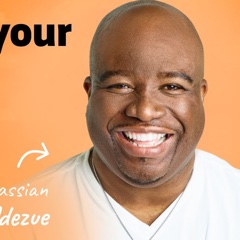
Oji Udezue
Chief Product Officer at Typeform; former CPO at Calendly, head of product at Twitter and Atlassian
Where to hear and read about Oji Udezue1 episode or test

Oji Udezue is Chief Product Officer at Typeform and has led product at Microsoft, Atlassian, Calendly and Twitter. The thing most worth learning from him is to pick a sharp problem first, one that makes a customer's workflow two to three times shorter, because growth tactics laid on a weak problem fizzle.
you have to accelerate me by three times for me to care.
Picking sharp problems, increasing virality, and unique product frameworks | Oji Udezue (Typeform)
Oji Udezue: the story and the lessons
1Oji Udezue's career and how he works
Udezue has built products at five very different companies. At Microsoft he worked on Windows, Outlook, Hotmail and Internet Explorer. He then led communication tools product at Atlassian, was CPO at Calendly, led creation and conversation at Twitter, and is now CPO at Typeform.
That range gives him a view of what works in product and growth across very different products. He also spent time at Bridgewater Associates and built a startup on a problem that was not sharp.
He learned about sharp problems from his own failed startup. Udezue built a startup on a non-sharp problem and says the advice he gives now is scar tissue from those mistakes. He is putting it into a book that treats product management and PLG as one practice.
He plans to make the book freemium so readers in Africa and India can get it, with premium versions adding tools and interviews to fund the free side.
Udezue blocks a full day each month to zoom out. He calls it forest time and uses a published worksheet that asks what the issues are and what alternative paths exist. He gives his executive team the same day monthly.
Aiming takes about 10% of product development time, and a bad aim can waste one to two million dollars of people's time. His line: "forest time should improve your aim."
He hires on skills, attributes and values, not skills alone. He took the three-part view from Bridgewater, which names the attributes it wants in job descriptions. In interviews he asks candidates to introduce themselves, then say what they are great at and what they need to learn.
He says Google's skill-based interviewing was only 50/50 predictive. He rejects Bridgewater's practice, including 80% attrition and real-time dot ratings, as not human or empathetic.
Udezue learns frameworks deeply enough to derive and adapt them. He prefers the term mental model and warns that blind use of frameworks harms people and their businesses. He tailors advice to whether a company is starting, in the middle or scaling.
His math analogy is being able to derive the equation instead of memorizing it.
2How Udezue judges whether a problem is sharp
He argues the problem you pick matters as much as your method. Udezue says the lean, fail-fast decade fixed founder ideas that customers never validated, but customer science alone does not explain everything. His 'Where to Fish to Land a Unicorn' framework sorts B2B workflows by how many departments use them and how often they run.
Founders can judge their odds before investing years, and investors can decide where to put money.
Frequent workflows in one team are his best place to fish. High-frequency niche workflows like Jira, recruiting tools, martech and sales tech are where B2B SaaS thrives. Workflows used by everyone, such as email, Word and Slack, pay most but are dominated by Microsoft and Google.
A company can move up from a low-frequency quadrant by finding the department that treats its product as mission critical. Typeform is trying to become the first thought of marketers and salespeople.
A problem is sharp when the product makes work two to three times better. A 20% improvement goes unnoticed, so people will not pay or switch for it. At about three times faster, people feel the gain enough to part with money.
He frames this as a zone of benefit: shrink the workflow, or give a superpower such as twice the output in the same time.
Udezue measures sharpness by drawing the workflow before and after. Before launch he draws the current workflow and the workflow with the product as two horizontal lines and compares their lengths. After launch he interviews the most enthusiastic customers and maps how their workflow changed.
He calls workflows the unit of productivity and prefers them to specs or use cases.
He distrusts wide eyes and nodding as proof of a sharp problem. Excitement can be noise, so he leans on measured workflow compression and customer research. People asking unprompted when they can pay is a useful hint, not proof.
"Sometimes it's just excitement and just noise."
On a sharp problem, mistakes are survivable. Customer obsession carries a team through errors. Without it, you pay heavily for marketing and word of mouth, and people drop the product in a recession.
He prefers a problem billions feel over one 100,000 people care about, unless you can charge thousands each. His example of a fun but not sharp product is mmhmm camera.
He finds the ICP among people who say they really care. Once an audience passes 100 people, he watches for those who say they really care. Best customers are not price sensitive because they get the value.
Calendly's ICP was salespeople, marketers and recruiters scheduling with outsiders. Typeform's is marketers. Twitter's was experts and their followers, and media groups like the NFL, NBA and HBO were an unseen 30% of customers.
3Udezue on onboarding, activation and customer listening
He treats onboarding as a stand-in for a salesperson. It replaces sales and account management for millions of customers and should feel like a friendly human guiding an evaluator. The buyer grasps the value, judges simplicity, kicks the tires, then chooses.
He calls it social psychology and says offline retail people who stock shelves are extraordinarily good at it.
Udezue keeps mandatory onboarding to about three screens. At Calendly the mandatory setup was only a calendar connection and default hours like 9 to 5, because those two steps set up later success. Everything else is optional guidance available at random access.
He found long click-through wizards gave limited benefit. One or two examples of what good looks like work because they are mimetic.
He shows trial status so users know where they stand. Users should see where they are in the trial and when payment is expected, for example after seven days. Typeform is trying a new twist on freemium.
He says there is no one-size-fits-all approach.
Udezue defines activation as three escalating thresholds. Each product places its rungs at the action that builds its core value, and the team studies drop-off between them. At Calendly, five meetings in a week is far stronger than the first one.
Typeform's rungs are publishing a form, getting responses and reading them on the insights page. Twitter's is following or being followed, since follows supply the content that brings people back.
He puts customer calls on team calendars by default. At Calendly and Typeform, customer calls land weekly on the calendars of PMs, designers, engineering managers and PMMs, who are trained to run them. Friction kills discovery.
"If you ask individuals to do customer discovery, they will not do customer discovery." The hard part is talking to the right customer, continuously. Talking to one customer is useless and 100 is very useful.
He runs customer listening as a triage workflow for existing signals. Signals already arrive from social posts, app stores, G2, churn surveys, NPS verbatims, bug reports, Zendesk and closed-lost deals in Salesforce. At Calendly he built a Slack-based workflow where people triaged them.
He has tried this at Twitter, Atlassian, Calendly and Typeform and thinks the industry still does it poorly.
4Udezue on virality and network effects
He says virality comes from a great product, not tricks. Virality is customers marketing a product through high-quality word of mouth, and referral mechanics only amplify it. Synthetic virality fails when people arrive and find a poor product.
Slack had no sharing mechanism at first. Coworkers at lunch called it amazing and the floor above asked when they could get it.
Uber and Calendly show virality following product quality. Uber has no viral trap. It compressed the cab workflow so much that it spread on its own, and after Austin kicked it out it returned a year later and crushed the apps that filled the gap.
Calendly beat earlier tools like Acuity Scheduling by being simple and respectful of the scheduler's time, not just the creator's. Its green dots showing when people are free are one network-effect feature.
Virality lets Atlassian spend less on marketing. Udezue calls virality customer-augmented marketing, where customers push, shame or FOMO others into adopting the product. Atlassian spends roughly 10 to 20 points less on marketing than comparable competitors.
Network effects, fanatical customer support and referral pages all add to net virality.
He calls network effects the most powerful feature a product can have. Passive members gain value when others join, as with Facebook and the Word file format. Critical mass is not mathematically defined: you have hit it when people join because others are already there.
Twitter survived losing most staff and its brand, and the last telegram was sent in 2016, over 100 years after its invention.
Udezue sees revenue as the weak point of a network. If advertisers leave, the money to improve the network dries up and a negative spiral begins. A challenger can win by winning the revenue spiral rather than activity.
He expects Threads to prosper because it can earn money even from a smaller base, and for advertisers it is just another click.

Picking sharp problems, increasing virality, and unique product frameworks | Oji Udezue (Typeform)
Oji Udezue shares product and growth frameworks for choosing sharp problems, finding ICPs, onboarding users, and building virality through product quality rather than tricks. He draws on his work at Atlassian, Calendly, Twitter and Typeform, and explains how to judge a problem's sharpness with measurable workflow compression.
Udezue has built products at five very different companies. At Microsoft he worked on Windows, Outlook, Hotmail and Internet Explorer. He then led communication tools product at Atlassian, was CPO at Calendly, led creation and conversation at Twitter, and is now CPO at Typeform.
That range gives him a view of what works in product and growth across very different products. He also spent time at Bridgewater Associates and built a startup on a problem that was not sharp.
He learned about sharp problems from his own failed startup. Udezue built a startup on a non-sharp problem and says the advice he gives now is scar tissue from those mistakes. He is putting it into a book that treats product management and PLG as one practice.
He plans to make the book freemium so readers in Africa and India can get it, with premium versions adding tools and interviews to fund the free side.
Udezue blocks a full day each month to zoom out. He calls it forest time and uses a published worksheet that asks what the issues are and what alternative paths exist. He gives his executive team the same day monthly.
Aiming takes about 10% of product development time, and a bad aim can waste one to two million dollars of people's time. His line: "forest time should improve your aim."
He hires on skills, attributes and values, not skills alone. He took the three-part view from Bridgewater, which names the attributes it wants in job descriptions. In interviews he asks candidates to introduce themselves, then say what they are great at and what they need to learn.
He says Google's skill-based interviewing was only 50/50 predictive. He rejects Bridgewater's practice, including 80% attrition and real-time dot ratings, as not human or empathetic.
Udezue learns frameworks deeply enough to derive and adapt them. He prefers the term mental model and warns that blind use of frameworks harms people and their businesses. He tailors advice to whether a company is starting, in the middle or scaling.
His math analogy is being able to derive the equation instead of memorizing it.
He argues the problem you pick matters as much as your method. Udezue says the lean, fail-fast decade fixed founder ideas that customers never validated, but customer science alone does not explain everything. His 'Where to Fish to Land a Unicorn' framework sorts B2B workflows by how many departments use them and how often they run.
Founders can judge their odds before investing years, and investors can decide where to put money.
Frequent workflows in one team are his best place to fish. High-frequency niche workflows like Jira, recruiting tools, martech and sales tech are where B2B SaaS thrives. Workflows used by everyone, such as email, Word and Slack, pay most but are dominated by Microsoft and Google.
A company can move up from a low-frequency quadrant by finding the department that treats its product as mission critical. Typeform is trying to become the first thought of marketers and salespeople.
A problem is sharp when the product makes work two to three times better. A 20% improvement goes unnoticed, so people will not pay or switch for it. At about three times faster, people feel the gain enough to part with money.
He frames this as a zone of benefit: shrink the workflow, or give a superpower such as twice the output in the same time.
Udezue measures sharpness by drawing the workflow before and after. Before launch he draws the current workflow and the workflow with the product as two horizontal lines and compares their lengths. After launch he interviews the most enthusiastic customers and maps how their workflow changed.
He calls workflows the unit of productivity and prefers them to specs or use cases.
He distrusts wide eyes and nodding as proof of a sharp problem. Excitement can be noise, so he leans on measured workflow compression and customer research. People asking unprompted when they can pay is a useful hint, not proof.
"Sometimes it's just excitement and just noise."
On a sharp problem, mistakes are survivable. Customer obsession carries a team through errors. Without it, you pay heavily for marketing and word of mouth, and people drop the product in a recession.
He prefers a problem billions feel over one 100,000 people care about, unless you can charge thousands each. His example of a fun but not sharp product is mmhmm camera.
He finds the ICP among people who say they really care. Once an audience passes 100 people, he watches for those who say they really care. Best customers are not price sensitive because they get the value.
Calendly's ICP was salespeople, marketers and recruiters scheduling with outsiders. Typeform's is marketers. Twitter's was experts and their followers, and media groups like the NFL, NBA and HBO were an unseen 30% of customers.
He treats onboarding as a stand-in for a salesperson. It replaces sales and account management for millions of customers and should feel like a friendly human guiding an evaluator. The buyer grasps the value, judges simplicity, kicks the tires, then chooses.
He calls it social psychology and says offline retail people who stock shelves are extraordinarily good at it.
Udezue keeps mandatory onboarding to about three screens. At Calendly the mandatory setup was only a calendar connection and default hours like 9 to 5, because those two steps set up later success. Everything else is optional guidance available at random access.
He found long click-through wizards gave limited benefit. One or two examples of what good looks like work because they are mimetic.
He shows trial status so users know where they stand. Users should see where they are in the trial and when payment is expected, for example after seven days. Typeform is trying a new twist on freemium.
He says there is no one-size-fits-all approach.
Udezue defines activation as three escalating thresholds. Each product places its rungs at the action that builds its core value, and the team studies drop-off between them. At Calendly, five meetings in a week is far stronger than the first one.
Typeform's rungs are publishing a form, getting responses and reading them on the insights page. Twitter's is following or being followed, since follows supply the content that brings people back.
He puts customer calls on team calendars by default. At Calendly and Typeform, customer calls land weekly on the calendars of PMs, designers, engineering managers and PMMs, who are trained to run them. Friction kills discovery.
"If you ask individuals to do customer discovery, they will not do customer discovery." The hard part is talking to the right customer, continuously. Talking to one customer is useless and 100 is very useful.
He runs customer listening as a triage workflow for existing signals. Signals already arrive from social posts, app stores, G2, churn surveys, NPS verbatims, bug reports, Zendesk and closed-lost deals in Salesforce. At Calendly he built a Slack-based workflow where people triaged them.
He has tried this at Twitter, Atlassian, Calendly and Typeform and thinks the industry still does it poorly.
He says virality comes from a great product, not tricks. Virality is customers marketing a product through high-quality word of mouth, and referral mechanics only amplify it. Synthetic virality fails when people arrive and find a poor product.
Slack had no sharing mechanism at first. Coworkers at lunch called it amazing and the floor above asked when they could get it.
Uber and Calendly show virality following product quality. Uber has no viral trap. It compressed the cab workflow so much that it spread on its own, and after Austin kicked it out it returned a year later and crushed the apps that filled the gap.
Calendly beat earlier tools like Acuity Scheduling by being simple and respectful of the scheduler's time, not just the creator's. Its green dots showing when people are free are one network-effect feature.
Virality lets Atlassian spend less on marketing. Udezue calls virality customer-augmented marketing, where customers push, shame or FOMO others into adopting the product. Atlassian spends roughly 10 to 20 points less on marketing than comparable competitors.
Network effects, fanatical customer support and referral pages all add to net virality.
He calls network effects the most powerful feature a product can have. Passive members gain value when others join, as with Facebook and the Word file format. Critical mass is not mathematically defined: you have hit it when people join because others are already there.
Twitter survived losing most staff and its brand, and the last telegram was sent in 2016, over 100 years after its invention.
Udezue sees revenue as the weak point of a network. If advertisers leave, the money to improve the network dries up and a negative spiral begins. A challenger can win by winning the revenue spiral rather than activity.
He expects Threads to prosper because it can earn money even from a smaller base, and for advertisers it is just another click.