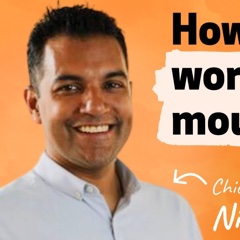
Nilan Peiris
Chief Product Officer at Wise
Where to hear and read about Nilan Peiris1 episode or test

Nilan Peiris is chief product officer at Wise, where he has led product for over 11 years, and Wise now gets about 70% of its new customers by word of mouth. The lesson to take is to find what customers keep asking for, make that 10x better than anyone else, and back the hard work with conviction instead of split tests.
you have to give them an experience they didn't know was previously possible.
How to drive word of mouth | Nilan Peiris (CPO of Wise)
Nilan Peiris: the story and the lessons
1Nilan Peiris and the word of mouth engine at Wise
Peiris has run Wise's product from nearly the beginning. He is chief product officer and has been at Wise for over 11 years. Wise sends money in more than 60 currencies to over 160 countries.
The business has 16 million customers and about 10 million actives. It moves about $12 billion a month, growing 30 to 40% a year, and has been profitable for over four years with 20% EBITDA margins. The average price is about 0.65% across all routes.
About 70% of Wise's new customers come from a friend. Of about 1 million customers who joined in a quarter, around 700,000 heard about Wise from a friend.
Money is a commodity, and Wise charges less than rivals, so it has less margin to spend on paid marketing. Word of mouth is the one channel that scales cheaply.
Wise started with a good product, no customers and no playbook. Peiris and the founders launched the first Google ads and tried every channel. Ten to twelve years ago he asked growth peers such as Andrew Chen what to measure for word of mouth, and nothing existed.
So Wise worked it out step by step: first asking customers how they heard about it, then finding what drives recommendation.
Wise measures word of mouth by asking inside the sign-up flow. A 'how did you hear about us' question is sampled at sign-up. The answers are overlaid on referrer and cookie data to size what shows up as direct traffic.
Airbnb measured it the same way with a simple interstitial. Peiris says of Wise's version: "It's actually integrated into the flow."
2How Peiris finds what makes customers recommend Wise
Peiris uses NPS to find who actually recommends the product. Invite rates and invite conversion were very low at scores of 1 to 6. Moving from 6 to the 7 to 8 group doubled the people a customer told, 8 to 9 doubled it again, and 9 to 10 doubled it again.
Moving people into the 9 to 10 group is worth far more than the average score suggests.
He pushes NPS, not conversion rate, because it compounds. A 10% conversion lift is a one-off gain. Moving NPS from 30 to 50 raises the viral coefficient of the whole customer base.
Modeled, the return on NPS gains was huge, so NPS became the metric the business rallied behind.
Wise emailed every NPS comment to the whole company weekly. The team started this in year one and kept going for three or four years. Customers kept repeating the same asks: faster, cheaper, easier to use.
That became the three product pillars of price, speed and ease of use. Seven or eight years ago the team still argued over whether trust or something else mattered most, so conviction came slowly.
Wise only earned advocacy once it was 8 to 10 times cheaper. A price of 5.9% against a rival's 6% won customers but no talk. Recommendations began when Wise was eight to 10 times cheaper.
"We only got the advocacy when we were eight to 10 times cheaper."
Peiris aims for an experience users did not know was possible. Most teams stop once the product works or polish conversion. Wise went after instant transfers and a price drop from 6% to 0.35%.
Wise's NPS is about 70, against roughly negative 30 for banks. Peiris says it is above the iPhone and Google search. In a new market it starts in the 20s and 30s.
He lets friends build trust instead of writing trust copy. Landing page trust signals were far weaker than a friend's tip, and trust fears can be solved one by one only slowly.
Even customers who arrive through marketing usually heard about Wise from a friend first. In his words: "what people trust is their friends."
A mission email with no call to action beat all other marketing. After a rebrand about eight or nine years ago, Wise emailed customers its mission with no sign-up button. Customers forwarded it with 'you should check out Wise'.
Peiris credits authenticity: the founders and many staff are immigrants who felt the cost of moving money. "We got more new customers from that email being forwarded around than any other kind of marketing."
3How Wise got to 10x better on price, speed and ease
Peiris refuses to plug into someone else's payment rails. Opening Indonesia through a partner's route brought some users but no hockey stick growth, because nothing was 10x better for the customer.
He asks for the theoretical minimum cost into a market and the maximum speed, then asks how to get there in two years. "You've got to build a 10x better product than what's there."
Wise prices from the cost each transaction causes. Each bill is allocated to the customer or transfer that generated it, and margin is added on top. About 20% of customers generate 80% of costs, so they pay more and everyone else pays less.
A 'where is my transfer' call is charged to the AUD/GBP route, and the checks on a Brazilian business needing 20 documents are charged to that segment. Wise launched at 0.5%, is now around 0.35%, and is profitable on every transaction.
Wise engineers away its three transaction costs. The costs are people, realized risk and partner fees. Limiting exposure and algorithms halved FX risk cost over a few years, and automation cuts support and operations costs about 20% a year.
Peiris says to "invest as much of your cashflow in engineering" as possible to remove these costs. A 20% yearly gain is not a 10x step, which is why the bigger fights mattered.
Peiris got customers to lobby Singapore's government for Wise. Singapore's regulator required meeting every customer in person, with about 20,000 people on the wait list. Wise opened an office and had its verification team do the checks onsite.
Customers hated it, so Wise got them to complain to the government, not to Wise. After a year of lobbying and a year of building, Wise won the world's first eKYC license, letting users verify with a selfie and an ID photo.
Wise went to central banks directly for the cheapest partner. The cheapest banking partner is the central bank, so Wise got accounts there, including at the Bank of England.
Each account was as hard as the Singapore verification fight and took years of lobbying.
Wise built an account because transfers alone could not reach more users. Nobody downloads an app to move $10, so the account serves people who handle foreign money regularly. Businesses get local account details in three clicks.
Launching the account in a market brought 20 to 30% more cross-border volume from it. Deposits are about $12.5 billion, held in government bonds, and Wise deliberately has no banking license.
4How Peiris runs product teams
Peiris builds conviction on core levers instead of split testing everything. Wise bets that the lowest cost, fastest, highest quality platform wins the world's volume. A 10% price cut only shows in a test if over 10% more customers happen to arrive that day.
He told a new PM who wanted to test everything to talk to customers, build a gut feel, pick one change in three weeks, then launch and test. "You can't split test your way to love." Data still guards against hubris.
He checks for harm with a beta and a small holdout. Define what counts as something breaking. A holdout can be smaller than the sample needed for significance, since the goal is only to catch negative impact.
If a change will not be rolled back, ship it. Each quarter teams report what they shipped, how many used it and the effect on volume.
Teams can build ideas that leaders call crazy. Wise's founder called a standalone currency converter a crazy idea. The SEO team built it anyway to capture the large search traffic for 'currency converter'.
It now draws huge visit numbers and sign-ups. Wise still measures the impact of almost everything.
The product team is rewarded for hard problems and given air cover. The founders see work that is not hard and new as a waste of time. New hires who expect to play with a few things get a rude awakening.
In slow months marketing could turn on paid spend while product teams kept at the hard problems, with no pressure to hit a quarterly goal. "We're super incentivized to do the hard things, and that's what's rewarded."
One global onboarding codebase, with local teams contributing. The same onboarding code runs in Brazil, New York and Australia. Local teams own conversion and KYC cost for their market, and the global team owns overall KPIs.
Anyone can make a pull request, and sub-types such as Japan's three-sided ID photo emerge from market feedback. This avoids the usual international backlog where everyone argues for priority.
Autonomous KPI teams gave way to squads and tribes at 30 teams. Teams first owned parts of a KPI tree of cheaper, faster and easier. At about 30 teams, quarterly planning grew from an afternoon to two days.
Autonomy now sits at squad level around products, such as the Wise account, business, platform and financial crime. A squad director sets the vision and is accountable for results, and tribes give light-touch strategy.
A customer insight tripled referrals after 12 years of testing. Variants tried chocolate, cash, $10, $200 and $500, and the sweet spot sat around three for $100. Then a PM noticed customers believed they saved money but not the number in the post-transfer email.
The question became what it would take to make them believe the number, and the change raised referrals by 300%. "People believed they saved money, but they didn't believe the number."

How to drive word of mouth | Nilan Peiris (CPO of Wise)
Wise gets about 70% of new customers through word of mouth by using NPS comments to find what customers want (price, speed, ease of use) and then making those things 10x better than anyone else. The episode explains how that plays out in pricing, experimentation, team structure and referrals, at a company moving about $12 billion a month and profitable for more than four years.
Peiris has run Wise's product from nearly the beginning. He is chief product officer and has been at Wise for over 11 years. Wise sends money in more than 60 currencies to over 160 countries.
The business has 16 million customers and about 10 million actives. It moves about $12 billion a month, growing 30 to 40% a year, and has been profitable for over four years with 20% EBITDA margins. The average price is about 0.65% across all routes.
About 70% of Wise's new customers come from a friend. Of about 1 million customers who joined in a quarter, around 700,000 heard about Wise from a friend.
Money is a commodity, and Wise charges less than rivals, so it has less margin to spend on paid marketing. Word of mouth is the one channel that scales cheaply.
Wise started with a good product, no customers and no playbook. Peiris and the founders launched the first Google ads and tried every channel. Ten to twelve years ago he asked growth peers such as Andrew Chen what to measure for word of mouth, and nothing existed.
So Wise worked it out step by step: first asking customers how they heard about it, then finding what drives recommendation.
Wise measures word of mouth by asking inside the sign-up flow. A 'how did you hear about us' question is sampled at sign-up. The answers are overlaid on referrer and cookie data to size what shows up as direct traffic.
Airbnb measured it the same way with a simple interstitial. Peiris says of Wise's version: "It's actually integrated into the flow."
Peiris uses NPS to find who actually recommends the product. Invite rates and invite conversion were very low at scores of 1 to 6. Moving from 6 to the 7 to 8 group doubled the people a customer told, 8 to 9 doubled it again, and 9 to 10 doubled it again.
Moving people into the 9 to 10 group is worth far more than the average score suggests.
He pushes NPS, not conversion rate, because it compounds. A 10% conversion lift is a one-off gain. Moving NPS from 30 to 50 raises the viral coefficient of the whole customer base.
Modeled, the return on NPS gains was huge, so NPS became the metric the business rallied behind.
Wise emailed every NPS comment to the whole company weekly. The team started this in year one and kept going for three or four years. Customers kept repeating the same asks: faster, cheaper, easier to use.
That became the three product pillars of price, speed and ease of use. Seven or eight years ago the team still argued over whether trust or something else mattered most, so conviction came slowly.
Wise only earned advocacy once it was 8 to 10 times cheaper. A price of 5.9% against a rival's 6% won customers but no talk. Recommendations began when Wise was eight to 10 times cheaper.
"We only got the advocacy when we were eight to 10 times cheaper."
Peiris aims for an experience users did not know was possible. Most teams stop once the product works or polish conversion. Wise went after instant transfers and a price drop from 6% to 0.35%.
Wise's NPS is about 70, against roughly negative 30 for banks. Peiris says it is above the iPhone and Google search. In a new market it starts in the 20s and 30s.
He lets friends build trust instead of writing trust copy. Landing page trust signals were far weaker than a friend's tip, and trust fears can be solved one by one only slowly.
Even customers who arrive through marketing usually heard about Wise from a friend first. In his words: "what people trust is their friends."
A mission email with no call to action beat all other marketing. After a rebrand about eight or nine years ago, Wise emailed customers its mission with no sign-up button. Customers forwarded it with 'you should check out Wise'.
Peiris credits authenticity: the founders and many staff are immigrants who felt the cost of moving money. "We got more new customers from that email being forwarded around than any other kind of marketing."
Peiris refuses to plug into someone else's payment rails. Opening Indonesia through a partner's route brought some users but no hockey stick growth, because nothing was 10x better for the customer.
He asks for the theoretical minimum cost into a market and the maximum speed, then asks how to get there in two years. "You've got to build a 10x better product than what's there."
Wise prices from the cost each transaction causes. Each bill is allocated to the customer or transfer that generated it, and margin is added on top. About 20% of customers generate 80% of costs, so they pay more and everyone else pays less.
A 'where is my transfer' call is charged to the AUD/GBP route, and the checks on a Brazilian business needing 20 documents are charged to that segment. Wise launched at 0.5%, is now around 0.35%, and is profitable on every transaction.
Wise engineers away its three transaction costs. The costs are people, realized risk and partner fees. Limiting exposure and algorithms halved FX risk cost over a few years, and automation cuts support and operations costs about 20% a year.
Peiris says to "invest as much of your cashflow in engineering" as possible to remove these costs. A 20% yearly gain is not a 10x step, which is why the bigger fights mattered.
Peiris got customers to lobby Singapore's government for Wise. Singapore's regulator required meeting every customer in person, with about 20,000 people on the wait list. Wise opened an office and had its verification team do the checks onsite.
Customers hated it, so Wise got them to complain to the government, not to Wise. After a year of lobbying and a year of building, Wise won the world's first eKYC license, letting users verify with a selfie and an ID photo.
Wise went to central banks directly for the cheapest partner. The cheapest banking partner is the central bank, so Wise got accounts there, including at the Bank of England.
Each account was as hard as the Singapore verification fight and took years of lobbying.
Wise built an account because transfers alone could not reach more users. Nobody downloads an app to move $10, so the account serves people who handle foreign money regularly. Businesses get local account details in three clicks.
Launching the account in a market brought 20 to 30% more cross-border volume from it. Deposits are about $12.5 billion, held in government bonds, and Wise deliberately has no banking license.
Peiris builds conviction on core levers instead of split testing everything. Wise bets that the lowest cost, fastest, highest quality platform wins the world's volume. A 10% price cut only shows in a test if over 10% more customers happen to arrive that day.
He told a new PM who wanted to test everything to talk to customers, build a gut feel, pick one change in three weeks, then launch and test. "You can't split test your way to love." Data still guards against hubris.
He checks for harm with a beta and a small holdout. Define what counts as something breaking. A holdout can be smaller than the sample needed for significance, since the goal is only to catch negative impact.
If a change will not be rolled back, ship it. Each quarter teams report what they shipped, how many used it and the effect on volume.
Teams can build ideas that leaders call crazy. Wise's founder called a standalone currency converter a crazy idea. The SEO team built it anyway to capture the large search traffic for 'currency converter'.
It now draws huge visit numbers and sign-ups. Wise still measures the impact of almost everything.
The product team is rewarded for hard problems and given air cover. The founders see work that is not hard and new as a waste of time. New hires who expect to play with a few things get a rude awakening.
In slow months marketing could turn on paid spend while product teams kept at the hard problems, with no pressure to hit a quarterly goal. "We're super incentivized to do the hard things, and that's what's rewarded."
One global onboarding codebase, with local teams contributing. The same onboarding code runs in Brazil, New York and Australia. Local teams own conversion and KYC cost for their market, and the global team owns overall KPIs.
Anyone can make a pull request, and sub-types such as Japan's three-sided ID photo emerge from market feedback. This avoids the usual international backlog where everyone argues for priority.
Autonomous KPI teams gave way to squads and tribes at 30 teams. Teams first owned parts of a KPI tree of cheaper, faster and easier. At about 30 teams, quarterly planning grew from an afternoon to two days.
Autonomy now sits at squad level around products, such as the Wise account, business, platform and financial crime. A squad director sets the vision and is accountable for results, and tribes give light-touch strategy.
A customer insight tripled referrals after 12 years of testing. Variants tried chocolate, cash, $10, $200 and $500, and the sweet spot sat around three for $100. Then a PM noticed customers believed they saved money but not the number in the post-transfer email.
The question became what it would take to make them believe the number, and the change raised referrals by 300%. "People believed they saved money, but they didn't believe the number."