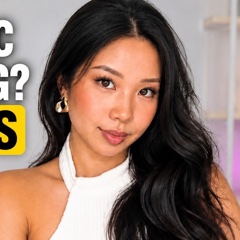
Nicole Cheung
Founder building consumer apps (Glam Up, Sprout) that reach 300-400 million monthly social views
Where to hear and read about Nicole Cheung1 episode or test

Nicole Cheung is a founder building consumer apps, including Glam Up and Sprout, with Glam Up reaching 300-400 million monthly social views. The lesson most worth taking from her is to find and film the viral format yourself, then hand it to paid creators through a tight training system.
you're hiring them to create content, not to figure out how to go viral for your app.
The UGC Marketing Playbook Behind 300M+ Monthly Views
Nicole Cheung: the story and the lessons
1How Nicole Cheung finds a viral format before hiring anyone
Cheung made the first videos go viral herself. At Glam Up there was no budget, so she and her co-founders made videos go viral first. They started scaling only once one worked.
Finding formats takes hours and days of research, and she treats that as the founder's job. "the moment it does go viral, that's when we start of scaling"
She does not expect paid creators to figure out virality. Many founders bet $10K to $20K on the best creators and expect hits. She says that misreads what creators are hired to do.
She admits that doing the research yourself is more stressful than paying someone to try, but that is the job.
Her first day on a new app idea is research, not posting. She studies the niche, the market and competitor apps before posting anything. She avoids testing a hundred ideas at once because it confuses the mind.
She rarely understands the industry when she starts building, so she treats it like being a student.
Day two goes to designing the screen meant to go viral. In Figma she mocks up several versions of the screen that will appear in social videos, not the onboarding flow.
She borrows design ideas from apps in her niche and from unrelated apps. Day three is distribution, or simply building.
She learns from competitors far smaller than her. She stays confident without being cocky and does not feel threatened by apps making $10K to $20K a month.
She often takes ideas from people with much smaller numbers and uses them in her own apps.
2How Cheung trains creators so any of them can repeat the format
She records a custom onboarding course for every app. The course runs from 30 minutes to over an hour. It covers the app and its setup, any codes needed, account creation and warm-up, content creation and account management.
It assumes creators know nothing, down to example usernames and bios. She systematizes it so she never repeats the same sentences. She films a new course per app, though the core ideas end up very similar.
Each idea ships with a content bank. The bank holds the idea, example videos, scripts, emotions, captions, on-video captions and hashtags.
Cheung films the example videos herself. If a creator's video goes viral, it replaces hers.
She writes scripts like screenplays to protect watch time. Each line gets an emotion and a camera angle, and shots vary between long, medium and short, with zooms in and out.
Watch time is the key signal for reach, so a phone held still with a flat voice is boring. She grew up in entertainment, and her brother is a film director.
She teaches creators that the job continues after posting. A module covers continued warm-up, using the comment section to raise engagement and posting stories.
Her team answers creator questions within a couple of hours so they feel supported. Many creators only want to post once and walk away, so she sets that expectation up front.
3Why Cheung has creators post from brand new accounts
Every creator opens a fresh account and posts from it. A brand new account is easier to steer toward the target audience than an existing one.
Each creator warms the account up with her playbook, which she has posted on her Twitter. "it's so easy to change the algorithm to your targeted audiences on a brand new account"
The warm-up is 3 days of following micro accounts. For three days, creators follow and repost accounts in the niche, choosing small niche accounts over huge ones.
Everyone follows someone like Messi, so a huge account tells the algorithm little. A tiny niche follow lets it place the account in one audience.
4How Nicole Cheung finds and screens UGC creators
She starts on UGC platforms, then moves to her network. Early on, platforms like SideShift bring many applicants to one campaign. After 2-3 years she relies on friends' UGC communities, a Discord application chat and recommendations.
A recommended creator must still be able to go viral with the content she wants.
She recruits micro-influencers who average about 10K views. She does direct outreach to creators who regularly get around 10K views and asks if they want to do UGC.
"a lot of these influencers, they go viral on TikTok or Instagram, but they have no way to monetize." That is why many say yes.
She interviews creators and accepts only about half. Filling a campaign from a platform is only about 5% of the work. When she started, she blocked entire days for interviews and accepted roughly 50% or fewer.
She wants creators who take it seriously, because they give the program a good foundation.
5How Cheung pays UGC creators
She pays a small base rate plus shrinking CPM bonuses. The base is $10 to $30 per post, with view bonuses starting at 10K or 50K views. $50 at 50K views is a $1 CPM, and $500 at 1M views is a $0.50 CPM.
Because the CPM falls as views grow, a viral hit is rewarded without becoming unaffordable. She wrote her pay playbook as a 60-page college thesis and still stands by most of it.
The base rate only applies after 500 views. She ties the base payment to a floor of about 500 views so she does not pay for posts that go nowhere.
This is her own rule, and other companies set the structure differently, so she treats the terms as a template.
She hires newer creators at $10 when content is easy to film. Experienced creators working with several apps will not take $10. A college student new to UGC will if the video is simple.
The base rate depends on the content type and where the creator was found.

The UGC Marketing Playbook Behind 300M+ Monthly Views
A founder lays out her UGC marketing system: how she pays creators, finds them, onboards them and warms up fresh accounts. The result is apps pulling 300-400 million monthly social views, with the founder owning the viral format rather than the creators.
Cheung made the first videos go viral herself. At Glam Up there was no budget, so she and her co-founders made videos go viral first. They started scaling only once one worked.
Finding formats takes hours and days of research, and she treats that as the founder's job. "the moment it does go viral, that's when we start of scaling"
She does not expect paid creators to figure out virality. Many founders bet $10K to $20K on the best creators and expect hits. She says that misreads what creators are hired to do.
She admits that doing the research yourself is more stressful than paying someone to try, but that is the job.
Her first day on a new app idea is research, not posting. She studies the niche, the market and competitor apps before posting anything. She avoids testing a hundred ideas at once because it confuses the mind.
She rarely understands the industry when she starts building, so she treats it like being a student.
Day two goes to designing the screen meant to go viral. In Figma she mocks up several versions of the screen that will appear in social videos, not the onboarding flow.
She borrows design ideas from apps in her niche and from unrelated apps. Day three is distribution, or simply building.
She learns from competitors far smaller than her. She stays confident without being cocky and does not feel threatened by apps making $10K to $20K a month.
She often takes ideas from people with much smaller numbers and uses them in her own apps.
She records a custom onboarding course for every app. The course runs from 30 minutes to over an hour. It covers the app and its setup, any codes needed, account creation and warm-up, content creation and account management.
It assumes creators know nothing, down to example usernames and bios. She systematizes it so she never repeats the same sentences. She films a new course per app, though the core ideas end up very similar.
Each idea ships with a content bank. The bank holds the idea, example videos, scripts, emotions, captions, on-video captions and hashtags.
Cheung films the example videos herself. If a creator's video goes viral, it replaces hers.
She writes scripts like screenplays to protect watch time. Each line gets an emotion and a camera angle, and shots vary between long, medium and short, with zooms in and out.
Watch time is the key signal for reach, so a phone held still with a flat voice is boring. She grew up in entertainment, and her brother is a film director.
She teaches creators that the job continues after posting. A module covers continued warm-up, using the comment section to raise engagement and posting stories.
Her team answers creator questions within a couple of hours so they feel supported. Many creators only want to post once and walk away, so she sets that expectation up front.
Every creator opens a fresh account and posts from it. A brand new account is easier to steer toward the target audience than an existing one.
Each creator warms the account up with her playbook, which she has posted on her Twitter. "it's so easy to change the algorithm to your targeted audiences on a brand new account"
The warm-up is 3 days of following micro accounts. For three days, creators follow and repost accounts in the niche, choosing small niche accounts over huge ones.
Everyone follows someone like Messi, so a huge account tells the algorithm little. A tiny niche follow lets it place the account in one audience.
She starts on UGC platforms, then moves to her network. Early on, platforms like SideShift bring many applicants to one campaign. After 2-3 years she relies on friends' UGC communities, a Discord application chat and recommendations.
A recommended creator must still be able to go viral with the content she wants.
She recruits micro-influencers who average about 10K views. She does direct outreach to creators who regularly get around 10K views and asks if they want to do UGC.
"a lot of these influencers, they go viral on TikTok or Instagram, but they have no way to monetize." That is why many say yes.
She interviews creators and accepts only about half. Filling a campaign from a platform is only about 5% of the work. When she started, she blocked entire days for interviews and accepted roughly 50% or fewer.
She wants creators who take it seriously, because they give the program a good foundation.
She pays a small base rate plus shrinking CPM bonuses. The base is $10 to $30 per post, with view bonuses starting at 10K or 50K views. $50 at 50K views is a $1 CPM, and $500 at 1M views is a $0.50 CPM.
Because the CPM falls as views grow, a viral hit is rewarded without becoming unaffordable. She wrote her pay playbook as a 60-page college thesis and still stands by most of it.
The base rate only applies after 500 views. She ties the base payment to a floor of about 500 views so she does not pay for posts that go nowhere.
This is her own rule, and other companies set the structure differently, so she treats the terms as a template.
She hires newer creators at $10 when content is easy to film. Experienced creators working with several apps will not take $10. A college student new to UGC will if the video is simple.
The base rate depends on the content type and where the creator was found.