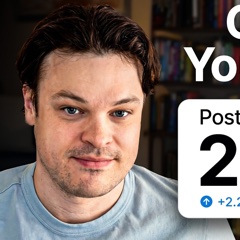
Nic Weber
Co-founder of Noise, a pay-as-you-go UGC and TikTok distribution platform for app founders
Where to hear and read about Nic Weber1 episode or test

Nic Weber is co-founder of Noise, a pay-as-you-go UGC and TikTok distribution platform for app founders, built by marketers who came from performance marketing. The most useful lesson from him is to treat TikTok growth as a numbers game: copy formats that already went viral, post thousands of small variations, and let the data pick winners.
We don't have to be super creative. We just have to have a good eye for what's already gone viral
Meet The Guy Who Solved App Growth on TikTok
Nic Weber: the story and the lessons
1How Nic Weber went from Meta ads to building Noise
Weber's team chose TikTok because it was the best distribution at cost. The founders came from performance marketing, where Meta ads cost a lot and underdeliver. TikTok serves content by interest, so a relevant post works like a cheap, native ad.
A viewer who likes cats gets cat content, so a product tied to cats feels like organic discovery.
He learned by posting slideshows for his own app in July 2024. One internal slideshow reached 20,000 views in a week, so they invited other app founders to try it. His own test account had six posts take off right away, starting with 887K views on the first.
One hook image passed 5 million views after being posted only a few times. Weber had never posted short-form video before.
Weber proved the method by hand with 30 users before automating it. The team paid about 30 engaged users from its last app to post Canva slideshows ending in a clear call to action for Playbite, with no other distribution. The Brawl Stars slideshows worked far better than expected.
Weber knew nothing about Brawl Stars, but knew many of the app's users played it. The platform later took over editing, randomizing text and slide order so each post is unique. His rule: "we like to do things that don't scale and then when we prove that they work, we scale them up".
Founders on Noise logged over 2.5 billion views in a year. Nobody planned the total. The team only added it up at year end. Noise itself did 54 million views in 30 days across TikTok, Instagram and YouTube, and averages about 30 cent installs.
These figures come from his own platform and app. No outside data, retention or revenue numbers are given.
2Why Weber copies viral formats instead of inventing them
Weber says viral hits come from copying, not original creativity. The Lingo Pingo format, where a person cries over a word and the app roasts them, was copied from a trend started by a random woman on Google Translate. It reached about 20 million views overnight.
The roast format ran through October and November in about 15 variations. Weber's view is that you only need to be creative in showing how your app fits an existing format.
He hands creators a format with its reasoning, not a blank page. Creators got an example, exact prompts for the app and an explanation of why it is funny. Brands bring the format, and creators are not meant to invent their own.
Taking creative work off the creators keeps the machine running, and any language works because the concept does not depend on one word.
Weber borrows ideas already popular elsewhere, such as Reddit's roast subreddit. The roast idea mirrors the popular "roast me" subreddit, now done by an AI. An AI-themed app gets comments asking what the app is, which convert very well.
Reddit helps in an unfamiliar niche to learn how its people talk, but the best inspiration is still the platform you post on.
Weber finds winning formats by studying outlier videos with SpyTok. SpyTok scans hundreds of thousands of TikToks promoting apps. A fitness search sorted by most viral turned up a 106x outlier using a text hook over an image and a creative call to action on slide two.
The tool is used by 11 Labs, Ammo and Voodoo, the studio that owns BeReal.
Weber tests formats on Noise's own app before passing them to users. A secret Santa post complaining about a $60 mandatory gift and asking what people do for extra funds was built to draw comments. It helped the app reach the top 5 in its category.
The platform began as an internal growth hack tool, and new ideas are proven there first. The earlier "Don't get a second job" video, modeled on a woman's Airbnb-cleaning post, took the app to number 5 and number 7 in its category.
3Weber on hooks, captions and claims
Weber found eggs in the hook image made slideshows take off. In AI-generated, Pinterest-style clean-eating slideshows, hard-boiled and scrambled eggs hit a nerve. The pattern showed up for one brand, then across many accounts.
Eggs are healthy, cheap and instantly understood, and egg prices had even been an election issue. Viewers swipe on, and swiping is the signal that spreads a post.
One caption change moved a post from 10,000 views to a million. Opening with "Don't get a second job" made the post go viral, while "everybody needs a side hustle" flopped. Nobody likes being told what to do.
The post ran as a playbook and did 8 cent installs for about 3 days. Of four to six similar posts that passed a million views, only washing dishes worked, not vacuuming or pouring coffee.
He frames income claims small, then converts to a monthly total. Weber pitches $20 a night, then $500 a month, which anchors on something real like a $498 car payment. Claims like $7,000 in a week get dismissed as a scam, even when real users earned it.
Showing receipts or a bank stub does not help, because people assume they are fake. In the comments, people mostly asked how it works rather than calling it a scam. As he puts it: "Anyone can imagine a $20 bill in their hand, but then they're bad at math."
Weber keeps captions simple and edits AI copy by hand. AI generates variations, but current tools do not feel organic enough on their own. AI-prompted posts have still hit 1 to 2 million views.
The posts that took the least time are the ones that always go viral.
4How Noise runs distribution at scale
Weber spreads one format across thousands of posters, not a few creators. A platform of 50,000 posters puts out about 100,000 pieces of content a day, each a slight variation. The usual alternative is 5 or 10 people posting twice a day, or a creator paid $200 to $500 a month for 20 slideshows with no guarantee of a hit.
A post that misses shows why through analytics or view counts. Changing the text, the picture or the first seconds can move it from 1,000 views to 10 million.
He pays per view and sets CPM from the target cost per install. There are no retainers, so creators get instant feedback. The CPM is set to the cost per install the founder will pay.
The app supplies everything, so creators only manage the account and a regular posting schedule.
Weber runs playbooks like Meta ad sets and pauses losers fast. Campaigns hold playbooks, and posts sit under each playbook. One playbook sent 446 posts in about a week and got 200,000 views, so it was paused.
The "how are we making money by Christmas" playbook that replaced it reached 9 million views.
He runs viral UGC for reach and mass slideshows to convert. The UGC posts reached 3.8M, 5M, 2M, 2M and 1.6M views. The slideshows had only 2 million views in 30 days, but they act like retargeting ads for people who watched the viral video.
Both run at once, one campaign called premium (high-effort UGC with a soft call to action) and one basic (slideshows with a hard call to action). Views follow a power law, so top videos get millions and the rest a few thousand.
Weber seeds comments at scale so users do the selling. The video never names the app, which appears only in the description. One seeded comment, "I use the noise app to make extra money", got about 1,686 likes.
He estimates at least a thousand people downloaded or searched for the app as a result. Comment seeding is hard to do alone because it needs scale and many accounts.
The dashboard randomizes captions, images and hashtags so every post is unique. Weber sets captions, hook images, descriptions and hashtags once, then the system randomizes them and sends them to users to post.
He believes pasting text natively in TikTok sends a better signal than baking it into the image. That is his theory, not a tested fact.
5Weber's theories on low views, saturation and learning to go viral
Weber says posts with few views still convert. TikTok sends each video to the people most likely to care, so a slideshow seen by 500 people goes to the right 500. Videos with 200 views still draw comments asking what the app is.
The effect is steady installs, not an explosion, and 500-view posts won't push an app to number one. He says he has "plenty of math" to prove it, but none is shown.
He thinks TikTok has a fixed daily view budget per niche. Book slideshows that got 1 to 2 million views each lost those big pops once 10,000 people posted similar ones. Adding 5,000 videos a day to a niche doesn't create 5,000 videos' worth of new attention.
This is Weber's theory, not a tested fact. He says "The algorithm hates me" can simply mean the content isn't good enough to win against similar formats.
Weber treats a trend as a view budget that wears out. A viewer might tolerate 100 John Ham memes today, 50 tomorrow and 10 the day after. Inside a trend, 1,000 videos at 1,000 views each reach as many people as one video at a million.
Repeating formats gives even a known brand another impression to convert or win back a viewer. He points to an article saying Duolingo's numbers fell once it stopped its unhinged content.
He believes going viral is a learnable skill, not a gift. Weber compares it to art class: the kid with natural talent paints better at first, but a student who grinds can match or pass him.
His team has taught its creators the method, and new creators often report their best view counts ever. He says that no longer surprises him.

Meet The Guy Who Solved App Growth on TikTok
Nic Weber explains how Noise uses mass distribution, copied viral formats and a two-pronged UGC plus slideshow strategy to get app growth from TikTok. The founders on the platform generated over 2.5 billion views in a year, and Noise itself averages about 30 cent installs.
Weber's team chose TikTok because it was the best distribution at cost. The founders came from performance marketing, where Meta ads cost a lot and underdeliver. TikTok serves content by interest, so a relevant post works like a cheap, native ad.
A viewer who likes cats gets cat content, so a product tied to cats feels like organic discovery.
He learned by posting slideshows for his own app in July 2024. One internal slideshow reached 20,000 views in a week, so they invited other app founders to try it. His own test account had six posts take off right away, starting with 887K views on the first.
One hook image passed 5 million views after being posted only a few times. Weber had never posted short-form video before.
Weber proved the method by hand with 30 users before automating it. The team paid about 30 engaged users from its last app to post Canva slideshows ending in a clear call to action for Playbite, with no other distribution. The Brawl Stars slideshows worked far better than expected.
Weber knew nothing about Brawl Stars, but knew many of the app's users played it. The platform later took over editing, randomizing text and slide order so each post is unique. His rule: "we like to do things that don't scale and then when we prove that they work, we scale them up".
Founders on Noise logged over 2.5 billion views in a year. Nobody planned the total. The team only added it up at year end. Noise itself did 54 million views in 30 days across TikTok, Instagram and YouTube, and averages about 30 cent installs.
These figures come from his own platform and app. No outside data, retention or revenue numbers are given.
Weber says viral hits come from copying, not original creativity. The Lingo Pingo format, where a person cries over a word and the app roasts them, was copied from a trend started by a random woman on Google Translate. It reached about 20 million views overnight.
The roast format ran through October and November in about 15 variations. Weber's view is that you only need to be creative in showing how your app fits an existing format.
He hands creators a format with its reasoning, not a blank page. Creators got an example, exact prompts for the app and an explanation of why it is funny. Brands bring the format, and creators are not meant to invent their own.
Taking creative work off the creators keeps the machine running, and any language works because the concept does not depend on one word.
Weber borrows ideas already popular elsewhere, such as Reddit's roast subreddit. The roast idea mirrors the popular "roast me" subreddit, now done by an AI. An AI-themed app gets comments asking what the app is, which convert very well.
Reddit helps in an unfamiliar niche to learn how its people talk, but the best inspiration is still the platform you post on.
Weber finds winning formats by studying outlier videos with SpyTok. SpyTok scans hundreds of thousands of TikToks promoting apps. A fitness search sorted by most viral turned up a 106x outlier using a text hook over an image and a creative call to action on slide two.
The tool is used by 11 Labs, Ammo and Voodoo, the studio that owns BeReal.
Weber tests formats on Noise's own app before passing them to users. A secret Santa post complaining about a $60 mandatory gift and asking what people do for extra funds was built to draw comments. It helped the app reach the top 5 in its category.
The platform began as an internal growth hack tool, and new ideas are proven there first. The earlier "Don't get a second job" video, modeled on a woman's Airbnb-cleaning post, took the app to number 5 and number 7 in its category.
Weber found eggs in the hook image made slideshows take off. In AI-generated, Pinterest-style clean-eating slideshows, hard-boiled and scrambled eggs hit a nerve. The pattern showed up for one brand, then across many accounts.
Eggs are healthy, cheap and instantly understood, and egg prices had even been an election issue. Viewers swipe on, and swiping is the signal that spreads a post.
One caption change moved a post from 10,000 views to a million. Opening with "Don't get a second job" made the post go viral, while "everybody needs a side hustle" flopped. Nobody likes being told what to do.
The post ran as a playbook and did 8 cent installs for about 3 days. Of four to six similar posts that passed a million views, only washing dishes worked, not vacuuming or pouring coffee.
He frames income claims small, then converts to a monthly total. Weber pitches $20 a night, then $500 a month, which anchors on something real like a $498 car payment. Claims like $7,000 in a week get dismissed as a scam, even when real users earned it.
Showing receipts or a bank stub does not help, because people assume they are fake. In the comments, people mostly asked how it works rather than calling it a scam. As he puts it: "Anyone can imagine a $20 bill in their hand, but then they're bad at math."
Weber keeps captions simple and edits AI copy by hand. AI generates variations, but current tools do not feel organic enough on their own. AI-prompted posts have still hit 1 to 2 million views.
The posts that took the least time are the ones that always go viral.
Weber spreads one format across thousands of posters, not a few creators. A platform of 50,000 posters puts out about 100,000 pieces of content a day, each a slight variation. The usual alternative is 5 or 10 people posting twice a day, or a creator paid $200 to $500 a month for 20 slideshows with no guarantee of a hit.
A post that misses shows why through analytics or view counts. Changing the text, the picture or the first seconds can move it from 1,000 views to 10 million.
He pays per view and sets CPM from the target cost per install. There are no retainers, so creators get instant feedback. The CPM is set to the cost per install the founder will pay.
The app supplies everything, so creators only manage the account and a regular posting schedule.
Weber runs playbooks like Meta ad sets and pauses losers fast. Campaigns hold playbooks, and posts sit under each playbook. One playbook sent 446 posts in about a week and got 200,000 views, so it was paused.
The "how are we making money by Christmas" playbook that replaced it reached 9 million views.
He runs viral UGC for reach and mass slideshows to convert. The UGC posts reached 3.8M, 5M, 2M, 2M and 1.6M views. The slideshows had only 2 million views in 30 days, but they act like retargeting ads for people who watched the viral video.
Both run at once, one campaign called premium (high-effort UGC with a soft call to action) and one basic (slideshows with a hard call to action). Views follow a power law, so top videos get millions and the rest a few thousand.
Weber seeds comments at scale so users do the selling. The video never names the app, which appears only in the description. One seeded comment, "I use the noise app to make extra money", got about 1,686 likes.
He estimates at least a thousand people downloaded or searched for the app as a result. Comment seeding is hard to do alone because it needs scale and many accounts.
The dashboard randomizes captions, images and hashtags so every post is unique. Weber sets captions, hook images, descriptions and hashtags once, then the system randomizes them and sends them to users to post.
He believes pasting text natively in TikTok sends a better signal than baking it into the image. That is his theory, not a tested fact.
Weber says posts with few views still convert. TikTok sends each video to the people most likely to care, so a slideshow seen by 500 people goes to the right 500. Videos with 200 views still draw comments asking what the app is.
The effect is steady installs, not an explosion, and 500-view posts won't push an app to number one. He says he has "plenty of math" to prove it, but none is shown.
He thinks TikTok has a fixed daily view budget per niche. Book slideshows that got 1 to 2 million views each lost those big pops once 10,000 people posted similar ones. Adding 5,000 videos a day to a niche doesn't create 5,000 videos' worth of new attention.
This is Weber's theory, not a tested fact. He says "The algorithm hates me" can simply mean the content isn't good enough to win against similar formats.
Weber treats a trend as a view budget that wears out. A viewer might tolerate 100 John Ham memes today, 50 tomorrow and 10 the day after. Inside a trend, 1,000 videos at 1,000 views each reach as many people as one video at a million.
Repeating formats gives even a known brand another impression to convert or win back a viewer. He points to an article saying Duolingo's numbers fell once it stopped its unhinged content.
He believes going viral is a learnable skill, not a gift. Weber compares it to art class: the kid with natural talent paints better at first, but a student who grinds can match or pass him.
His team has taught its creators the method, and new creators often report their best view counts ever. He says that no longer surprises him.