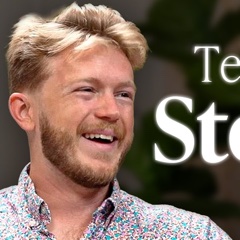
Nat Eliason
Author of Crypto Confidential, former how-to and SEO blogger turned narrative writer
Where to hear and read about Nat Eliason1 episode or test

Nat Eliason is the author of Crypto Confidential and a former how-to and SEO blogger who spent two years teaching himself to write gripping narrative. The most useful thing to learn from him is to build every scene from a want and an obstacle, and to read the style you want before each writing session.
A lot of good writing is in the Grammarly advice you ignore.
How to Tell Captivating Stories in 103 Minutes – Nat Eliason
Nat Eliason: the story and the lessons
1How Nat Eliason went from how-to blogger to narrative writer
Eliason spent two years teaching himself to tell gripping stories. After years of how-to and SEO writing, he wrote Crypto Confidential as narrative nonfiction. His first draft chapters got the feedback "I'm bored and I'm confused."
He had never learned to tell an exciting story. Online, no draft sat longer than two weeks, while the book meant two years in a new style with no feedback.
He chose stories over guides because stories reach more people. He loves concise index-card how-to guides, but says their audience is small and nerdy. A how-to on the crypto world would have been boring.
He started a nonfiction book on science versus religion, quit at 20,000 words and judged it would sell about 20,000 copies. His next plan is a fast-paced, Jurassic Park style book making the same arguments for a mass audience.
Writing a book in the dark nearly drove him crazy. He worked three to four hours a day on material that felt bad. He avoided asking his editor for feedback for fear the deal might be rethought, and the editor replied the next day that the chapters were good.
Naming what was missing brought peace. In his words, "Learning just takes so freaking long."
TikTok became a dopamine outlet that crowded out his writing. While a draft rested for 4 to 6 weeks, BookTok took him to about 50,000 followers. It later reached about 100,000 on TikTok and almost 180,000 on Instagram.
One Thanksgiving he spent his scarce time on TikTok and YouTube instead of the draft, so he quit entirely: "the number one way you fail at writing is to stop writing." He built a basic word-count tracker with a friend to get a daily win without publishing.
2How Eliason opens with a promise and stakes
Eliason spends his effort on a compelling promise first. Citing Brandon Sanderson, he splits a story into promise, progress and payoff. A mediocre payoff or a slow middle can be forgiven, but a weak promise means nobody reads far enough to find out.
Atlas Shrugged has flawed dialogue, yet "Who is John Galt?" carries about 350,000 words. His line: "if your promise isn't good, nobody will read your book."
He shows something at risk of dying, in any form, early. Drawing on Conflict and Suspense, he says readers drop books when they don't care about the conflict. The risk can be physical, psychological, a loss of identity or a community falling apart.
Even a mundane setting holds something that could fail or end, and that is enough to carry suspense.
He put $100 million of stakes in the first two paragraphs. With his editor he reworked the Crypto Confidential prologue so a night-time wake-up, a crying baby and an angry wife lead to the $100 million. It threatens a marriage, an identity and other people's money at once.
The scene really happens near the end of the book, so he moved it to a three-page prologue and then jumped back nine months. Readers wonder how he got from excitement to near-ruin.
3Eliason's rules for scenes, dialogue and interiority
Every line of dialogue must serve the want and the obstacle. Real conversation is about 80% small talk and tangents, so most of it gets cut. Each scene pairs what a character wants with what blocks them, and adversarial tension beats two people agreeing.
He ties this to Aaron Sorkin's line that he worships "at the altar of intention and obstacle."
He redirects dialogue or answers with action instead of yes or no. A request makes readers predict yes or no. A response like "we already booked two hours" opens a new question.
A non-verbal reply works even better: the other person just gets up and leaves, and the reader wonders what was said.
He ends scenes with a "yes, but" or a "no, and.". Either the character gets what they wanted with an unseen cost, or they don't and something worse happens. That outcome sets up the next scene, so stakes rise.
He says you notice the pattern in everything you read and watch once you hear it.
He pushes characters further from the goal before they get close. Each easy fix fails and sends the hero back a step until the climax. Christopher Nolan reportedly sketches stories this way, as with Inception's levels.
Steady progress is boring because the stakes aren't going up. He asks in each scene what new tension pushes the character back.
He broke all of Crypto Confidential into a stimulus and response spreadsheet. Each beat read: this happened, so this happened, which caused this. Where a link felt weak, he changed it to keep the action moving.
He tried an emotion, thought, decision, action chain too and cut part of it as overdone. He says he no longer needs the checklist because he has internalized it.
He braids action, dialogue, description and interiority in one passage. Weak writers use one or two of the four, good writers alternate blocks, and great writers weave all four within a few sentences.
He says editors look at this to tell a promising writer from a great one. Description is his own weak spot right now.
He adds one sentence of interior reaction at the key moment. An early reader told him he was missing what was going on in the author's head. He added lines about a team's hesitation over launching a risky token after a gambler's blunt reply, and the flat scene came alive.
"You can do a lot with one sentence in the right place."
He adds half a sentence of smell to bring a scene alive. Most writers cover sight and sometimes sound but forget smell, which is tied to memory.
He also cites research that people who lose their sense of smell struggle to form deep relationships.
4How Eliason protects his voice and builds taste
He ignores Grammarly advice that sands off his style. Tools and editors push toward a vague right way to write. Some Crypto Confidential chapters have no dialogue tags or scene setting, only fragments, to make readers feel the mania.
A tool would flag it as bad writing, but it did its job. He compares formulaic, editor-heavy books to private equity companies: they may earn more, but they are not the founder's book.
He reads the style he wants before each writing session. His how-to habits did not produce exciting narrative, so he read Red Rising each morning for fast, engaging prose. When a sci-fi draft lost description and interiority, he switched to slower books like East of Eden.
He calls finding what to prime yourself with his biggest unlock.
He reads weak books and says exactly why they fail. Following Stephen King, he reads bad or merely commercial books and articulates what isn't working. Naming what he dislikes lets him spot what better books do well and borrow it.
He writes his real emotions on the page, even embarrassing ones. He credits David Foster Wallace's power to honesty about desperation, and says a writer's job is to tell people they are not the only one who feels this. He cried in a coffee shop writing his hardest scenes.
A publisher's encouragement kept the most vulnerable material in the book. He thinks self-publishing would have meant toning it down.
He moved technical explanation into skippable standalone chapters. After three drafts where crypto explanations stalled the pace, he copied Anthony Bourdain's Kitchen Confidential and put them in short between-chapter pieces.
About half of readers skip them and stay with the story, while less technical readers go deep.
5Writing for readers unlike him, and living with imperfection
He weights feedback from outsiders over experts who know the topic. He wrote for crypto insiders, but also for their partners and parents. Women with no interest in crypto showed where the book lost people, and he weighed their notes above those of crypto readers.
Crypto readers could correct facts but "couldn't tell me what was confusing." Years of how-to writing had taught him to break technical ideas down for lay readers.
He took the sales team's advice and renamed his book. His working title, Everyone Getting Rich Without Me, could mean GameStop options, Airbnbs or crypto, so it was hard to pitch. The sales team proposed Crypto Confidential, which had been on his own early shortlist.
His first reaction was anger, so he waited a day before replying. He wants art that also pays the bills and sees walking that line as a useful skill.
He reminds himself that almost all readers read as readers. He still sees problems in every draft, such as thin description, that almost no one else notices. About 98% of readers would miss them, and 99.9% read as readers, not writers.
The skill is knowing when you are reading as a writer and when you are reading as a reader, then deciding it's done.
He treats mastery as a 10 to 30 year project. Early success is a poor measure. He cites Louis C.K., Seinfeld, Stephen King selling Carrie at 26 and Cormac McCarthy publishing a month before he died.
He fears being ignored more than being criticized. He now answers praise with "it's good and it can be better" instead of "you're lying."
6How Eliason uses AI to write
He feeds AI a long writing sample and a ban list. In Novelcrafter his one-line scene prompt carries 6,000 to 7,000 words of hidden context: synopsis, characters, the last 2,000 words, a 30,000 word sample of his best chapter and style rules.
A banned list of AI tics, such as running a hand through hair, makes output more varied. He still deletes or rewrites most of it: "99% of it is how good your prompting is and how good your writing style is."
He uses AI to generate options, then judges them yes or no. When stuck on description or a plot turn, he asks for ideas, rejects most and combines the pieces he likes. About 95% of its chat ideas are not good, but one occasionally gets him unstuck.
He compares this to Miranda Priestly in The Devil Wears Prada, who never designs anything and only approves or rejects, and says taste is the competitive advantage.
He notes that models overwrite when they try to look smart. Given the same complex prompt, he finds the cheaper Sonnet often writes better than Opus.
His reading is that Opus tries too hard to look smart, like an insecure writer.

How to Tell Captivating Stories in 103 Minutes – Nat Eliason
Nat Eliason spent two years teaching himself to tell gripping stories after years of writing how-to articles, and he explains the practical rules he learned about promise, conflict, dialogue and scene structure. The most useful habit is breaking a draft into stimulus and response beats and reading the style you want to write before each session.
Eliason spent two years teaching himself to tell gripping stories. After years of how-to and SEO writing, he wrote Crypto Confidential as narrative nonfiction. His first draft chapters got the feedback "I'm bored and I'm confused."
He had never learned to tell an exciting story. Online, no draft sat longer than two weeks, while the book meant two years in a new style with no feedback.
He chose stories over guides because stories reach more people. He loves concise index-card how-to guides, but says their audience is small and nerdy. A how-to on the crypto world would have been boring.
He started a nonfiction book on science versus religion, quit at 20,000 words and judged it would sell about 20,000 copies. His next plan is a fast-paced, Jurassic Park style book making the same arguments for a mass audience.
Writing a book in the dark nearly drove him crazy. He worked three to four hours a day on material that felt bad. He avoided asking his editor for feedback for fear the deal might be rethought, and the editor replied the next day that the chapters were good.
Naming what was missing brought peace. In his words, "Learning just takes so freaking long."
TikTok became a dopamine outlet that crowded out his writing. While a draft rested for 4 to 6 weeks, BookTok took him to about 50,000 followers. It later reached about 100,000 on TikTok and almost 180,000 on Instagram.
One Thanksgiving he spent his scarce time on TikTok and YouTube instead of the draft, so he quit entirely: "the number one way you fail at writing is to stop writing." He built a basic word-count tracker with a friend to get a daily win without publishing.
Eliason spends his effort on a compelling promise first. Citing Brandon Sanderson, he splits a story into promise, progress and payoff. A mediocre payoff or a slow middle can be forgiven, but a weak promise means nobody reads far enough to find out.
Atlas Shrugged has flawed dialogue, yet "Who is John Galt?" carries about 350,000 words. His line: "if your promise isn't good, nobody will read your book."
He shows something at risk of dying, in any form, early. Drawing on Conflict and Suspense, he says readers drop books when they don't care about the conflict. The risk can be physical, psychological, a loss of identity or a community falling apart.
Even a mundane setting holds something that could fail or end, and that is enough to carry suspense.
He put $100 million of stakes in the first two paragraphs. With his editor he reworked the Crypto Confidential prologue so a night-time wake-up, a crying baby and an angry wife lead to the $100 million. It threatens a marriage, an identity and other people's money at once.
The scene really happens near the end of the book, so he moved it to a three-page prologue and then jumped back nine months. Readers wonder how he got from excitement to near-ruin.
Every line of dialogue must serve the want and the obstacle. Real conversation is about 80% small talk and tangents, so most of it gets cut. Each scene pairs what a character wants with what blocks them, and adversarial tension beats two people agreeing.
He ties this to Aaron Sorkin's line that he worships "at the altar of intention and obstacle."
He redirects dialogue or answers with action instead of yes or no. A request makes readers predict yes or no. A response like "we already booked two hours" opens a new question.
A non-verbal reply works even better: the other person just gets up and leaves, and the reader wonders what was said.
He ends scenes with a "yes, but" or a "no, and.". Either the character gets what they wanted with an unseen cost, or they don't and something worse happens. That outcome sets up the next scene, so stakes rise.
He says you notice the pattern in everything you read and watch once you hear it.
He pushes characters further from the goal before they get close. Each easy fix fails and sends the hero back a step until the climax. Christopher Nolan reportedly sketches stories this way, as with Inception's levels.
Steady progress is boring because the stakes aren't going up. He asks in each scene what new tension pushes the character back.
He broke all of Crypto Confidential into a stimulus and response spreadsheet. Each beat read: this happened, so this happened, which caused this. Where a link felt weak, he changed it to keep the action moving.
He tried an emotion, thought, decision, action chain too and cut part of it as overdone. He says he no longer needs the checklist because he has internalized it.
He braids action, dialogue, description and interiority in one passage. Weak writers use one or two of the four, good writers alternate blocks, and great writers weave all four within a few sentences.
He says editors look at this to tell a promising writer from a great one. Description is his own weak spot right now.
He adds one sentence of interior reaction at the key moment. An early reader told him he was missing what was going on in the author's head. He added lines about a team's hesitation over launching a risky token after a gambler's blunt reply, and the flat scene came alive.
"You can do a lot with one sentence in the right place."
He adds half a sentence of smell to bring a scene alive. Most writers cover sight and sometimes sound but forget smell, which is tied to memory.
He also cites research that people who lose their sense of smell struggle to form deep relationships.
He ignores Grammarly advice that sands off his style. Tools and editors push toward a vague right way to write. Some Crypto Confidential chapters have no dialogue tags or scene setting, only fragments, to make readers feel the mania.
A tool would flag it as bad writing, but it did its job. He compares formulaic, editor-heavy books to private equity companies: they may earn more, but they are not the founder's book.
He reads the style he wants before each writing session. His how-to habits did not produce exciting narrative, so he read Red Rising each morning for fast, engaging prose. When a sci-fi draft lost description and interiority, he switched to slower books like East of Eden.
He calls finding what to prime yourself with his biggest unlock.
He reads weak books and says exactly why they fail. Following Stephen King, he reads bad or merely commercial books and articulates what isn't working. Naming what he dislikes lets him spot what better books do well and borrow it.
He writes his real emotions on the page, even embarrassing ones. He credits David Foster Wallace's power to honesty about desperation, and says a writer's job is to tell people they are not the only one who feels this. He cried in a coffee shop writing his hardest scenes.
A publisher's encouragement kept the most vulnerable material in the book. He thinks self-publishing would have meant toning it down.
He moved technical explanation into skippable standalone chapters. After three drafts where crypto explanations stalled the pace, he copied Anthony Bourdain's Kitchen Confidential and put them in short between-chapter pieces.
About half of readers skip them and stay with the story, while less technical readers go deep.
He weights feedback from outsiders over experts who know the topic. He wrote for crypto insiders, but also for their partners and parents. Women with no interest in crypto showed where the book lost people, and he weighed their notes above those of crypto readers.
Crypto readers could correct facts but "couldn't tell me what was confusing." Years of how-to writing had taught him to break technical ideas down for lay readers.
He took the sales team's advice and renamed his book. His working title, Everyone Getting Rich Without Me, could mean GameStop options, Airbnbs or crypto, so it was hard to pitch. The sales team proposed Crypto Confidential, which had been on his own early shortlist.
His first reaction was anger, so he waited a day before replying. He wants art that also pays the bills and sees walking that line as a useful skill.
He reminds himself that almost all readers read as readers. He still sees problems in every draft, such as thin description, that almost no one else notices. About 98% of readers would miss them, and 99.9% read as readers, not writers.
The skill is knowing when you are reading as a writer and when you are reading as a reader, then deciding it's done.
He treats mastery as a 10 to 30 year project. Early success is a poor measure. He cites Louis C.K., Seinfeld, Stephen King selling Carrie at 26 and Cormac McCarthy publishing a month before he died.
He fears being ignored more than being criticized. He now answers praise with "it's good and it can be better" instead of "you're lying."
He feeds AI a long writing sample and a ban list. In Novelcrafter his one-line scene prompt carries 6,000 to 7,000 words of hidden context: synopsis, characters, the last 2,000 words, a 30,000 word sample of his best chapter and style rules.
A banned list of AI tics, such as running a hand through hair, makes output more varied. He still deletes or rewrites most of it: "99% of it is how good your prompting is and how good your writing style is."
He uses AI to generate options, then judges them yes or no. When stuck on description or a plot turn, he asks for ideas, rejects most and combines the pieces he likes. About 95% of its chat ideas are not good, but one occasionally gets him unstuck.
He compares this to Miranda Priestly in The Devil Wears Prada, who never designs anything and only approves or rejects, and says taste is the competitive advantage.
He notes that models overwrite when they try to look smart. Given the same complex prompt, he finds the cheaper Sonnet often writes better than Opus.
His reading is that Opus tries too hard to look smart, like an insecure writer.